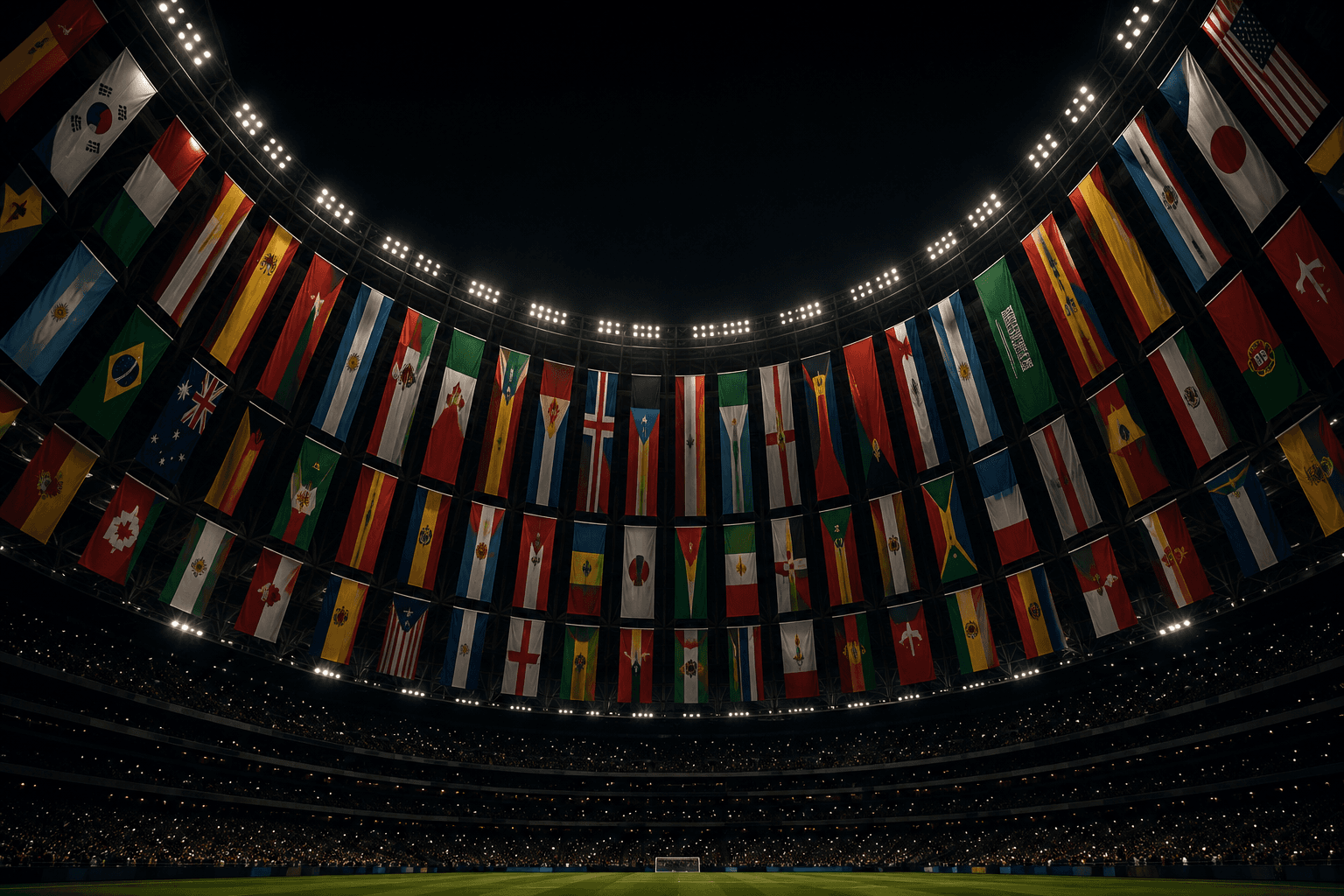
The World Cup is not 48 teams. It is 48 stories.
Some are about redemption. Some are about arrival. Some are about farewell. Some are about a nation seeing itself on the biggest stage for the first time. Some are about a nation returning to a stage it was not sure it would ever reach again.
The 2026 World Cup is the largest in history — 48 teams, 16 venues, three countries, 104 matches across five weeks. The format is new. The scale is unprecedented. But the reason the World Cup matters has never changed: it is the only event on earth where an entire country's identity is represented by 26 players on a football pitch.
These are the 48 stories arriving in North America this June.
Some stories are about winning the World Cup. Most are not. Some nations arrive chasing history. Others arrive simply grateful to be part of it.
Group A
Mexico — The hosts open the tournament at the Estadio Azteca on June 11, in the stadium where Pelé played his final World Cup in 1970 and Maradona scored the Goal of the Century in 1986. Javier Aguirre, 67, is managing Mexico at a World Cup for the third time. He was the coach the last time Mexico played South Africa in a World Cup opener — June 11, 2010, in Johannesburg. Same fixture. Same date. Same coach. The "quinto partido" — the fifth match, the quarterfinal Mexico have never reached away from home — is 40 years old.
South Africa — The last time Bafana Bafana played at a World Cup, they were hosting it. In 2010, they became the first nation eliminated at the group stage of their own tournament. They beat France 2-1 in their final match but it was not enough. Hugo Broos, 74, has said this is his last job in football. Sixteen years later, they return — not as hosts, but as a team that topped their qualifying group ahead of Nigeria.
South Korea — Son Heung-min arrives at what may be his final World Cup with a squad drawn almost entirely from European leagues. The 2002 semifinal — the greatest achievement by an Asian team at a World Cup — happened 24 years ago. An entire generation has grown up in its shadow, measured against an achievement none of them witnessed as adults.
Czechia — Twenty years away. Czechia have not played at a World Cup since 2006. They survived two penalty shootouts in the playoffs to get here — against the Republic of Ireland and Denmark. Patrik Schick and Tomáš Souček carry a squad that arrived through the narrowest possible door.
Group B
Canada — Canada waited 36 years between World Cups — from 1986 to 2022. Now they host one. All three group-stage matches are on Canadian soil. In 2022, they qualified and went home winless. In 2026, at home, with an entire country watching, winless is not an option. This is the tournament that will determine whether Canada is a football nation or a country that occasionally qualifies for football tournaments.
Switzerland — The team nobody fears and nobody beats easily. Switzerland have reached the knockout rounds at five consecutive major tournaments, including a quarterfinal at Euro 2020 where they eliminated France on penalties. They do not produce stories. They produce results.
Qatar — The 2022 hosts were winless on home soil — three matches, three defeats, one goal scored. They arrived at their own World Cup as the lowest-ranked team in the field and played like it. In 2026, they qualified through the standard route and leaked 24 goals doing it. The question is whether the team that was given a World Cup can compete at one they earned.
Bosnia and Herzegovina — They knocked out Italy on penalties in the playoff final. Italy will miss a third consecutive World Cup. Bosnia will play at their second. Edin Džeko, at 40, leads a squad whose greatest achievement before this tournament was ensuring that one of football's founding nations stayed home.
Group C
Brazil — Five World Cup titles and none since 2002. The drought is 24 years old. Vinícius Jr, Rodrygo, and Endrick represent a generation that has never experienced Brazil winning anything at senior international level. The pressure is not to win — it is to stop the clock that has been running since Ronaldo lifted the trophy in Yokohama.
Morocco — The 2022 semifinal was not a fluke. Morocco became the first African nation to reach a World Cup semifinal, and they did it by beating Belgium, Spain, and Portugal. The squad has been rebuilt — several veterans from the 2022 run were left out — but the belief that Africa's best can compete with Europe's best is no longer theoretical. Morocco proved it.
Haiti — Back after 52 years. Haiti's only previous World Cup was in 1974. They return to a tournament that has changed beyond recognition — from 16 teams to 48, from West Germany to North America, from black-and-white television to 4K streaming. The gap is so vast that returning is itself the story.
Scotland — The last time Scotland played at a World Cup, it was 1998. The opening ceremony was in Paris. France won the tournament. Steve Clarke's side qualified through a campaign that required persistence rather than brilliance, and they arrive in a group with Brazil and Morocco knowing that survival, not victory, is the measure.
Group D
USA — The generation that grew up knowing this World Cup was coming. Christian Pulisic was 14 when the hosting rights were awarded. He is now the face of American soccer at the tournament that was always supposed to define his career. The country is still deciding how much it cares about football. The next five weeks will determine the answer for a generation.
Paraguay — Paraguay spent 16 years watching World Cups from home. They return with a generation too young to remember the last one — players who qualified through CONMEBOL, which is never easy and never comfortable, on the final day. They have no expectations and no fear, which is precisely the combination that makes South American teams dangerous at World Cups.
Australia — Tony Popovic named 17 debutants and two uncapped players in his squad. This is the youngest and most aggressive Australia squad in World Cup history. Cristian Volpato, born in Sydney to Italian parents, chose Australia over Italy. The Socceroos are rebuilding in public, at a World Cup.
Turkey — Arda Güler and Kenan Yıldız were not alive for Turkey's third-place finish in 2002. They are too young to remember. The squad is stacked with European-league talent and the kind of raw, unmanaged intensity that either produces a deep run or an early exit with nothing in between.
Group E
Germany — The 2014 champions have not won a knockout match at a World Cup since lifting the trophy in Rio. Group-stage exits in 2018 and 2022 produced a national crisis that Julian Nagelsmann was hired to solve. This is the last Adidas Germany kit — Nike takes over in 2027. A third consecutive group exit would be the worst run in German football history.
Curaçao — Population: 150,000. The smallest nation ever to play at a World Cup. They qualified through CONCACAF, and their presence in North America is proof that the expanded tournament is not just bigger — it is wider. Most of the squad play in the Dutch second division. None of that matters. They are here.
Ivory Coast — The reigning African champions. Ivory Coast won the 2024 AFCON on home soil and arrived in North America with the confidence of a team that believes it belongs at the highest level. The Éléphants have always had talent. Now they have a trophy.
Ecuador — Ecuador have quietly become one of South America's most prolific talent producers. This is the strongest generation in their history — players at Chelsea, Bayer Leverkusen, Brighton — and the question is whether they can finally turn potential into a quarterfinal run. Four World Cups, one knockout appearance. The ceiling has been low. The talent suggests it should not be.
Group F
Netherlands — Talent has never been the problem. The Netherlands have produced some of the most gifted players in football history and won exactly zero World Cups. The pattern — brilliant group stages, agonizing knockouts — is older than most of the current squad. Ronald Koeman's team will be expected to break it. They probably will not.
Japan — Beat Germany and Spain in the 2022 group stage. That was not a fluke. Japan's squad is now drawn almost entirely from the top five European leagues — Mitoma, Kubo, Kamada, Tomiyasu, Endo — and they arrive in 2026 as the team that traditional powers do not want to face. The question is no longer whether Japan belong. It is how far they can go.
Sweden — Rebuilt through the playoffs. Sweden beat Poland 3-2 in the playoff final and arrived in the tournament with the kind of confidence that comes from earning qualification the hard way. They are nobody's favorite. That is precisely the point.
Tunisia — Six World Cups. Never past the group stage. Tunisia have been to the tournament six times and have never survived to play a fourth match. The ceiling is real, and the squad knows it. Whether that knowledge is a burden or a liberation depends on the first result.
Group G
Belgium — The golden generation that finished third in 2018 has aged. De Bruyne, Lukaku, and Courtois are all still present, but the squad around them is younger, less proven, and the question is whether the transition happened quickly enough. Belgium's window — the one that was supposed to produce a trophy — may have already closed.
Egypt — Mohamed Salah at a World Cup. The most famous player in the tournament after Messi and Mbappé, playing in the biggest event in football. Egypt's story is Salah's story — a player who has won everything at club level and nothing with his country. If Egypt advance from the group, the tournament gains its most compelling individual narrative.
Iran — Without Sardar Azmoun, their third-highest scorer, dropped for political reasons. With a domestic league that has been shut down since February. With a squad shaped by war, political exclusion, and a level of external pressure that no other team at this tournament will experience. Iran have qualified for seven World Cups and never advanced past the group stage. The seventh attempt carries weight that extends far beyond football.
New Zealand — The All Whites return for the first time since 2010, when they drew all three group-stage matches — including a 1-1 draw with Italy — and went home unbeaten. That remains one of the most remarkable statistical achievements in World Cup history. They will not repeat it. But they will remind the world that football exists in places most people do not think to look.
Group H
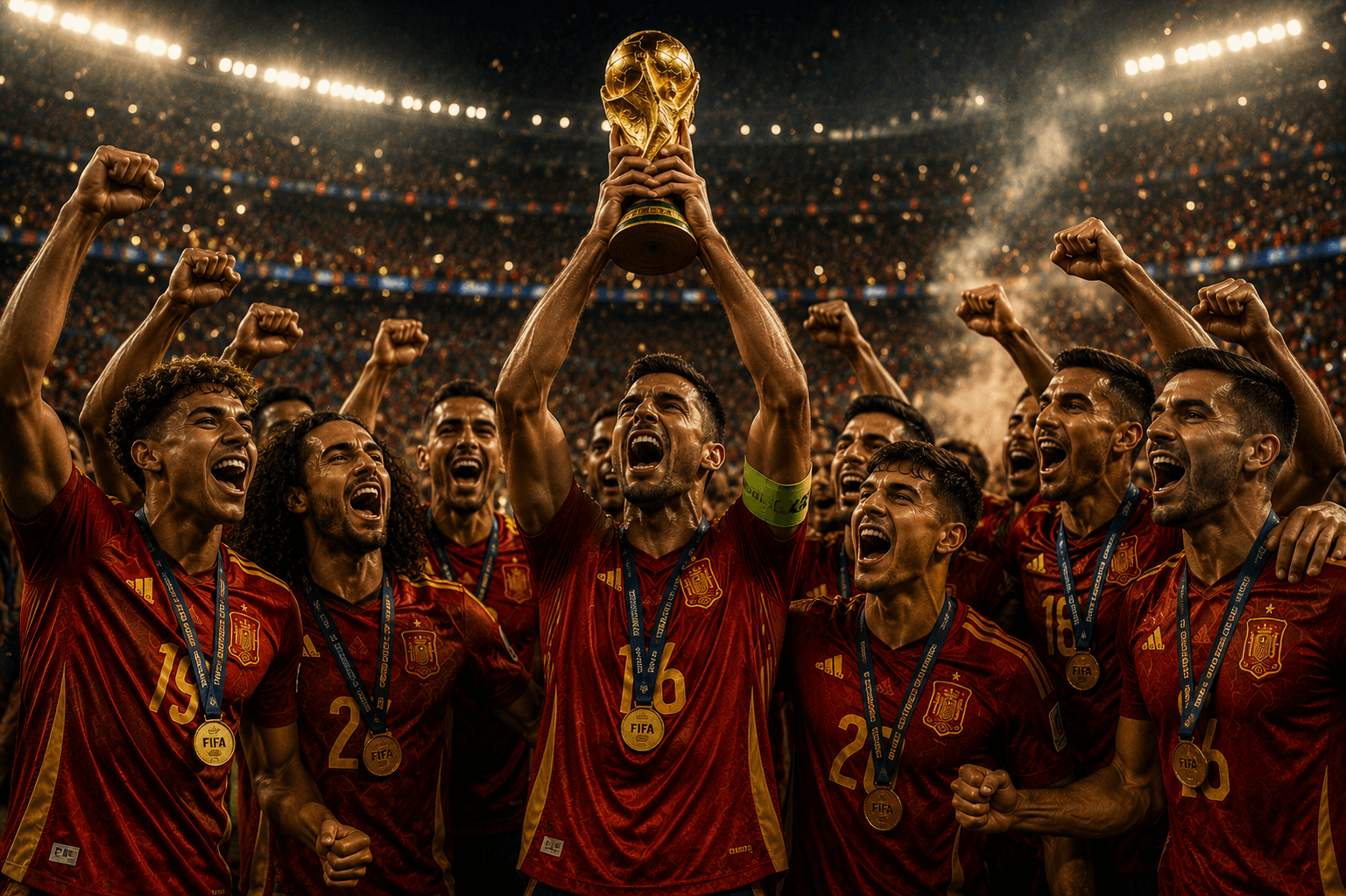
Spain — European champions. Lamine Yamal, Nico Williams, Pedri, Rodri — a generational core that won Euro 2024 and arrives in North America as one of three or four genuine favorites. Spain do not rebuild. They reload.
Cape Verde — Population: 600,000. Tournament debutants. Cape Verde qualified through African qualifying and arrive as one of the smallest nations ever to play at a World Cup. Their story is not what they will do at the tournament. Their story is that they are at the tournament.
Saudi Arabia — They beat Argentina 2-1 in the 2022 World Cup. It remains one of the greatest upsets in tournament history. The question Saudi Arabia have spent four years trying to answer is whether that was a moment or a movement. Their entirely domestic squad suggests the former.
Uruguay — The first World Cup champions. Uruguay won the inaugural tournament in 1930 — 96 years ago — and have spent every decade since reminding the world that small nations with deep football cultures can compete with anyone. Marcelo Bielsa, at 70, manages a squad built around Federico Valverde, Manuel Ugarte, and the conviction that two stars on the badge still mean something.
Group I
France — Winners in 2018. Finalists in 2022. Mbappé, Griezmann, Tchouaméni, Saliba, Dembélé — the depth is extraordinary. France are the co-favorites alongside Argentina, and the only thing standing between Mbappé and a coronation is the defending champions themselves. The 2022 final — the greatest match in World Cup history — demands a sequel.
Senegal — Winners of the 2025 Africa Cup of Nations. West Africa's strongest team, with a squad that combines domestic talent and European-league quality. Senegal reached the quarterfinals in 2002, the round of 16 in 2022, and arrive in 2026 with the belief that the trajectory is still ascending.
Iraq — Back after 40 years. Iraq's last World Cup was in 1986, when Ahmed Radhi scored against Belgium — the only Iraqi goal in World Cup history. Radhi died in 2020. The squad that came through a long qualifying campaign carries his memory and an entire nation's longing for the stage they were denied for four decades.
Norway — Erling Haaland's first World Cup. Martin Ødegaard's first World Cup. Norway have not played at a World Cup since 1998, and the question that follows them into every match is whether Haaland and Ødegaard alone are enough to carry a squad that, beyond its two stars, lacks the depth of the teams around them.
Group J
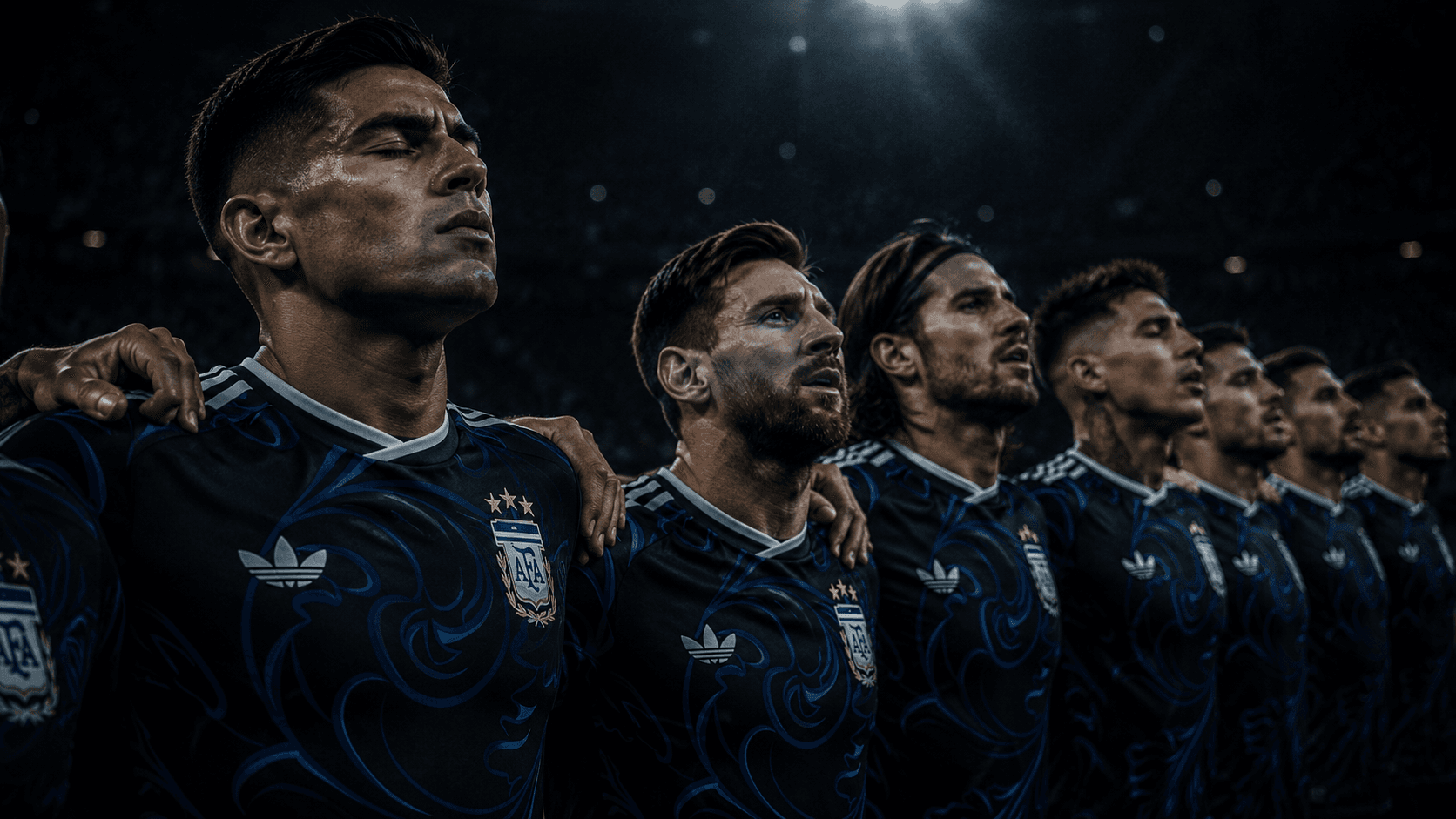
Argentina — Defending champions. Messi at 38, at his sixth World Cup, leading a squad that has won a World Cup, a Copa América, and a Finalissima in the same cycle. The greatest career in football history is approaching its final chapter, and the question is the same one it has always been: can the story end the way the story should end?
Algeria — Back after 12 years. The Fennec Foxes have not played at a World Cup since 2014, when they reached the round of 16 and gave Germany everything they could handle in extra time. The diaspora in the northeastern United States is massive, and the support in Philadelphia and Boston will rival anything Argentina can produce. Algeria do not arrive quietly.
Austria — Qualified comfortably through the European group stage. Austria are the team that has spent an entire qualifying cycle outperforming expectations — organized, physical, disciplined, and built to make better teams uncomfortable. They are nobody's pick to advance. That is the kind of team that advances.
Jordan — The first time. Jordan have never played at a World Cup. Every match is a first. Every moment is unprecedented. The squad knows that qualification was the achievement — everything from here is a bonus — but the feeling of walking out for a World Cup match for the first time in your nation's history is something that no amount of preparation can simulate.
Group K
Portugal — Cristiano Ronaldo at 41, at what will almost certainly be his final World Cup. But the story of this squad is no longer Ronaldo. It is the midfield — Vitinha and João Neves, who just won the Champions League with PSG, and Bruno Fernandes, who just won the Premier League's Player of the Season. Portugal may have the best midfield trio in world football. The question is whether Ronaldo's presence enhances or constrains what they can do with it.
DR Congo — Back after 52 years. DR Congo last played at a World Cup in 1974, when they competed as Zaire. The name has changed. The nation has changed. The football has changed. But the return — after half a century of absence — carries the weight of a country that has endured war, political upheaval, and decades of instability, and is now represented on the biggest stage in sport.
Uzbekistan — Central Asian football has never had a World Cup team. Uzbekistan are the first — and their presence in the tournament is as significant for the region as Curaçao's is for the Caribbean. Most casual fans cannot place them on a map. By July, some of those fans will remember their name.
Colombia — Colombia are no longer content to be entertaining. The 2024 Copa América runners-up arrive in North America as a team that genuinely expects to contend — not to reach a quarterfinal and celebrate, but to reach a semifinal and push further. This is the first Colombian generation that views deep tournament runs as a baseline, not an aspiration.
Group L
England — The deepest squad in the tournament. Jude Bellingham, Bukayo Saka, Declan Rice, Harry Kane — and Thomas Tuchel, who made bold selection calls by omitting Phil Foden and Cole Palmer, backing form over reputation. The question with England is always the same: can they convert talent into a trophy? The answer, for 60 years, has been no. Every tournament, they arrive believing this is the one. Every tournament, the pattern repeats.
Croatia — Luka Modrić at 40. This is almost certainly the last World Cup for the golden generation that reached the final in 2018 and the semifinal in 2022. Modrić, Perišić, Brozović — the names that defined Croatian football for a decade — are playing their final act on the biggest stage. The 2018 semifinal rematch against England on June 17 in Dallas is the kind of match that either extends a legacy or closes it.
Ghana — Asamoah Gyan's penalty against Uruguay in the 2010 quarterfinal — missed, after Suárez's handball on the line — remains the defining moment of Ghanaian football. Fifteen years later, the wound has not healed. Antoine Semenyo, Mohammed Kudus, and Inaki Williams represent a new generation, but the memory of what might have been follows them onto every pitch.
Panama — Back after their 2018 debut, when Román Torres's qualifying goal against Costa Rica sent an entire nation into the streets. Panama qualified again through CONCACAF and return to the World Cup with the experience of having been there before — which, for a nation of four million, is itself remarkable.
Forty-eight stories. Some will end in the group stage. Some will end in the final. Some will produce a moment that nobody predicted — the goal, the save, the red card, the penalty that changes everything. The 2026 World Cup begins on June 11 at the Azteca. It ends on July 19 at MetLife Stadium. Everything in between belongs to the 48 nations who earned the right to be there.
More World Cup 2026 reading:
- The Same Match, Sixteen Years Later — Mexico vs South Africa Opening Match Preview
- World Cup 2026 Group-by-Group Guide
- World Cup 2026 Predictions
- The 20 Best World Cup 2026 Kits, Ranked