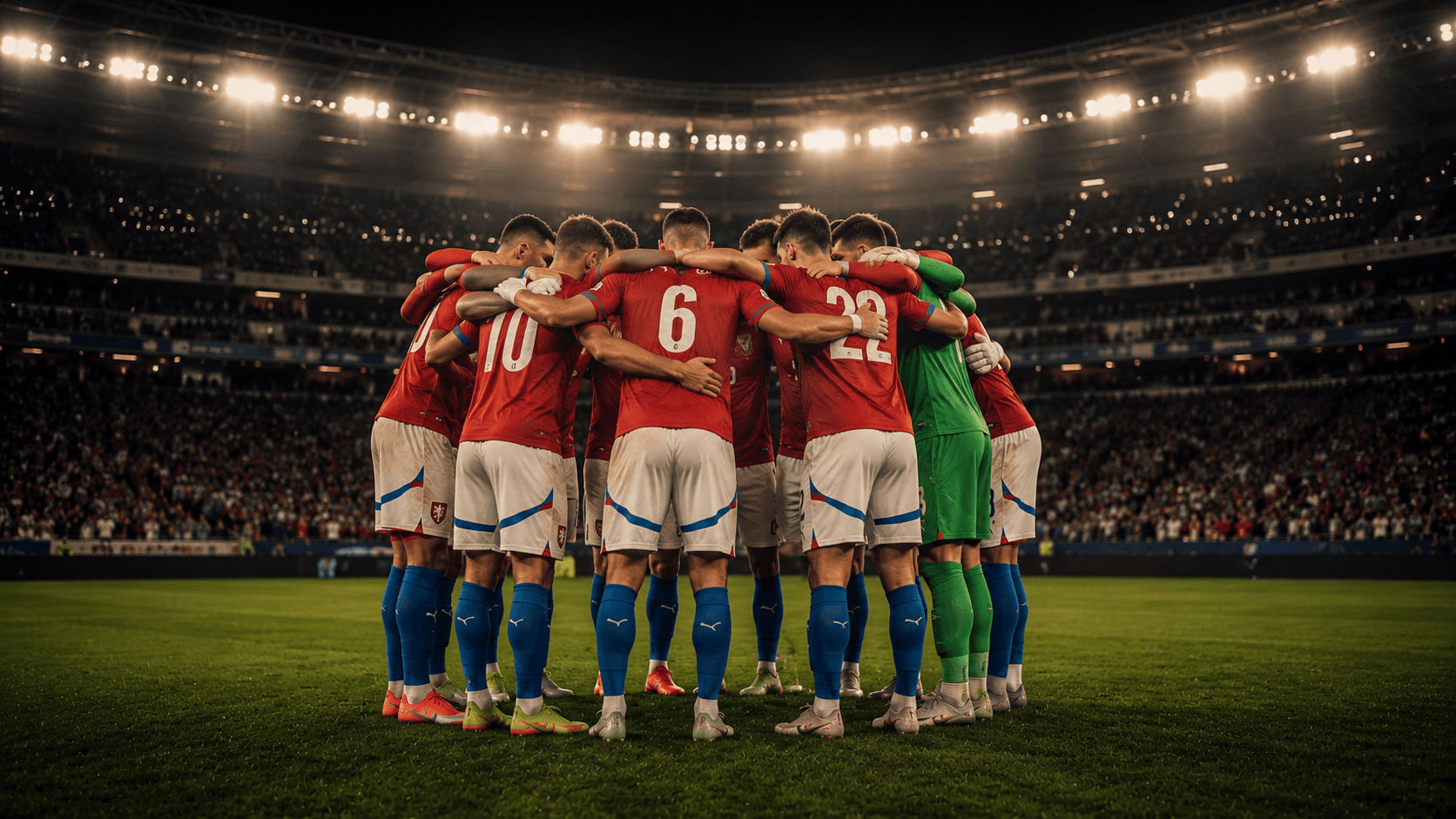
The last time Czechia played at a World Cup, Petr Čech was the goalkeeper, Pavel Nedvěd was in midfield, and Milan Baroš — Euro 2004's Golden Boot winner — led the line. That was Germany 2006. Czechia lost to Ghana and Italy in the group stage and went home. An entire generation passed.
Twenty years is a long time to be away from football's biggest tournament. Long enough for Czechoslovakia's two World Cup finals — 1934 and 1962 — to feel like someone else's history. Long enough for the country's football identity to quietly erode while neighbors Poland, Slovakia, and Austria took turns at the big table. Czechia became a European Championship team only, reaching the quarterfinals at Euro 2020 before retreating to the qualifier treadmill.
The return, when it came, arrived through the narrowest door available. Czechia finished second in their UEFA qualifying group behind Croatia, then won two penalty shootouts in the playoffs. Against Ireland in Prague, they fell 2-0 behind before Patrik Schick converted a penalty and Ladislav Krejčí equalized late to force the shootout. Five days later, against Denmark at Letná, Pavel Šulc scored in the third minute, Joachim Andersen equalized, Krejčí's header from a free kick restored the lead in extra time, and Kasper Høgh headed in to force another shootout. Denmark missed three. Michal Sadílek stepped up and ended it. Twenty years ended in a shootout — the second in a week.
Schick
Slavia's tournament
Miroslav Koubek is 74 years old — one of the oldest head coaches at the tournament. He took charge in December 2025 after Ivan Hašek was sacked following a humiliating loss to the Faroe Islands in qualifying. His first two competitive matches as national team coach were the two playoff shootouts. He won both and switched the formation from a back four to a 3-4-3.
His 26-man squad is built overwhelmingly from the Czech domestic league — 17 of the 26 play at home, and ten of those play for Slavia Praha: David Zima, David Jurásek, Tomáš Holeš, Lukáš Provod, Michal Sadílek, Štěpán Chaloupek, David Douděra, goalkeeper Jindřich Staněk, and forwards Mojmír Chytil and Tomáš Chorý. Add Sparta Praha's contributions — Jan Kuchta, Hugo Sochůrek, Jaroslav Zelený — and the two Prague clubs account for 13 of the 26.
Two of those Slavia players arrive under a cloud. David Douděra and Tomáš Chorý are serving lengthy bans for red cards in a recent Prague derby that was abandoned. They will be short of match fitness when the tournament begins.
The quality gap between the domestic core and the handful abroad defines this squad. Patrik Schick of Bayer Leverkusen is a Bundesliga striker. Tomáš Souček has spent years in the Premier League at West Ham. Ladislav Krejčí captains Wolverhampton, even if Wolves were relegated this season. Adam Hložek and Robin Hranáč are at Hoffenheim — Hložek having recovered from calf and foot injuries that cost him most of the Bundesliga season. Vladimír Coufal joined them from West Ham. Pavel Šulc plays for Lyon in Ligue 1.
Between these players and the domestic core, there is a continental divide in experience. The squad asks whether Schick and Souček can carry enough of the weight to make the rest competitive at this level.
The talisman
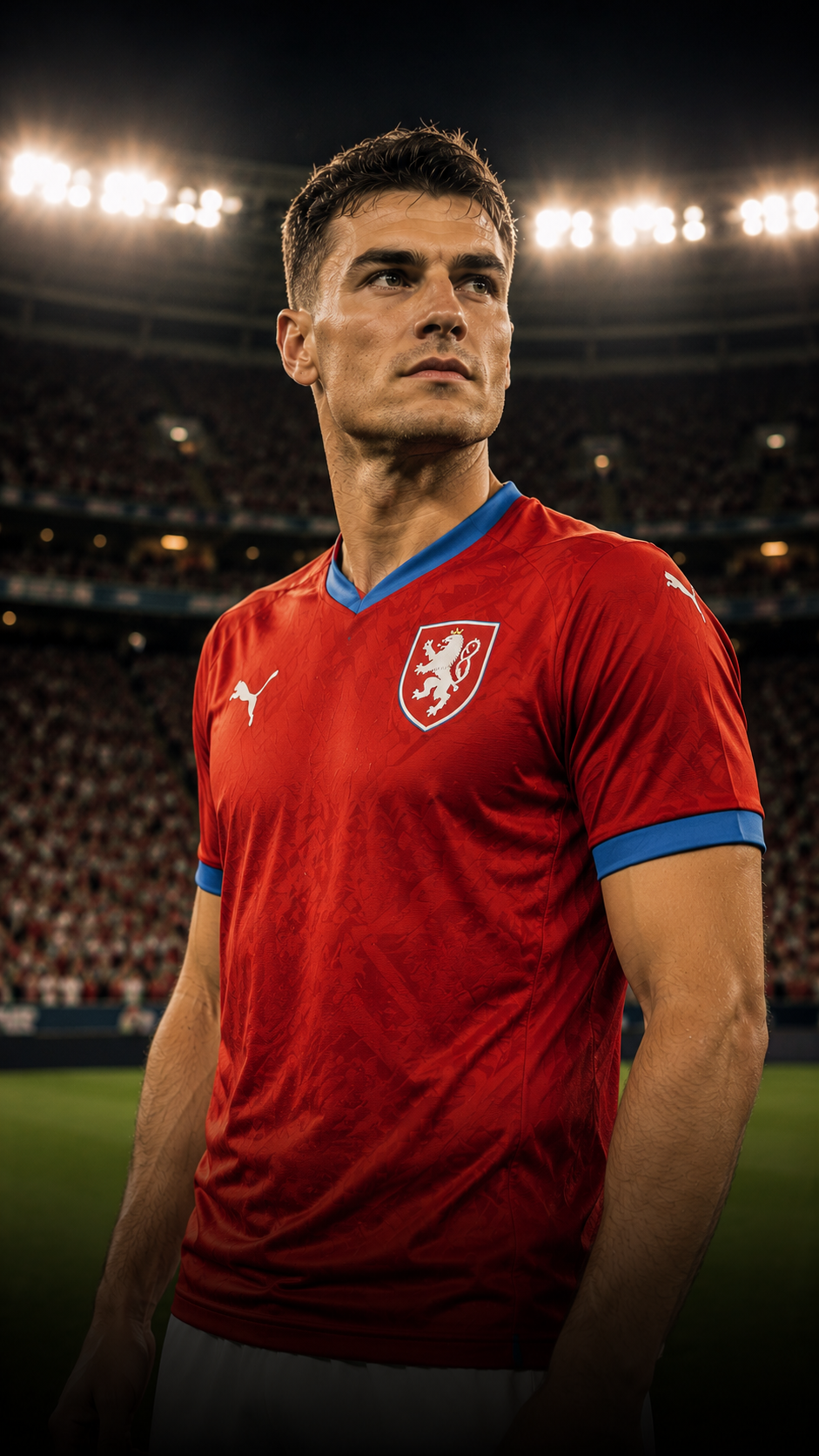
Schick is the obvious answer. The Bayer Leverkusen striker became briefly famous at Euro 2020 for the goal against Scotland — a shot from near the halfway line at Hampden Park that still looks implausible on replay. He scored five goals in that tournament, and the intervening years have not diminished the memory. At 30, he remains the most dangerous player in this squad by a considerable margin. Everything Czechia does in attack will run through him.
Souček provides the engine. The West Ham midfielder is physical, aerially dominant, and experienced in a way that domestic-league players rarely are. At 31, this is almost certainly his only World Cup — a player who has spent his peak years at the highest level without ever reaching the tournament. For Souček, this is overdue.
The 17-year-old Hugo Sochůrek of Sparta Praha — the youngest player in the squad — offers a glimpse of what Czech football might look like next.
The group
Czechia face South Korea in their opener on June 11 in Guadalajara, then South Africa on June 18 in Atlanta, and co-hosts Mexico on June 24 in Mexico City — at the Azteca, the stadium where Maradona scored the Goal of the Century 40 years ago. The group is navigable without being kind. South Korea are organized and intense. Mexico will have the crowd. South Africa are the team Czechia must beat.
Twenty years ago, Čech, Nedvěd, and Baroš went to Germany. They did not come back with anything. Now Schick, Souček, and Krejčí go to North America — coached by a 74-year-old who was not in charge six months ago, backed by a squad drawn largely from a single domestic league, and qualified through two shootouts that nobody outside Prague expected them to survive. The absence has been long enough that simply being there carries its own weight.
The squad
Goalkeepers: Lukáš Horníček (Braga), Matěj Kovář (PSV Eindhoven), Jindřich Staněk (Slavia Praha)
Defenders: Vladimír Coufal (Hoffenheim), David Douděra (Slavia Praha), Tomáš Holeš (Slavia Praha), Robin Hranáč (Hoffenheim), Štěpán Chaloupek (Slavia Praha), David Jurásek (Slavia Praha), Ladislav Krejčí (Wolverhampton), Jaroslav Zelený (Sparta Praha), David Zima (Slavia Praha)
Midfielders: Lukáš Červ (Viktoria Plzeň), Vladimír Darida (Hradec Králové), Lukáš Provod (Slavia Praha), Michal Sadílek (Slavia Praha), Hugo Sochůrek (Sparta Praha), Alexandr Sojka (Viktoria Plzeň), Tomáš Souček (West Ham), Pavel Šulc (Lyon), Denis Višinský (Viktoria Plzeň)
Forwards: Adam Hložek (Hoffenheim), Tomáš Chorý (Slavia Praha), Mojmír Chytil (Slavia Praha), Jan Kuchta (Sparta Praha), Patrik Schick (Bayer Leverkusen)
Coach: Miroslav Koubek | Group A: Mexico · South Africa · South Korea
Fixtures: Jun 11 v South Korea — Guadalajara · Jun 18 v South Africa — Atlanta · Jun 24 v Mexico — Mexico City (Azteca)
Correction, October 5, 2026: this piece first called Koubek the tournament's oldest head coach (Curaçao's Dick Advocaat is 78), counted seven Slavia Praha players (there are ten, so the two Prague clubs supply 13, not 10), and placed the Denmark playoff at the same ground as the Ireland game (Ireland were played at Eden, Denmark at Letná).