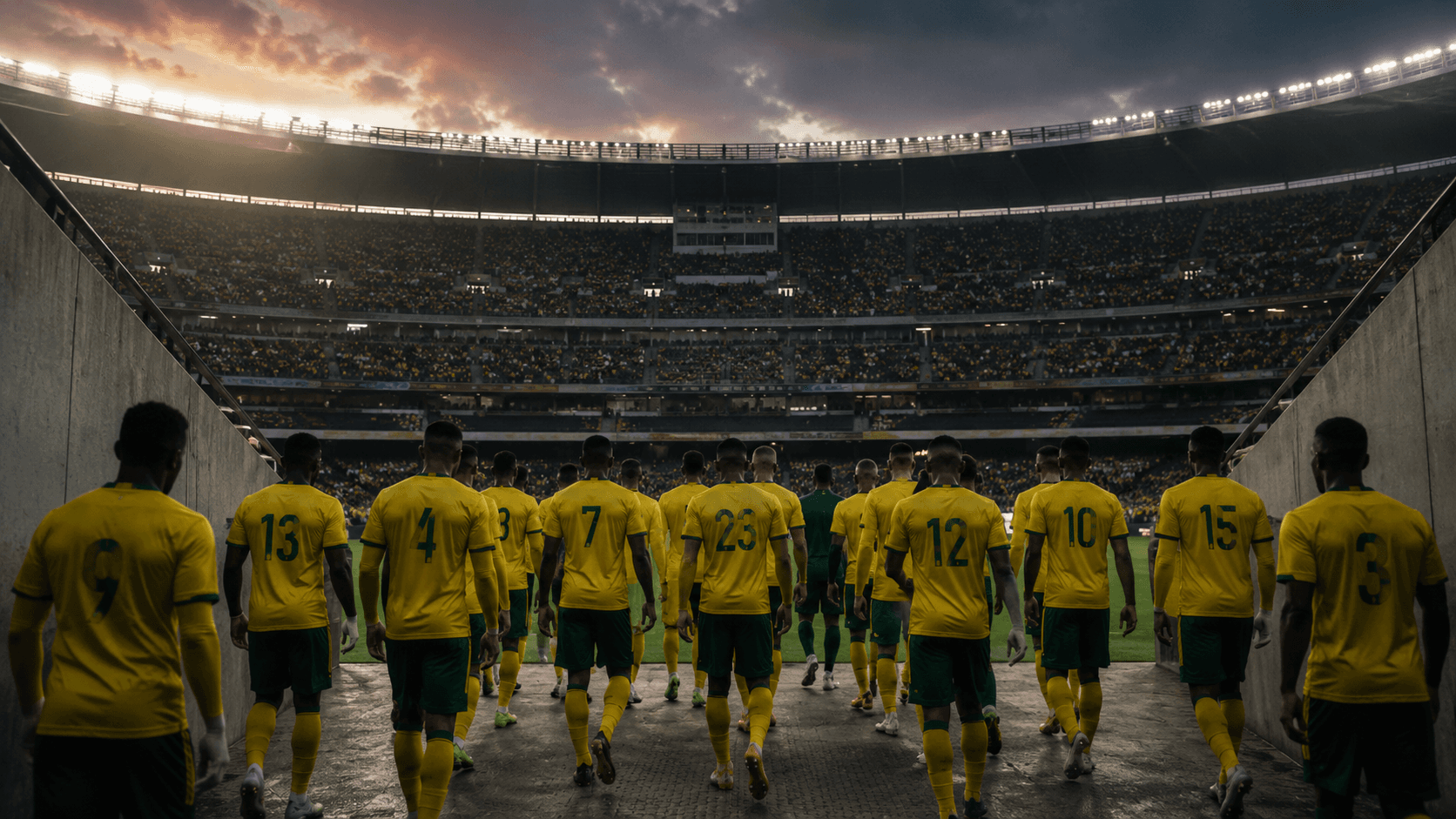
The last time South Africa played at a World Cup, the world came to Johannesburg. Siphiwe Tshabalala's left-footed strike in the 55th minute of the opening match at Soccer City — the one that sent the vuvuzelas into a register only dogs could hear — remains the defining image of a tournament that South Africa organized and played in but could not advance through. They drew with Mexico, beat France, lost to Uruguay, went home on goal difference.
Then the tournament moved on without them. Three World Cups passed. Sixteen years disappeared.
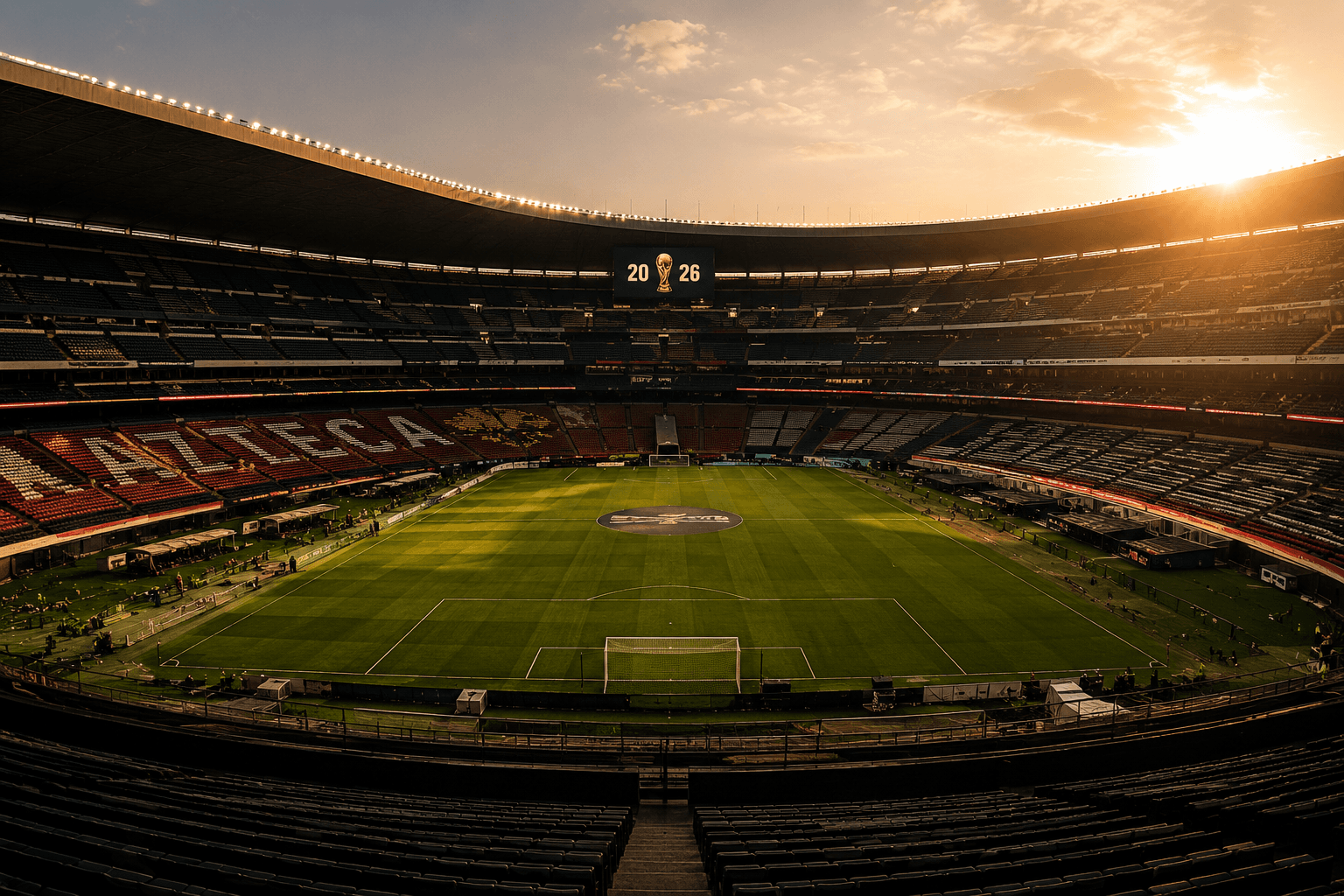
On June 11 at the Estadio Azteca in Mexico City, Bafana Bafana open the 2026 World Cup.
Sixteen years later, the first opponent is Mexico again.
Different stadium. Different country. Different generation.
The same question.
Williams
Who Broos Chose
Hugo Broos announced his 26-man squad on Wednesday evening at the Sefako Makgatho Presidential Guest House in Pretoria. The ceremony was attended by President Cyril Ramaphosa and SAFA president Dr Danny Jordaan — a level of presidential gravity reserved for the moments when a country understands the weight of what it is about to attempt.
The 74-year-old Belgian coach has been in charge since May 2021. His philosophy has been consistent throughout: loyalty to the players who qualified the team, continuity over experimentation, trust built over time. Above all, trust in younger players. Broos has said it plainly: "An older player is difficult to change. A younger player, you can change. That process gave us all our results of the past."
The squad reflects that. Most of the core that navigated CAF qualifying and led South Africa to third place at AFCON 2023 is here. The 2025 AFCON was more difficult — South Africa lost in the last 16 to Cameroon — but Broos's position was never seriously challenged. Five years in, his tenure is a long one by South African standards.
Nineteen of the twenty-six play at home. Most World Cup squads are built in Europe's major leagues. South Africa's was built in Pretoria, Johannesburg, Polokwane and Bloemfontein. Mamelodi Sundowns and Orlando Pirates together provide sixteen of the twenty-six — eight each — two clubs from the same country dominating the squad of a nation competing on the world's biggest stage.
The Captain and the Engine
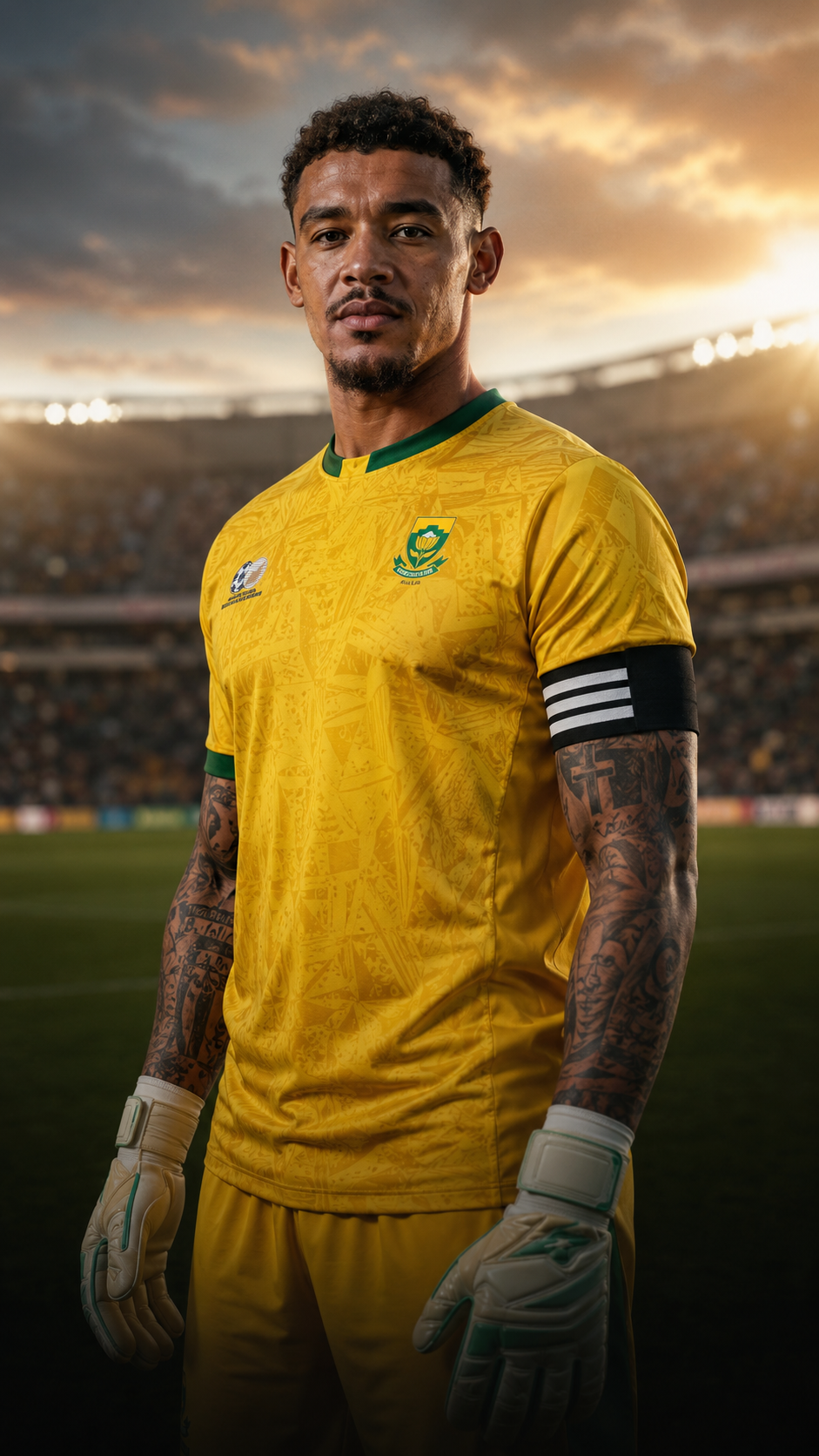
Ronwen Williams is 34, plays for Mamelodi Sundowns, and has 62 caps — the most experienced player in the squad by some distance. He is the captain and the goalkeeper.
Williams made his senior international debut against Brazil in March 2014 — a 5-0 defeat. He was deputising for the injured Itumeleng Khune and was, by his own account, unperturbed: "Losing 5-0 is a lot, but we were playing against the best team in the world. I'm not shaken."
Twelve years later he is still standing. Goalkeepers age differently. Nations do too. South Africa have spent most of those twelve years trying to get back here.
Teboho Mokoena is the engine — Mamelodi Sundowns' central midfielder, one of the better creators in the domestic league, the player who makes Bafana Bafana function in possession. During qualifying he was at the center of a scandal that almost cost South Africa their place in the tournament: he unwittingly played in a 2-0 win over Lesotho while suspended. FIFA changed the result. It did not change the destination.
Mokoena is still here.
Lyle Foster and the European Outlier
Lyle Foster of Burnley is the squad's only Premier League player, and the forward the opposition will plan for most carefully. He has scored ten goals in 26 matches for South Africa. His physicality, his hold-up play, and his ability to bring others into the game make him the reference point for everything Bafana Bafana want to do going forward.
Around him are youth and experience. Around him is possibility. The responsibility remains his.
Relebohile Mofokeng, 21, has been one of the season's most exciting younger players at Orlando Pirates. The 36-year-old Themba Zwane provides the guile and experience that Broos considers essential to holding a lead. Both make the squad. Neither changes the calculation the way Foster does.
The Two Who Weren't There Before
Broos included two uncapped players: Olwethu Makhanya, 22, who plays center back for Philadelphia Union in MLS, and Bradley Cross, 25, a left back for Kaizer Chiefs who had been out of the Bafana fold for two and a half years before this call-up.
Cross's inclusion has a specific explanation. Aubrey Modiba, the first-choice left back, picked up a fitness concern in Mamelodi Sundowns' CAF Champions League final against AS FAR. Broos was direct about it: "We still have a little problem with Modiba. If there is a problem, we only have Kabini on that side — and that was also a reason why we took Bradley with." His value extends beyond left-back cover. Cross began his career as a center back and can fill that role if needed, making him a genuine utility option across the defensive line.
Brandon Petersen's omission, meanwhile, was explained in terms that had nothing to do with his form. The Kaizer Chiefs goalkeeper had one of the best domestic seasons of any goalkeeper in the Premiership. Broos acknowledged the cut was motivated by Petersen's lack of integration with the Bafana squad rather than his football quality.
One of the best goalkeepers of the season, not on the plane, for reasons that have nothing to do with his goalkeeping.
The Group
South Africa have appeared at three World Cups. They have never reached the knockout rounds. No South African player has ever experienced a World Cup round of 16. This squad is trying to become the first.
Mexico on June 11 at the Azteca. Czechia on June 18 in Atlanta. South Korea on June 24 in Monterrey.
The task is simple to describe and difficult to achieve: do what Tshabalala's generation could not. Reach the second round.
Mexico at the Azteca in the tournament opener is about as difficult a first game as any team in the tournament faces. Czechia and South Korea are capable sides. The group is not a gift. It was never going to be.
What Sixteen Years Means
South Africa were absent from the 2014, 2018, and 2022 World Cups. Three consecutive non-qualifications. An entire generation of South African footballers who grew up watching the world's tournament from the outside. Broos arrived in 2021 specifically to fix that — a coach brought in with a single mandate, who delivered it, and who now stands at the edge of the thing he was hired for.
The squad he named is not the most technically gifted South Africa has ever assembled. It is, by several measures, the most cohesive. The domestic core has played together through qualification. Williams knows his defenders. Mokoena knows his midfielders.
South Africa spent sixteen years watching the World Cup from somewhere else. Now they walk into the Azteca carrying nineteen domestic players, a goalkeeper who refused to be shaken, and a coach who spent five years building a team that trusts itself.
Mexico awaits.
Sixteen years ago, Tshabalala scored the goal every South African supporter can still picture. Sixteen years is a long time to be away. It is an even longer time to wait for a second chance.
South Africa World Cup 2026 Squad
Goalkeepers: Ronwen Williams (Mamelodi Sundowns, captain), Ricardo Goss (Siwelele FC), Sipho Chaine (Orlando Pirates)
Defenders: Khuliso Mudau (Mamelodi Sundowns), Nkosinathi Sibisi (Orlando Pirates), Ime Okon (Hannover 96), Khulumani Ndamane (Mamelodi Sundowns), Aubrey Modiba (Mamelodi Sundowns), Samukele Kabini (Molde FK), Thabang Matuludi (Polokwane City), Olwethu Makhanya (Philadelphia Union), Kamogelo Sebelebele (Orlando Pirates), Bradley Cross (Kaizer Chiefs), Mbekezeli Mbokazi (Chicago Fire)
Midfielders: Teboho Mokoena (Mamelodi Sundowns), Thalente Mbatha (Orlando Pirates), Sphephelo Sithole (CD Tondela), Jayden Adams (Mamelodi Sundowns)
Forwards: Oswin Appollis (Orlando Pirates), Iqraam Rayners (Mamelodi Sundowns), Tshepang Moremi (Orlando Pirates), Relebohile Mofokeng (Orlando Pirates), Evidence Makgopa (Orlando Pirates), Themba Zwane (Mamelodi Sundowns), Lyle Foster (Burnley), Thapelo Maseko (AEL Limassol)
Coach: Hugo Broos | Group A: Mexico · Czechia · South Korea
Correction, October 5, 2026: this piece first put Siphiwe Tshabalala's 2010 goal in the fifth minute (it came in the 55th) and said the squad was built in Durban and Cape Town (no squad member plays for a club from either; they come from Pretoria, Johannesburg, Polokwane and Bloemfontein).