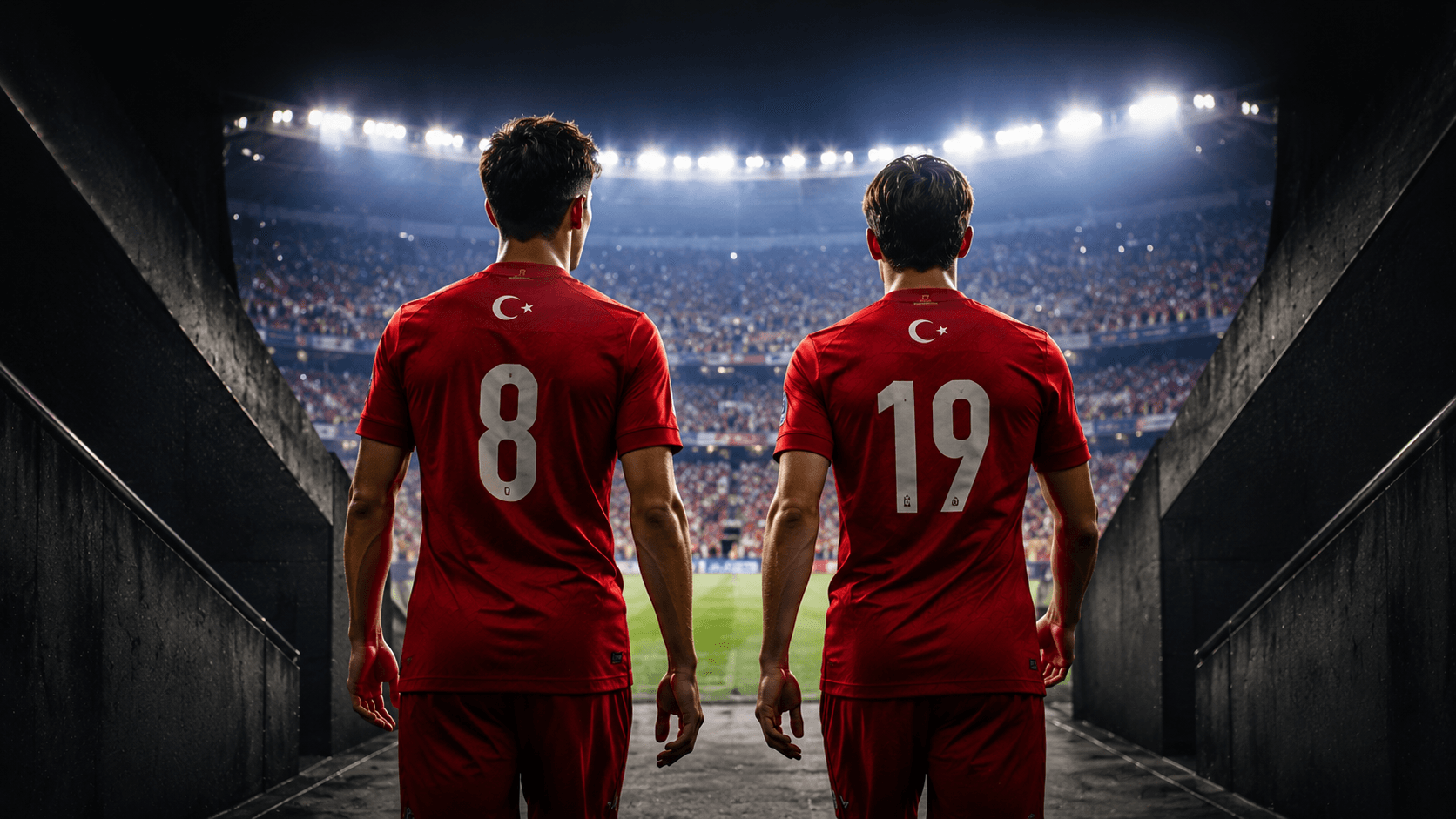
The last time Türkiye played at a World Cup was 2002. They finished third. Şükür scored the fastest goal in World Cup history eleven seconds into the third-place playoff against South Korea. İlhan Mansız, Hasan Şaş, Rüştü Reçber — a generation of players whose names are still referenced when Turkish football people talk about what the sport can look like when everything aligns.
Arda Güler was born in 2005. Kenan Yıldız was born in 2005. They are the faces of this World Cup squad. Neither of them was alive the last time their country played in one.
Twenty-four years is a long time in football. The 2002 generation is retired, coaching, or gone. The clubs that produced them no longer dominate the landscape in the same way. The system that built that third-place team has been rebuilt around different principles, different academies, different pathways. Vincenzo Montella, the Italian manager who took charge in 2023, is the architect of what comes next.
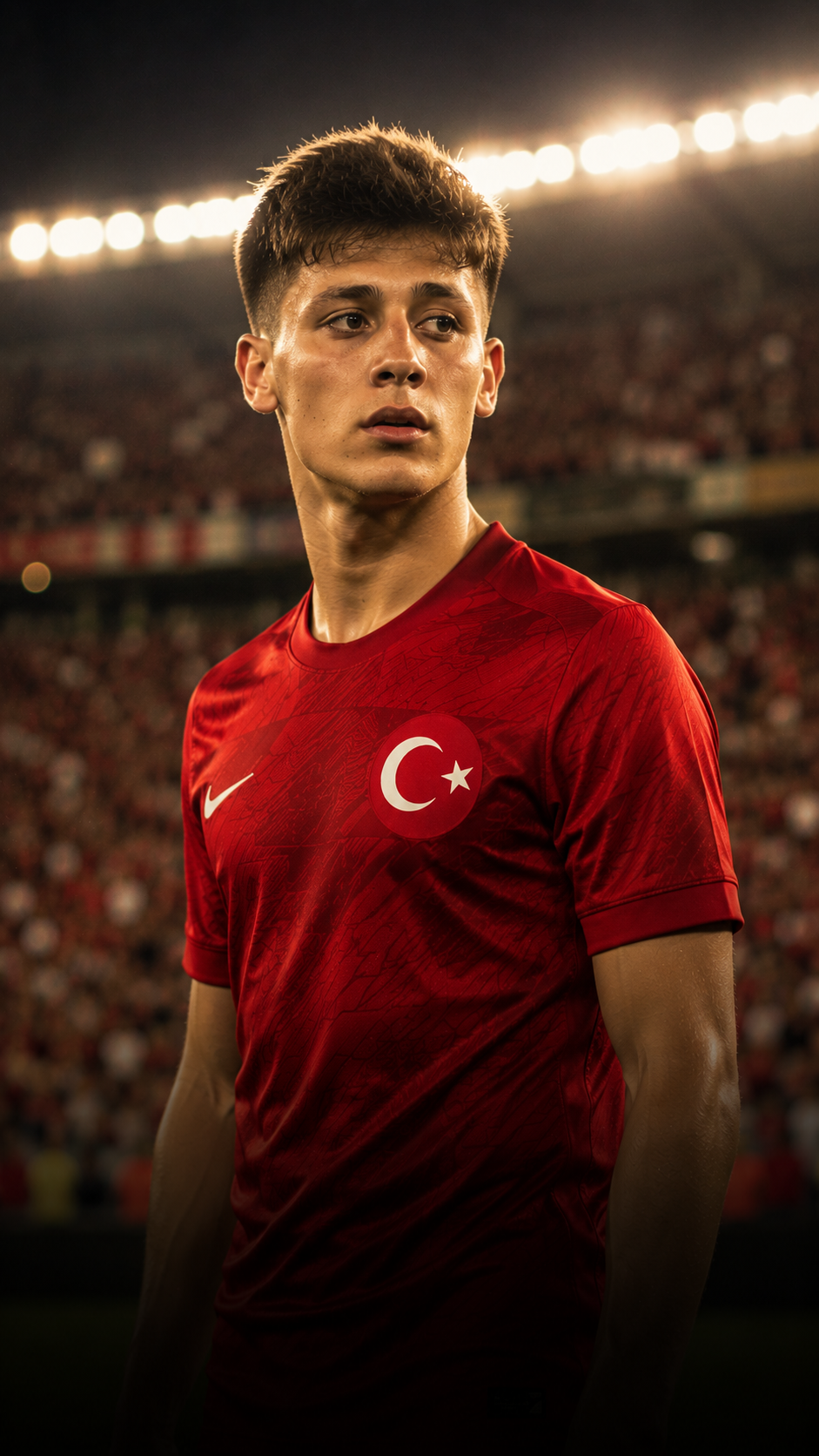
Güler
The Two
Arda Güler is 21 and plays for Real Madrid. He was one of the most discussed players at Euro 2024 — technically extraordinary, capable of moments that belong to a different category of difficulty, the kind of player who makes difficult passes look inevitable and difficult shots look necessary. He spent two seasons under Carlo Ancelotti, which means he has been educated in how to use talent within a collective. He is not a player built only on individual brilliance. He understands what the game looks like from the inside.
Kenan Yıldız is 21 and plays for Juventus. Born in Regensburg to a Turkish father and raised in the Bayern Munich academy, he chose the red shirt. His ability to carry the ball under pressure and find solutions in tight spaces gives Türkiye something different from their wide options. He and Güler are not the same player. They complement each other in ways that give Montella flexibility.
Neither was born in 2002. Both are playing at their first World Cup. That is either the story of a generation finally arriving or the story of a team that asked too much of players who are very good but not yet great. This tournament will answer the question.
The Captain
Hakan Çalhanoğlu is 32, has reached two Champions League finals with Inter Milan, and has won Serie A there. He is the player who connects the new generation to the standard they are supposed to meet. As the deep-lying midfielder — the regista behind the attackers, the one who receives under pressure and finds the passes that others cannot — he is the reason the transition from one generation to another has been managed without a collapse.
He captains this squad not because of age, though age is part of it. He captains it because he is the player the twenty-year-olds look at when they want to understand what it looks like to perform at this level every week. Çalhanoğlu at 32 is close to the end of his international career. This is his first World Cup, and almost certainly his last. That makes him a different kind of leader — someone who knows the clock is running.
The Group
Türkiye play Australia on June 13 in Vancouver, Paraguay on June 19 in San Francisco, and the United States on June 25 in Los Angeles.
The USA game is the one. The host nation, in front of their own crowd, at SoFi Stadium — the loudest possible environment. A win for Türkiye there would announce something. A loss there, in a group where both Australia and Paraguay are reachable, would complicate everything.
Qualifying from this group is the minimum. Reaching the round of sixteen for the first time since 2002 is what would begin to satisfy the expectation. What happens after that is genuinely unknown — which is, in its way, the most interesting thing about this squad.
Twenty-Four Years
The gap between 2002 and 2026 contains multiple failed qualification campaigns, a period of European competition that raised expectations without delivering on them, and finally the construction of something that looks like a foundation rather than a collection of individuals.
Güler and Yıldız do not remember 2002. They cannot carry the weight of a generation they never witnessed. What they carry is only the weight of the present — which is its own burden and also its own freedom. They are not trying to equal something. They are trying to begin something.
Türkiye have been waiting twenty-four years for the stage. The stage is here. The players are young enough not to be afraid of it.
Türkiye World Cup 2026 Squad
Goalkeepers: Mert Günok (Fenerbahçe), Altay Bayındır (Manchester United), Uğurcan Çakır (Galatasaray)
Defenders: Zeki Çelik (Roma), Merih Demiral (Al-Ahli), Çağlar Söyüncü (Fenerbahçe), Eren Elmalı (Galatasaray), Abdülkerim Bardakcı (Galatasaray), Ozan Kabak (TSG Hoffenheim), Mert Müldür (Fenerbahçe), Ferdi Kadıoğlu (Brighton & Hove Albion), Samet Akaydin (Çaykur Rizespor)
Midfielders: Salih Özcan (Borussia Dortmund), Orkun Kökçü (Beşiktaş), Hakan Çalhanoğlu (Inter Milan, captain), İsmail Yüksek (Fenerbahçe), Kaan Ayhan (Galatasaray)
Forwards: Kerem Aktürkoğlu (Fenerbahçe), Arda Güler (Real Madrid), Deniz Gül (Porto), Kenan Yıldız (Juventus), İrfan Can Kahveci (Kasımpaşa), Yunus Akgün (Galatasaray), Barış Alper Yılmaz (Galatasaray), Oğuz Aydın (Fenerbahçe), Can Uzun (Eintracht Frankfurt)
Coach: Vincenzo Montella | Group D: United States · Paraguay · Australia
Fixtures: Jun 13 v Australia — Vancouver · Jun 19 v Paraguay — Santa Clara · Jun 25 v United States — Los Angeles
Correction, October 5, 2026: this piece first said Vincenzo Montella took charge in 2022 (it was 2023), that Hakan Çalhanoğlu won the Champions League (Inter lost the 2023 and 2025 finals), that his last World Cup might already be behind him (this is his first), that Kenan Yıldız qualifies through a grandfather (it is his father), and gave all three group dates a day late (June 13, 19 and 25).