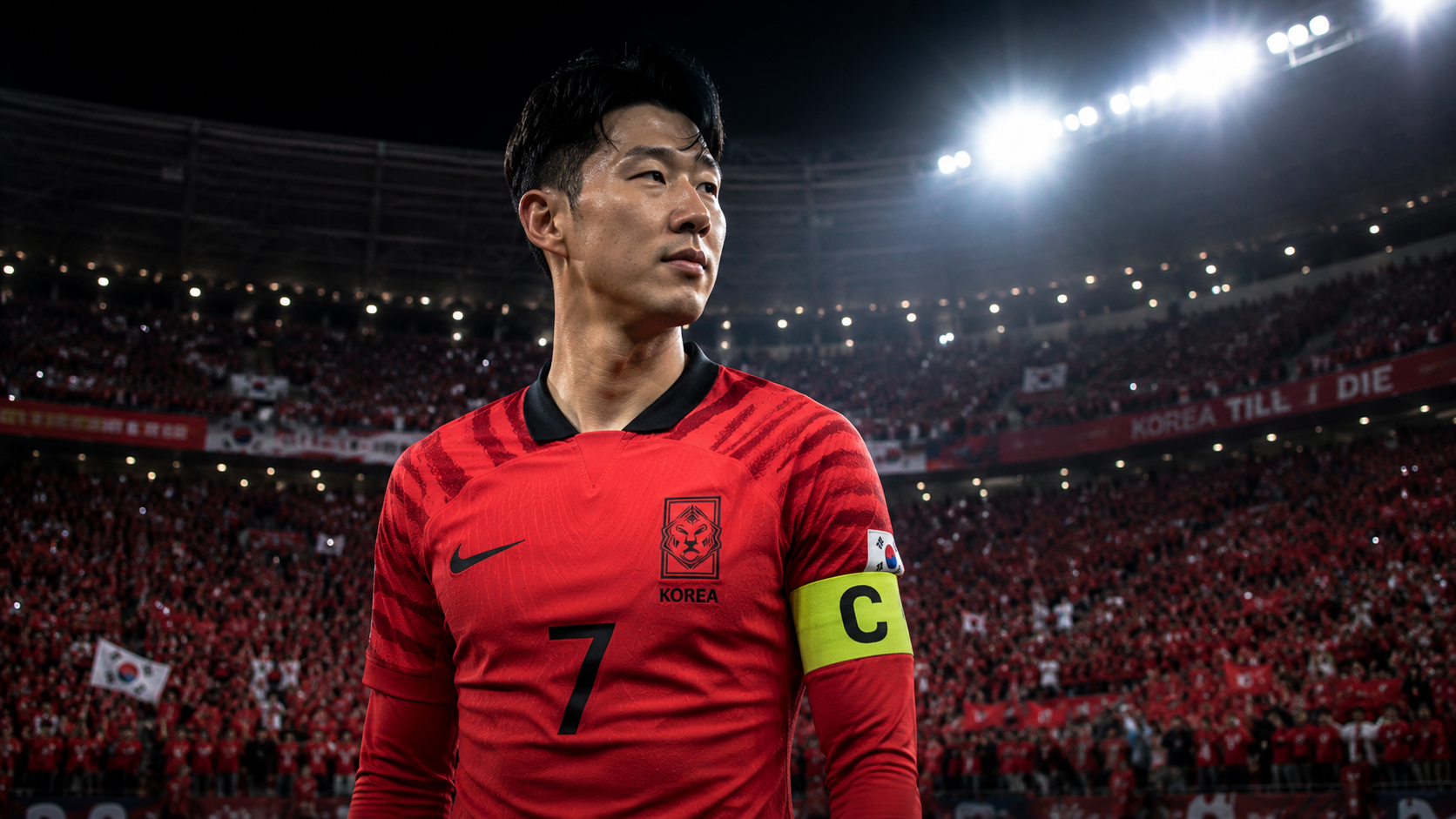
Son Heung-min left Tottenham Hotspur last summer after a decade in north London and joined LAFC in Major League Soccer, settling in Los Angeles, trading the Premier League for a league that moves slower, forgives more, and asks less of the body. It was, by most interpretations, the beginning of the end. And yet here he is, captain of South Korea for a fourth World Cup, leading his country into a tournament played across the continent he now calls home.
This is South Korea's 11th consecutive World Cup, a streak stretching back to 1986 that no other Asian nation can match. The high-water mark came in 2002, when they co-hosted the tournament and reached the semifinals — the best performance by any Asian team in World Cup history. The coach who has selected this squad, Hong Myung-bo, was the captain of that 2002 side. He also managed South Korea at the 2014 World Cup in Brazil, where they collected a single point and went home. The personal stakes are not small.
Since 2002, the trajectory has been uneven: group-stage exits in 2014 and 2018 (though they beat Germany on the way out that year), then a round-of-16 loss to Brazil in 2022 after beating Portugal in their final group game. Recent form has been poor — a 4-0 loss to Ivory Coast and a 1-0 defeat to Austria in March — and Hong was measured about expectations. "Our primary goal is to reach the round of 32," he said, referring to the first knockout round in the expanded 48-team format. "We do not know what will happen after that."
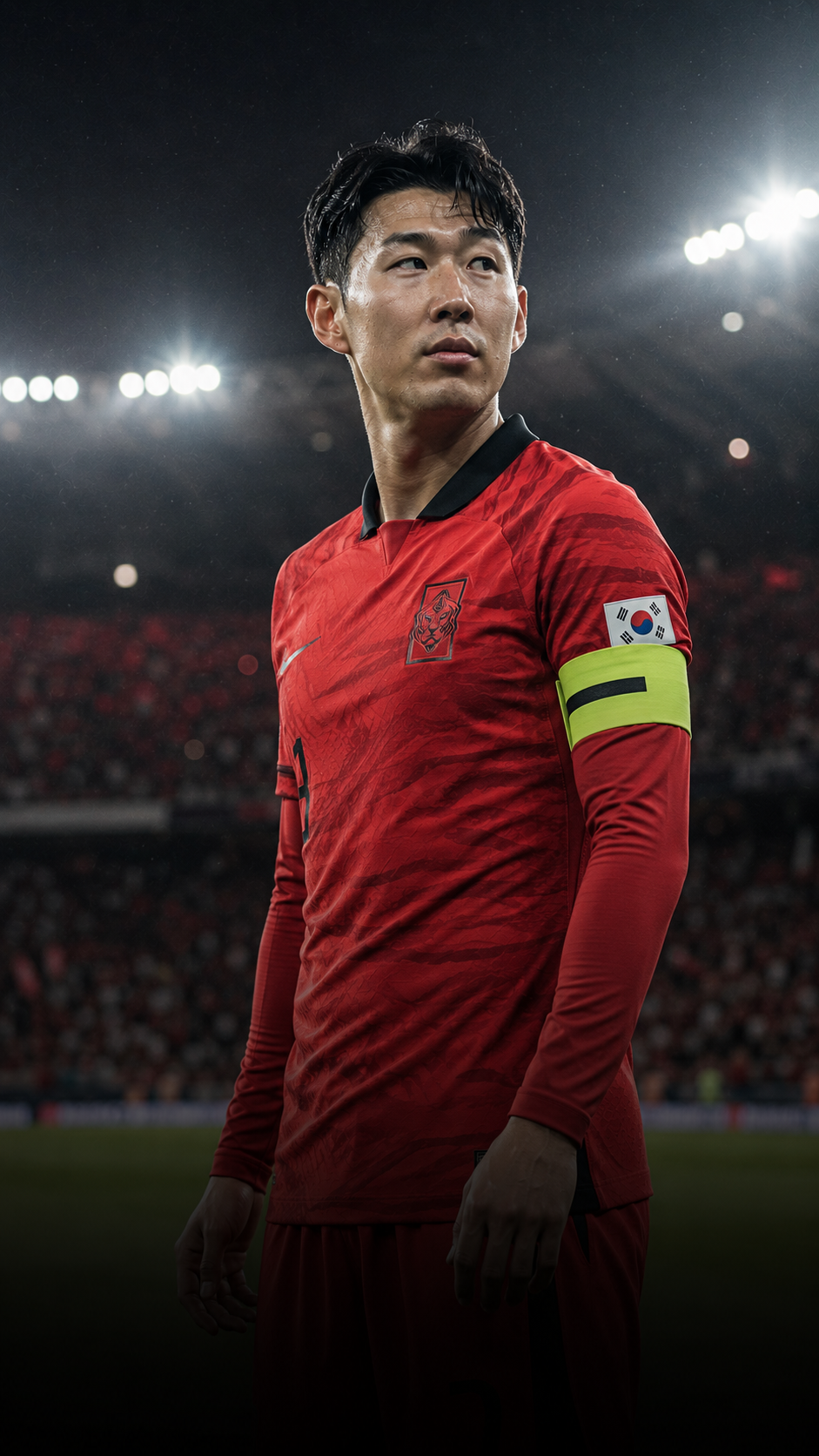
Heung-min
Everything flows through Son. At 33, playing in MLS, he is further from his peak than at any point in his international career, but the gap between Son at 80% and most attackers in the tournament at 100% remains significant. His movement, his finishing with either foot, and his ability to produce a decisive moment from nothing are qualities that do not depend on the league he plays in. This is his fourth World Cup. It will almost certainly be his last. South Korea's hopes of progressing from Group A rest substantially on whether Son can find the form that made him one of the Premier League's most dangerous forwards for the better part of a decade.
Kim Min-jae of Bayern Munich is the defensive anchor and the most important player after Son. The center-back's first two seasons in Munich have established him as one of the best defenders in the Bundesliga, and his ability to play out from the back gives South Korea a dimension that most Asian sides lack. Lee Kang-in of PSG brings the creativity — at 25 the most technically gifted midfielder in the squad and the player most likely to unlock a packed defense. Hwang In-beom of Feyenoord is the engine, though an ankle injury has cast doubt over his fitness. Hwang Hee-chan of Wolves adds pace and directness in the final third. Yang Hyun-jun of Celtic provides width.
Three forwards is thin. Son, Oh Hyeon-gyu of Beşiktaş, and Cho Gue-sung of Midtjylland are the only designated strikers in the squad. If Son is unavailable or ineffective, the alternatives lack his quality. The attacking depth is the most obvious vulnerability in a squad that otherwise looks well-constructed. The defense, by contrast, has numbers and variety — ten defenders is a squad-building choice that tells you how Hong intends to play: organized, compact, hard to beat, relying on Son and the midfield creators to produce moments of individual quality.
Jens Castrop of Borussia Mönchengladbach, born in Germany to a Korean father, makes his first major tournament squad at 23 and represents the next generation of Korean internationals emerging from the European diaspora.
The squad
Goalkeepers: Jo Hyeon-woo (Ulsan), Kim Seung-gyu, Song Bum-keun
Defenders: Kim Min-jae (Bayern Munich), Cho Yu-min (Sharjah), Lee Han-beom (Midtjylland), Kim Tae-hyeon (Kashima Antlers), Park Jin-seob (Zhejiang), Lee Gi-hyuk (Gangwon), Lee Tae-seok (Austria Wien), Seol Young-woo (Red Star Belgrade), Jens Castrop (Borussia Mönchengladbach), Kim Moon-hwan (Daejeon)
Midfielders: Yang Hyun-jun (Celtic), Paik Seung-ho (Birmingham City), Hwang In-beom (Feyenoord), Kim Jin-gyu (Jeonbuk), Bae Jun-ho (Stoke City), Eom Ji-sung (Swansea City), Hwang Hee-chan (Wolverhampton Wanderers), Lee Dong-gyeong (Ulsan), Lee Jae-sung (Mainz), Lee Kang-in (PSG)
Forwards: Oh Hyeon-gyu (Beşiktaş), Son Heung-min (LAFC), Cho Gue-sung (Midtjylland)
South Korea are in Group A and will play all three group games in Mexico — Czechia on June 11 (the opening day of the tournament), then co-hosts Mexico on June 18, then South Africa on June 24. It is a group without an obvious favorite, which means it is a group where South Korea's tournament experience — 11 consecutive World Cups, a semifinal run, a record of performing when it matters — could be the difference.
Son has played in three World Cups and scored in two of them. He has carried this team through qualification campaigns, through tournaments, through the transition from one generation to the next. If this is his final act on the international stage, the setting is appropriate: North America, where he now lives, where the World Cup will be decided, where the captain of South Korea will try one more time to take his country beyond the first knockout round.
View South Korea's full team profile →