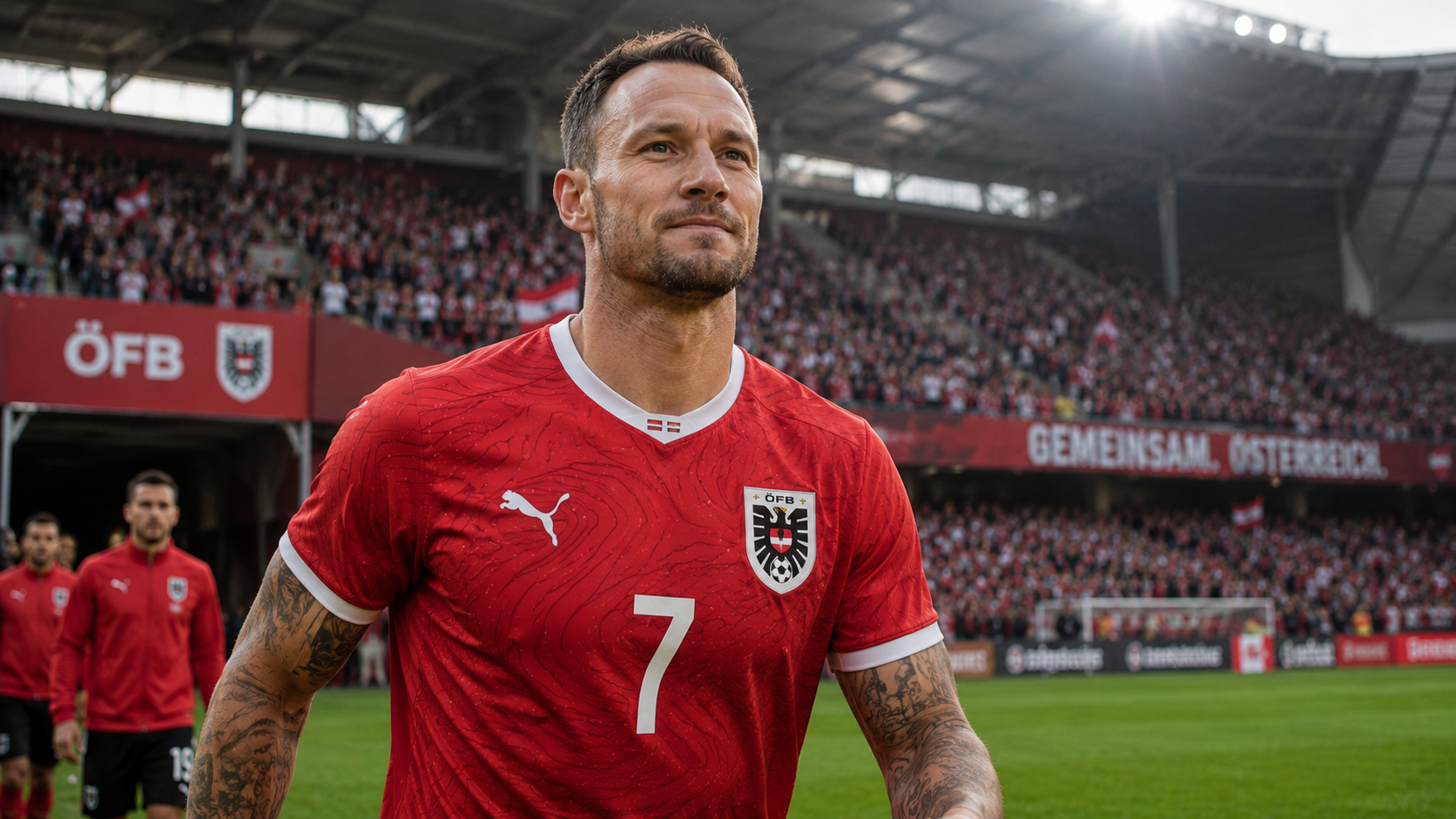
Austria have not played at a World Cup since 1998 in France. Twenty-eight years is a long time to be absent. Long enough that no player in this squad has experienced it. Long enough that the country's football identity, for a generation, has been defined by what it could not do rather than what it could. The Euro 2024 campaign — competitive, organized, ultimately quarter-final-bound — suggested something had shifted. Qualification for 2026, topping a group that included Romania and Bosnia, confirmed it.
Ralf Rangnick, the German coach who has rebuilt Austrian football from the ground up since taking over in 2022, has named his 26. It is a squad that reflects his philosophy in every position: pressing, intensity, structure, and the willingness to select on conviction rather than reputation. The two most striking names in the squad are players who, until this year, represented England and Germany.
Carney Chukwuemeka, 22, was born in Vienna to Nigerian parents, raised in Northampton, and came through the academies at Aston Villa and Chelsea before joining Borussia Dortmund. He represented England at youth level. In March 2026, FIFA approved his switch to Austria, and he debuted with a goal in a 5-1 win over Ghana. Paul Wanner, 20, came through Bayern Munich's academy and represented Germany's youth teams before committing to Austria, the country of his birth, earlier this year. He now plays for PSV Eindhoven. Rangnick personally convinced both to switch. The implications for Austria's future extend well beyond this tournament.
Arnautovic
The squad
Goalkeepers: Alexander Schlager (RB Salzburg), Patrick Pentz (Brøndby), Florian Wiegele (Viktoria Plzeň)
Defenders: David Alaba (Real Madrid), Kevin Danso (Tottenham), Stefan Posch (Mainz), Philipp Lienhart (Freiburg), Phillipp Mwene (Mainz), Alexander Prass (Hoffenheim), Marco Friedl (Werder Bremen), Michael Svoboda (Venezia), David Affengruber (Elche)
Midfielders: Marcel Sabitzer (Borussia Dortmund), Xaver Schlager (RB Leipzig), Nicolas Seiwald (RB Leipzig), Christoph Baumgartner (RB Leipzig), Konrad Laimer (Bayern Munich), Florian Grillitsch (Braga), Carney Chukwuemeka (Borussia Dortmund), Romano Schmid (Werder Bremen), Alessandro Schöpf (Wolfsberger AC), Paul Wanner (PSV Eindhoven), Patrick Wimmer (Wolfsburg)
Forwards: Marko Arnautović (Red Star Belgrade), Michael Gregoritsch (Augsburg), Saša Kalajdžić (LASK)
What it tells you
David Alaba captains the side. He has won the Champions League four times — twice with Bayern Munich, twice with Real Madrid — and is the most decorated Austrian footballer of his generation by a considerable distance. At 34, he brings the authority of someone who has played in the biggest games in the world and can transmit that experience to a dressing room that has never been to a World Cup.
This is where Austria's squad is genuinely strong — and where Rangnick's identity is most visible. No European side pressed with more intensity during qualifying: Austria registered the continent's highest number of tackles, second highest recoveries, and the lowest Passes Per Defensive Action, edging even England and Germany. Three RB Leipzig players — Xaver Schlager, Seiwald, and Baumgartner — form the core of a midfield built on pressing triggers and positional discipline. Sabitzer adds experience and goal threat. Laimer of Bayern Munich is the Austrian Footballer of the Year.
Eleven midfielders in a 26-man squad is an unusual allocation. It tells you exactly how Rangnick intends to play: dominate the middle of the pitch, press relentlessly, and trust the system to create chances without relying on elite individual quality up front.
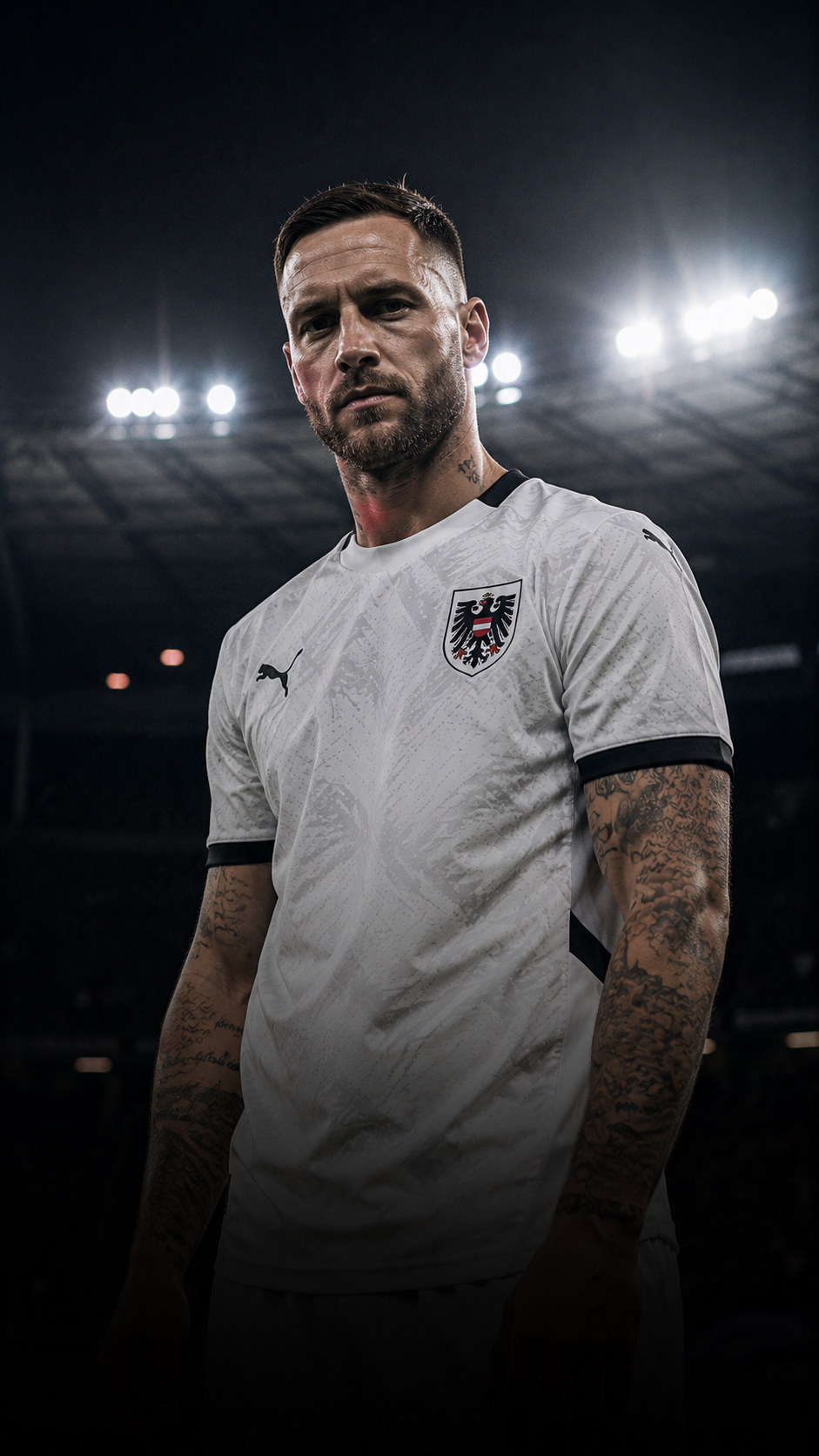
The forward line is thin by comparison. Arnautović, 37, of Red Star Belgrade, is the country's most-capped player with 132 appearances and all-time leading scorer with 47 goals. He is here for experience and leadership, and for his ability to hold the ball up in a system that prioritizes late-arriving midfield runners. If he is unavailable, Austria's options narrow quickly. It is the one area where the squad's depth does not match its midfield riches.
Rangnick turned down Manchester United to build this. He now has the squad, the system, and the belief. "The minimum objective," he said, "is advancing from the group stage." For a country absent since 1998, that is not a modest target. It is a statement of intent.
Austria are in Group J alongside defending champions Argentina, Algeria, and debutants Jordan. They open against Jordan on June 16 at Levi's Stadium in San Francisco, face Argentina on June 22 at AT&T Stadium in Dallas, and conclude against Algeria on June 27 at Arrowhead Stadium in Kansas City.
View Austria's full team profile →