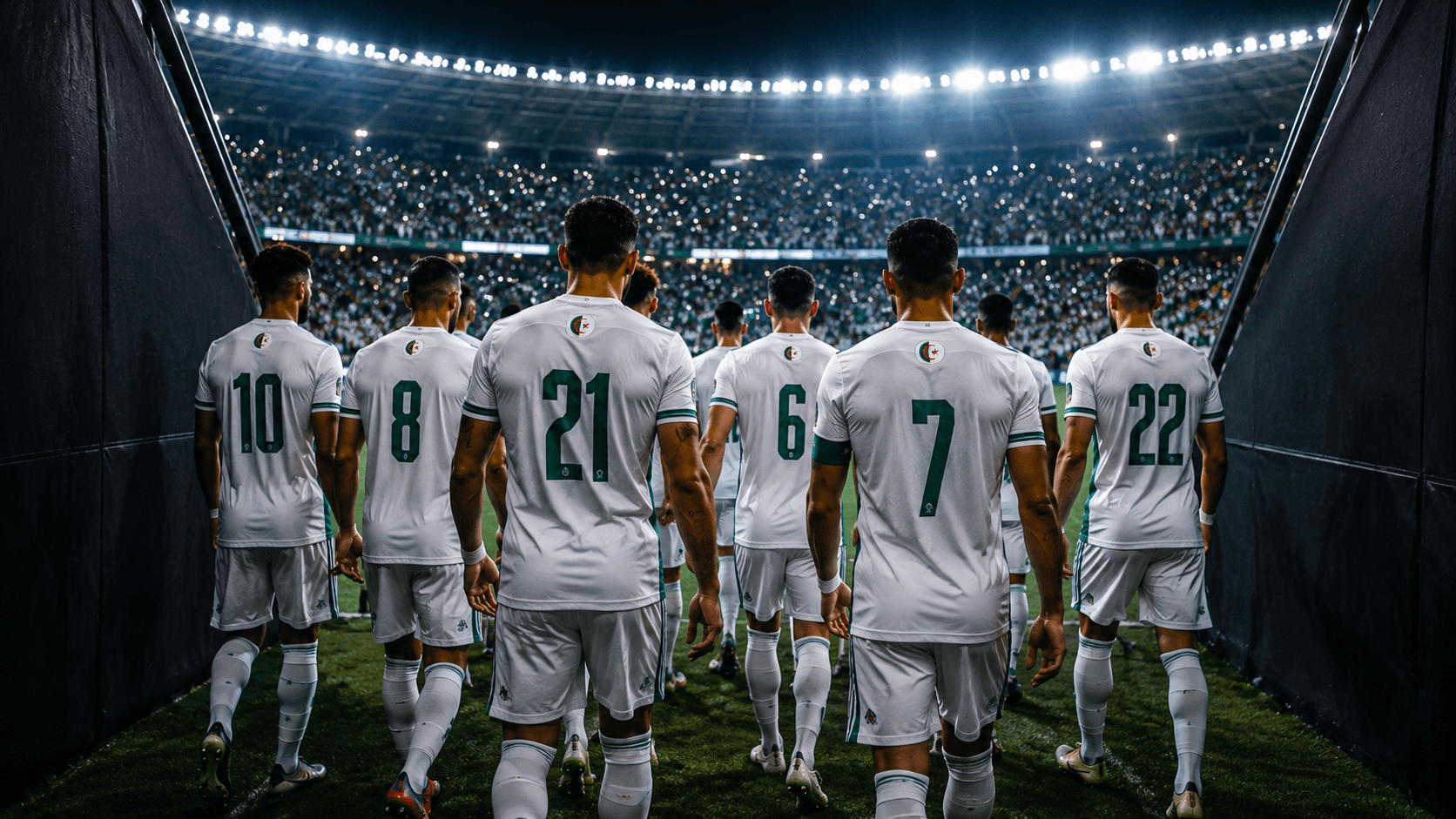
The last time Algeria played at a World Cup, they pushed Germany to extra time in the round of sixteen in Porto Alegre. It was 2014, and it was goalless after ninety minutes. André Schürrle scored two minutes into extra time, Mesut Özil added a second at the end, and Abdelmoumene Djabou's reply came too late: the eventual world champions won 2-1. The whole country watched. Forty million people. A standing ovation at the final whistle.
Then the tournament moved on. Algeria missed 2018. They missed 2022. Twelve years passed.
This is Algeria's fifth World Cup. It is their first since that night in Porto Alegre. The absence created pressure that fell on the players, the coaches, and the federation in roughly equal measure. Petković, the Sarajevo-born coach who took Switzerland to the quarterfinals at Euro 2020, was brought in to fix it. He did.
The squad he named on Sunday has one task above all others: stop Algeria being a country that talks about 2014 and become one that has something more recent to discuss.
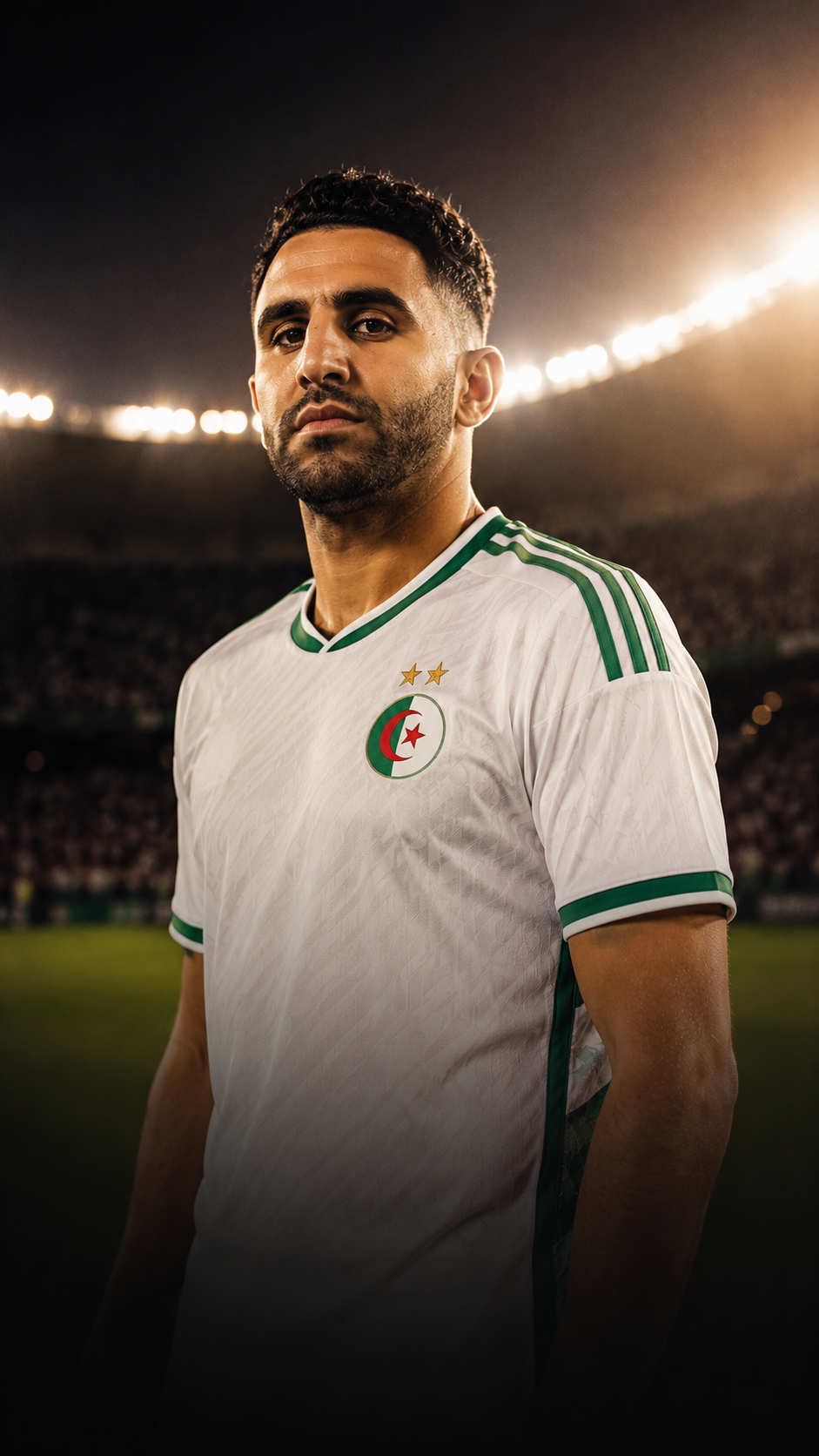
Mahrez
Mahrez: The Final Chapter
For a decade, Algeria's biggest moments have almost always involved Riyad Mahrez. The free kick against Nigeria in the 2019 AFCON semifinal. The tournament victory that followed. The countless qualifying campaigns held together by individual brilliance when the collective wasn't enough.
This World Cup feels less like the middle of his international career than the final chapter of it.
Mahrez is 35, at Al-Ahli after his years at Manchester City, with 113 caps and 38 international goals. His record for Algeria is better than his record for anyone else — which tells you something about how much this shirt has meant to him and how much he has meant to it. He remains the player Algeria organizes around, the one who creates something from nothing when nothing is available. He was part of the generation that spent twelve years answering questions about 2014. This squad arrives with a chance to stop answering them.
Maza: The Next Question
Ibrahim Maza is 20 years old and plays for Bayer Leverkusen.
He represents something unusual in this Algeria selection: a player who is better than his current caps suggest, who plays for one of the better clubs in European football, and who arrives at a World Cup not as a prospect but as someone Petković genuinely believes can impact the tournament. He is the product of a football ecosystem that barely existed for Algeria's previous World Cup generation: elite academy development, elite club minutes, elite tactical education before the age of twenty. The kind of player the previous generation of Algerian football rarely had access to at this stage.
Maza is the post-Mahrez generation in one player. Not yet the leader, not yet the captain, but the reason the next twelve years look different from the last twelve. His inclusion alongside Farès Chaïbi of Eintracht Frankfurt gives this midfield a generational texture it has rarely had. The experience is Bentaleb and Aouar; the youth is Maza and Chaïbi. If Petković makes those two axes function simultaneously, Algeria have a depth their predecessors often lacked.
The Omission That Will Be Debated
Ismaël Bennacer is not here. The Milan midfielder, on loan at Dinamo Zagreb this season and one of the better defensive midfielders in Serie A before that, was left out. In his place: Nabil Bentaleb, 31, back from a cardiac arrest in 2024 and a regular at Lille this season.
Petković's most consequential decision says something about how he sees this tournament. He chose Bentaleb — a player from the generation that remembers 2014, who was there — over Bennacer, who many assumed would be central to the next chapter. Whether that judgment survives group-stage scrutiny against Argentina is a question the tournament will answer before the end of June.
Aouar and the Attack
Houssem Aouar is at Al-Ittihad in Saudi Arabia. His career at Lyon and Roma promised more than it delivered at club level. For Algeria, however, he has been consistently excellent — a creative midfielder who operates at a higher level in an Algerian shirt than he typically managed in European club football. Petković is sensible to build around that rather than question it. Aouar and Mahrez have a natural understanding that has been visible for years; when Algeria are functioning well in possession, those two tend to be the reason.
The attack beyond Mahrez is the squad's genuine strength. Amine Gouiri finished as Marseille's leading scorer this season. Mohamed Amoura scored ten goals in African qualifying — more than any other player in Group G by a distance, and the clearest single reason Algeria arrived at this tournament with such clarity. Anis Hadj Moussa at Feyenoord brings pace and physical directness. Rayan Aït-Nouri, who moved from Wolves to Manchester City this season, provides attacking width from left back that the squad has historically struggled to produce.
In goal, Petković turns to Luca Zidane of Granada, fit again after recovering from a double chin-jaw fracture earlier this year. His surname guarantees attention; his performances will determine whether that attention matters.
The Group
Argentina are the world champions. They will likely win Group J. The path for Algeria runs through Jordan — the debutants, nothing to lose — and Austria, who won their qualifying group, organized and difficult to break down.
Algeria's World Cup will be decided by Jordan and Austria.
The tactical caveat is the one that follows Algeria everywhere: they play two games in each match. In qualifying they kept plenty of the ball, yet often looked stagnant in the first half — slow in build-up, vulnerable on the turnover. After the interval they press higher, create more, and force the errors that their attacking talent can convert. A team that wakes up after 45 minutes can win group games. In knockout football, the first half matters equally.
The Return
Twelve years is a long time in international football. Long enough for generations to change, coaches to cycle through, and a single tournament result to harden into a national reference point that later squads are forever measured against.
Algeria's supporters still talk about Porto Alegre. The standing ovation. The 120 minutes. The way the country stopped.
This squad — Mahrez in the final chapter, Maza in the opening one, Petković threading the needle between them — arrives with an opportunity no Algerian squad has had since: the chance to make people stop talking about 2014.
The return is not the achievement. The return is the beginning.
Algeria World Cup 2026 Squad
Goalkeepers: Luca Zidane (Granada), Oussama Benbot (USM Alger), Melvin Mastil (Lausanne)
Defenders: Rafik Belghali (Hellas Verona), Samir Chergui (Paris FC), Rayan Aït-Nouri (Manchester City), Jaouen Hadjam (Young Boys), Aïssa Mandi (Lille), Ramy Bensebaïni (Borussia Dortmund), Zineddine Belaïd (JS Kabylie), Achref Abada (USM Alger), Mohamed Amine Tougaï (ES Tunis)
Midfielders: Nabil Bentaleb (Lille), Hicham Boudaoui (Nice), Houssem Aouar (Al-Ittihad), Farès Chaïbi (Eintracht Frankfurt), Ibrahim Maza (Bayer Leverkusen), Yacine Titraoui (Charleroi), Ramiz Zerrouki (Twente)
Forwards: Riyad Mahrez (Al-Ahli), Anis Hadj Moussa (Feyenoord), Mohamed Amoura (Wolfsburg), Nadhir Benbouali (Győr), Adil Boulbina (Al-Duhail), Amine Gouiri (Marseille), Farès Ghedjemis (Frosinone)
Coach: Vladimir Petković | Group J: Argentina · Austria · Jordan
Fixtures: Jun 16 v Argentina — Kansas City · Jun 22 v Jordan — San Francisco · Jun 27 v Austria — Kansas City
Correction, October 5, 2026: this piece first said Algeria led Germany deep into the second half in 2014 (it was goalless after 90 minutes), that Petković took Switzerland to the 2022 World Cup quarterfinals (it was Euro 2020), that Mahrez's free kick against Nigeria came in the 2019 AFCON final (it was the semifinal), that Bennacer captains Milan (he spent the season on loan at Dinamo Zagreb), that Bentaleb had not played for almost a year (he played all season for Lille), that Aouar played for Betis (he did not), and that Austria came through the playoffs (they won their group).