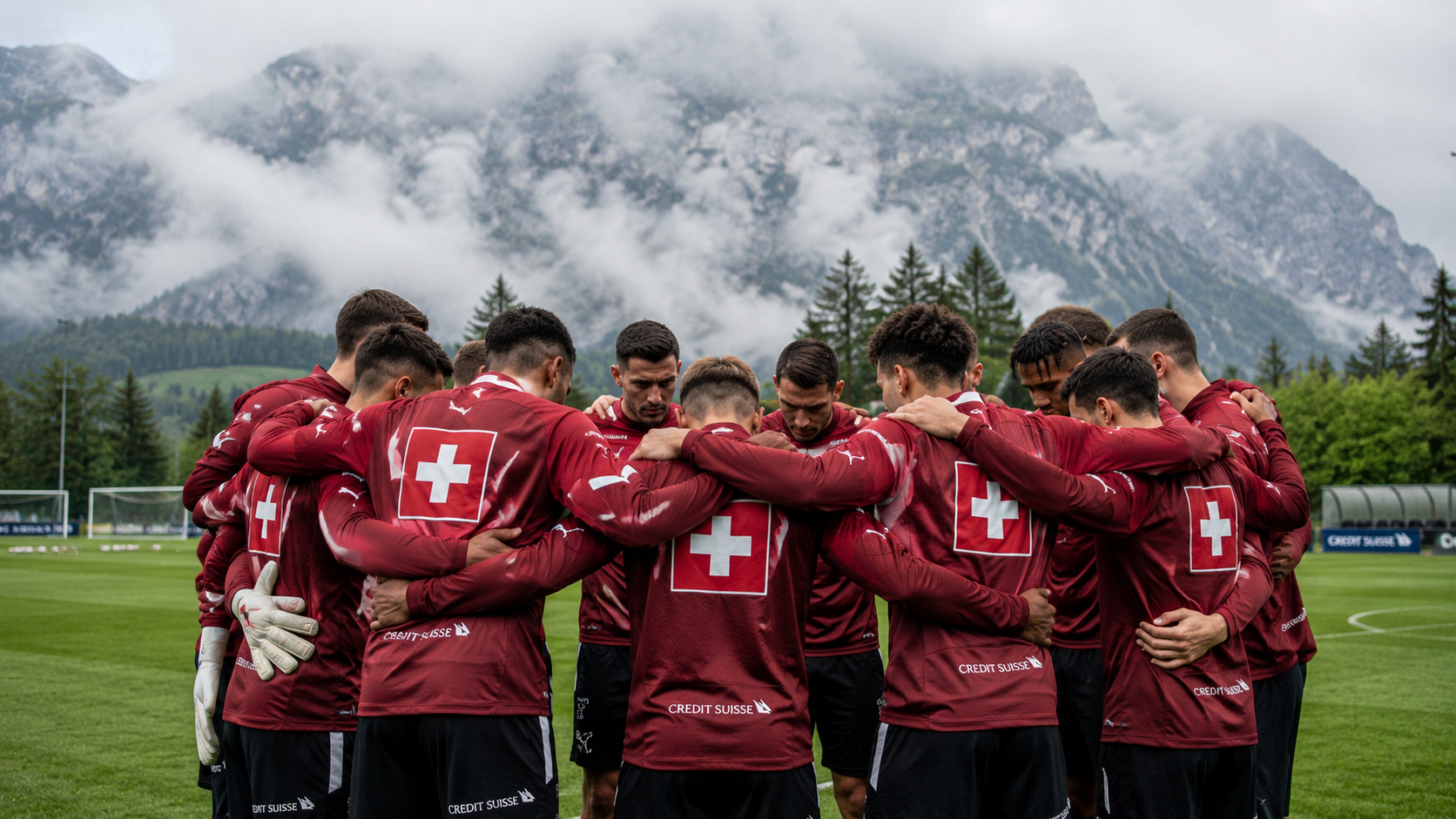
Switzerland do not lose early. They do not embarrass themselves. They qualify, they compete, they reach the knockout rounds, and then they stop. In four of the last five World Cups, they have been eliminated in the round of 16. In 2022, it was Portugal. In 2018, Sweden. In 2014, Argentina in extra time. In 2006, Ukraine on penalties. The pattern is so consistent it has become the defining feature of Swiss tournament football: competent enough to survive, not quite enough to advance.
Murat Yakin, the head coach, has named his 26 for a tournament that offers more paths through the bracket than any before — 48 teams, a round of 32 before the round of 16. If there was ever a structure designed to reward Switzerland's particular brand of reliable, unglamorous progression, this is it.
The captain is Granit Xhaka, 33, now at Sunderland after spells at Arsenal and Bayer Leverkusen. He has 144 caps — more than any Swiss player in history — and will lead the team at a fourth consecutive World Cup. The move to the Championship might, in another context, suggest decline. At Sunderland, Xhaka has helped the club push for European qualification, and his authority on the pitch has not diminished. He remains the heartbeat of this team.
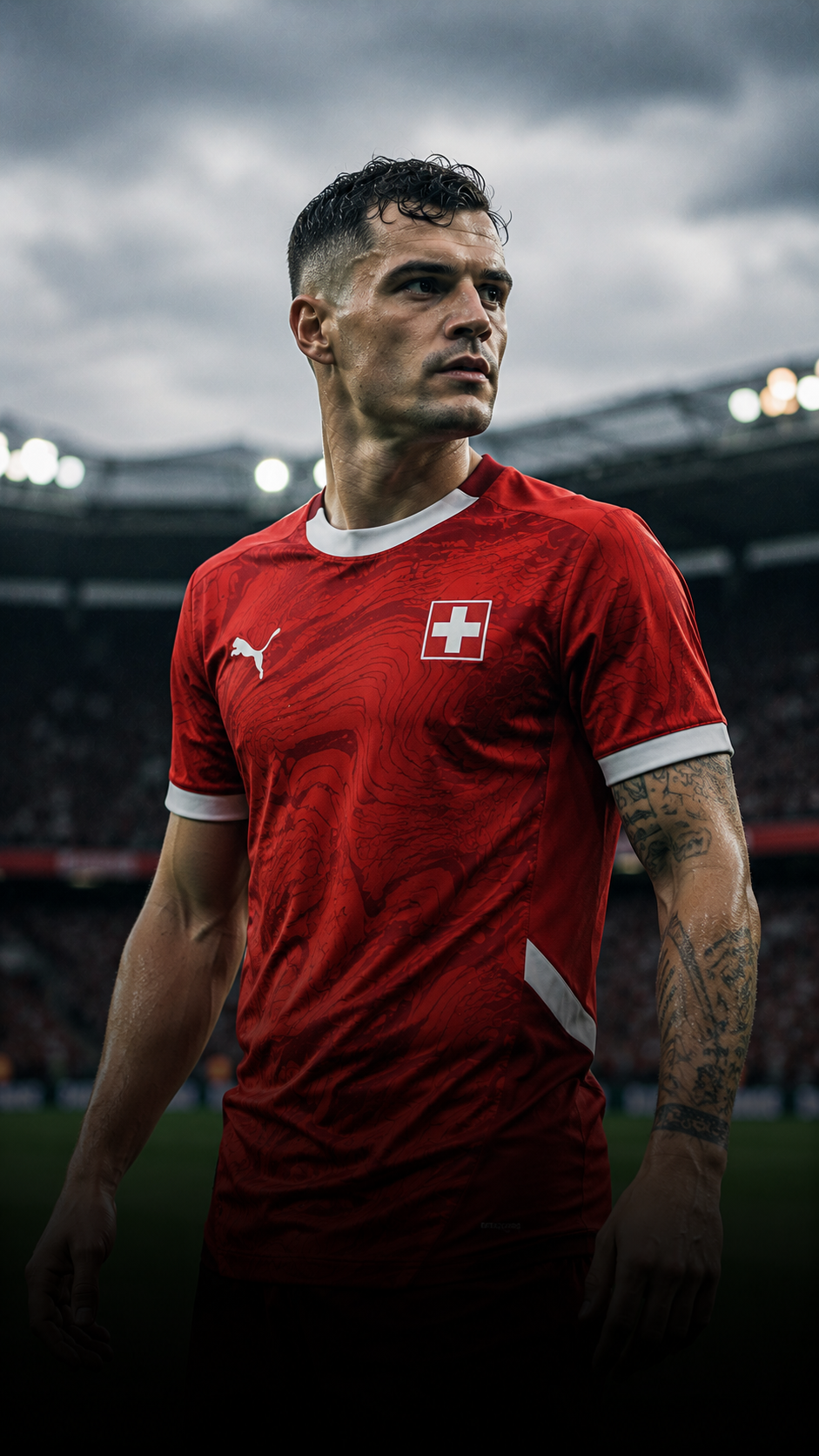
Xhaka
Kobel of Borussia Dortmund is the number one and among the best goalkeepers at the tournament. Akanji, now at Inter Milan and fresh from winning the Serie A title, is the defensive leader — composed, quick, and experienced at the highest level. Xhaka anchors the midfield. Ahead of him, the options are varied: Denis Zakaria at Monaco brings physicality and box-to-box running, Ardon Jashari at AC Milan represents the next generation at 22, and Remo Freuler at Bologna provides the steady metronome work that Yakin's system requires. Johan Manzambi of Freiburg, still only 20, may be the most exciting prospect in the squad — he debuted last June with a win over Mexico, then scored in a 4-0 rout of the United States, and started in Freiburg's Europa League final loss to Aston Villa on May 20.
The attack is led by Breel Embolo of Rennes, the squad's top scorer in qualifying with four goals, a player whose career has been shaped as much by injuries as by talent but who has never let his country down when fit. Dan Ndoye of Nottingham Forest has established himself as a goalscoring winger with pace and directness. Noah Okafor at Leeds United and Zeki Amdouni at Burnley add Premier League experience, though Amdouni has played less than one hour of club football all season after rupturing his ACL last July. His appearance as a late substitute at Arsenal the day before the squad announcement was only his third game off the bench this month. Yakin has declared him "100% fit" and selected him on a record of 11 goals in 27 international appearances — a gamble on pedigree over match fitness.
Christian Fassnacht and Cedric Itten are the unexpected inclusions. Both have played only a handful of minutes for Switzerland since 2023. Fassnacht, the 18-goal top scorer in the Swiss Super League this season at Young Boys, earned his place on domestic form. Itten, at Fortuna Düsseldorf in Germany's second division, adds a different profile up front. Yakin has gambled on both — players who know his system but have not been tested at this level for years.
The squad
Goalkeepers: Gregor Kobel (Borussia Dortmund), Yvon Mvogo (Lorient), Marvin Keller (Young Boys)
Defenders: Manuel Akanji (Inter Milan), Nico Elvedi (Borussia Mönchengladbach), Ricardo Rodríguez (Real Betis), Silvan Widmer (Mainz), Miro Muheim (Hamburg), Aurèle Amenda (Eintracht Frankfurt), Eray Cömert (Valencia), Luca Jaquez (Stuttgart)
Midfielders: Granit Xhaka (Sunderland), Johan Manzambi (Freiburg), Remo Freuler (Bologna), Denis Zakaria (Monaco), Ardon Jashari (AC Milan), Djibril Sow (Sevilla), Christian Fassnacht (Young Boys), Michel Aebischer (Pisa), Fabian Rieder (Augsburg), Rubén Vargas (Sevilla)
Forwards: Breel Embolo (Rennes), Noah Okafor (Leeds United), Dan Ndoye (Nottingham Forest), Zeki Amdouni (Burnley), Cedric Itten (Fortuna Düsseldorf)
Switzerland are in Group B with co-hosts Canada, Bosnia and Herzegovina, and Qatar. They open against Qatar on June 13 at Levi's Stadium in San Francisco, face Bosnia on June 18 at SoFi Stadium in Los Angeles, and close against Canada on June 24 at BC Place in Vancouver. It is a group they should expect to top, or at worst finish second.
The question, as always, is what comes next. Switzerland's squad is well-constructed, balanced, and deep enough to handle the demands of a tournament that could require seven games to reach the final. Xhaka has the experience. Akanji has the quality. Embolo and Ndoye have the goals. Whether Switzerland have the capacity to win a knockout game — really win one, under pressure, when the margins are fine — is the question that 20 years of round-of-16 exits have left unanswered.
This is the squad that will try. Again.
View Switzerland's full team profile →