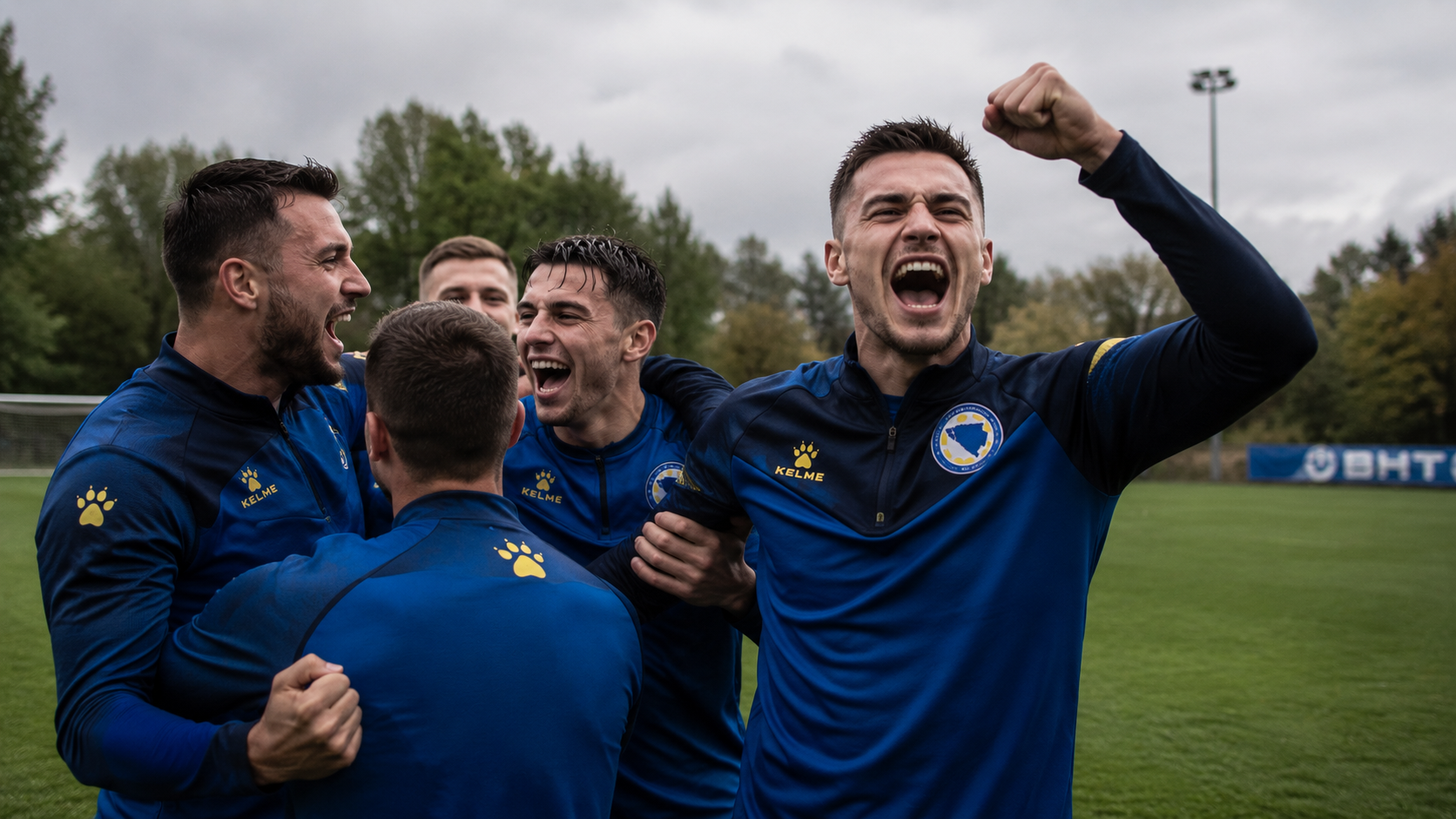
Bosnia and Herzegovina have been to one World Cup. In 2014, in Brazil, they beat Iran 3-1 in their final group game and went home. Three group games, one win, an early flight. The squad that got them there, led by Edin Džeko and Miralem Pjanić, was supposed to return. Twelve years later, only Džeko and defender Sead Kolašinac remain.
Džeko is 40 years old and plays for Schalke, newly promoted back to the Bundesliga after Džeko's six goals in nine appearances helped drive their title charge in the second division — making him the oldest goalscorer in the league's history along the way. He signed in January, scored immediately, and then suffered a shoulder injury in the final moments of extra time in the Italy playoff. He has 73 goals for his country. Pjanić retired in December. Džeko carried on.
What followed was one of the great qualifying campaigns in World Cup history. Bosnia topped Group H until the final matchday, when a late Michael Gregoritsch goal for Austria knocked them into the playoffs. Against Wales in Cardiff, Dan James gave the hosts the lead; Džeko equalized in the 86th minute, and Bosnia won on penalties after Nikola Vasilj saved from Neco Williams. Then came Italy in Zenica. Moise Kean gave the four-time champions the lead after 15 minutes, but an Alessandro Bastoni red card shifted the momentum. Haris Tabaković equalized with 11 minutes remaining. Penalties again. Esmir Bajraktarević — a 21-year-old PSV Eindhoven winger, born in Wisconsin, who earned a senior cap for the United States in 2024 before switching allegiance to Bosnia — scored the decisive spot-kick in both rounds. Italy, absent from a third consecutive World Cup, went home. Bosnia went to North America.
At 40, Džeko joins Cristiano Ronaldo and Luka Modrić as one of only three outfield players over 40 at this tournament. Only one outfield player has ever appeared at a World Cup older — Cameroon's Roger Milla, who was 42 when he scored against Russia in 1994.
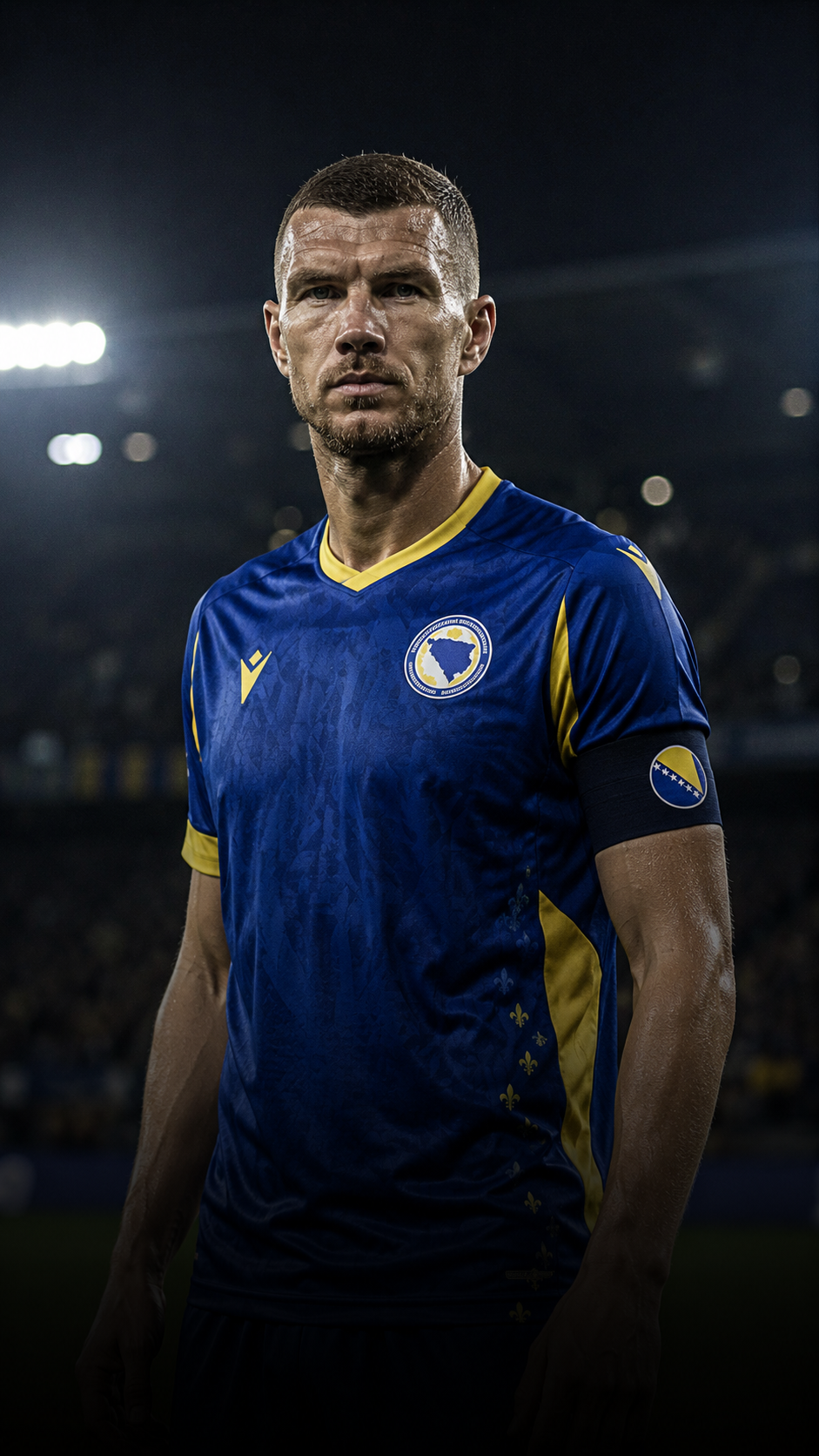
Dzeko
Sergej Barbarez was appointed in 2024 without a day of prior coaching experience — a former national team captain who went straight from retirement to the dugout. What he has built reflects how he played: physical, passionate, relentlessly aggressive. Bosnia committed 15.16 fouls per 90 minutes during qualifying, the highest of any European side. Barbarez plays a 4-4-2 built around two tall center forwards. Džeko and Ermedin Demirović of Stuttgart lead the line, with Tabaković of Borussia Mönchengladbach — 12 Bundesliga goals this season — ready from the bench or alongside them. Width and crosses are the primary creative source. This is a team that thrives on emotion, set pieces, and sustained physical pressure. In a short tournament, where intensity matters more than aesthetics, it is not a bad formula.
Kolašinac, now at Atalanta, anchors the defense alongside Amar Dedić of Benfica — the most talented defender in the group and the clearest signal of what Bosnia could look like in the next cycle. The midfield is functional rather than glamorous, with Bajraktarević operating as the attacking winger who provides the pace and creativity the system otherwise lacks. Kerim Alajbegović, 18, of RB Salzburg is the youngest player in the squad.
The squad is a diaspora project: eight players from German clubs across three divisions, others scattered across Italy, the Netherlands, Portugal, Austria, Croatia, and further east. The domestic Bosnian league barely features. This is a nation that exports its footballers and reassembles them under a flag every few months.
The squad
Goalkeepers: Nikola Vasilj (St. Pauli), Martin Zlomislić (HNK Rijeka), Osman Hadžikić (Slavan Belupo)
Defenders: Sead Kolašinac (Atalanta), Amar Dedić (Benfica), Nihad Mujakić (Gaziantep), Nikola Katić (Schalke), Tarik Muharemović (Sassuolo), Stjepan Radeljić (HNK Rijeka), Dennis Hadžikadunić (Sampdoria), Nidal Čelik (Lens)
Midfielders: Amir Hadžiahmetović (Hull City), Ivan Šunjić (Pafos), Ivan Bašić (Astana), Dzenis Burnić (Karlsruhe), Armin Gigović (Young Boys), Ermin Mahmić (Slovan Liberec), Benjamin Tahirović (Brøndby), Amar Memić (Viktoria Plzeň), Kerim Alajbegović (RB Salzburg), Esmir Bajraktarević (PSV Eindhoven)
Forwards: Ermedin Demirović (Stuttgart), Jovo Lukić (Universitatea Cluj), Samed Baždar (Jagiellonia Białystok), Haris Tabaković (Borussia Mönchengladbach), Edin Džeko (Schalke)
Bosnia are in Group B with co-hosts Canada, Switzerland, and Qatar. The aim is straightforward: get out of the group for the first time. For Džeko and Kolašinac, it would be the crowning achievement of careers spent carrying a small nation further than anyone expected. For Bajraktarević and Alajbegović, it would be the beginning.
View Bosnia & Herzegovina's full team profile →