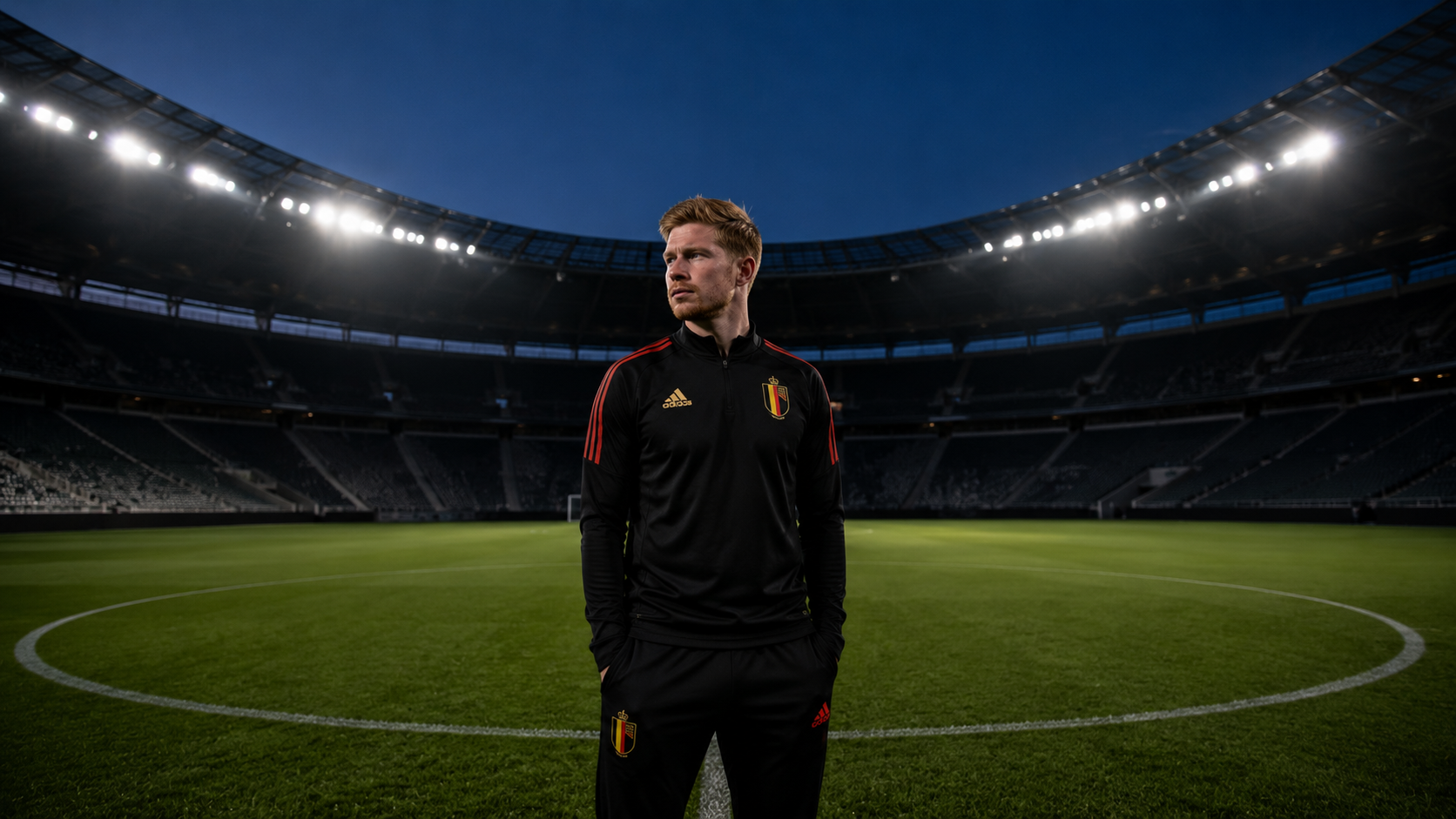
There is a version of Belgian football history where the golden generation won something. Where Eden Hazard, Kevin De Bruyne, Romelu Lukaku, and Thibaut Courtois — four players who, at their peaks, would have walked into almost any squad in the world — lifted a trophy together. That version does not exist. Third place in 2018. A group-stage exit in 2022, the humiliation of it made worse by how clearly it had been coming. And now this: a 2026 World Cup squad in which De Bruyne, Lukaku, Courtois, and Axel Witsel remain, older and further from their best, but still present, still selected, still carrying the weight of what might have been.
Rudi Garcia, the French manager appointed in January 2025 in his first international role, has named a 26-man squad that tries to do two things at once: honor the experience of the survivors and build something around the generation that follows them. Whether it can do both remains the central question of Belgium's summer.
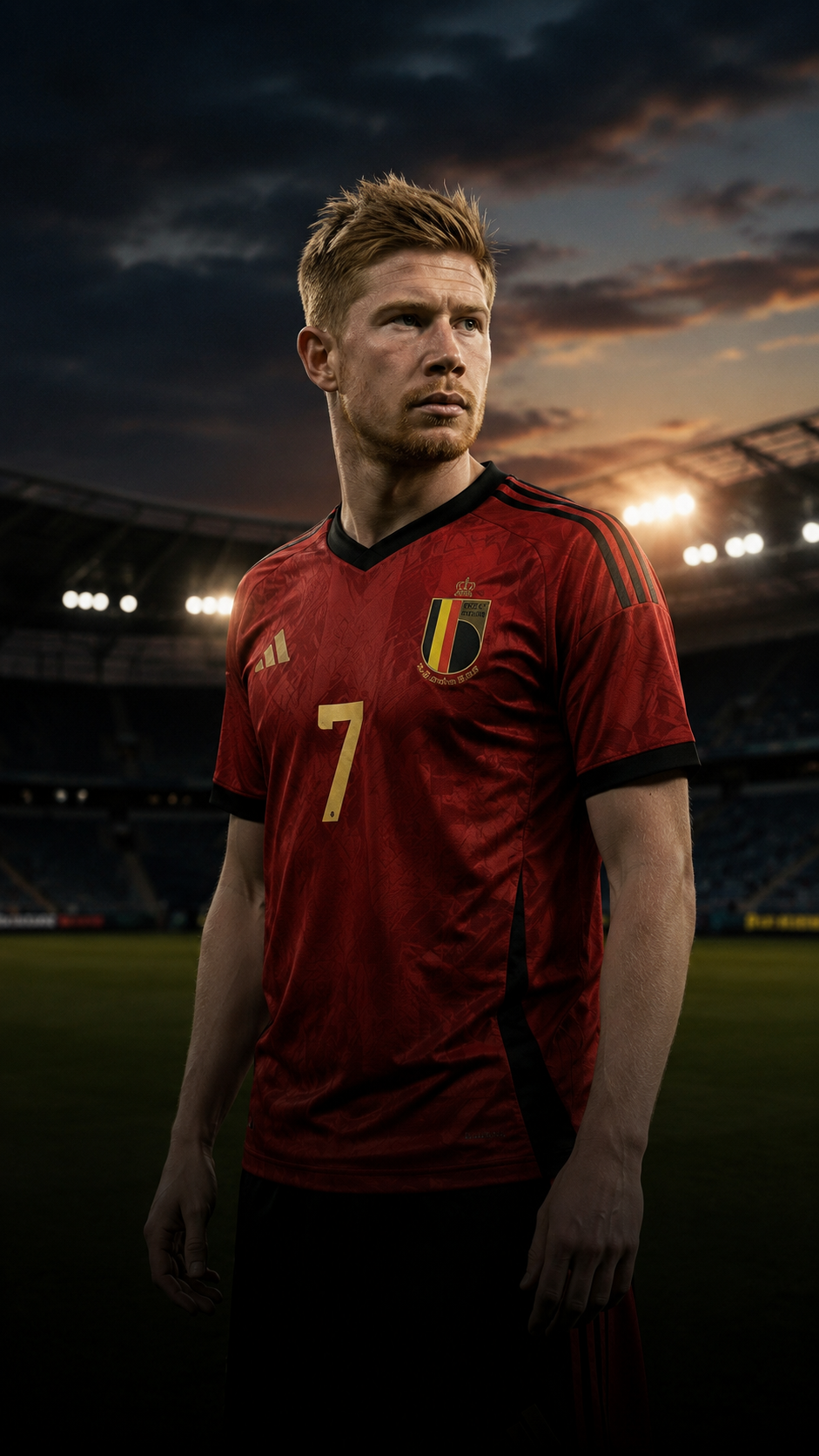
De Bruyne
Four players remain from Belgium's 2014 squad, all heading into a fourth World Cup. Courtois, with 107 caps, is still among the best goalkeepers in the world at Real Madrid and will start. De Bruyne, 34, has moved from Manchester City to Napoli and remains the creative fulcrum of the national team even as the legs have slowed — 117 caps and counting. Witsel, the most-capped player in the squad at 136, is now at Girona and provides the midfield solidity Garcia clearly values at 37. And then there is Lukaku, whose selection is the boldest call of the lot.
Lukaku is 33 and Belgium's all-time top scorer with a remarkable lead that may never be matched. But he has barely played this season — 64 minutes of club football across five Serie A substitute appearances for Napoli, and a withdrawal from Belgium's most recent friendlies over fitness concerns. He hasn't started a game for his country in almost a year. Garcia has selected him on reputation and recovery rather than form, a gamble that will either vindicate the veteran's endurance or expose a squad built around a striker who cannot play 90 minutes.
Captain Youri Tielemans of Aston Villa and his club teammate Amadou Onana form the double pivot that Garcia has built his midfield around. Tielemans is 29 and Onana 24; both are Premier League regulars, and both represent the transition from what Belgium was to what it is becoming. Tielemans brings composure and passing range; Onana brings physical dominance and the ability to cover ground that De Bruyne and Witsel no longer can.
In attack, Jérémy Doku of Manchester City is the player Garcia will look to as the difference-maker. At 23, Doku's pace and dribbling are weapons that few defenses in the tournament will be equipped to handle. Leandro Trossard of Arsenal offers a different kind of threat — intelligent movement, comfort on either foot, and the experience of competing for major trophies at club level. Charles De Ketelaere of Atalanta has enjoyed a strong season in Serie A and provides creativity from deeper positions.
The back line is where Belgium's squad looks thinnest. The days of Vertonghen and Alderweireld are long gone, and the depth behind the first-choice pairing is untested at this level. Of the defenders here, only Thomas Meunier has played in a World Cup knockout game. Garcia will need Courtois to be exceptional. That is not a hope; it is a structural requirement.
Romeo Lavia of Chelsea is the most notable absence — an injury-disrupted season has cost the 22-year-old his place despite being one of the most talented Belgian players of his generation. Loïs Openda, who has spent much of the season on the Juventus bench, was also left behind. Nathan De Cat, a 17-year-old midfielder who scored on his debut in a 5-2 win over the United States in March, was not selected. Garcia has favored reliability over potential.
The squad
Goalkeepers: Thibaut Courtois (Real Madrid), Senne Lammens (Manchester United), Mike Penders (Strasbourg)
Defenders: Timothy Castagne (Fulham), Zeno Debast (Sporting CP), Maxim De Cuyper (Brighton), Koni De Winter (AC Milan), Brandon Mechele (Club Brugge), Thomas Meunier (Lille), Nathan Ngoy (Lille), Joaquin Seys (Club Brugge), Arthur Theate (Eintracht Frankfurt)
Midfielders: Kevin De Bruyne (Napoli), Amadou Onana (Aston Villa), Nicolas Raskin (Rangers), Youri Tielemans (Aston Villa), Hans Vanaken (Club Brugge), Axel Witsel (Girona)
Forwards: Charles De Ketelaere (Atalanta), Jérémy Doku (Manchester City), Mathias Fernandez-Pardo (Lille), Romelu Lukaku (Napoli), Dodi Lukebakio (Benfica), Diego Moreira (Strasbourg), Alexis Saelemaekers (AC Milan), Leandro Trossard (Arsenal)
Belgium are in Group G with Egypt, Iran, and New Zealand. They open against Egypt on June 15 at Lumen Field in Seattle, face Iran on June 21 at SoFi Stadium in Los Angeles, and conclude against New Zealand on June 26 at BC Place in Vancouver. On paper, it is a group they should win. Egypt are organized and have Mohamed Salah. Iran are durable and difficult to break down. New Zealand are making their third World Cup appearance. None of these opponents are weak, but none should be beyond Belgium if the squad performs to its ability.
The deeper question is what happens after the group. Belgium's golden generation reached a semifinal, reached quarterfinals, reached knockout rounds — and never found the final step. This squad, built around the remnants of that generation and the promise of the next one, will discover whether the pattern holds or breaks.
For De Bruyne, Lukaku, Courtois, and Witsel, this is the last time the question will be asked.
View Belgium's full team profile →
Correction, October 5, 2026: this piece first said four players remain from Belgium's 2018 semifinal squad (six do; the four going to a fourth World Cup remain from 2014), that none of the defenders had played in a World Cup knockout game (Thomas Meunier played Belgium's 2018 knockout matches), and that this is New Zealand's second World Cup (it is their third).