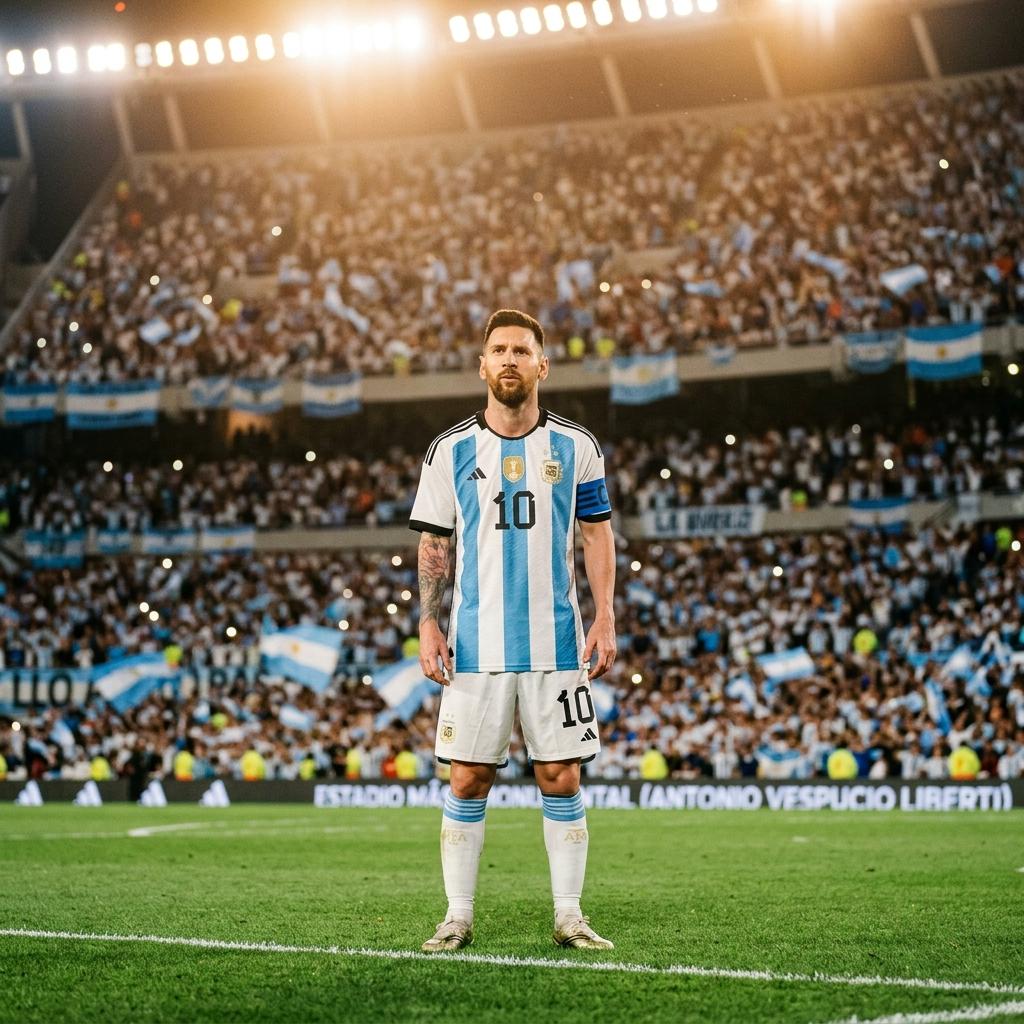
The last team to arrive at a World Cup as defending champions and leave with the trophy was Brazil in 1962. Garrincha was 28. Pelé watched most of the tournament from the bench after tearing a groin muscle in the second match. The squad that completed the repeat looked familiar: many of the same men who had won in Sweden four years earlier, slightly older, carrying slightly more history, asked to do the rarest thing in international football.
Argentina arrive in North America with seventeen survivors from Qatar.
Same core. Slightly older.
Same task.
Lionel Scaloni announced his 26-man squad on Thursday, ahead of FIFA's deadline, posted to the Argentine FA's social media channels. No press conference, no theatrics, just the list.
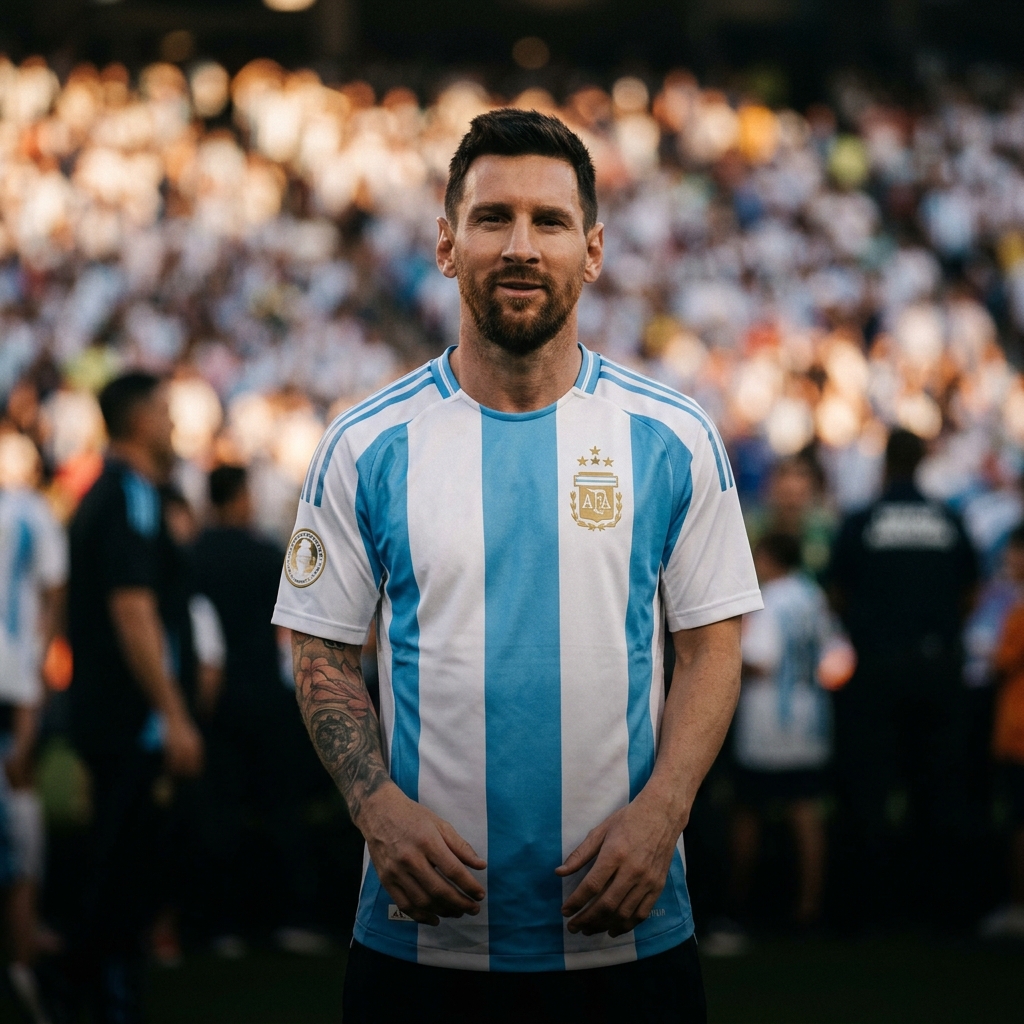
Messi
The Core That Won It
Emiliano Martínez remains in goal, still living off the penalty shootout that made him a national monument. He arrives having fractured the ring finger of his right hand in Aston Villa's Europa League final win over Freiburg last week — one of several players Scaloni named while still recovering from something.
Cristian Romero arrives carrying a damaged knee. Nicolás Otamendi arrives carrying nearly two decades of professional football in his legs. Scaloni trusts both. Lisandro Martínez provides the left-sided cover; at fullback, Nahuel Molina and Gonzalo Montiel — both managing muscle injuries — will compete for the right-back berth, with Nicolás Tagliafico settled on the left.
In midfield, Rodrigo De Paul and Alexis Mac Allister return, joined again by Enzo Fernández — 25 now, no longer the breakout figure of Qatar, carrying his own pressure at Chelsea and his own questions about whether he can still be the engine for a team that won when he was four years younger. Leandro Paredes, Giovani Lo Celso, and Exequiel Palacios fill out the central options. The combinations are familiar to the players involved and even more familiar to the opponents.
Up front, the conversation is mostly Messi, but it is also Julián Álvarez (at Atlético Madrid since his 2024 move from Manchester City) and Lautaro Martínez (still scoring for Inter Milan). And there is the absence — for the first time in over a decade — of Ángel Di María, who retired from international football after Copa América 2024. His place is now Giuliano Simeone's to inherit, or Nicolás González's, or Nico Paz's.
None of them are Ángel Di María. Argentina can replace the position. They cannot replace the player who scored in a World Cup final, a Copa América final, and somehow spent a decade being underrated anyway.
This is a squad that has won three consecutive major tournaments under Scaloni: Copa América 2021, World Cup 2022, Copa América 2024.
Success has made continuity look inevitable.
It never is.
The Eight First-Timers
Scaloni named eight players who will experience their first World Cup. Juan Musso of Atlético Madrid is the third goalkeeper behind Martínez and Gerónimo Rulli of Marseille. Leonardo Balerdi (Marseille) and Facundo Medina (also Marseille) deepen the center-back rotation. Valentín Barco, 21, plays at Strasbourg and offers cover across the left and the midfield.
The other four are forwards. Giuliano Simeone — Diego's son — has had the best season of his career at Atlético Madrid and earned his place through form. Nicolás González is also at Atlético, on loan from Juventus. Nico Paz, 21, plays for Como in Serie A and was one of the breakout players of the European season. José "Flaco" López scores goals at Palmeiras and has impressed Scaloni in recent call-ups despite limited international minutes.
These are additions to a champion, not foundations for a new one. The new faces fill out the bench, give Scaloni options, and provide insurance against the cumulative wear of a generation that has been together since the 2019 Copa América.
The Mastantuono Question
The biggest absence is Franco Mastantuono. Real Madrid agreed to sign him in June 2025, before he turned 18, for a fee that signaled they expected him to be a generational figure for the next decade. He has been one of the most talked-about teenagers in world football since his breakthrough at River Plate.
He is not on the plane.
Argentina has chosen experience over potential because they are defending a title, not building toward one. The team that won in Qatar plays a specific way, and dropping an 18-year-old into that pattern eight games into his international career would be more disruptive than helpful.
Mastantuono's World Cup is probably 2030. This one belongs to the men who already won one.
The Hamstring
Messi pulled up sore against the Philadelphia Union on May 24, playing for Inter Miami in an MLS regular-season game. The hamstring was the worry. Argentine medical staff and their Inter Miami counterparts communicated between Tuesday and Wednesday. By Thursday Scaloni had judged him available, and he is in the 26.
The injury is not considered serious. The implication is bigger than the injury.
Messi will go to a sixth World Cup at 38. Only one player has won the trophy older: Dino Zoff, in goal for Italy at 40. No player has ever arrived at a sixth tournament carrying quite this combination of expectation and improbability. He has 198 caps and 116 goals for Argentina — both records. His career was supposed to have ended several versions ago. It keeps refusing.
He is playing one more. The campaign rests on his fitness in a way that almost no other player's fitness has ever determined a tournament. Argentina without a fit Messi is a different team — one capable of advancing from the group, capable of winning a round of 16 match, but probably not capable of repeating Qatar. With him, the proposition is different.
Group J
Argentina open against Algeria on June 16 in Kansas City. Austria and Jordan follow in Arlington. The group is favorable. Algeria should provide the resistance; Austria and Jordan should not provide enough.
The real tournament begins later. It usually does for the favorites. The group stage is an obligation; everything after it is the test.
What They Are Trying To Do
No nation has won consecutive World Cups since Brazil in 1962. The reasons it has not happened are many: tournaments have grown longer, squads have grown larger, the pool of nations capable of mounting serious challenges has widened. The physical toll of two tournaments four years apart is calibrated for the player approaching the end of a peak, not extending one. Champions get older. Their opponents do not. Argentina will be one of the oldest squads at the tournament, with an average age above 29.
They arrive with seventeen players who already know what it takes — and a captain who, at 38, is one cramp away from changing the entire calculus. They arrive with eight first-timers who will not be expected to do much more than understand their roles. They arrive having left at home a teenager that Real Madrid considers a future Ballon d'Or candidate, because there is no time and no need.
Brazil did it in 1962. Garrincha was 28. Pelé spent most of the tournament injured. The squad looked a lot like the one that had won four years earlier.
Argentina's looks familiar too.
Same core. Slightly older.
Same task.
History rarely offers second chances. Argentina arrive believing this one might.
Argentina World Cup 2026 Squad
Goalkeepers: Emiliano Martínez (Aston Villa), Gerónimo Rulli (Marseille), Juan Musso (Atlético Madrid)
Defenders: Cristian Romero (Tottenham), Lisandro Martínez (Manchester United), Nicolás Otamendi (Benfica), Nahuel Molina (Atlético Madrid), Gonzalo Montiel (River Plate), Nicolás Tagliafico (Lyon), Leonardo Balerdi (Marseille), Facundo Medina (Marseille)
Midfielders: Rodrigo De Paul (Inter Miami), Alexis Mac Allister (Liverpool), Enzo Fernández (Chelsea), Leandro Paredes (Boca Juniors), Giovani Lo Celso (Real Betis), Exequiel Palacios (Bayer Leverkusen), Valentín Barco (Strasbourg)
Forwards: Lionel Messi (Inter Miami, captain), Julián Álvarez (Atlético Madrid), Lautaro Martínez (Inter Milan), Nicolás González (Atlético Madrid, on loan from Juventus), Thiago Almada (Atlético Madrid), Giuliano Simeone (Atlético Madrid), Nico Paz (Como), José "Flaco" López (Palmeiras)
Coach: Lionel Scaloni | Group J: Algeria · Austria · Jordan
Updated June 11: Leonardo Balerdi withdrew with a calf injury on June 6; Marcos Senesi (Bournemouth) replaced him.
Correction, October 5, 2026: this piece first said no player had ever won a World Cup at 38 (Dino Zoff won one at 40), that Messi's hamstring trouble came on May 21 (it was May 24), that Julián Álvarez moved to Atlético last summer (it was 2024), and that Real Madrid signed Franco Mastantuono after the 2025 Club World Cup (the deal was agreed that June, before it).