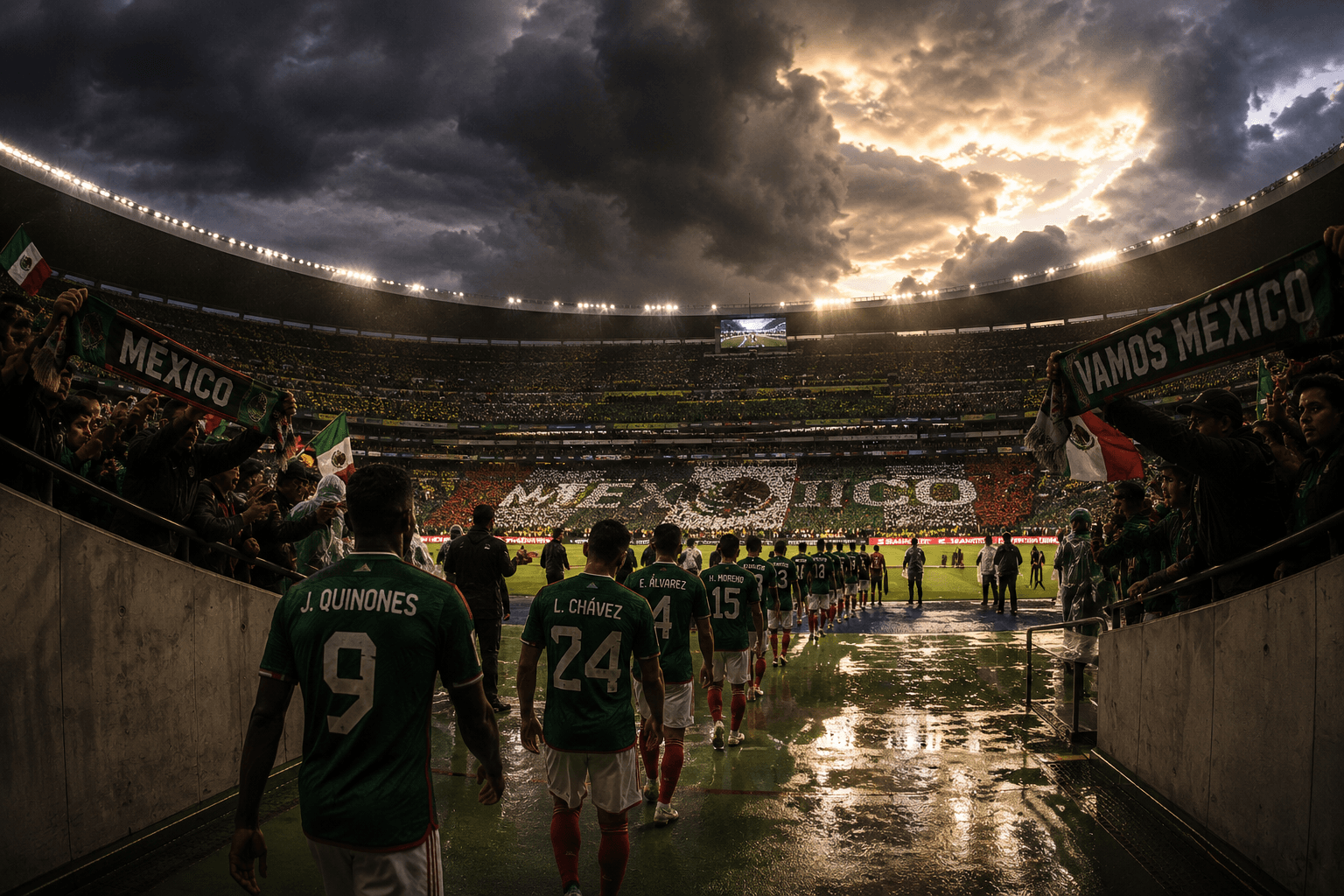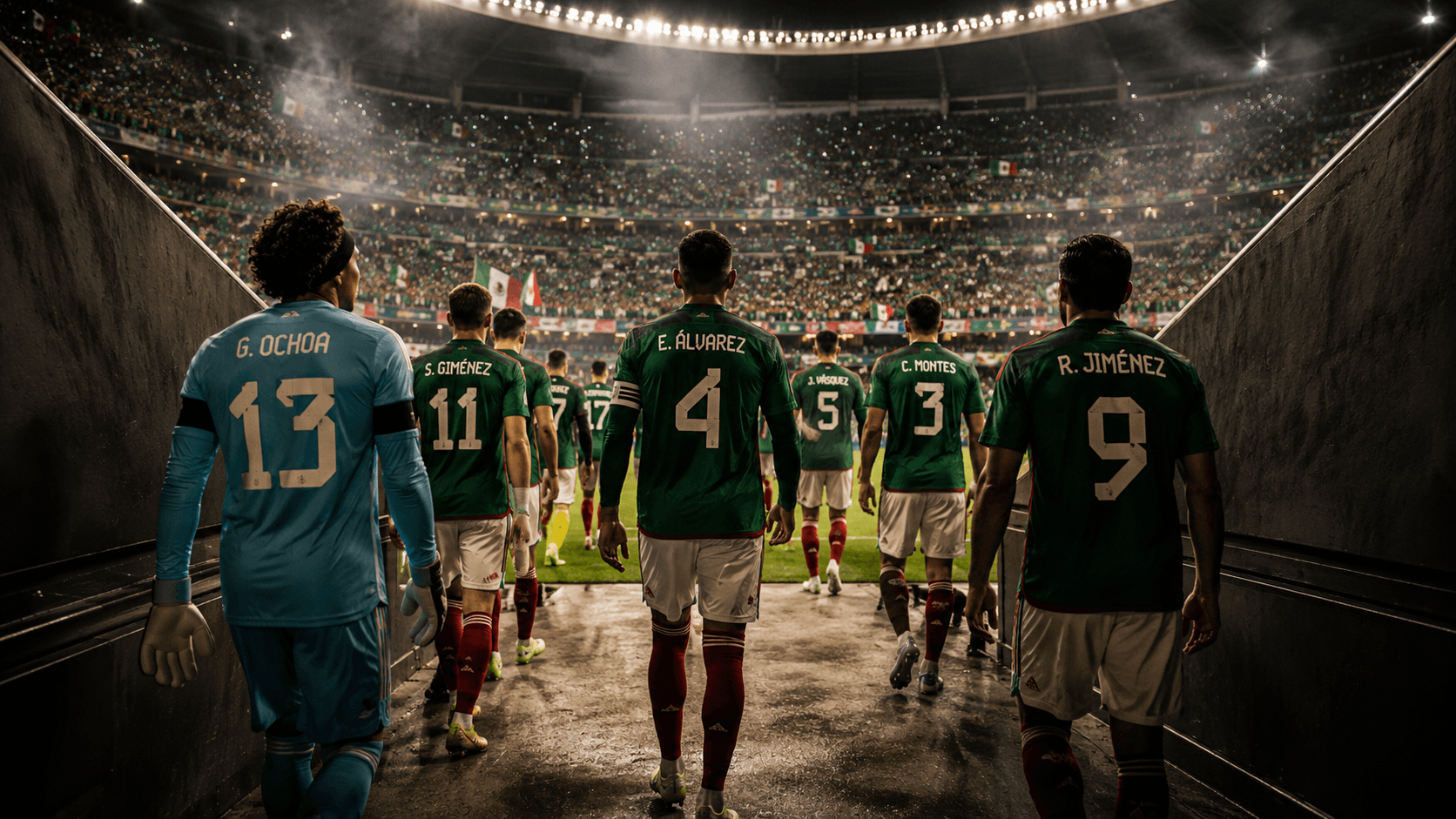
Mexico open the entire 2026 World Cup on June 11 at the Estadio Azteca. More than eighty thousand people. The stadium where Pelé won his third world title, where Maradona scored against England forty years ago. The world watching. And El Tri walking out as hosts for a tournament they have waited forty years to host again.
The occasion is the largest possible. The pattern, for Mexico, is the problem.
Since 1986, Mexico have reached the World Cup quarterfinal exactly once — in 1986, when they were hosts. Then seven consecutive exits in the round of sixteen, from 1994 to 2018, and a group-stage exit in Qatar in 2022. The "quinto partido" — the fifth match, the quarterfinal — is the game Mexico has not reached since. In the new 48-team format, the knockout rounds begin with a round of 32. The quinto partido becomes the Round of 16 itself. The ceiling hasn't moved. The task has gotten harder.
Javier Aguirre's 26 will try to change both.
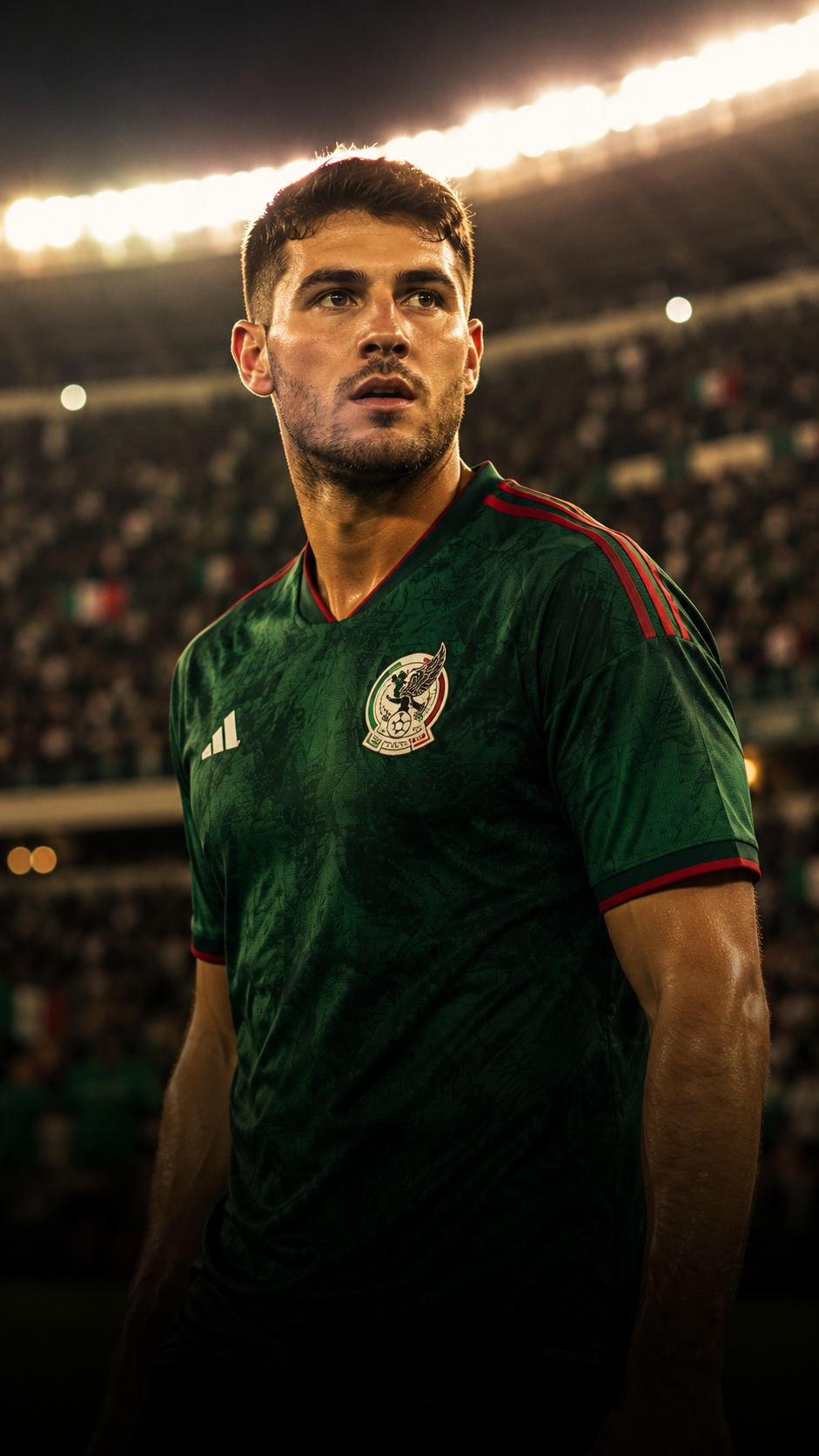
Giménez
Giménez
Santiago Giménez is 25 years old and plays for AC Milan. He finished the 2024/25 Serie A season with nineteen goals in thirty-one league appearances — numbers that would be considered exceptional for any striker in that division, and numbers that represent a different level of attacking threat than Mexico have carried into a World Cup in a generation.
The expectation around Giménez is significant. Mexico need goals, and he is the player most likely to provide them. His movement in behind, his ability to convert in tight areas, his comfort with pressure — these are the qualities that made Milan want him after his years at Feyenoord, and they are the qualities Aguirre is building the attack around.
The pressure of being the striker for a co-hosting nation opening the tournament at the Azteca is not a small thing. Giménez seems comfortable with it. That is, in itself, a reason for optimism.
Ochoa at Forty-One
Guillermo Ochoa is forty-one years old and will be at his sixth World Cup. No Mexican player has ever appeared at six. No goalkeeper from any nation has played in more tournaments. He is at AEL Limassol in Cyprus, not at a top-five European club, and Aguirre named him anyway — because in a Mexican jersey, in a World Cup, Ochoa does something that is hard to quantify and harder to replace.
He kept Brazil to zero in Fortaleza in 2014. He made the save against Argentina in 2018 that was irrelevant to the result but was perfect. He is the one the country trusts.
Raúl Rangel of Guadalajara starts this tournament ahead of him — Ochoa accepts the number-two role, something he would not have accepted at thirty. He is here because of what he means and what he can provide when called upon. That is enough.
The Captain and the Midfield
Edson Álvarez captains this squad. He plays for Fenerbahçe and has spent the last few years converting the question — midfielder or defender? — into an asset. He does both. He sits, he defends, he transitions, he leads. The armband suits him.
Behind Álvarez in the midfield options are players whose domestic careers blend Liga MX and European competition in roughly equal measure. Brian Gutiérrez (Guadalajara), Luis Chávez (Dinamo Moscow), Orbelín Pineda (AEK Athens), Obed Vargas (Atlético Madrid), César Huerta (Anderlecht), Álvaro Fidalgo (Real Betis) — the breadth is genuine, though the depth at elite European club level remains thinner than France or Germany or England can name.
Raúl Jiménez at Fulham gives Aguirre a second striker option with Premier League experience and the positioning intelligence that comes from a decade at the highest level. Giménez and Jiménez — an attack built on two players whose surnames differ by one letter and whose roles complement each other precisely.
Group A
Mexico play all three group matches against opponents who are reachable.
South Africa on June 11 at the Azteca — the opening match of the tournament. South Korea on June 18 in Guadalajara at Estadio Akron. Czechia on June 24, back at the Azteca in Mexico City.
On paper, this is a group Mexico should win. The question is whether "should" functions as it normally does for a team carrying forty years of pattern, or whether the pressure of the occasion and the history of the venue and the weight of the nation watching produces something different.
Qualifying from Group A is the floor. It is not the achievement. The achievement is what comes after.
The Pattern
1986 is the year that defines Mexican football's relationship with the World Cup. Hosts, quarterfinalists, eliminated by West Germany on penalties. Hugo Sánchez. Manuel Negrete. The generation that reached the fifth game.
In every tournament since — excepting only 2022, when Mexico failed to advance from the group — Mexico have won enough to reach the Round of 16 and lost in the Round of 16. The record is precise and consistent in a way that feels less like bad luck and more like a structural ceiling.
Aguirre's squad is the most credible generation Mexico has sent to this tournament in years. Giménez is the striker the previous squads did not have. The home-field advantage is real. The group is manageable. The format change means reaching the Round of 16 itself requires winning the fifth match of the tournament.
The quinto partido is now the entry point, not the exit.
Forty years since 1986. Same stadium. Different squad. The same question.
Mexico World Cup 2026 Squad
Goalkeepers: Raúl Rangel (Guadalajara), Carlos Acevedo (Santos Laguna), Guillermo Ochoa (AEL Limassol)
Defenders: Jorge Sánchez (PAOK), César Montes (Lokomotiv Moscow), Edson Álvarez (Fenerbahçe), Johan Vásquez (Genoa), Israel Reyes (América), Mateo Chávez (AZ), Jesús Gallardo (Toluca)
Midfielders: Érik Lira (Cruz Azul), Luis Romo (Guadalajara), Álvaro Fidalgo (Real Betis), Orbelín Pineda (AEK Athens), Obed Vargas (Atlético Madrid), Gilberto Mora (Tijuana), Luis Chávez (Dynamo Moscow), Brian Gutiérrez (Guadalajara)
Forwards: Raúl Jiménez (Fulham), Alexis Vega (Toluca), Santiago Giménez (AC Milan), Armando González (Guadalajara), Julián Quiñones (Al-Qadsiah), César Huerta (Anderlecht), Guillermo Martínez (Pumas UNAM), Roberto Alvarado (Guadalajara)
Coach: Javier Aguirre | Group A: South Africa · South Korea · Czechia
Fixtures: Jun 11 v South Africa — Mexico City · Jun 18 v South Korea — Guadalajara · Jun 24 v Czechia — Mexico City
Correction, October 5, 2026: this piece first said 87,000 would see the opener at the Azteca (the stadium held 80,824 for World Cup matches), that Pelé won his second world title there (1970 was his third), and that Mexico went out in the round of 16 at every tournament since 1986 (they did from 1994 to 2018, then went out in the group stage in 2022).