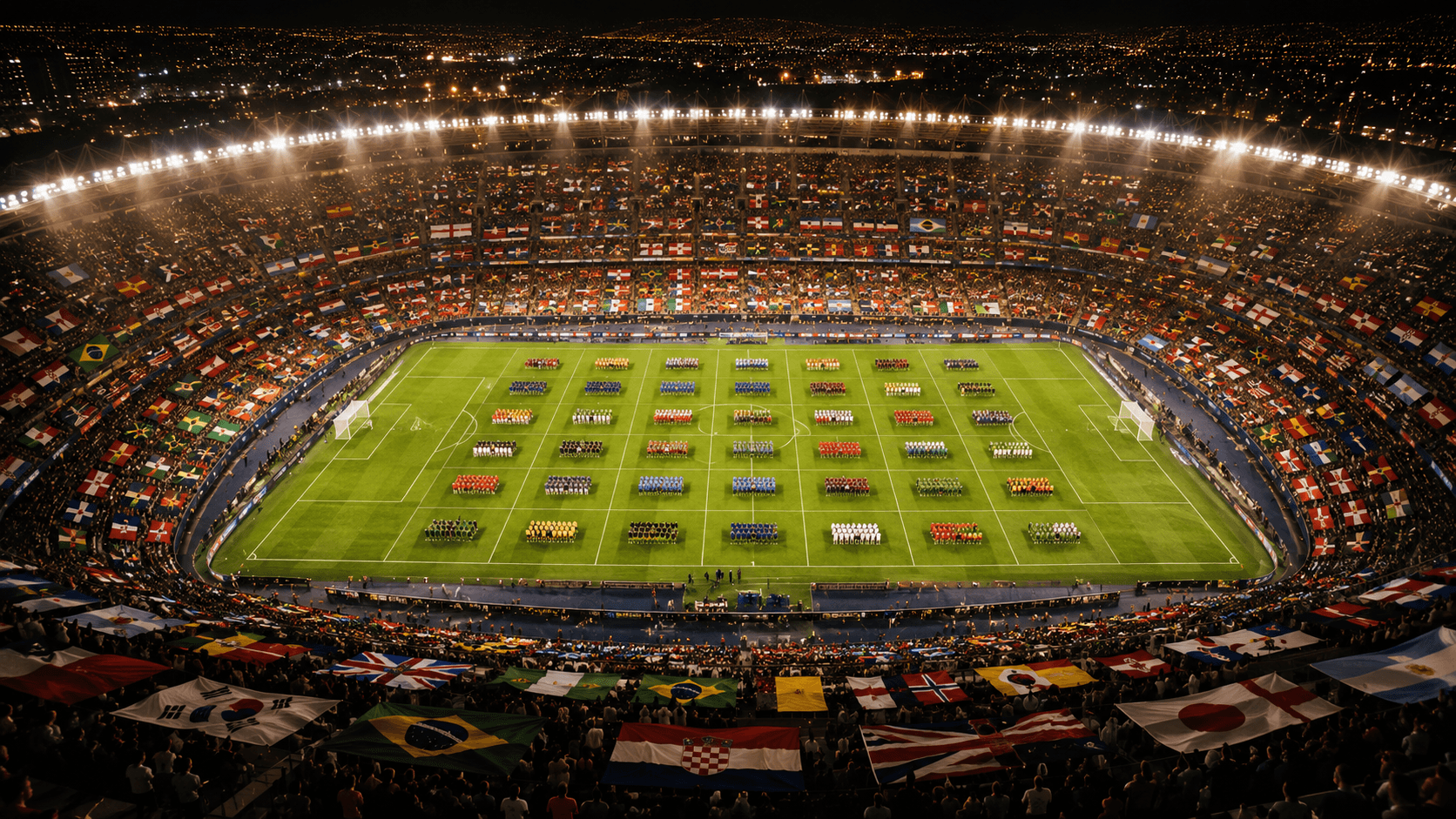
The 2026 World Cup is the first with 48 teams. The format is the biggest structural change in the tournament's 96-year history: twelve groups of four, with the top two in each group qualifying automatically and the eight best third-placed teams also advancing to a round of 32. The third-place rule returns from the 1986–1994 era, but at a scale never attempted before — eight of twelve third-placed teams will survive. A draw against Brazil is no longer a respectable result. It may be a qualification result. A single goal difference may be enough to go home or enough to survive.
The tournament runs from June 11 to July 19 across 16 venues in three countries: the United States, Mexico, and Canada. The final is at MetLife Stadium in New Jersey.
Here is every group, every team, and what to watch for in each.
Group A — Mexico, South Africa, South Korea, Czechia
The tournament opens here. Mexico vs South Africa at the Estadio Azteca on June 11 — the first match of the World Cup, in the stadium where Maradona scored the Goal of the Century forty years ago. Mexico carry the weight of being co-hosts in a country where the national team is the closest thing to a religion. South Africa return after a sixteen-year absence from the World Cup — their first appearance since hosting in 2010. South Korea arrive with several key players competing at the highest levels of European club football and a tournament pedigree stretching back decades. Czechia qualified through the UEFA playoffs, beating Denmark on penalties in the final after eliminating the Republic of Ireland.
The question: Can Mexico handle the pressure of opening the tournament at the Azteca, or does the occasion overwhelm them?
Key fixtures: Mexico vs South Africa — Jun 11, 3PM ET, Azteca · South Korea vs Czechia — Jun 11, 10PM ET, Guadalajara
→ Twenty Years Away — Czechia World Cup 2026 Squad → The Same Match, Sixteen Years Later — Opening Match Preview
Group B — Canada, Bosnia-Herzegovina, Qatar, Switzerland
Canada's World Cup begins at home. Whether it stays there depends on this group. Canada play all three matches on home soil, starting in Toronto. Jesse Marsch's squad is built around Alphonso Davies, Jonathan David, and a pressing system that has given Canada a genuine tactical identity for the first time. Switzerland offer deep tournament pedigree — quarter-finalists at Euro 2020 and consistent World Cup participants under Murat Yakin. Bosnia-Herzegovina produced one of the great qualifying shocks by beating Italy on penalties in the playoff final — Italy will miss a third consecutive World Cup. Qatar were winless as hosts in 2022 and have something to prove.
The question: Is Canada ready to advance from the group stage of a World Cup they are hosting?
Key fixtures: Canada vs Bosnia — Jun 12, 3PM ET, Toronto · Canada vs Qatar — Jun 18, 6PM ET, Vancouver · Switzerland vs Canada — Jun 24, 3PM ET, Vancouver
→ Earned, Not Given — Qatar World Cup 2026 Squad
Group C — Brazil, Morocco, Haiti, Scotland
The most loaded group on paper. Brazil are five-time champions but arrived in patchy qualifying form. Morocco were 2022 semi-finalists — the first African nation to reach that stage — and have rebuilt under coach Mohamed Ouahbi, with Achraf Hakimi and Brahim Díaz leading a new generation after several veterans from the 2022 run were left out. Scotland's qualification was a triumph in itself; their reward is facing two of the best teams in the tournament. Haiti are making only their second World Cup appearance, sixty years after their first.
The question: Can both Brazil and Morocco advance, or does one of them fall to Scotland's organization?
Key fixtures: Brazil vs Morocco — Jun 13, 6PM ET, MetLife · Haiti vs Scotland — Jun 13, 9PM ET, Foxborough
Group D — USA, Paraguay, Australia, Türkiye
The USA have spent four years preparing for this moment. Christian Pulisic, Weston McKennie, and a generation that grew up knowing this moment was coming. They play in front of their own crowds at SoFi Stadium and beyond. Paraguay qualified through CONMEBOL — never easy — and bring physicality and tournament experience. Australia are consistent World Cup participants who will be difficult to break down. Türkiye qualified through the UEFA playoffs and have genuine quality in Arda Güler and Hakan Çalhanoğlu.
The question: Can the USA win their group outright, or does the pressure of hosting produce the same tension it did for Qatar in 2022?
Key fixtures: USA vs Paraguay — Jun 12, 9PM ET, SoFi · Australia vs Türkiye — Jun 13, 12AM ET, Vancouver
→ One Point — Paraguay World Cup 2026 Squad
Group E — Germany, Curaçao, Ivory Coast, Ecuador
Germany are the favorite. The interesting question is whether Ivory Coast or Ecuador are actually the second-best team in this group. After group-stage exits in 2018 and 2022, Germany cannot afford another early departure. Julian Nagelsmann's rebuild has been convincing, and Jamal Musiala is the player around whom the project is built. Ivory Coast won the 2024 AFCON on home soil and have continued to develop since. Ecuador bring pace, directness, and qualification through one of the most competitive confederations in world football. Curaçao are the smallest nation in the tournament by population and will be playing in their first World Cup.
The question: Have Germany solved the problem that sent them home early in consecutive tournaments, or does this group expose the same vulnerabilities?
Key fixtures: Germany vs Curaçao — Jun 14, 1PM ET, Houston · Ivory Coast vs Ecuador — Jun 14, 7PM ET, Philadelphia
Group F — Netherlands, Japan, Sweden, Tunisia
The group with the most tactical intrigue. Japan are one of the most improved footballing nations on earth — their players are spread across the Bundesliga, Premier League, and La Liga, bringing technical quality and tactical sophistication that few Asian nations have matched. They beat Germany and Spain in the 2022 group stage. That is not a coincidence. The Netherlands under Ronald Koeman are built around control and structure. Sweden qualified through the UEFA playoffs, beating Poland 3-2 in the final. Tunisia are experienced World Cup participants with a disciplined defensive approach.
The question: Can Japan replicate their 2022 form, or was that the peak?
Key fixtures: Netherlands vs Japan — Jun 14, 4PM ET, Arlington
Group G — Belgium, Egypt, Iran, New Zealand
The post-golden-generation transition is the story. Kevin De Bruyne and Romelu Lukaku remain, but Belgium's squad is no longer the one that finished third in 2018 — it's younger, less proven, and the question is whether the transition has happened quickly enough. Egypt bring Mohamed Salah and a footballing culture that carries enormous weight domestically. Iran are consistent Asian qualifiers with a defensive discipline that makes them difficult to beat. New Zealand are making their first World Cup appearance since 2010.
The question: Has Belgium rebuilt quickly enough, or does Egypt capitalize on the transition?
Key fixtures: Belgium vs Egypt — Jun 15, 3PM ET, SoFi · Iran vs New Zealand — Jun 15, 12PM ET, SoFi
→ Without Azmoun — Iran World Cup 2026 Squad
Group H — Spain, Cape Verde, Saudi Arabia, Uruguay
Spain are the defending European champions with generational talent in Lamine Yamal and Nico Williams. Uruguay have two World Cup titles and a squad built around Federico Valverde. On paper this group has the clearest hierarchy — but Uruguay's qualifying form was inconsistent and Cape Verde, in their second World Cup appearance, are a well-organized side capable of taking points from anyone who underestimates them. Saudi Arabia have appeared at seven World Cups and produced one of the greatest group-stage upsets ever when they beat Argentina in 2022.
The question: Can Uruguay secure second place behind Spain, or does the group produce a surprise?
Key fixtures: Saudi Arabia vs Uruguay — Jun 15, 6PM ET, Miami
→ Saudi Arabia World Cup 2026 Squad: The Moment and What Comes After
Group I — France, Senegal, Iraq, Norway
France remain one of the tournament favorites. Winners in 2018 and finalists in 2022, they arrive with Kylian Mbappé as arguably the most dangerous player in the tournament. Senegal are Africa's most consistent recent World Cup performers — quarter-finalists in 2002, round-of-16 in 2022, and winners of the 2025 AFCON on the pitch before a controversial CAF ruling. Norway qualified with Erling Haaland, Martin Ødegaard, and a squad that has dramatically improved over the past cycle. Iraq return to the World Cup for the first time since 1986, qualifying through the FIFA playoff tournament.
The question: Does anyone in this group have the quality to challenge France, or is this group decided before it starts?
Key fixtures: France vs Senegal — Jun 16, Arlington (time TBC)
→ Iraq World Cup 2026 Squad: The Last Team In
Group J — Argentina, Algeria, Austria, Jordan
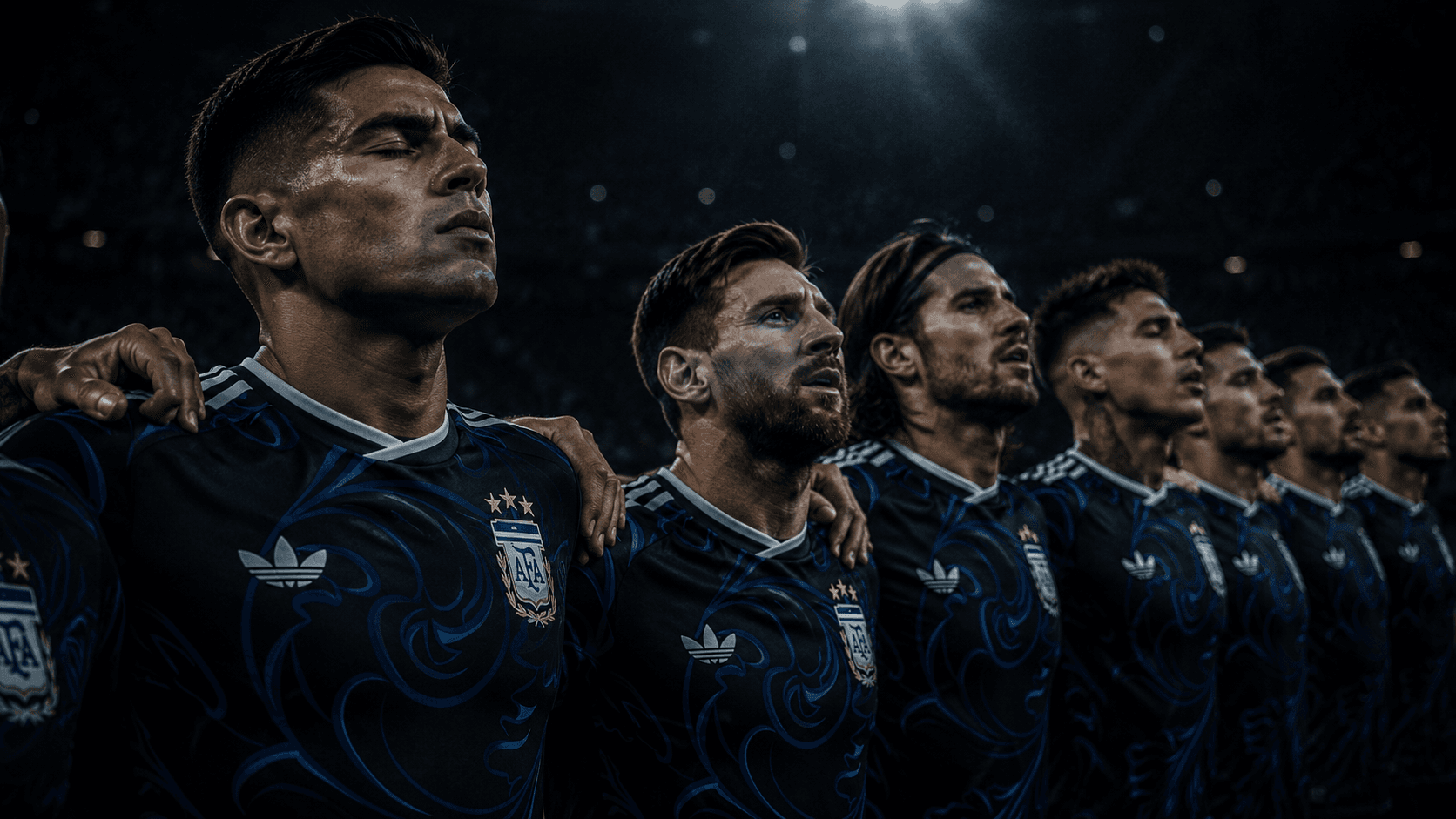
This group belongs to Messi until somebody takes it away from him. Argentina enter as holders. Lionel Messi — perhaps the greatest player of his generation — may well be playing in his final World Cup. Algeria return after twelve years, led by Riyad Mahrez in what is likely his final international tournament. Austria are organized, physical, and qualified comfortably through the European group stage. Jordan are World Cup debutants with nothing to lose and everything to prove.
The question: Is this Messi's final chapter, and does the squad around him still have the intensity that won the 2022 final?
Key fixtures: Argentina vs Algeria — venue/time TBC
→ Jordan World Cup 2026 Squad: The First Time
Group K — Portugal, DR Congo, Uzbekistan, Colombia
Portugal and Colombia both believe they can reach a semi-final. One of them probably will. Portugal have one of the deepest squads in the competition — Rafael Leão, Bernardo Silva, Bruno Fernandes — and Cristiano Ronaldo, who may be playing in his final World Cup alongside Messi. Colombia were Copa América finalists in 2024 and have genuine quality across the pitch. DR Congo qualified through the FIFA playoff tournament and will look to make an impact in their World Cup return. Uzbekistan are the Asian dark horse.
The question: Can Colombia push Portugal for first place, or does the group settle early?
Key fixtures: Portugal vs DR Congo — Jun 17, 1PM ET, Houston
Group L — England, Croatia, Ghana, Panama
England's squad is arguably the deepest in the tournament — Jude Bellingham, Bukayo Saka, Declan Rice, Harry Kane — and the weight of expectation is heavier than it has been in a generation. Thomas Tuchel made bold selection calls, omitting Phil Foden and Cole Palmer, backing form over reputation. After the 2022 quarter-final loss to France, the question is the same one it always is with England: can they convert talent into trophies? Croatia are still built around Luka Modrić, who may be playing in his final major tournament. Ghana bring pace, directness, and a physical intensity that has troubled European teams before. Panama have World Cup experience from 2018 and qualified through CONCACAF.
The question: Is this finally the tournament where England convert talent into a title, or does the familiar pattern repeat?
Key fixtures: England vs Croatia — Jun 17, 4PM ET, Arlington
The Format Question
The expansion from 32 to 48 teams is the single biggest change in World Cup history. The larger group stage, the third-place qualifying rule, and the round of 32 before the round of 16 all change the rhythm of the tournament. A team that loses its first match is no longer in crisis — a draw and a win may still be enough to advance as a best third-placed side. The margins are thinner. The stakes are different. The arithmetic is new.
Twelve groups. Forty-eight teams. More nations than ever before arriving with a plausible path to the knockout rounds. FIFA wanted a bigger tournament. What nobody knows yet is whether it will be a better one.
It starts June 11 at the Azteca.
→ Read our predictions for every group → → Read the story behind every team →