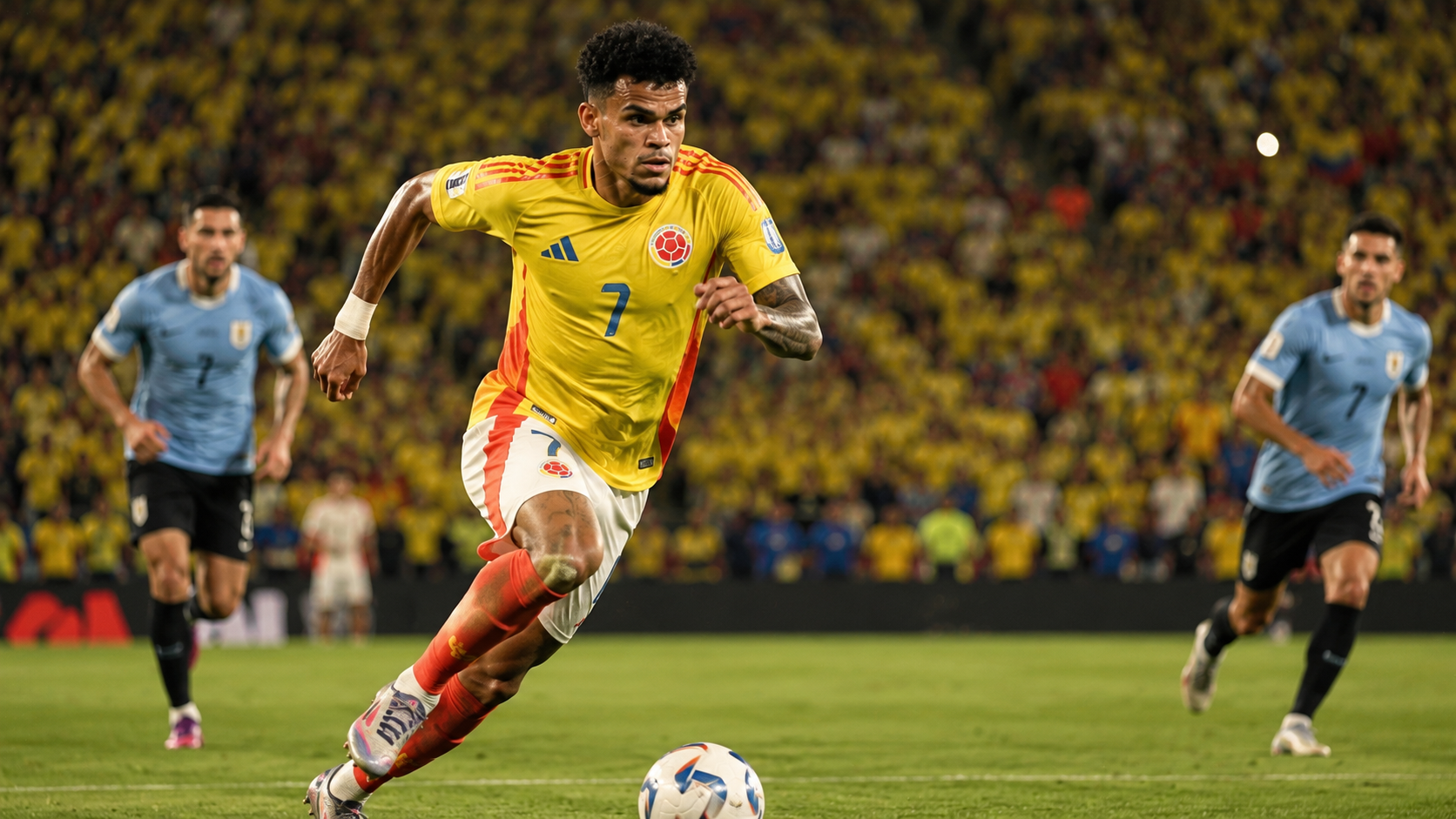
Colombia were not at the 2022 World Cup. They finished sixth in the CONMEBOL qualifying table, behind Brazil, Argentina, Ecuador, Uruguay, and Peru, and watched Qatar from home. It was a sobering result for a nation that had reached the quarterfinals in 2014, eliminated Brazil from their own tournament, and felt — in the years that followed — that they were building toward something.
They were. It just took longer than expected.
The 2026 qualifying campaign told a different story. Néstor Lorenzo, the Argentine coach who took over in 2022, built something more organized and more resilient. The same core group reached the Copa América 2024 final, losing to Argentina in Miami — the closest Colombia had come to a major title in decades, and proof that the squad was further along than the 2022 absence suggested. In qualifying, they beat Brazil 2-1 in Barranquilla. They finished third in CONMEBOL with 28 points from 18 games — above Uruguay and Brazil on goal difference, behind only Argentina and Ecuador. The wins at home, loud and emphatic and driven by a player who has spent the last two years becoming one of the most dangerous wide forwards in the world, were the rule.
That player is Luis Díaz. He is 27, plays for Bayern Munich, and is the reason Colombia's name appears in the conversation about teams that could genuinely trouble the tournament's favorites. He was Colombia's most direct attacking force throughout qualifying — direct, physical, impossible to plan for comfortably.
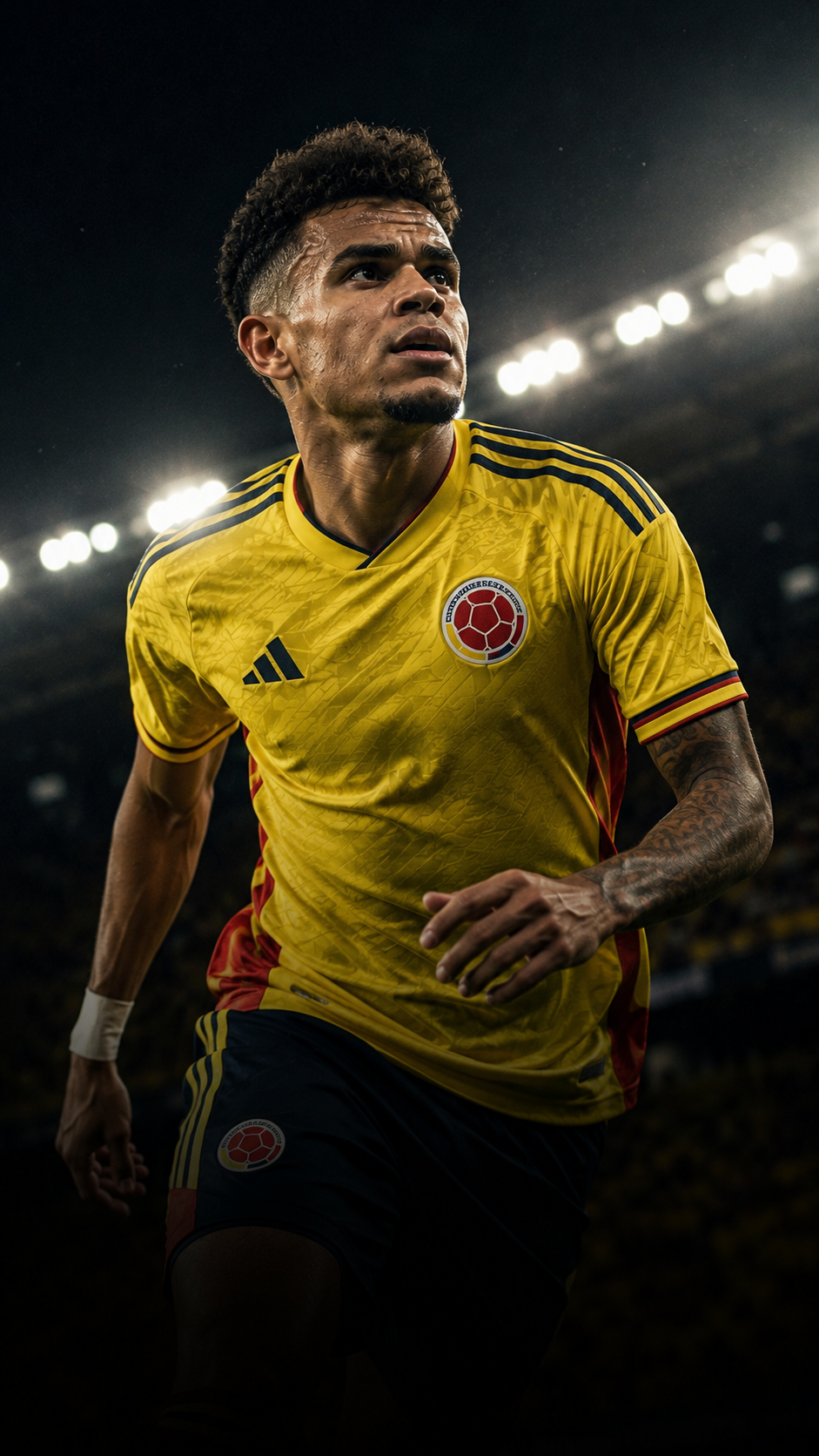
Díaz
The Squad
Goalkeepers: Camilo Vargas (Atlas), David Ospina (Atlético Nacional), Álvaro Montero (Vélez Sarsfield)
Defenders: Daniel Muñoz (Crystal Palace), Davinson Sánchez (Galatasaray), Jhon Lucumí (Bologna), Johan Mojica (Mallorca), Willer Ditta (Cruz Azul), Santiago Arias (Independiente), Deiver Machado (Nantes), Yerry Mina (Cagliari)
Midfielders: Jefferson Lerma (Crystal Palace), Richard Ríos (Benfica), Kevin Castaño (River Plate), Jorge Carrascal (Flamengo), James Rodríguez (Minnesota United), Juan Fernando Quintero (River Plate), Gustavo Puerta (Racing Santander), Juan Camilo Portilla (Athletico Paranaense), Jaminton Campaz (Rosario Central)
Forwards: Luis Díaz (Bayern Munich), Jhon Arias (Palmeiras), Luis Suárez (Sporting CP), Jhon Córdoba (Krasnodar), Juan Camilo Hernández (Real Betis), Carlos Andrés Gómez (Vasco da Gama)
The Two Versions of Colombia
There are two ways to understand this squad, and both of them are accurate.
The first version centers James Rodríguez. He is 34, captain, Colombia's all-time leading scorer in the World Cup, playing in MLS for Minnesota United on a short-term deal through June 2026, and will line up for his third tournament. In 2014, in Brazil, he had the finest individual tournament of any player in the competition — six goals, the Golden Boot, a volley against Uruguay that was voted the Goal of the Tournament, and a quarterfinal loss to Brazil that was the only thing standing between him and a place in the final. He moved to Real Madrid on the back of it. He was, briefly, the most talked-about player in the world.
That version of James Rodríguez is not the player flying to the United States in June. He is 34, his best football belongs to a decade ago, and the romantic story of his World Cup return will be told most loudly by the people who loved 2014 and want one more moment from it. There is nothing wrong with that. The question is whether the romance will survive contact with the football.
The second version centers Luis Díaz. He is 27, in the best form of his career at Bayern Munich, and the reason opposition defenses spent two years preparing specific plans for how to stop Colombia and failing anyway. He scored seven goals in CONMEBOL qualifying — bettered only by Lionel Messi's eight across all 18 nations. Duván, Colombia's other main striking option who spent the second half of the season on loan at Zenit Saint Petersburg from Al-Nassr, did not make the squad. Luis Suárez of Sporting CP — who scored 28 league goals in Portugal this season — leads the line in his absence. When Díaz is on the ball on the left — direct, physical, capable of cutting inside or going around — there is no comfortable answer. Brazil and Argentina both discovered this in Barranquilla.
Both versions are real. The squad Lorenzo has selected places them on the same pitch and asks the question of whether James at 34 and Díaz at 27 can coexist productively — whether the system that has been built around collective resilience and Díaz's directness has room for a player who works best when the game is organized around his creativity. In the best version of Colombia, it does. James controls the tempo, finds Díaz in space, and the combinations that worked in qualifying produce the same results at the tournament.
Ospina's Record
David Ospina is 37 and holds 129 caps for Colombia — the national record. He is playing in the Colombian domestic league with Atlético Nacional, which tells you something about where his career has taken him since his years at Arsenal and Napoli. He is unlikely to start. Camilo Vargas, the Atlas goalkeeper playing in Liga MX, is the expected number one. But Ospina's presence in the squad — the experience he brings, the caps he carries — is not nothing for a squad that missed the last World Cup entirely and needs to remember what this feels like.
The Group
Colombia are in Group K with Uzbekistan, DR Congo, and Portugal.
Uzbekistan on June 17 at Mexico City Stadium is the opener — the match Lorenzo's squad should win, the one that sets the tone. DR Congo on June 23 at Estadio Guadalajara is more interesting: an African side with genuine quality, including Chancel Mbemba, who will not be overawed by the occasion. Portugal on June 27 in Miami is Cristiano Ronaldo, Rúben Dias, Bruno Fernandes — the match that will define whether Colombia leave the group in first or second.
Lorenzo named nine midfielders in this squad, more than any other positional group. He was direct about why: "In tournaments like the World Cup, it is crucial to have options in the midfield; we aim to cover that area comprehensively." It reflects both the squad's strength in that area and the tactical flexibility a 34-year-old James requires — a coach who needs options around his creative hub rather than dependence on it.
Qualifying from Group K is the reasonable expectation. What happens in the Round of 32 depends on who Colombia meet and whether Díaz is still the force he was in qualifying. Potential opponents from Group L — England, Croatia, Ghana, Saudi Arabia — would represent a significant step up. Colombia vs England would be, by any measure, a match worth watching.
What Lorenzo Has Built
The most significant thing Néstor Lorenzo did in the qualifying campaign was not tactical. It was cultural. He stopped treating James Rodríguez as the automatic answer to every question and started treating Colombia as a team that could win games without any single individual being the controlling presence. The results — a Copa América final, beating Brazil at home, finishing above Uruguay and Brazil in qualifying — were the evidence.
Rodríguez is still in the squad. Still captain. Still the player who, on his best days, can do things with a football that no other Colombian can. But the system no longer waits for him. It functions without him, and when he is at his best, he makes it better. That is the correct relationship between a 34-year-old midfielder and a well-functioning collective, and it took Lorenzo two years to establish it.
The squad announced today by Lorenzo is largely the same group that earned the qualification. No major surprises, no dramatic inclusions or exclusions. It is a coach who knows what he has and trusts it. Given what that trust produced — a Copa América final, third place in CONMEBOL qualifying — it is difficult to argue with the approach.
Colombia are back. They came back the hard way. The next question is how far the road goes from here.