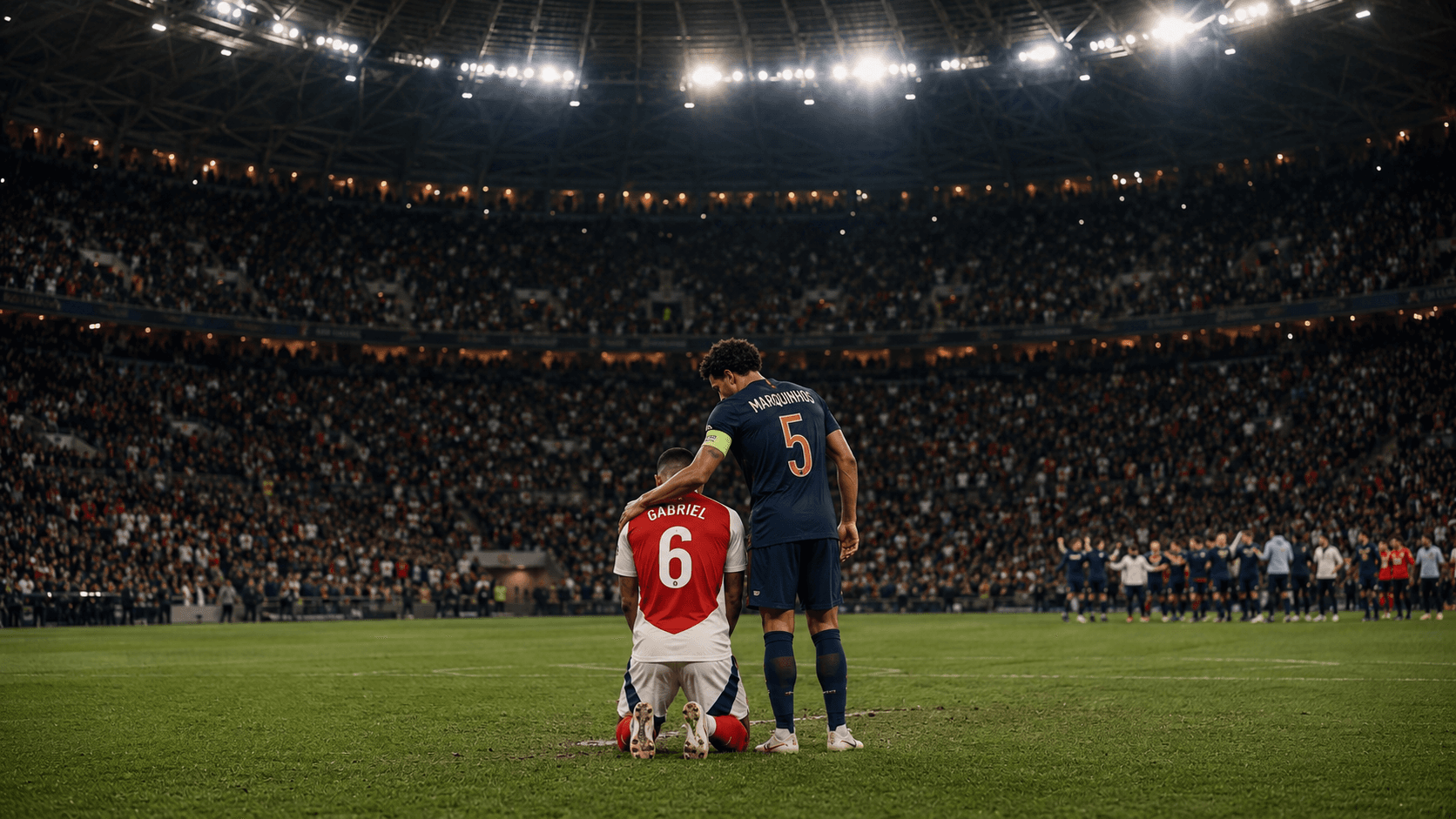
Lehmann was sent off in the 18th minute. Campbell headed Arsenal in front in the 37th. At half-time, Arsenal led Barcelona 1-0 with ten men. They held that lead for 39 more minutes — through Ronaldinho free kicks and Eto'o running at the temporary back line and a second half onslaught that felt like an exercise in how long discipline can hold against talent. It held until the 76th minute. Eto'o equalized. Four minutes later, Belletti scored. At the Stade de France in 2006, Arsenal stood on the brink of history. Then, in the blink of an eye, their dream of a first Champions League crown vanished.
Twenty years later, Arsenal arrive in Budapest with a different squad, a different manager, a different kind of resistance — and the same question of whether discipline, taken to its limit, can hold against the most talented attacking side in Europe.
What Arsenal are now
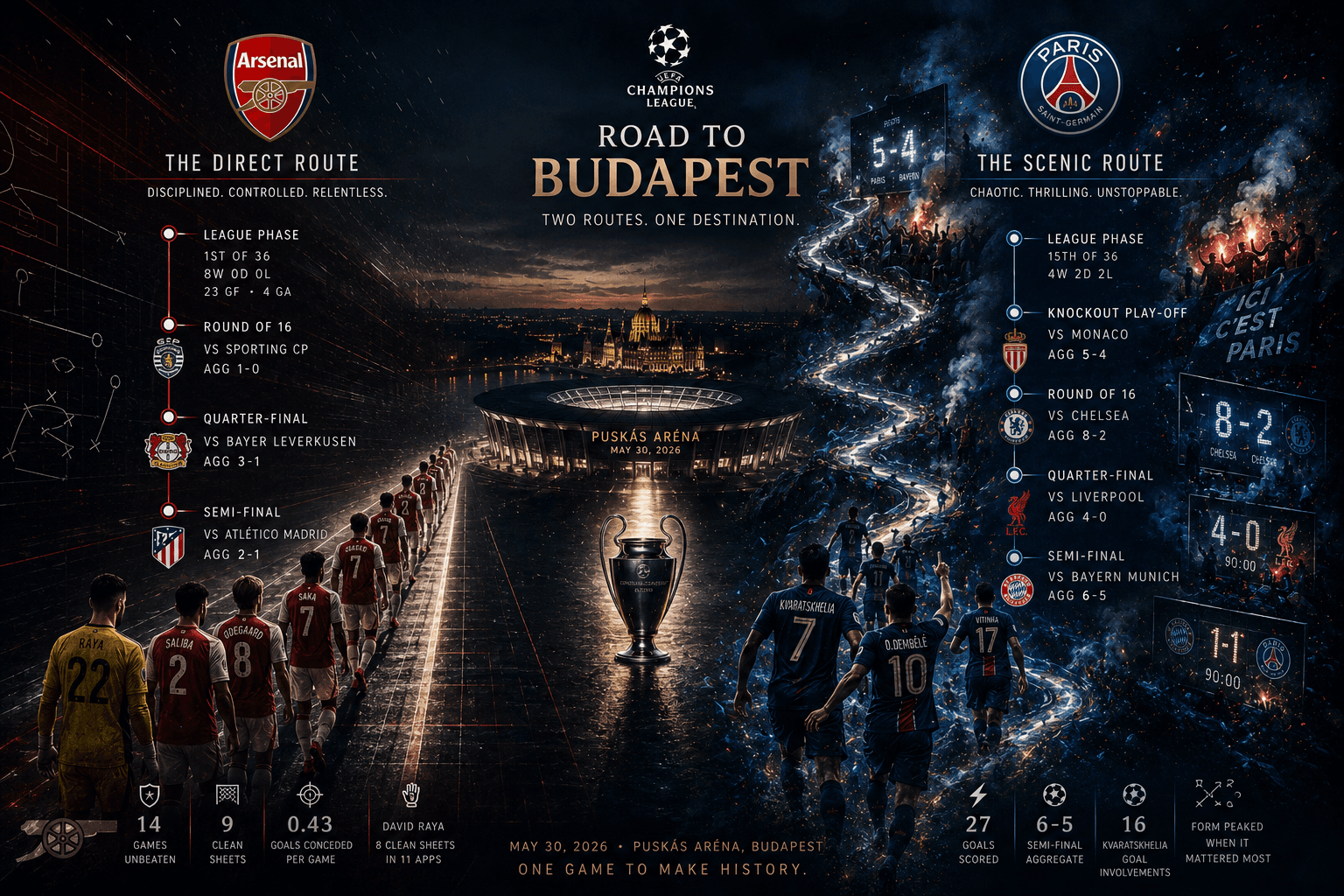
The number is six. That is how many goals Arsenal have conceded in 14 Champions League matches this season. Arsenal won all eight league phase matches — the first club in the history of the competition to do so — and have not lost a single game en route to the final. David Raya, behind that defense, has been close to unbeatable.
Six goals conceded across 14 matches is not a run of form. It is an architecture — built over four seasons of near-misses, refined through the kind of obsessive detail work that turned Arsenal from a team that kept conceding late equalisers into a team that concedes almost nothing at all. William Saliba and Gabriel Magalhães have been together long enough to function as a single defensive unit with two sets of instincts. Saliba brings the composure — opponents often hesitate against him, as if his positioning makes the shot look less viable than it did a second earlier. Gabriel brings the authority, the aggression in the air, the noise that organizes the line behind him. This season Gabriel was the higher-rated of the two by most defensive metrics — more dominant in duels, more decisive in the moments that decided matches. Saliba may carry the greater ceiling; Gabriel has had the better season.
Declan Rice in front of them is the pivot — a midfielder who makes the team feel organized rather than heavy, who reads the second ball before the first one has landed.
The problem Arteta carries into Budapest is at right back. Jurriën Timber has been absent since mid-March with injury. Ben White sustained a season-ending knee injury in May. The most likely solution is Cristhian Mosquera — a 21-year-old center back signed last summer as a development player for £13m, who has covered the right back position over the last month as Arteta ran out of alternatives. What Mosquera will face on his flank is Kvaratskhelia, Nuno Mendes, Dembélé, and Doué rotating through a structure fluid enough to place two of them on the same side at once. A stand-in defending against the best left-sided combination in Europe.
PSG have their own right back concern. Achraf Hakimi — hamstring injury in the semi-final first leg — is racing to be fit. If he doesn't make it, Warren Zaïre-Emery starts there, which removes the attacking thrust Hakimi provides but gives Arsenal's left side a different kind of problem. Either way, both sides arrive in Budapest with their right back positions compromised.
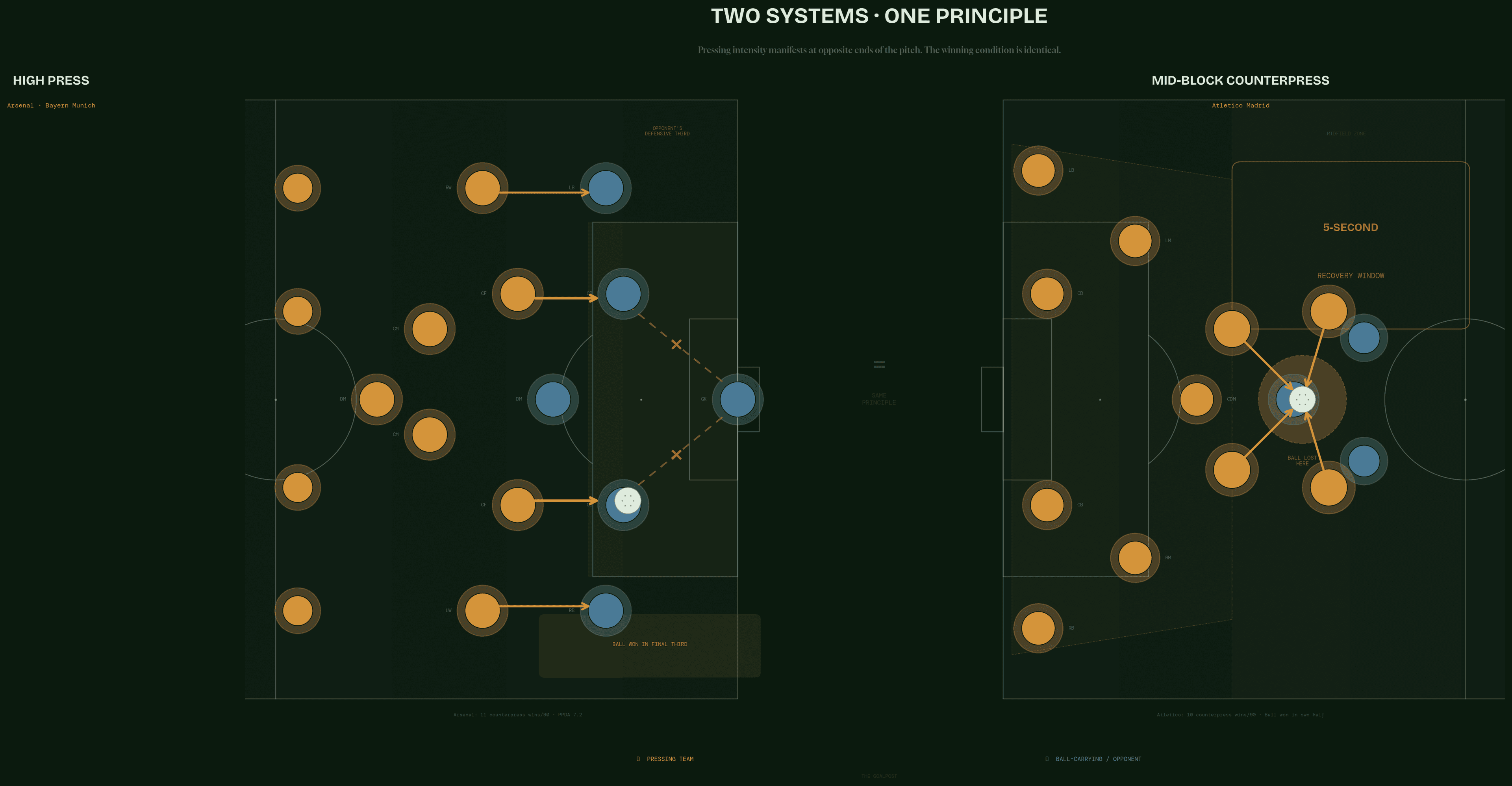
Arsenal press from the front and defend from a low block — sometimes both in the same game, depending on what the match requires. They win 1-0 from set pieces, scoring more from dead balls than any other side in Europe's top five divisions this season. They are not a team that dominates opponents; they are a team that makes opponents' good moments unprofitable.
The selection question Arteta faces is whether Gyökeres or Havertz leads the line. Both are used as alternatives rather than partners. Gyökeres needs space — he bullied Atlético's defenders in the semi-final through size, aggression and speed, but Pacho and Marquinhos are a different defensive proposition. Havertz is the better technician, neater link player, and better suited to a match where Arsenal may spend sustained periods without the ball — holding it up, letting teammates get up the pitch, arriving into the box late. The likely sequence: Havertz to start, Gyökeres to run at tired legs. Arteta will not play both from the start.
Saka is Arsenal's primary difference-maker — a player who creates from within, arriving into dangerous areas through movement rather than pace. The midfield behind him may be where Arteta makes his boldest selection. The expectation would be to sit deep, absorb, and counter. But the league title has been won. The pressure that compressed Arsenal into their most cautious version has been lifted. Arteta could deploy Ødegaard and Eze as dual eights alongside Rice — Ødegaard bringing tempo control, pressing intensity, and the ability to find tight spaces, Eze bringing creativity and the kind of half-turn that opens up defenses who are expecting a more rigid opponent. If Arteta decides Saturday is the moment to take the shackles off, that midfield shape is how he does it.
What PSG are now
The counterargument has spent 15 Champions League matches making itself. PSG scored 44 goals in those matches. Twenty-two conceded. The goals-against figure sounds alarming until you set it against what they produced going forward, and it stops being the main point.
Ousmane Dembélé has been the most dangerous forward in the competition in the knockout rounds — scoring and assisting at a rate that requires a defense to make a choice about him at all times. Kvaratskhelia has been the outstanding player in this competition — 10 goals and six assists in 15 appearances, with a clutch quality in knockout matches that no one has been able to design a reliable answer to. Désiré Doué, man of the match in last year's final against Inter, completes a front line fluid enough that two of them will sometimes appear on the same flank at once.
The semi-final against Bayern Munich — Luis Enrique's PSG won 6-5 on aggregate — produced the question of whether they are genuinely fragile. The second leg at the Allianz Arena answered it: 1-1, Kvaratskhelia in the 3rd minute, Harry Kane in the 94th. PSG held a one-goal lead against Bayern at their own ground for 83 minutes before Kane's stoppage-time equalizer. Whatever label applies to that team, fragile is not it. This is the first PSG side of the Qatari era whose identity is larger than any individual star.
Luis Enrique has described wanting players who can fill every position on the field — not as a party trick but as a tactical philosophy. The compactness in possession, the commitment to pressing as an offensive tool, the belief that the game can be controlled by controlling the ball rather than by shaping space around its absence.


Arsenal generated more than 1.5 expected goals per leg than they converted. Gianluigi Donnarumma made multiple miraculous saves — including three from Martinelli — to hold a result the underlying numbers said Arsenal should have turned over.
Donnarumma left PSG for Manchester City last summer. His replacement, Matvei Safonov, has performed well — but he is not Donnarumma. Arsenal created enough chances across last season's semi-final to win the tie comfortably. If they produce a performance as good in Budapest, they will fancy their chances.
What has happened between them
Seven previous meetings in UEFA competition. Two wins each. Three draws.
Arsenal and PSG first met in 1994 — a Cup Winners' Cup semi-final that Arsenal won 1-0 on aggregate before going on to lift the trophy. That remains Arsenal's last European title.
In this season's league phase, Arsenal beat PSG 2-0 at the Emirates — Havertz, Saka. PSG could only produce an xG of 0.40 that night; Dembélé was absent, internally suspended by Enrique after a disagreement.
Last season's semi-final tells a more complicated story than the 3-1 aggregate result suggests. PSG won the first leg 2-1 at the Parc des Princes, then 1-0 at the Emirates. But the expected goals across both legs favored Arsenal 4.54 to 2.90. Gianluigi Donnarumma made multiple miraculous saves — including three from Gabriel Martinelli — to hold a result the underlying numbers said Arsenal should have turned over. Donnarumma left PSG for Manchester City last summer. His replacement, Chevalier, started the season as the number one but a string of shaky performances cost him the shirt. Matvei Safonov took the starting position and has not given it back. He has performed well but is no Donnarumma. Arsenal created enough chances across last season's semi-final to win the tie comfortably. If they produce a performance even remotely as good in Budapest, they will fancy their chances of beating Safonov.
The coaches
Arteta arrived at Arsenal in December 2019 after three years as Guardiola's assistant at Manchester City. He set about building Arsenal in a familiar image: possession-based, high-pressing, and obsessively detailed. For several seasons, Arsenal looked like a team trying to challenge Guardiola's City on Guardiola's terms. They came close, but not close enough.
What emerged from those near-misses was something more distinct. Arsenal retained the positional structure and control Arteta had learned under Guardiola, but layered on qualities that reflected the realities of competing against City rather than being City. They became more physical, more dominant from set pieces, more comfortable winning games that were untidy rather than beautiful. If Guardiola's teams sought to control every phase of a match, Arteta's learned how to survive the phases they couldn't control.
The result is a side built on structure, defensive authority, and an almost obsessive attention to marginal gains. Arsenal did not abandon Guardiola's blueprint. They evolved it. They have now won the Premier League with it.
Three runners-up finishes in three consecutive seasons preceded this one. The title was confirmed on May 19 when City drew 1-1 at Bournemouth. The release of that pressure — the accumulated weight of being the team that was supposed to win and didn't — is the context for what Arteta's side carry into Budapest.
The theory is that a team playing without the pressure of needing a result to rescue a season will play with a freedom the pressure-burdened version could not access. The shackles come off; Budapest is the coronation rather than the trial. The counter-theory is simpler: they have already won the thing they spent four years trying to win. The edge of desperation has been discharged. Which version shows up Saturday is the psychological subplot running beneath every tactical question.
Luis Enrique won the Champions League with Barcelona in 2015 — Messi, Suárez, Neymar — and again last year with PSG in a 5-0 demolition of Inter Milan in Munich. A third title Saturday would place him alongside Guardiola, Zinedine Zidane, Bob Paisley, and Carlo Ancelotti as the only managers to win it three times, and make him the only one to do so with clubs from two different countries.
What Enrique has built at PSG has been compared to the Guardiola Barcelona of 2008 to 2012. He describes this PSG project as the most complete expression of what he believes football should look like. Saturday is the proof of concept.
The student, the teacher's idea
Arteta was a La Masia youth product who left Barcelona before the first team — PSG, Rangers, Everton, Arsenal as a player, then Guardiola's assistant at City from 2016 to 2019. Enrique played for Barcelona's first team and managed it. The institution that shaped both of them is the same. What they built from it is not. Both inherited the same football language. They arrived at different conclusions about what it should sound like.
The student playing the grandchild of the teacher's idea.
The question Budapest will answer
Arsenal's defensive structure does not collapse cleanly against teams that play high-tempo, fluid football — it absorbs and redirects. The question is whether PSG's creativity is sufficient to find a gap. PSG's attacking structure does not collapse cleanly against organized pressing — it finds the player who is free on the next pass. The question is whether Arsenal's press is tight enough to eliminate that option before it opens.
Something breaks. The question is which side's identity cracks first. The margins in finals are small.
There is a broader context. Aston Villa have already won the Europa League. Crystal Palace have won the Conference League. An Arsenal victory would complete an English sweep of UEFA's three club competitions — something achieved only once before by a major European league.
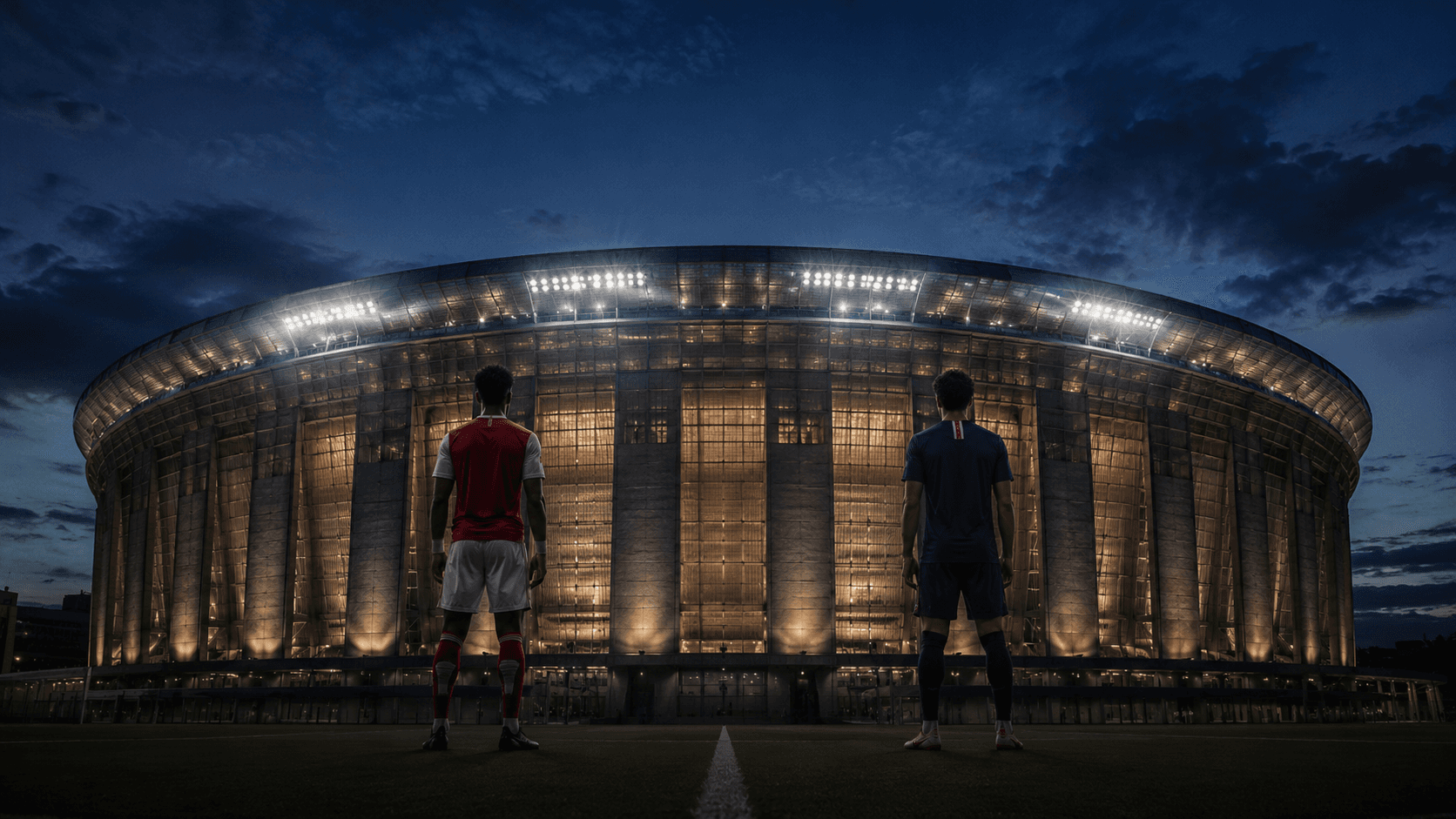
The Puskás Aréna holds 67,215 people. Kickoff is noon Eastern on Saturday. Twenty years after the night in Saint-Denis, Arsenal have another chance at the one trophy that has always escaped them. They return to a Champions League final with the same question hanging over them: how long can discipline hold against talent? The wall has held all season. Saturday will decide whether it can hold one more time.
Read the match report: UCL Final: The Water Won →
Arsenal4-3-3PSG4-3-3GoalPost Prediction
Generated by the GoalPost Poisson model — UCL 2025–26 match data, cross-referenced with domestic season stats.
Arsenal 1–1 PSG · Arsenal on penalties (most likely outcome)
| Arsenal | Draw | PSG | |
|---|---|---|---|
| Win probability | 38% | 27% | 35% |
Most likely scorelines: 1–1 (14%) · 0–0 (10%) · 1–0 PSG (10%) · 0–1 Arsenal (11%)
Model inputs: Arsenal conceded 6 goals in 14 UCL matches (0.43/game — the lowest in the competition). PSG scored 44 in 15 (2.93/game — the highest). The model's expected goals for 90 minutes: PSG ~1.1 xG, Arsenal ~1.3 xG. Arsenal's exceptional defensive shape suppresses PSG's expected output significantly; PSG's defensive record against elite attacks is the model's primary uncertainty.
The numbers align with the article's argument: Arsenal's defensive identity is strong enough to keep this tight. PSG's attack is strong enough to break through once. One each is the most probable single-score result. Penalties are football's coin flip — GoalPost assigns no meaningful edge there. If this does reach extra time, Arsenal have conceded in extra time fewer times than any other side in this competition.
This prediction reflects GoalPost's analytical model and does not constitute betting advice.