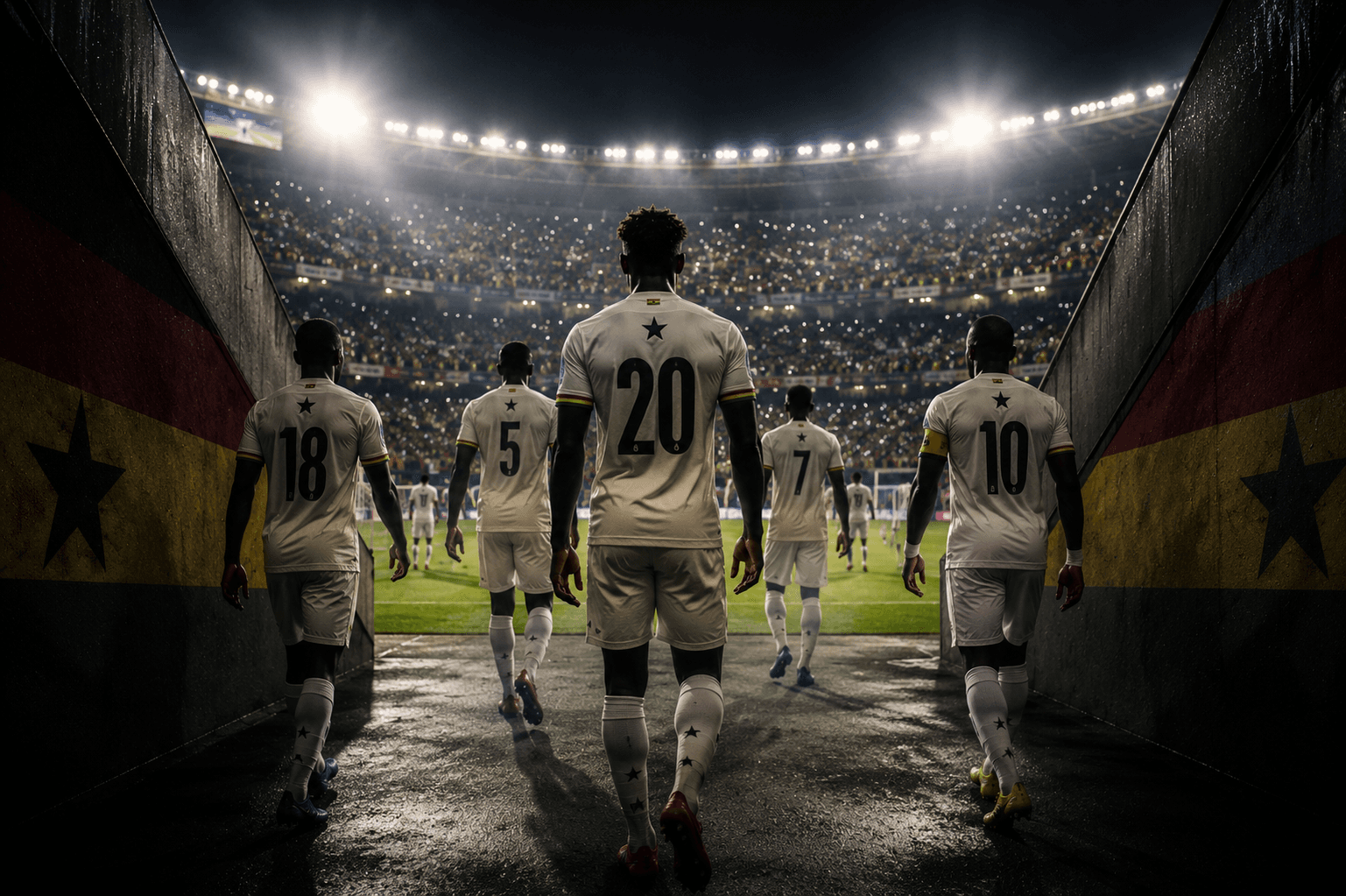
Ghana's deepest run at a World Cup ended in South Africa in 2010. They were a minute from the semifinal. Asamoah Gyan stepped up to take a penalty that would have sent them through. He hit the crossbar. Uruguay stayed in the tournament. Ghana went home. The handball, the miss, the quarterfinal that became a reference point — a generation built its identity around what did not happen.
The players who carried that weight are gone. The squad Carlos Queiroz named in June 2026 is not the 2010 generation and is not its children. It is something different: a collection of players assembled by a coach appointed eight weeks before the tournament began, shaped around an absence that defined the preparation more than any presence.
Mohammed Kudus is not going to the World Cup.
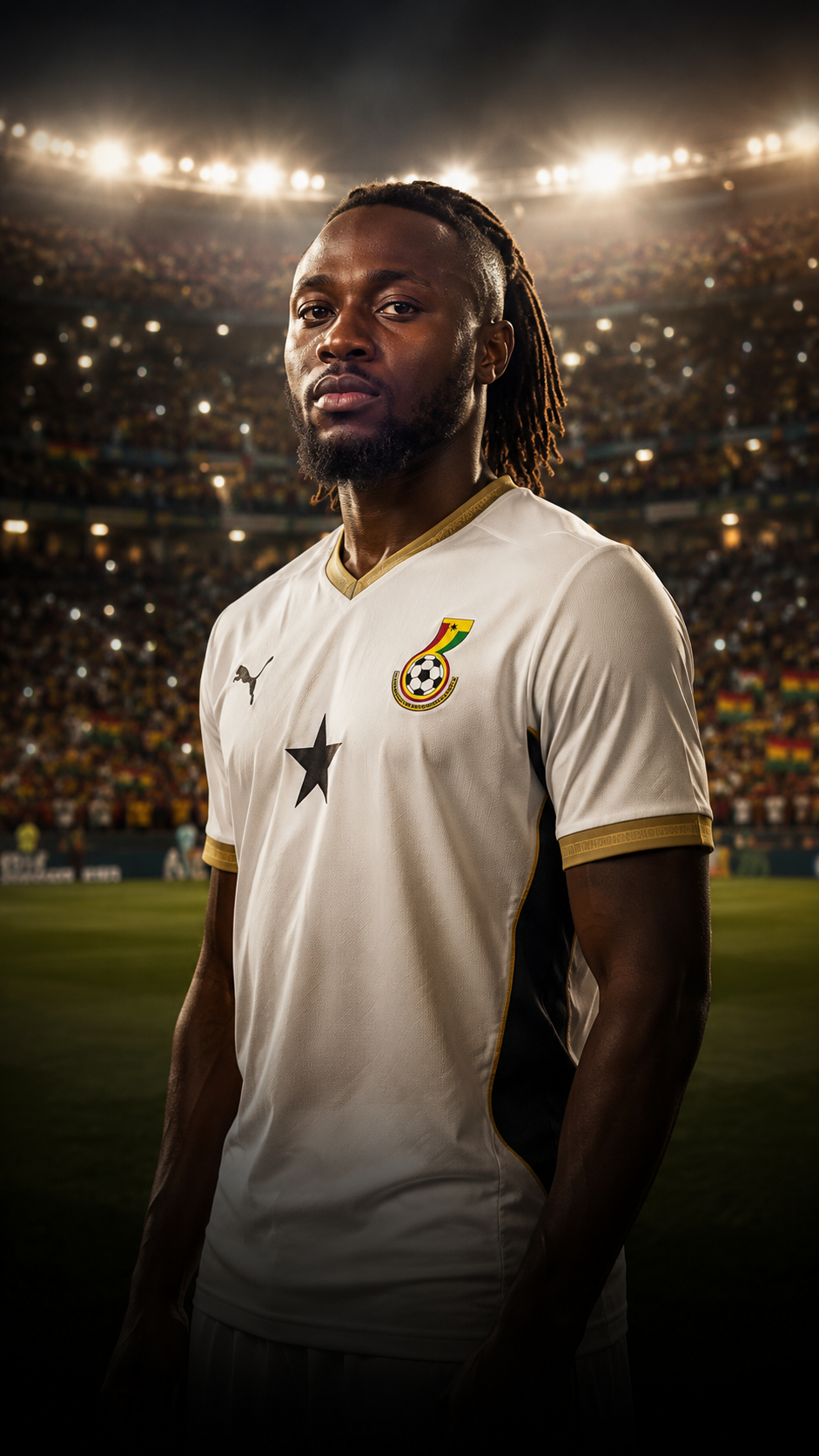
Semenyo
The Absence
Kudus was supposed to be the player this squad was built around. The West Ham forward — later Tottenham — was among the most dynamic attackers in the Premier League, the kind of player who changes the shape of a match by moving into it. His club form across the 2024/25 season was the evidence that Ghana could arrive at this tournament with a genuinely dangerous number ten.
He did not make the squad. The circumstances are disputed. What is not disputed is that the team that walked into camp in late May was a different team from the one anyone had modeled.
Antoine Semenyo, 26, plays for Manchester City. He arrived there from Bournemouth in the January window. He is direct, physical, and capable of the kind of performance that defines a tournament — the question is whether a squad that lost its most creative attacking player a month before departure can be reorganized around a different profile.
Queiroz
Carlos Queiroz is 73 years old. He has managed Portugal, South Africa, Iran, Colombia, Egypt, Qatar, Oman, and now Ghana. He is experienced in precisely the situation he has been handed — a squad in transition, a short preparation window, a tournament where the seedings are against his team.
His method is pragmatic and collective. He does not build around one player. He builds around a shape and asks individuals to find their role within it. Thomas Partey, at Villarreal, provides the midfield anchor. Partey's ability to control possession and win the ball back gives Queiroz the platform his system requires.
Jordan Ayew returns. He is 34 and has watched his brother Andre step away from international football. He has been at World Cups. He has been through this before. In a young squad with a new manager and a preparation period measured in weeks, that experience is not nothing.
The Group
Ghana play Panama on June 17 in Toronto. England on June 23 in Foxborough. Croatia on June 27 in Philadelphia.
The group is difficult. England are among the tournament favorites. Croatia are built around Luka Modrić and the same defensive structure that reached the 2018 final. Panama are reachable. Three points from Panama, organized resistance against Croatia, and something unexpected against England — that is the path.
Iñaki Williams, who plays for Athletic Club in Bilbao and qualifies through his Ghanaian heritage, adds a different dimension in attack. His pace, directness, and movement off the ball give Queiroz an option he can deploy against different defensive structures. He has not always been central to Ghana's plans. He may be now.
The Weight
Ghana's World Cup record is: 2006, round of sixteen. 2010, quarterfinal. 2014, group stage. 2022, group stage.
The 2010 story dominates everything that comes after it — not because Ghana have been bad at World Cups since, but because the best they have been since was not as close. The crossbar. The penalty. The handball. These details refuse to leave.
This squad does not carry them personally. Queiroz was not there. Semenyo was ten years old. The weight they carry is not memory but expectation — the institutional expectation of a football federation that knows what almost happened and has been building toward proving it was not an accident.
The squad is different from the one expected. The manager arrived late. The key player is absent.
Ghana have been here before — not here specifically, but in the version of here where nothing is certain and something has to be proven. They go to North America with that in common with every tournament that came before it.
The unfinished business remains unfinished. There is time.
Ghana World Cup 2026 Squad
Goalkeepers: Lawrence Ati-Zigi (St. Gallen), Joseph Anang (St Patrick's Athletic), Benjamin Asare (Hearts of Oak)
Defenders: Alidu Seidu (Rennes), Jonas Adjetey (VfL Wolfsburg), Abdul Mumin (Rayo Vallecano), Gideon Mensah (Auxerre), Abdul Rahman Baba (PAOK), Jerome Opoku (İstanbul Başakşehir), Kojo Peprah Oppong (Nice), Derrick Luckassen (Pafos), Marvin Senaya (Auxerre)
Midfielders: Caleb Yirenkyi (Nordsjælland), Thomas Partey (Villarreal), Kwasi Sibo (Oviedo), Antoine Semenyo (Manchester City), Elisha Owusu (Auxerre), Augustine Boakye (Saint-Étienne)
Forwards: Abdul Fatawu (Leicester City), Jordan Ayew (Leicester City), Brandon Thomas-Asante (Coventry City), Christopher Bonsu Baah (Al-Qadsiah), Iñaki Williams (Athletic Bilbao), Kamaldeen Sulemana (Atalanta), Ernest Nuamah (Lyon), Prince Kwabena Adu (Viktoria Plzeň)
Coach: Carlos Queiroz | Group L: England · Croatia · Panama
Fixtures: Jun 17 v Panama — Toronto · Jun 23 v England — Boston · Jun 27 v Croatia — Philadelphia
Correction, October 5, 2026: this piece first said Carlos Queiroz had managed the United States (he has not; his national teams include Portugal, Iran, Colombia and Egypt), that Mohammed Kudus later joined Chelsea (he joined Tottenham), and that Queiroz knew Thomas Partey from managing in Europe (Queiroz's European club work predates Partey's career).