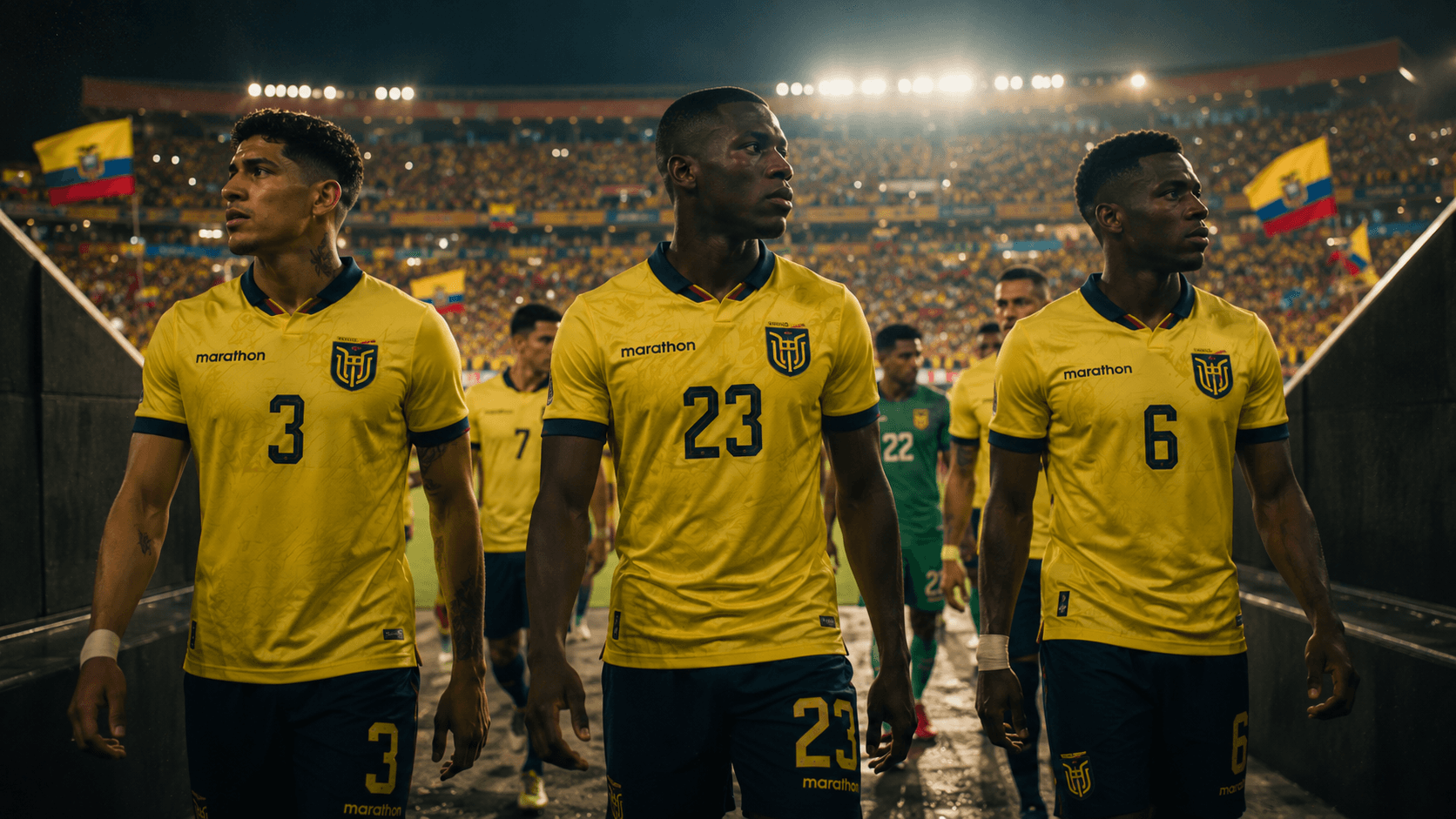
Ecuador finished second in CONMEBOL qualifying. Behind only Argentina. Ahead of Brazil, Colombia, Uruguay, and every other nation in the most competitive continental qualification competition in world football. They lost two of eighteen matches. They conceded five goals, the fewest in the region. They arrived at this World Cup not as tourists, not as a nation relieved to qualify, but as a team that had beaten the best South America has to offer.
This is the best squad Ecuador have ever had. The players know it. So does everyone else.
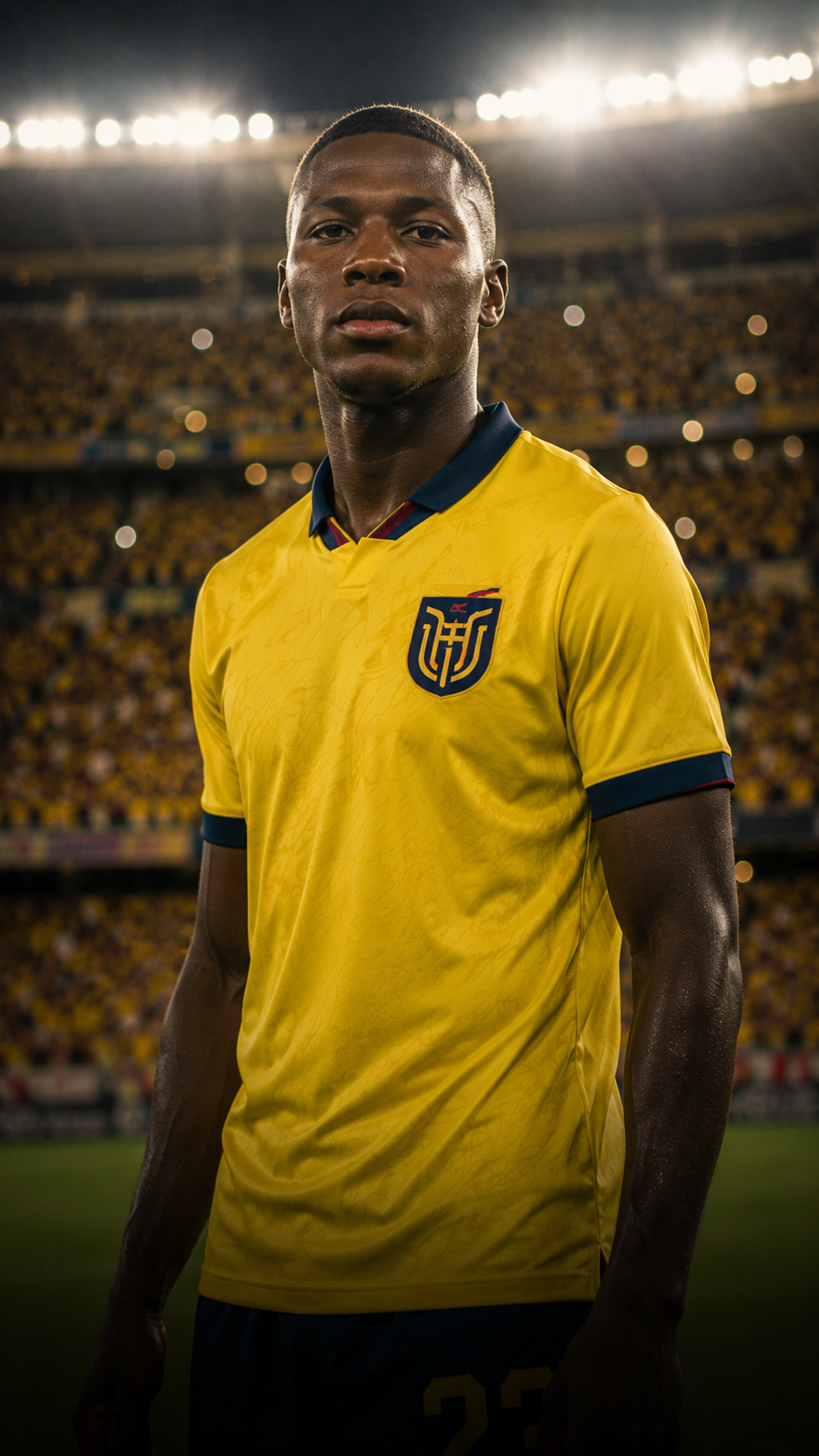
Caicedo
The Midfield Anchor
Moisés Caicedo is 24 years old. He plays for Chelsea and won the Club World Cup last year. He is among the best holding midfielders in European football — not the most expensive or the most decorated, but the most important on the pitch in the specific role of controlling space and winning the ball back. He is the kind of player whose absence is noticed in the first minute and felt for ninety.
Ecuador are built around what Caicedo does in the middle of the pitch. He allows Beccacece to play with aggression higher up because someone behind is absorbing the risk. He allows the defenders to defend higher because someone in front of them is screening. He is not the most visible player on this team. He is the most necessary.
His captaincy is not ceremonial. In a squad where the average age sits in the mid-twenties and the senior generation is aging out, Caicedo provides the authority a young team needs from someone who has already done this at the highest club level.
The Production Line
The story of Ecuador's football in the last decade is largely the story of Independiente del Valle. The Quito club — founded in 1958, irrelevant for most of its history — became a production line. Caicedo passed through it. Hincapié passed through it. The infrastructure, the methodology, the obsessive work with young players from the provinces around the capital — all of it produced the generation now wearing the yellow jersey in North America.
Willian Pacho is 24 and plays for PSG. Piero Hincapié is 24 and plays for Arsenal. Pervis Estupiñán is 28 and plays for AC Milan. These are not players who happened to be born in Ecuador and ended up at big clubs. They are the product of a system that identified them young, developed them deliberately, and placed them in the European market at exactly the moment when the European market wanted what they were offering.
The production line continues. Kendry Páez, 19, plays for River Plate. Jeremy Arévalo, 21, plays for Stuttgart. The conveyor belt has not stopped.
Enner Valencia
Enner Valencia is 36 years old and plays for Pachuca in Liga MX. He scored three of Ecuador's four goals in the 2022 World Cup group stage — two against Qatar and one against the Netherlands; Moisés Caicedo scored against Senegal. He is the greatest scorer in Ecuadorian international football history.
Whether he starts in this squad or provides experience from the bench is Beccacece's decision. What is certain is that his presence changes the calculus for defenders who have watched the footage. Enner Valencia, in a World Cup, against teams who have had three months to prepare for him, has still scored three. He is 36. He is still a problem.
Group E
Ecuador open against Ivory Coast on June 14 in Philadelphia. Ivory Coast play through Franck Kessié and Amad Diallo — a different kind of challenge, built on individual quality and African tournament experience. June 20 brings Curaçao in Kansas City — a first World Cup, a proud achievement, but not a team expected to trouble a side that finished second in CONMEBOL.
Then Germany on June 25 at MetLife Stadium. Germany are the group favorite. They are also a team that has exited consecutive World Cup group stages. Ecuador will not arrive at that match hoping to survive it.
The Question
Ecuador have been to four World Cups. 2002: first appearance, group stage exit. 2006: reached the round of sixteen. 2014: group stage exit. 2022: group stage exit.
The trajectory is inconsistent. The 2026 squad is generationally better than any of those. Caicedo did not exist at a senior level in 2014. Pacho and Hincapié were 12; Estupiñán was 16. The production line had not yet delivered its best.
This is what the best of Ecuadorian football looks like. The generation is here. The tournament is here. The group is, on paper, manageable from the places where it is manageable and hard only where it should be hard.
Finishing second behind Argentina in CONMEBOL was the answer to one question. What they can do in North America in June is the next one.
Ecuador World Cup 2026 Squad
Goalkeepers: Hernán Galíndez (Huracán), Moisés Ramírez (Kifisia), Gonzalo Valle (LDU Quito)
Defenders: Félix Torres (Internacional), Piero Hincapié (Arsenal), Joel Ordóñez (Club Brugge), Willian Pacho (Paris Saint-Germain), Pervis Estupiñán (AC Milan), Ángelo Preciado (Atlético Mineiro), Jackson Porozo (Tijuana), Yaimar Medina (Genk)
Midfielders: Jordy Alcívar (Independiente del Valle), Anthony Valencia (Antwerp), Kendry Páez (River Plate), Alan Minda (Atlético Mineiro), Pedro Vite (Pumas UNAM), Denil Castillo (Midtjylland), Alan Franco (Atlético Mineiro), Moisés Caicedo (Chelsea, captain)
Forwards: John Yeboah (Venezia), Kevin Rodríguez (Union Saint-Gilloise), Enner Valencia (Pachuca), Jordy Caicedo (Huracán), Gonzalo Plata (Flamengo), Nilson Angulo (Sunderland), Jeremy Arévalo (VfB Stuttgart)
Coach: Sebastián Beccacece | Group E: Germany · Ivory Coast · Curaçao
Fixtures: Jun 14 v Ivory Coast — Philadelphia · Jun 20 v Curaçao — Kansas City · Jun 25 v Germany — New York
Correction, October 5, 2026: this piece first said Ecuador won 14 of 18 qualifiers and conceded 19 goals (they won eight, drew eight, lost two and conceded five), that Achraf Hakimi and Brahim Díaz play for Ivory Coast (both play for Morocco), that Ecuador reached the round of 16 in 2002 (they went out in the group stage; 2006 was their round of 16), and that Enner Valencia scored all three of Ecuador's 2022 group goals (he scored three of their four; Moisés Caicedo scored the other).