Ahmed Radhi scored Iraq's only World Cup goal on June 8, 1986. A low shot into the corner of the net against Belgium in Toluca. Iraq lost the match 2-1. They lost all three of their group games. Then they went home and did not return to the World Cup for forty years.
Radhi died on June 21, 2020, of COVID-19. He was 56 years old. He never saw Iraq qualify again.
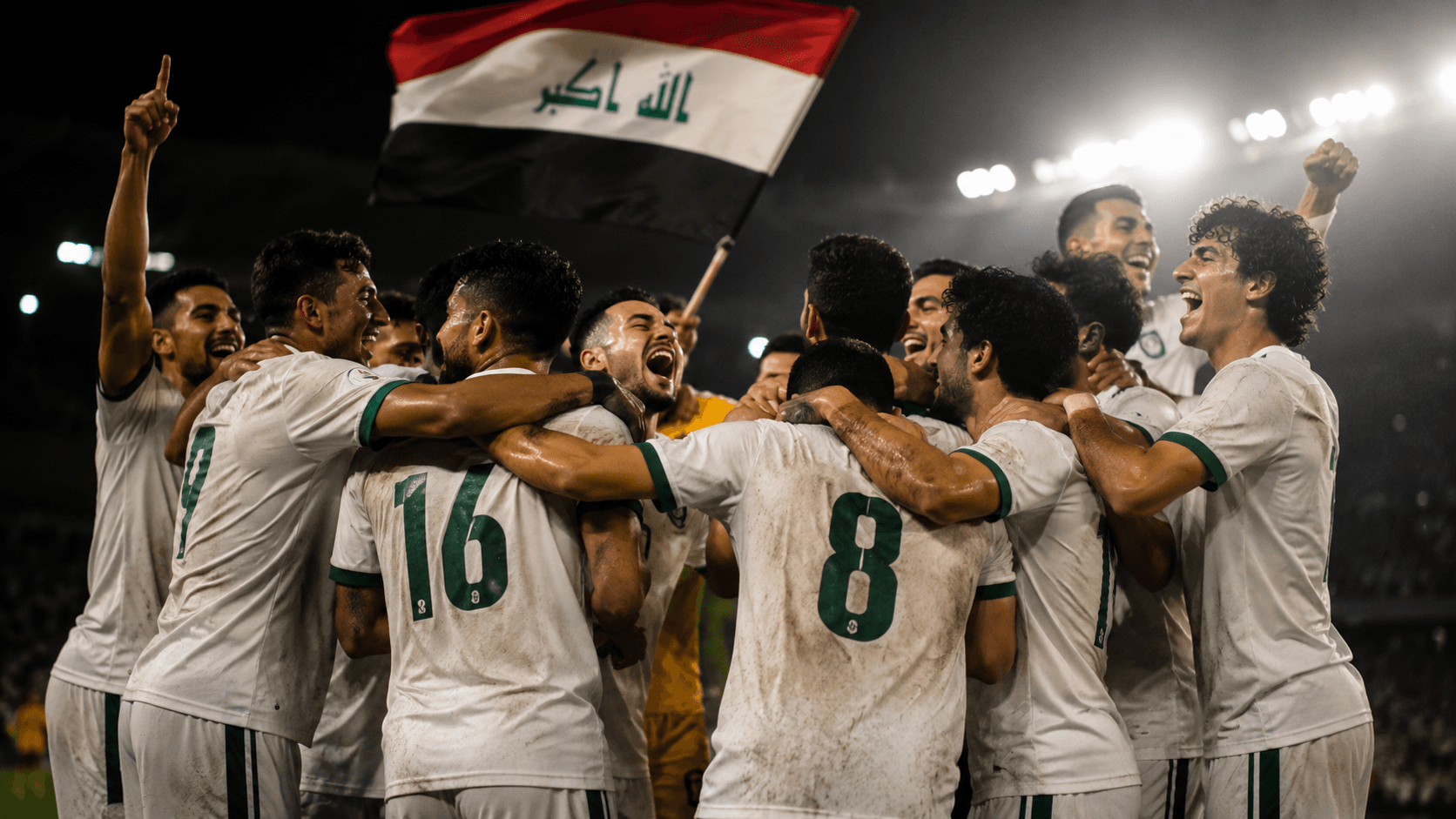
The squad Graham Arnold named on Monday is the answer to a question that took four decades to ask: could Iraqi football, after everything that happened between 1986 and now, produce a team capable of reaching the World Cup one more time? The answer required 21 qualifying matches — more than any other nation at this tournament — a path through the Asian qualifiers, a two-legged playoff against the UAE, and a final intercontinental playoff against Bolivia in Monterrey on March 31, 2026. Iraq won 2-1. They were the 48th and final team to qualify.

Al-Hamadi
What Happened in Between
This is not the place for a full accounting of what Iraq endured between 1986 and 2026. The wars, the sanctions, the invasion, the occupation, the insurgency — these are matters of history and politics, not football. But they explain why the gap exists. Iraq spent years unable to host home internationals on their own soil. FIFA and the AFC routed their fixtures through Doha, Amman and Tehran. The Iraqi Football Association operated under conditions that would have ended most football programs entirely.
Football did not end. In 2007, during the worst of the sectarian violence, Iraq won the Asian Cup — beating Saudi Arabia 1-0 in the final. Younis Mahmoud scored the goal. It remains the single greatest achievement in Iraqi football history, and arguably one of the most remarkable results in the history of international football. A country at war, unable to train consistently, unable to play at home, won a continental championship.
That is the context this squad carries. Not as a burden — as evidence that Iraqi football does not stop.
Al-Hamadi and the Diaspora
Ali Al-Hamadi spent the season on loan at Luton Town from Ipswich Town. He scored the opening goal against Bolivia in the match that qualified Iraq for the World Cup. He is 24, born in Maysan, raised in the diaspora, and represents the way Iraqi football has rebuilt itself: through players scattered across Europe who chose to represent Iraq rather than the countries where they grew up.
Nine of the 26 players in Arnold's squad are based in Europe — across England, the Netherlands, Italy, Poland, the Czech Republic, Norway, Denmark, and Cyprus. Zidane Iqbal, born in Manchester, came through the Manchester United academy before moving to FC Utrecht. Ali Jasim, a Como player, spent the season on loan at Al-Najma in Saudi Arabia. Merchas Doski is at Viktoria Plzeň in the Czech Republic. Hussein Ali is at Pogoń Szczecin in Poland. Aimar Sher plays for Sarpsborg 08 in Norway. The squad is a map of where Iraqis went and what their children became.
And then there is Marko Farji, born and raised in Norway, who moved from Strømsgodset to Venezia in January. His family is from Iraq. He chose Iraq. In Monterrey he came off the bench and crossed for Aymen Hussein's winner against Bolivia. On June 16 in Foxborough, he will play against the country where he was born. The diaspora story is not abstract for Farji. It is the opening fixture.
Al-Hamadi is the most visible of them — the first Iraqi to play in the Premier League, carrying the hopes of a football nation most neutral supporters know only from history. In England, he has spent much of his career proving he belongs at levels people assumed were beyond him. Iraq ask him to do something similar at the World Cup. Against Norway, France, and Senegal, he will lead a frontline that few neutral supporters can name. The challenge is obvious. So is the opportunity. Every World Cup produces players who arrive unknown and leave remembered.
Aymen Hussein: The Goals That Qualified Them
Aymen Hussein scored nine goals in qualifying. He plays for Al-Karma in Iraq.
Hussein scored the clinching goal against Bolivia. He scored the only goal against Oman and against Palestine. He scored against Indonesia. The pattern is reliable: when Iraq need a goal in a match that matters, Hussein provides it. He may not be the most talented player in the squad. He is the most important.
The Captain at 100 Caps
Jalal Hassan captains the squad from goal. He won his 100th cap for Iraq in November, in the win over the UAE that sent Iraq to the playoff — a number that carries particular weight in a country where the national team has not always been able to play regularly. Those 100 appearances were earned across friendly windows, Asian Cup qualifiers, World Cup qualifiers, and neutral-venue matches played in countries that were not Iraq. Each cap represented a deliberate choice to continue showing up for a program that the world routinely forgot about.
Hassan is the oldest player in the squad and the emotional center of the dressing room. Arnold has built his Iraq squad around Hassan's presence — experience as infrastructure, not just selection.
Arnold and the System
Iraq did not qualify because they were the best team in Asia. They qualified because they were the most persistent. Twenty-one matches. Three qualifying phases. A playoff against the UAE decided by an injury-time penalty. A final playoff against Bolivia in Monterrey. Every time elimination appeared, Iraq found another ninety minutes.
Graham Arnold, the Australian who previously managed the Socceroos at the 2022 World Cup, was the coach who channeled that persistence into a system. He built Iraq into low-block operators — happy to concede the ball and deny space. Against Bolivia in the playoff final, they held just 32% possession and faced sixteen shots and sixteen corners. They still won 2-1. That is the blueprint.
The Group
France are world champions in waiting. Senegal reached the last 16 in Qatar. Norway arrive with Erling Haaland. Iraq spent forty years trying to get back to this tournament and were rewarded with one of the hardest groups in it.
The path is narrow. A draw against Norway on June 16 in Foxborough would be a statement. A performance against France on June 22 in Philadelphia would be remembered regardless of the result. The Senegal match on June 26 in Toronto is where Iraq's tournament will most likely be decided.
In a format where the eight best third-placed teams advance, a single result — one draw, one moment, one goal — could be enough. Iraq have never scored more than one goal at a World Cup. Ahmed Radhi's strike against Belgium in 1986 is still the only one. This squad arrives with the chance to add to a total that has stood for forty years.
The Last Team In
Iraq were the 48th nation to qualify. They took the longest road. They played more games than anyone. They qualified last, in Monterrey, on the final day available, through the final playoff spot, by a single goal. Forty years after Ahmed Radhi's goal, Iraq qualified on the final available night, through the final available place.
There is no squad at this World Cup that played more games to get here, qualified later, or took a harder road. The players who will wear the white and green in North America this month were not alive for Ahmed Radhi's goal. The youngest were toddlers when Iraq won the 2007 Asian Cup. They inherited a football program that survived everything a country can endure and still, somehow, kept producing players who wanted to represent it.
Iraq are the last team in. They intend to be remembered for more than that.
Iraq World Cup 2026 Squad
Goalkeepers: Jalal Hassan (Al-Zawraa, captain), Ahmed Basil (Al-Shorta), Fahad Talib (Al-Talaba)
Defenders: Ahmed Yahya (Al-Shorta), Merchas Doski (Viktoria Plzeň), Akam Hashim (Al-Zawraa), Rebin Sulaka (Port FC), Zaid Tahseen (Pakhtakor), Manaf Younis (Al-Shorta), Hussein Ali (Pogoń Szczecin), Mustafa Saadoon (Al-Shorta), Frans Putros (Persib), Zaid Ismail (Al-Talaba)
Midfielders: Zidane Iqbal (FC Utrecht), Kevin Yakob (AGF Aarhus), Amir Al-Ammari (Cracovia), Ali Jasim (Al-Najma, on loan from Como), Marko Farji (Venezia), Ahmed Qasem (Nashville SC), Ibrahim Bayesh (Al Dhafra), Aimar Sher (Sarpsborg 08), Youssef Amyn (AEK Larnaca)
Forwards: Aymen Hussein (Al-Karma), Ali Al-Hamadi (Luton Town, on loan from Ipswich Town), Ali Yousif (Al-Talaba), Mohanad Ali (Dibba)
Updated June 8: Ahmed Yahya withdrew with a hamstring injury on June 6; Ahmed Maknzi (Al-Karma) replaced him.
Coach: Graham Arnold | Group I: France · Senegal · Norway
Fixtures: Jun 16 v Norway — Foxborough · Jun 22 v France — Philadelphia · Jun 26 v Senegal — Toronto
Correction, October 5, 2026: this piece first dated Ahmed Radhi's goal to June 11, 1986 (it was June 8, against Belgium); placed Ali Al-Hamadi at Ipswich in the Premier League (he spent the season on loan at Luton Town) and his birth in Baghdad (Maysan); placed Ali Jasim at Como (on loan at Al-Najma), Marko Farji at Strømsgodset (Venezia) and Aymen Hussein at Al-Khor (Al-Karma); said Hussein scored against the UAE (he did not); quoted Farji in words we could not trace to any report; said most of the squad were not alive for the 2007 Asian Cup (all of them were); gave Iraq seven shots against Bolivia (Iraq's count is unrecorded; Bolivia had 16); and listed Dubai and Tashkent among Iraq's home venues in exile. Several clubs in the squad list were also corrected.