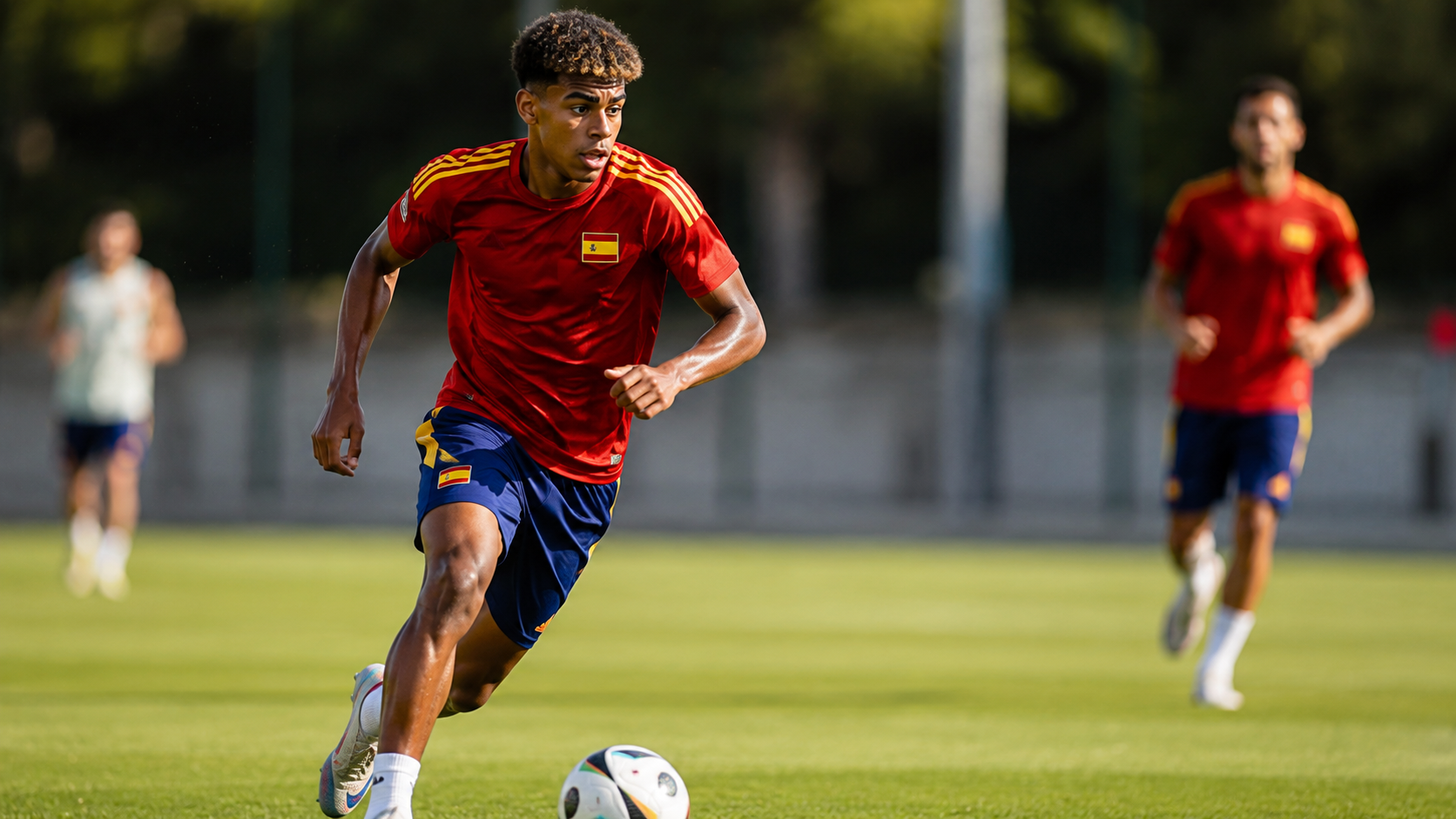
The last time Spain went to a World Cup without Dani Carvajal, the year was 2006 and Carvajal was nineteen years old and had not yet made his debut for Real Madrid Castilla. He spent the next two decades becoming one of the most decorated right-backs in the history of the game — five Champions Leagues, four La Liga titles, a European Championship, the complete silverware catalogue of his generation. His fractured toe ends that story here, in the squad announcement hall in Madrid on May 25, 2026, while Luis de la Fuente reads out twenty-six names that do not include him.
Also not included: any other player from Real Madrid. Carvajal aside, not one. The first time in the competition's entire history that has been true of a Spanish World Cup squad.
De la Fuente, asked about it, did not flinch. "Luckily I'm the national team coach and I don't look at where the players come from. They're national team players. I don't look at one club or another. I don't have that local bias a fan might have, for me it's more global." It was the correct answer and it was also entirely evasive about the more interesting question, which is: what does it mean that Barcelona now supplies eight of Spain's twenty-six, and Arsenal three, and that the club responsible for more Champions League finals than any other in the sport's history could not furnish a single player? It means that something has shifted — in the clubs, in the players, and in Spanish football itself.
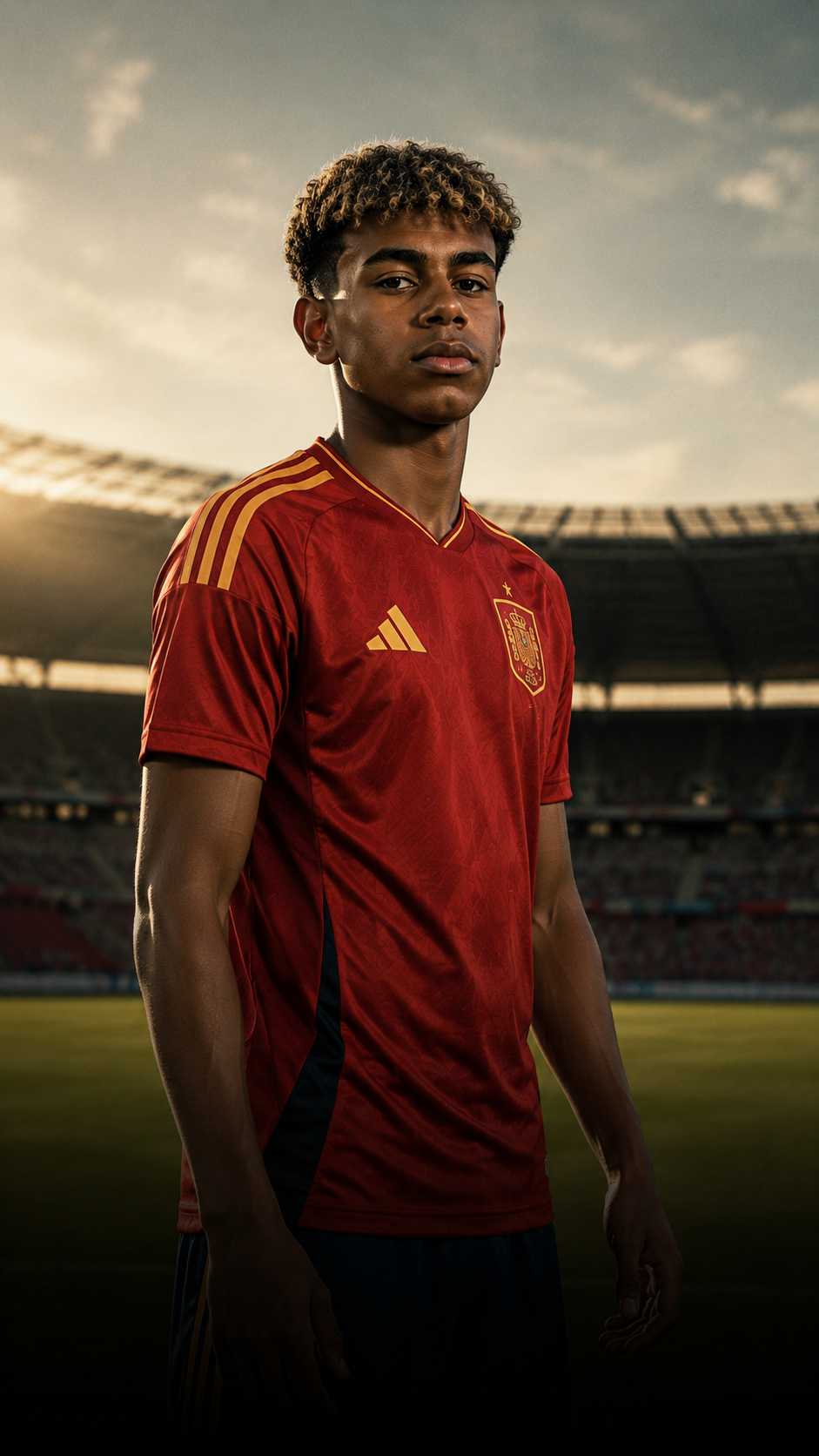
Yamal
The Squad
Goalkeepers: Unai Simón (Athletic Club), David Raya (Arsenal), Joan García (Barcelona)
Defenders: Marc Cucurella (Chelsea), Alejandro Grimaldo (Bayer Leverkusen), Pau Cubarsí (Barcelona), Aymeric Laporte (Athletic Club), Marc Pubill (Atlético Madrid), Eric García (Barcelona), Marcos Llorente (Atlético Madrid), Pedro Porro (Tottenham)
Midfielders: Rodri (Manchester City), Pedri (Barcelona), Gavi (Barcelona), Fabián Ruiz (PSG), Martín Zubimendi (Arsenal), Mikel Merino (Arsenal), Álex Baena (Atlético Madrid)
Forwards: Mikel Oyarzabal (Real Sociedad), Dani Olmo (Barcelona), Nico Williams (Athletic Club), Yéremy Pino (Crystal Palace), Ferran Torres (Barcelona), Borja Iglesias (Celta Vigo), Víctor Muñoz (Osasuna), Lamine Yamal (Barcelona)
The Barcelona Question
Eight players from one club is not, by itself, unprecedented in international football. The 1970 Brazil squad drew heavily from Santos — Pelé's club — as a single dominant source. The great German sides of the 1970s were essentially Bayern Munich in disguise. But eight players from a single club at a World Cup, in 2026, in an era of squad diversification and continental spread, is still remarkable — and it reflects something specific about what Hansi Flick has done at the Camp Nou since arriving in the summer of 2024. It could have been nine: Fermín López, who broke his foot, would otherwise have had a credible claim on a place.
Pedri is 23 and closing in on fifty caps. After years of injury disruption, he has rediscovered himself under Flick as the midfielder his early career promised — technically irreducible, positionally intelligent, the kind of player opposition coaches spend entire preparation weeks trying to neutralize. Gavi, who seemed at one point as if the knee injury might have taken something permanent from him, is back. Pau Cubarsí is twenty years old and already plays with the composure of someone who has been doing this for a decade. Joan García won La Liga as Barcelona's first-choice goalkeeper this season, which is a sentence that would have seemed impossible two years ago.
And Yamal, who turns nineteen on July 13 — the day of the World Cup final, should Spain get there — is the player around whom the entire tournament's most pressing question organizes itself.
The Fitness Cloud
Three players in this squad arrive with fitness concerns serious enough that De la Fuente addressed them directly in the announcement press conference, which is not something coaches typically do unless the concerns are genuine.
Yamal has a hamstring issue. Nico Williams has his own hamstring issue. Mikel Merino fractured a foot in January and returned as a second-half substitute in Arsenal's final Premier League match against Crystal Palace on Sunday — his first competitive action in four months. De la Fuente said he had "no doubt" all three would be ready for the June 15 opener against Cape Verde in Atlanta. He has their medical teams' assessments. The doubt is not irrational.
If Yamal and Williams are not fit for the opener, Spain's attacking width — the aspect of their game that broke England and France at Euro 2024 — disappears almost completely. Dani Olmo can play out wide and does so with intelligence, but he is not a natural wide forward in the way that either of those two are. The difference between Spain with both Yamal and Williams and Spain with neither is the difference between a team that can stretch any defense on the planet and a team that is very good at playing through the middle.
Then there is Rodri.
The Return of the Spine
The 2024 Ballon d'Or winner missed most of the 2024/25 season with an anterior cruciate ligament injury, but returned during the campaign and played a significant part in Manchester City's late title surge. He picked up a knock toward the end of the season, missed a handful of games, then returned for the final matches. He is not at the peak of his powers, and whether six weeks of preparation brings him fully there is the question De la Fuente's coaching staff will be monitoring most closely.
Spain's midfield without Rodri is still, by most measures, the deepest in world football — Pedri, Zubimendi, Merino, Gavi, Fabián Ruiz, Baena is a list that no other nation can match for technical quality and positional variety. But Rodri does something none of them do in quite the same way: he makes the team structurally simple. When he plays, the questions about where the defensive cover comes from and how Spain transition from defense to attack answer themselves. When he doesn't, those questions require conscious management rather than automatic resolution.
The hope — reasonable, given what we know about ACL recovery timelines and the fact that he returned to competitive minutes before the season ended — is that six weeks of preparation gets him to something close to full fitness. If it does, this Spain squad has a credible claim to being the best in the tournament.
What Was Left Behind
Álvaro Morata had scored zero Serie A goals for Como across the entire 2025/26 season. His omission was sad in the way that the end of a footballer's relevance to the national team is always sad, without being surprising.
Dean Huijsen was not on the fifty-five-man preliminary list. Not the final twenty-six — the preliminary fifty-five. He is twenty years old and was arguably the most impressive central defender in world football for stretches of last season. The decision has not been explained and probably won't be. These are the choices that coaches make and do not fully account for.
Carvajal's absence, as noted, is injury-related. De la Fuente found the right words for both absences at the announcement: "They've left an unforgettable legacy of leadership. But the generation behind them are perfectly prepared, they're cut from the same cloth." The absence of any other Real Madrid player is something the club's hierarchy will spend the summer contemplating — not because De la Fuente excluded them on principle, but because the players who came through that academy simply were not at the level the national team required.
Fermín López, who might otherwise have had a claim on a midfield place, fractured a foot and is absent. Barcelona's grip on this squad would have been even tighter without it.
The Group and the Road Ahead
Spain open in Atlanta on June 15 against Cape Verde — the smallest squad in Group H and, on paper, the most manageable opener in La Roja's recent tournament history. Saudi Arabia and Uruguay follow. The group is winnable with full fitness. The tournament beyond the group — potential last-sixteen opponents from Group G, quarterfinals in the US, a semifinal — is where the true test arrives.
De la Fuente won Euro 2024 by playing football that was at once technically beautiful and physically relentless — a 4-3-3 that compressed into something narrower out of possession, a press that was coordinated rather than chaotic, an attack that created goalscoring opportunities through movement rather than individual brilliance alone. The individual brilliance existed — Yamal in the final against England was as good as any player has been in a major tournament game in years — but it operated within a system rather than above one.
That system, with Rodri healthy, is the best in the world. Spain know it. Their opponents know it. The only question, on May 25, is whether the players who need to be fit will be fit when June 15 arrives.
"Excitement is the keyword. Passion," De la Fuente said at the announcement. "The reaction of people all over Spain — adults and children alike — is that they are fully behind the national team."
The second star has been the stated ambition since 2022. This is the squad they are going to find it with.