On June 11, 2010, South Africa and Mexico opened the World Cup in Johannesburg. Siphiwe Tshabalala scored one of the most famous goals in tournament history — a left-footed strike that bent into the top corner in the 55th minute and sent an entire continent into a noise that has never been fully described. Rafael Márquez equalized in the 79th. Katlego Mphela hit the post in the final minute. The match ended 1-1.
Mexico's coach that day was Javier Aguirre.
On June 11, 2026, Mexico and South Africa will play the opening match of the World Cup in Mexico City. Same fixture. Same date. Same coach.
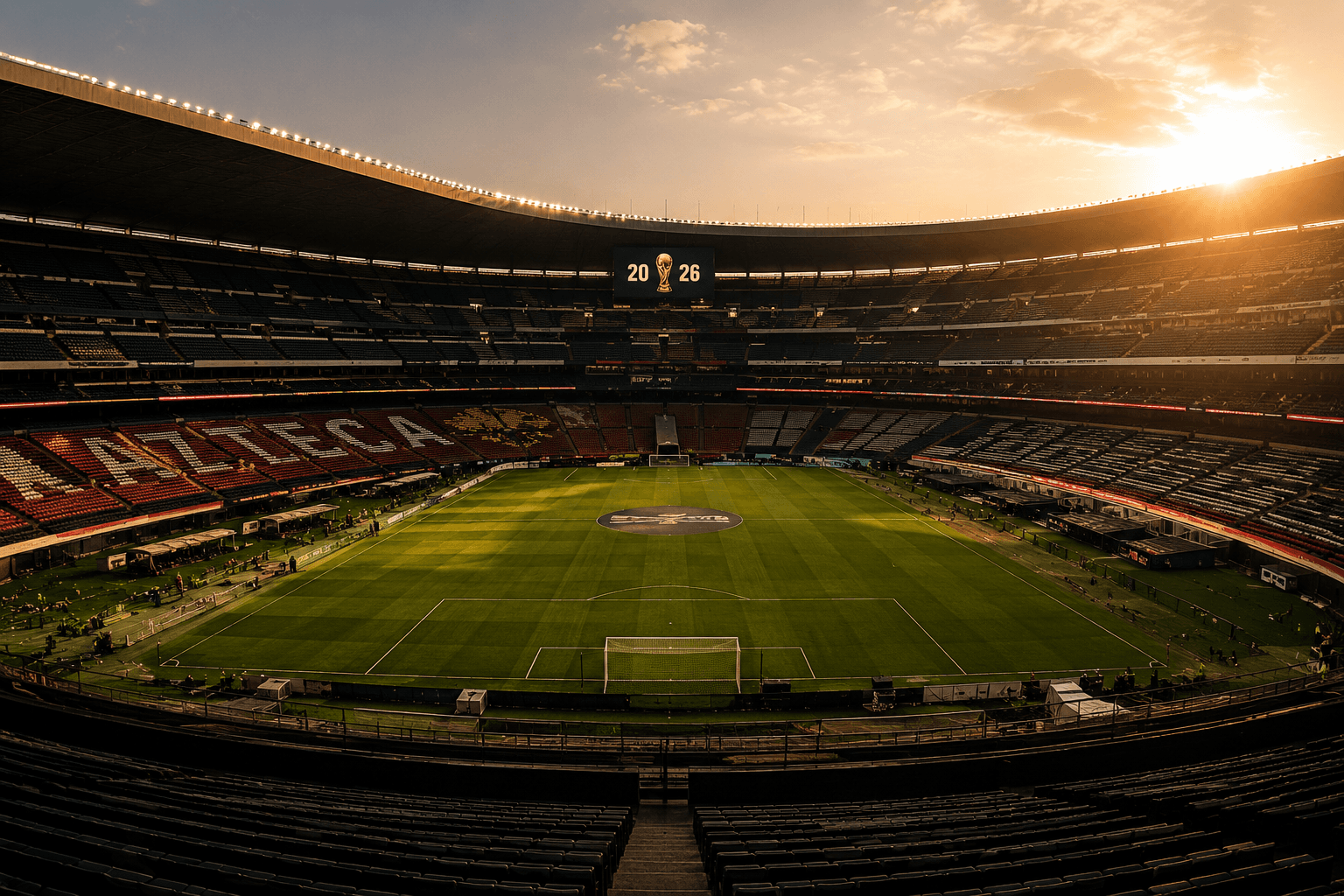
The Estadio Azteca becomes the first stadium in history to host three World Cup opening matches. It opened the tournament in 1970, when Mexico played the Soviet Union. It opened it again in 1986, when Italy played Bulgaria. Both of those tournaments produced some of the most iconic moments in football history — Pelé's final World Cup, Maradona's Hand of God and Goal of the Century, both World Cup finals played on the same pitch. The Azteca does not host ordinary football. It hosts football that becomes history.
Kickoff is 2 PM local time, 3 PM Eastern, 8 PM in London. The altitude is 2,200 meters. The crowd will exceed 80,000. The pressure on Mexico is immense. The opportunity for South Africa is real.
Aguirre's third act
Javier Aguirre is 67 years old and managing Mexico at a World Cup for the third time. He led them to the round of 16 in 2002, where they lost to the United States. He led them to the round of 16 in 2010, where they lost to Argentina. He was sacked after each tournament. In July 2024, he returned — replacing Jaime Lozano after Mexico's group-stage exit at Copa América — and immediately steadied a program that had drifted.
He won the 2025 CONCACAF Gold Cup. He rebuilt the spine. He promised nothing beyond organization and competitiveness, the same qualities that have defined his career across stints with Atlético Madrid, Japan, Egypt, and Monterrey. Aguirre is not a romantic coach. He is a pragmatist who has made a career of taking teams further than their talent suggests they should go.
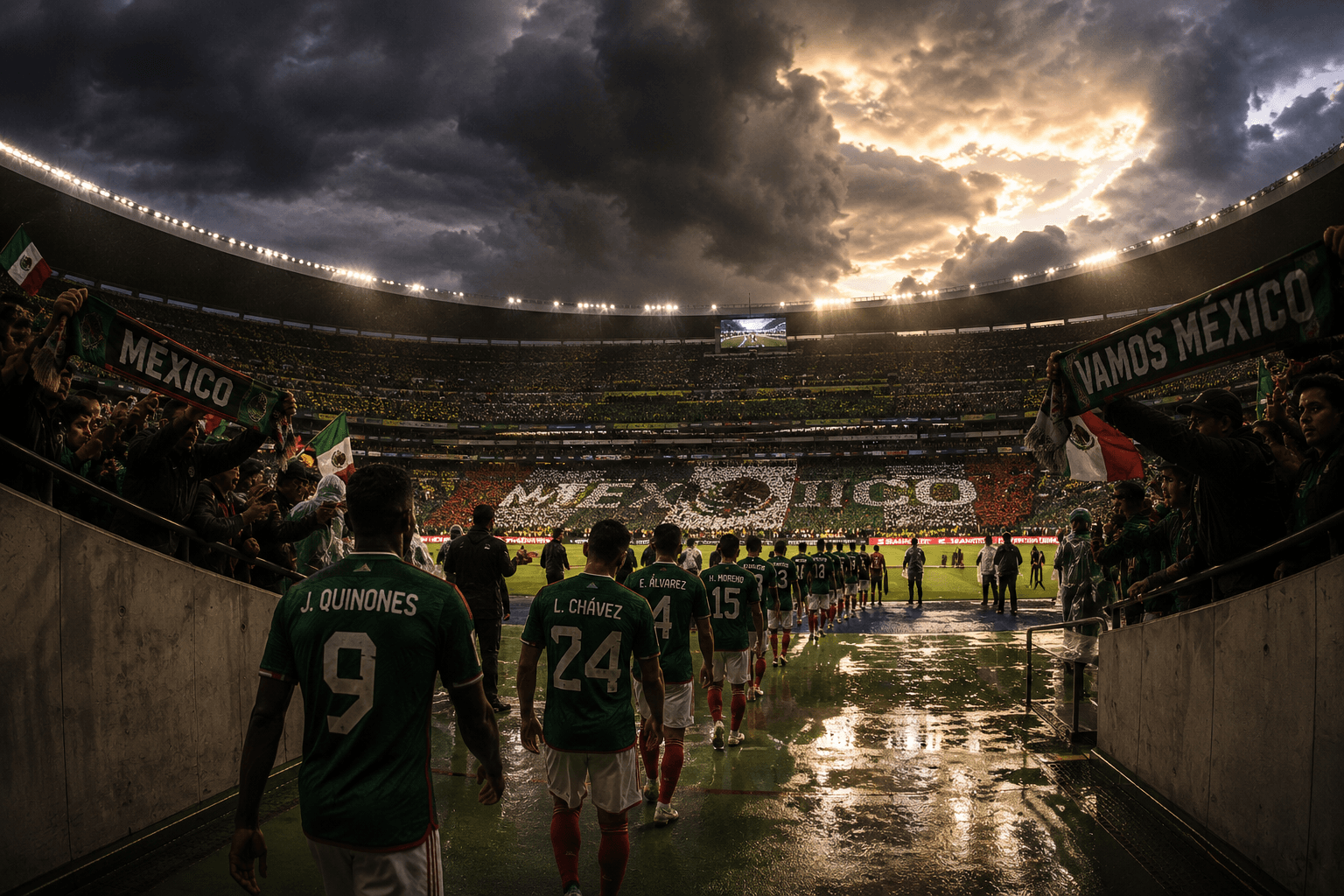
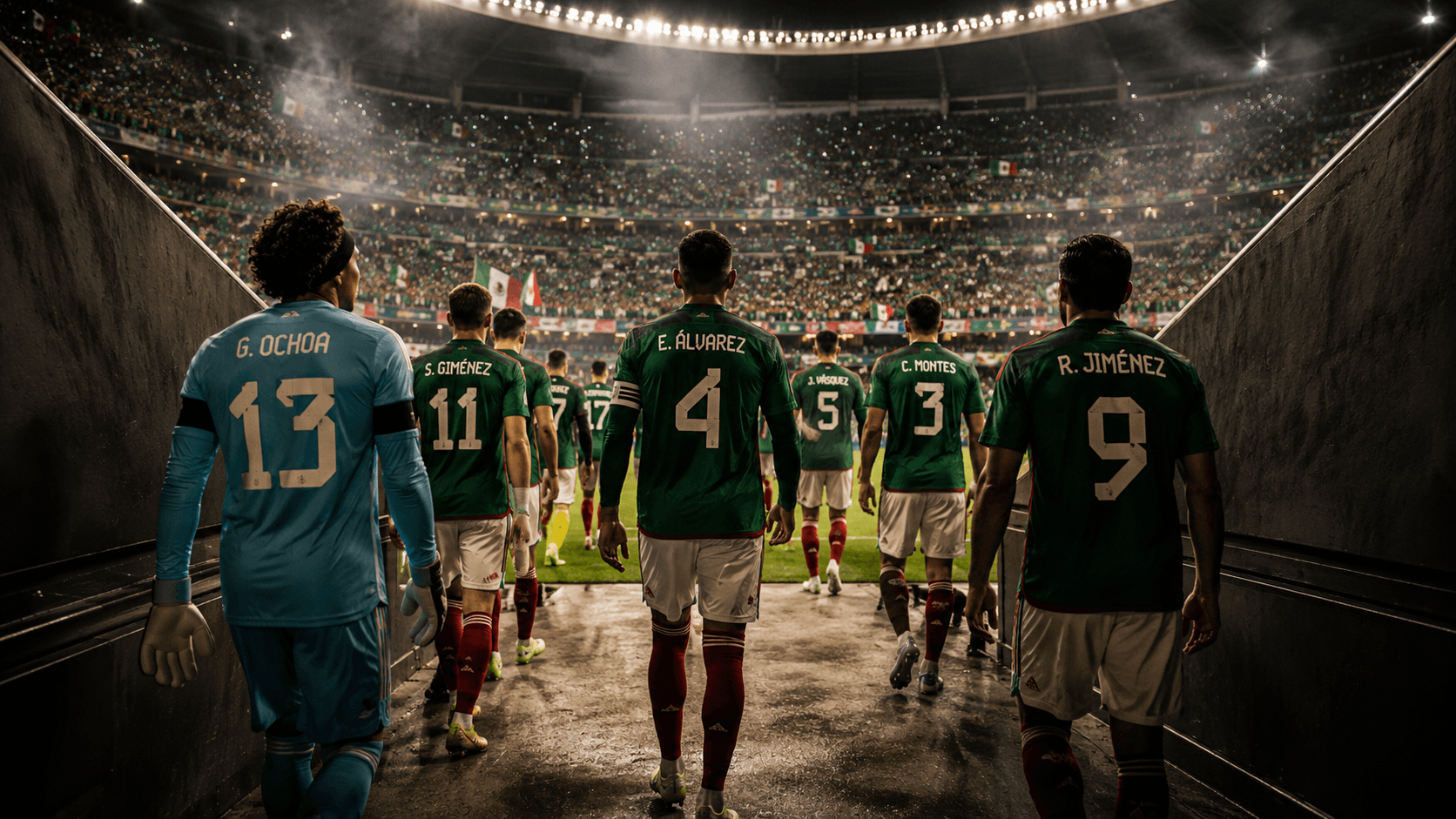
The squad he has assembled reflects that identity. Edson Álvarez of Fenerbahçe captains the midfield. Raúl Jiménez, 34, of Fulham leads the attack — his 44 international goals place him second on Mexico's all-time list, behind only Jared Borgetti's 46. Santiago Giménez of AC Milan provides the modern alternative: younger, sharper, playing at the highest level of European club football. Guillermo Ochoa, 40, is in the squad for a sixth World Cup — joining only Lionel Messi and Cristiano Ronaldo in that distinction. He is unlikely to start, but his presence gives Mexico something few nations possess: a goalkeeper whose World Cup history stretches back to 2006.
Gilberto Mora, 17, of Club Tijuana is the squad's youngest player. Julián Quiñones of Al-Qadsiah, who finished among the top scorers in the Saudi Pro League, provides an unexpected attacking option. Hirving Lozano, the man who scored against Germany in 2018 and became a national hero overnight, was not selected — disciplinary issues at San Diego FC ended his international career quietly.
Mexico have not reached a quarterfinal since 1986, the last time they hosted. Seven consecutive round-of-16 exits from 1994 to 2018 created a ceiling so durable it became an identity: the "quinto partido," the fifth match, the one Mexico could never win. In 2022, the ceiling dropped further — they failed to advance from the group stage for the first time since 1978. This is the context Aguirre inherits. The nation expects a quarterfinal. The history suggests a round-of-16 exit. The 2022 result suggests something worse is possible.
The results since qualification have done little to clarify Mexico's ceiling: three wins, six draws, and two losses in eleven friendlies, including a 4-0 defeat to Colombia. They look organized. They do not yet look convincing.
Broos's farewell
Hugo Broos is 74 years old and has said this is his last job in football. The Belgian took charge of South Africa in May 2021, inheriting a program that had spent a decade drifting from the World Cup stage. He led Cameroon to the 2017 Africa Cup of Nations title, beating Egypt 2-1 in the final, and brought the same disciplined, structured approach to Bafana Bafana. Fourth place at the 2023 AFCON — matching their best-ever tournament finish — announced that something had changed. Qualifying for the World Cup confirmed it.
South Africa topped their qualifying group ahead of Nigeria. The decisive result came on October 14, 2025: a 3-0 win over Rwanda in Mbombela. It was the kind of performance — controlled, clinical, collective — that had eluded South African football for years. The 16-year absence from the World Cup ended not with a scramble but with authority.
The squad is built almost entirely from domestic football. Nineteen of the 26 players are based in South Africa. Mamelodi Sundowns and Orlando Pirates each contribute eight. The captain is Ronwen Williams, the Sundowns goalkeeper who made history at the 2023 AFCON by saving four penalties in a single shootout against Cape Verde — a record. Williams has 62 caps and the kind of quiet authority that defines a team's character without demanding attention.
Teboho Mokoena controls the midfield. Lyle Foster of Burnley provides the European-level attacking quality. Oswin Appollis and Relebohile Mofokeng, the 20-year-old Orlando Pirates winger, represent the generation that has grown up under Broos's system. This is not a squad with household names. It is a squad with a shape.
South Africa have appeared at three previous World Cups — 1998, 2002, and 2010 — and have never advanced past the group stage. In 2010, as hosts, they became the first nation to be eliminated at the group stage of their own World Cup. They beat France 2-1 in their final match but it was not enough. The exit was not a disgrace — the tournament was broadly considered a success — but the football ended too early.
The stadium
The Azteca sits at 2,200 meters above sea level in the Tlalpan borough of Mexico City. The altitude is a factor that does not require exaggeration. Visiting teams feel it. Lungs work harder. Sprints shorten. Recovery between efforts slows. Mexico, who train and play at altitude throughout the year, are acclimated. South Africa, who arrived in North America from a base camp at sea level, are not.
The stadium hosted the 1970 World Cup Final — Brazil 4, Italy 1 — and the 1986 World Cup Final — Argentina 3, West Germany 2. Maradona's quarter-final against England in 1986, in which he scored both the Hand of God and the Goal of the Century within four minutes of each other, was played here. The Azteca is the most storied stadium in World Cup history.
The renovation for 2026 has modernized the infrastructure without altering the atmosphere. The crowd, for a Mexico opening match at a home World Cup, will be the loudest thing in the tournament until the knockout rounds arrive.
The match
Opening matches are rarely decided by tactics alone. They are decided by nerves. Mexico carry the weight of 80,000 expectations and a nation's quarterfinal obsession. South Africa carry none of it. One team is expected to begin a World Cup campaign. The other is simply expected to be present at one.
Mexico will dominate possession. South Africa will defend in a low block, look to absorb pressure, and counter through Foster and Appollis when the opportunity arises. The altitude and the crowd favor Mexico. The structure and discipline favor Broos's system, which is designed to make better teams work for every inch.
The first goal will define the match. If Mexico score early, the Azteca will become a force that South Africa cannot resist. If South Africa survive the first half, the possibility of a result — a draw, a counter-attacking goal, a repeat of 2010 — becomes real. Mphela hit the post in the 90th minute in Johannesburg. The margins in opening matches are always thin.
June 11
The date is the coincidence that is not quite a coincidence. June 11, 2010: Tshabalala scores and a continent erupts. June 11, 2026: the same fixture, in the same coach's hands, in the stadium that has watched Pelé and Maradona do things that became the mythology of the sport.
Sixteen years have changed everything about both teams. Mexico have cycled through coaches, generations, and disappointments. South Africa have spent every one of those years away from the World Cup entirely. Aguirre has been fired, rehired, sent to other continents, and brought back. Broos has arrived from Belgium via Cameroon with a plan and a timeline and the certainty that this is his last act.
And yet the fixture is the same. The date is the same. The opening whistle of a World Cup, the moment when everything that has been discussed and previewed and predicted becomes real. Five weeks of football begin here. In this stadium. With these two teams.
The last time Mexico and South Africa opened a World Cup, it ended 1-1 and Katlego Mphela hit the post. Sixteen years later, the fixture returns in a different country, under a different sky, with many of the same questions. The opening whistle will sound. The tournament will begin. And for 90 minutes, football will test whether history is repeating itself or merely rhyming.
Mexico vs South Africa FIFA World Cup 2026 — Group A, Matchday 1 Thursday, June 11, 2026 Estadio Azteca, Mexico City Kickoff: 2 PM CST / 3 PM ET / 8 PM BST
→ World Cup 2026: The Complete Group-by-Group Guide → World Cup 2026 Predictions: Who Advances From Every Group → The 48 Stories of the 2026 World Cup