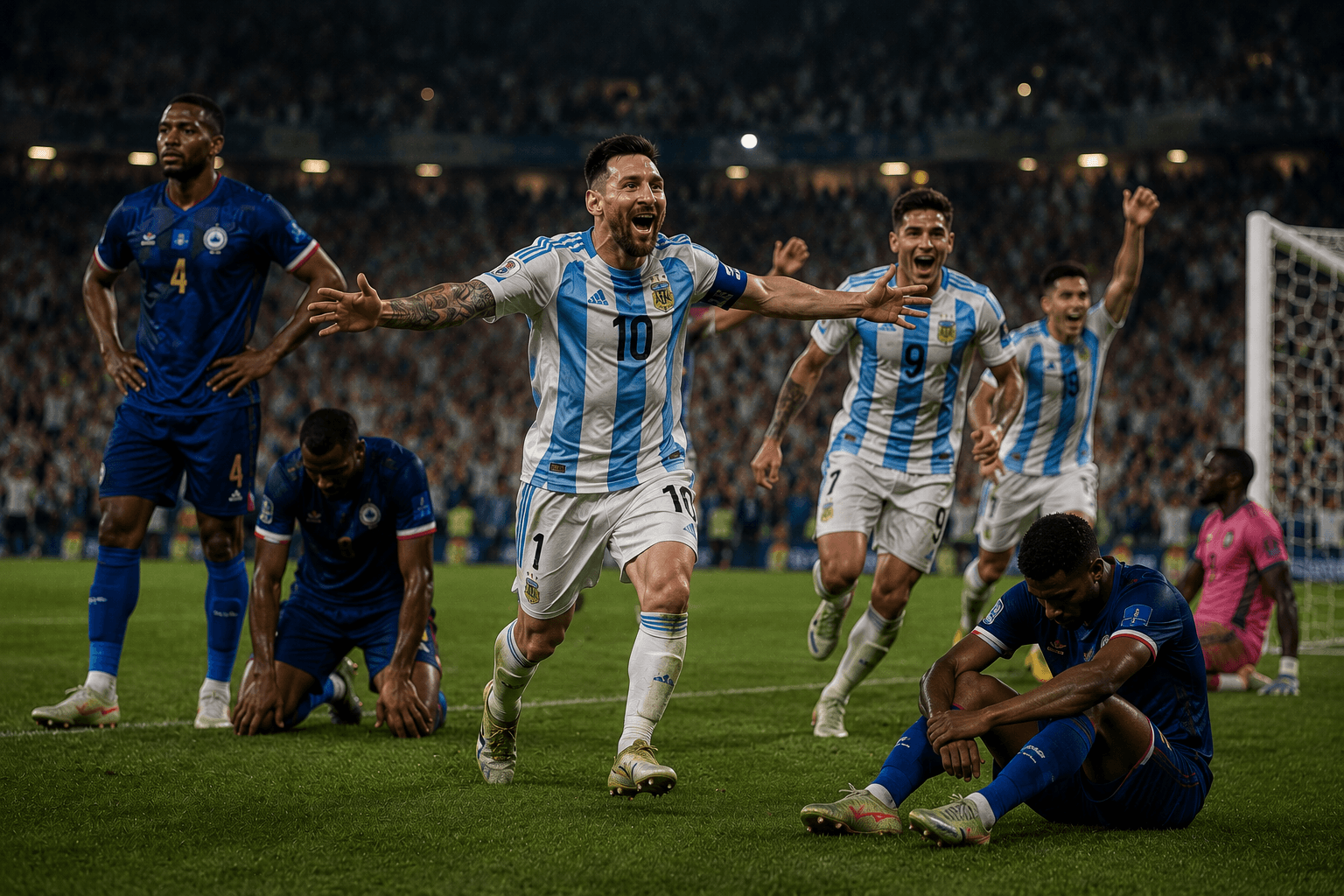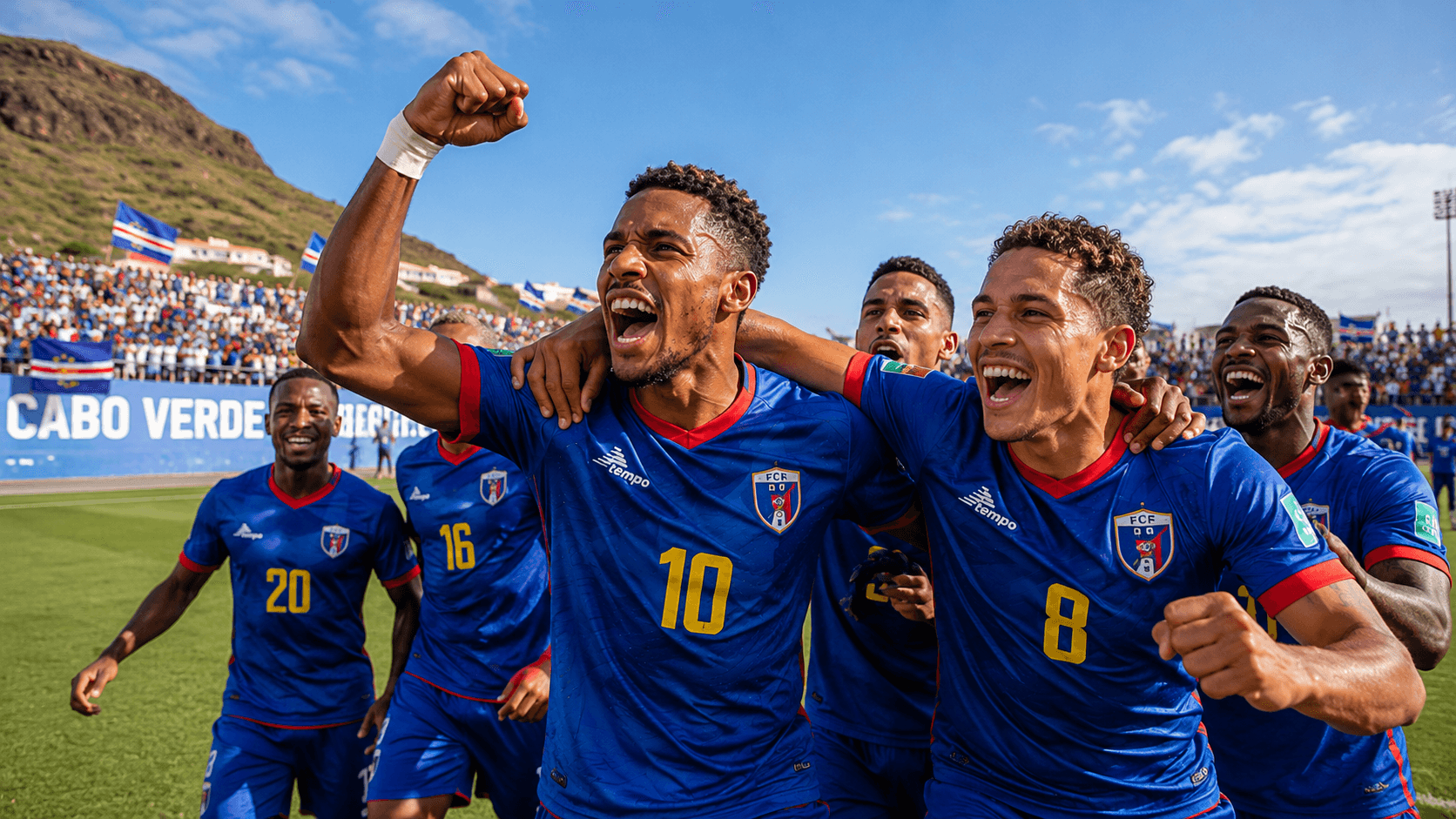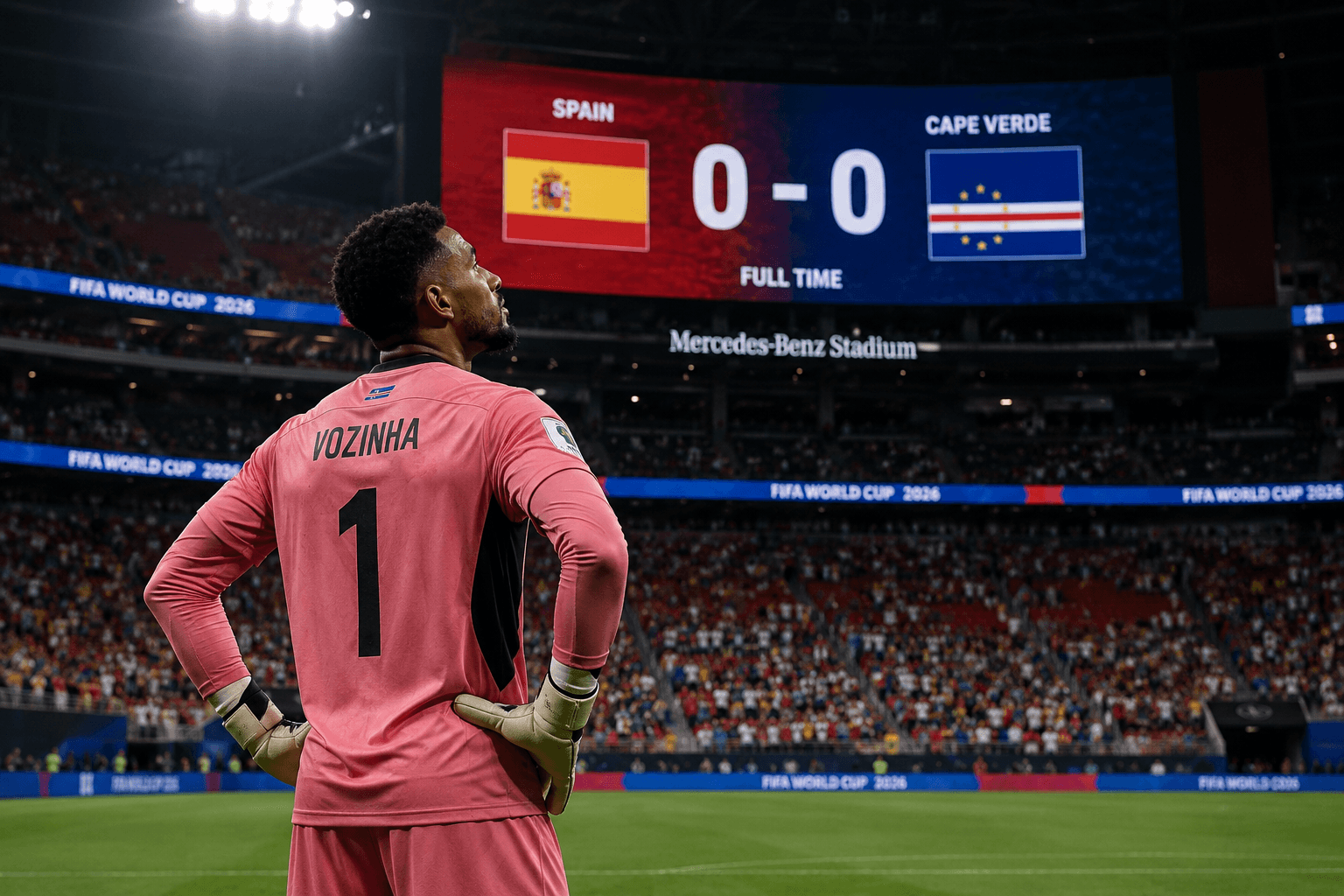
Spain took twenty-seven shots and could not score.
This was June 15, in Atlanta, against Cape Verde — an island nation of barely 525,000 people, ranked 67th in the world, playing in the first World Cup in their history. The European champions, co-favorites for the tournament, laid siege to the goal for ninety minutes. The Cape Verde goalkeeper, Vozinha, was named man of the match. The game finished goalless. And four days later, in case anyone had filed the result under fluke, Cape Verde went and drew 2-2 with Uruguay — the first World Cup winners, the two-star badge, the oldest aristocracy in the international game — coming from behind to do it.
That is the story of this World Cup. Not Cape Verde specifically, though they have been the tournament's great romance. The story is the thing Cape Verde represents: the giants are no longer frightening, and the small nations have noticed.
The day nobody flinched
There was a single day that told you everything. On June 16, every match on the schedule — all four of them — ended in a draw. That is the most drawn matches in a single day of men's World Cup football since 1958. Sixty-eight years. The day that record was last set, the World Cup had sixteen teams and was played in Sweden in black and white.
Look at who did the drawing. New Zealand, the lowest-ranked side in the entire 48-team field at 85th in the world, came from behind twice to hold Iran 2-2. Qatar took a point off Switzerland. Bosnia pegged Canada back on home soil. None of these results was supposed to happen. All of them happened on the same afternoon, and by the evening it had stopped looking like a series of upsets and started looking like a pattern.
A pattern is more dangerous than an upset, because an upset is an accident and a pattern is a fact. The fact this World Cup has been quietly assembling, result by result, is that the distance between the elite and everyone else — the distance the entire structure of international football assumes — is not what it used to be.
Why the gap closed
The temptation is to credit the format. FIFA expanded the World Cup to 48 teams, twelve groups, the top two from each plus the eight best third-placed sides advancing — which means 32 of the 48 nations reach the knockout rounds. A single point can keep a smaller team alive. The math rewards the disciplined draw, the deep block, the goalless afternoon that feels, to a team like Cape Verde, very much like a win.
But the format is the opportunity, not the cause. The cause is simpler and harder for the traditional powers to hear: the players turning out for the so-called minnows are not strangers to this level. Half of them play in Europe's top leagues. They line up on Saturdays against the very names they are now frightening on a Tuesday. The Cape Verde squad, the New Zealand squad, the Curaçao squad — these are full of professionals who face elite opposition every week of their club seasons. When the World Cup arrives, the shirt is different and the stakes are higher, but the opponent is familiar. And you cannot intimidate a player who has spent his club career marking the man across from him.
For most of World Cup history, the smaller nation arrived hoping to keep the score respectable, to take a memory home, to not be embarrassed on the world's biggest stage. That deference has gone out of it — and you can see exactly where it went. Cape Verde did not set up against Spain hoping to lose narrowly. They set up to take a point, and they took it.
The roll call
Once you start looking, the evidence is everywhere you turn. Australia beat Turkey 2-0 in Vancouver — and Turkey were not minnows, they were a fashionable dark-horse pick to go deep. Tony Popovic had named seventeen debutants in his squad. They simply outworked a more talented side, and Turkey have looked rattled ever since. It may be the most underrated result of the group stage.
Curaçao — population 150,000, the smallest nation ever to qualify for a World Cup — lost 7-1 to Germany, yes. But they also scored, through Leandro Comenencia, and then went and drew 0-0 with Ecuador to claim the first World Cup point in their history. For a country that size, a point at a World Cup is not a footnote. It is a national event.
Jordan, at their first World Cup, lost both their opening matches — and scored in each. Ali Olwan struck the nation's first-ever World Cup goal against Austria. Nizar Al Rashdan curled Jordan into a first-half lead against Algeria before the result turned. The scoreline said defeat. The performance said arrival.
Even Algeria's own comeback against Jordan carried the signature of this tournament: it was the first time in their history Algeria had won a World Cup match after conceding first, Riyad Mahrez at 35 supplying the assist that turned it. Everywhere you look, the matches are closer, later, more contested. The blowout has become the exception rather than the expectation.
The argument FIFA was having with itself
It is worth remembering that this was supposed to be the problem with the expanded World Cup, not its triumph. When FIFA pushed the tournament to 48 teams, the loudest objection came from inside the European game. UEFA's president called the expansion unnecessary and warned it would fill the tournament with what he called "useless games" — the implication being that the smaller nations would arrive only to be dispatched, padding the schedule with mismatches nobody needed.
Thirteen football federations from Asia and Africa rebutted him, and their argument has aged better than his. They pointed out that there is no such thing as an unimportant World Cup match — that every nation that qualifies has earned its place, that every supporter has the right to dream. They were making a moral case. This tournament has turned it into a sporting one. The "useless games" have produced the four-draw day, the Cape Verde miracle, the closest group stage in living memory. The giants who expected to stroll have spent a fortnight fighting for points they assumed were already theirs.
What it means for the rest
A word of caution, because this is where the romance can run ahead of the football. The knockout rounds may yet restore the old order. France and Argentina and Spain and Portugal still have the deepest squads, the most ruthless finishers, the experience of winning matches that matter. The group stage rewards the disciplined draw. The knockout stage punishes it — eventually someone has to chase the game, and that is when the gap, narrowed but not erased, tends to reappear. The favorites usually find their level. They probably will again.
But something has changed, and it will not change back. The smaller nations have learned that the giants bleed, and you cannot unlearn that. Cape Verde will go home at some point in this tournament — maybe in the group stage, maybe later — and they will take with them the knowledge that they stood in front of the European champions and did not blink. The next island nation to qualify will have watched. The deference that protected the elite for most of a century was never written into the rules. It lived in the heads of the players who arrived believing they could not win.
This World Cup is the one where they stopped believing it. That is the most dangerous thing that can happen to a favorite — not a better opponent, but an opponent who is no longer afraid.
The fear is gone. It is not coming back.