Lionel Messi went the first ninety minutes of the World Cup final without a shot. He went the first hundred and sixteen without one either. His first attempt at goal — the only one he managed all night — was blocked in the hundred and seventeenth minute, by which point Argentina were already losing, already down to ten men, and already, in every sense that mattered, finished. Fifty-four touches, one shot, no rabbit, no hat.
That is the whole final, and very nearly the whole story of how Spain became world champions. Not by scoring — they barely did that either, a single Ferran Torres goal in the second period of extra time settling a match they had controlled from the first whistle to the last. They won it by ensuring that the reigning world champions — a team that had scored in every game and clawed its way back from the dead in three of them — did not have a shot until there were three minutes left to play.
Argentina finished the biggest game of their lives with no shots in regulation, no corners, no touches in the Spanish penalty area, and thirty-five percent of the ball. You do not do that to Argentina. Nobody does that to Argentina. Spain did it for a hundred and twenty minutes, and made it look like a plan rather than a miracle, because that is exactly what it was.
The hat and the rabbit
They did not stop Messi. They starved him.
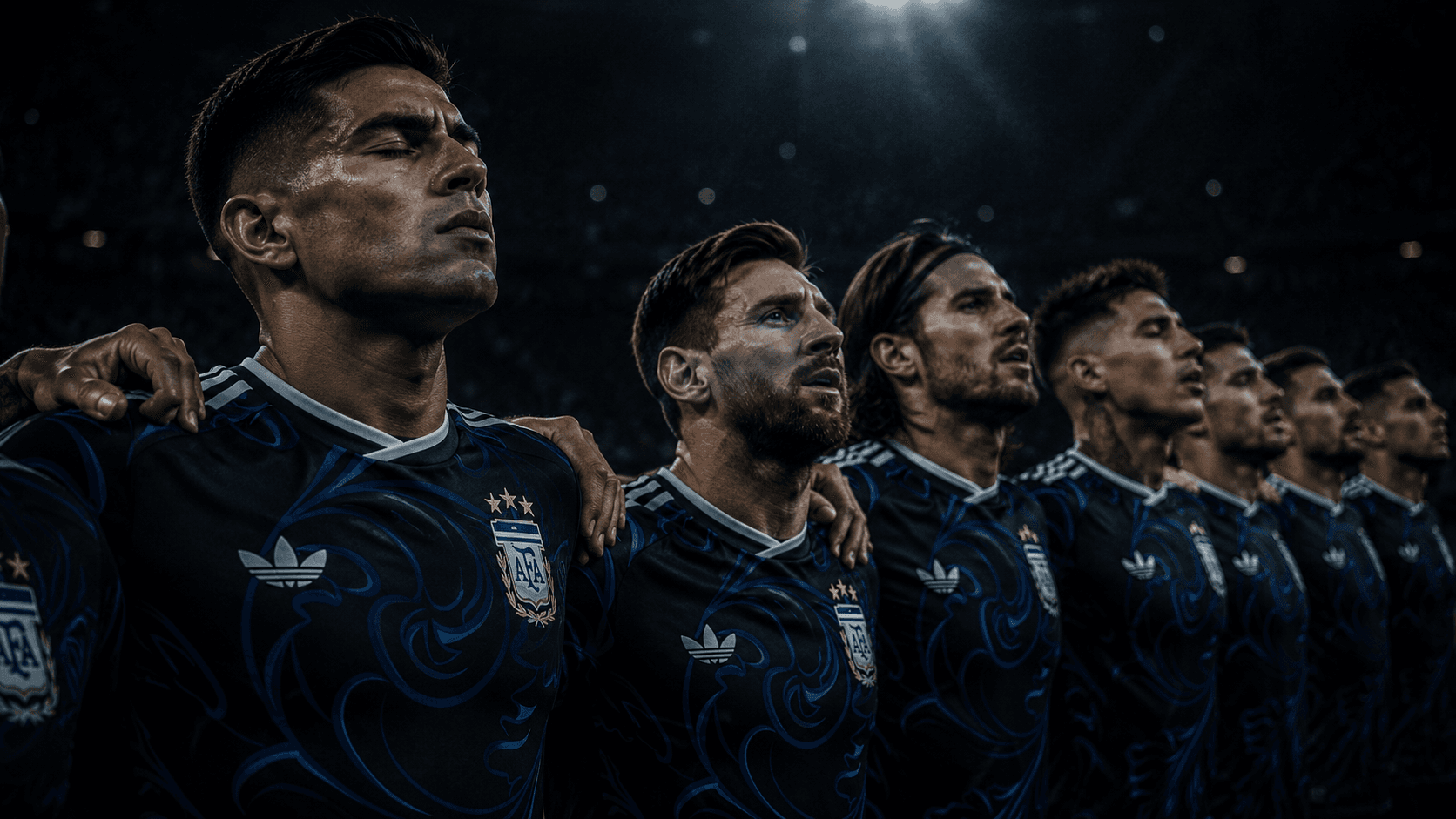
Everyone who has ever tried to plan against Lionel Messi arrives at the same despairing conclusion: you cannot mark him, because marking implies he will stand still long enough to be marked, and he will not. He drifts, he drops, he appears in the half-second of space that did not exist when you last looked. Defenders have spent twenty years being told to stay tight to him and have spent twenty years watching him materialize somewhere else. Every time he touched the ball on Sunday, the old magic was instantly, obviously present — a turn, a disguised pass, a sudden change of angle that bent the game toward him. The problem Spain set themselves was not how to stop the magic. The magic cannot be stopped. The problem was how to make sure the magician never got the ball.
De la Fuente had told everyone how he would do it. "We won't man-mark Messi," he said before the game, "but we'll be vigilant." It sounds like nothing, a coach's shrug, until you watch what vigilance meant in practice. It meant that Álex Baena, Marc Cucurella, Aymeric Laporte, Fabián Ruiz and Rodri were not assigned to Messi at all. They were assigned to the space around him — to the passing lanes that fed him, to the yard of grass a teammate would need to find him in. Argentina would look up to locate their captain and see him already screened, a red shirt between the ball and the man, the pass that had always been there suddenly not there. They did not put a defender on Messi. They put a wall between Messi and everybody who might have given him the ball.
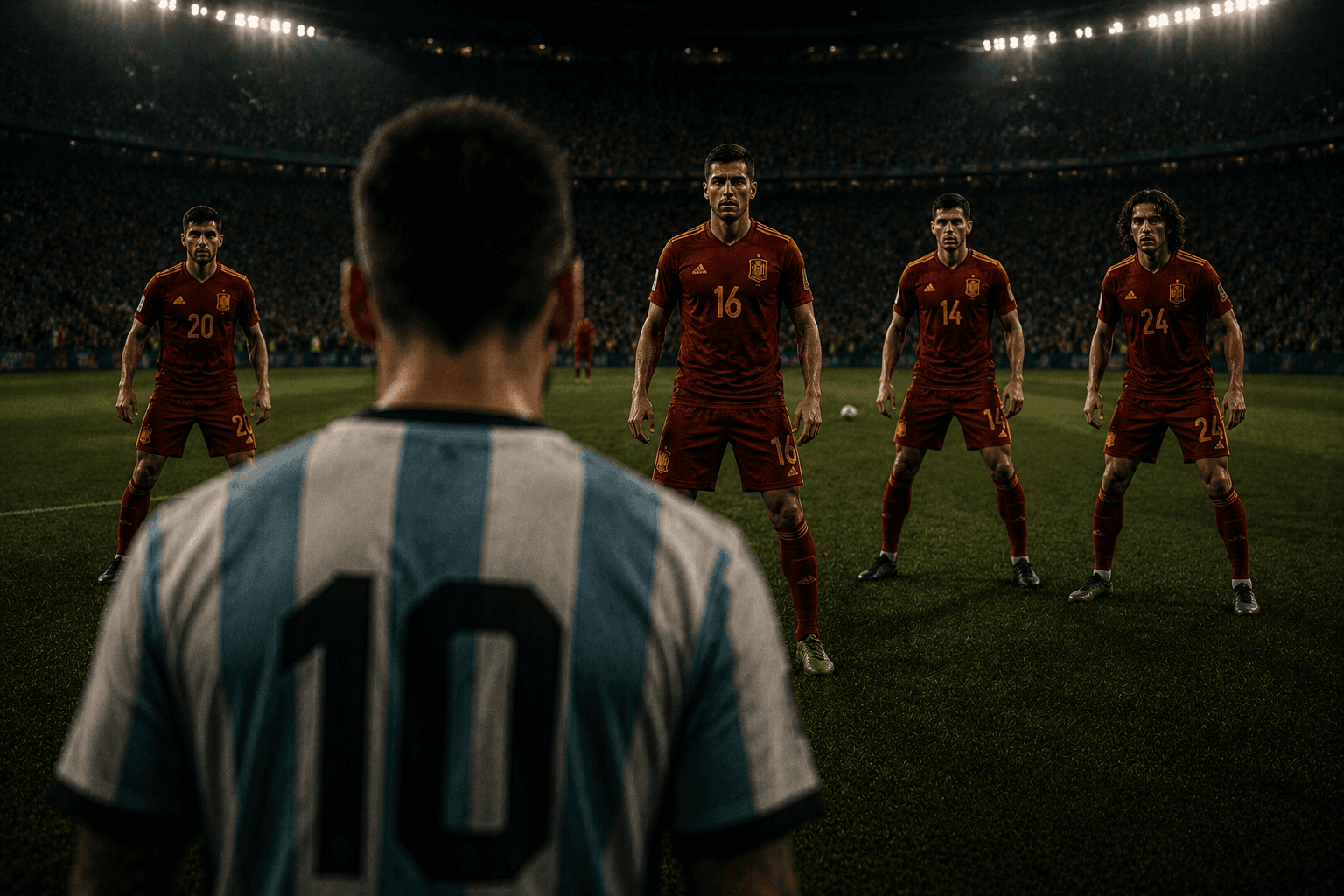
It is the oldest truth about him, dressed as a tactic: a magician needs a hat within reach to pull the rabbit from. Spain did not try to prevent the rabbit. They kept taking away the hat. Messi still found fifty-four touches, but most came far from goal, the next pass screened, the penalty area beyond another line of red shirts. The magic remained. The conditions required to use it did not — and the greatest player of all time spent the last World Cup match of his career a spectator to a game happening just out of his reach.
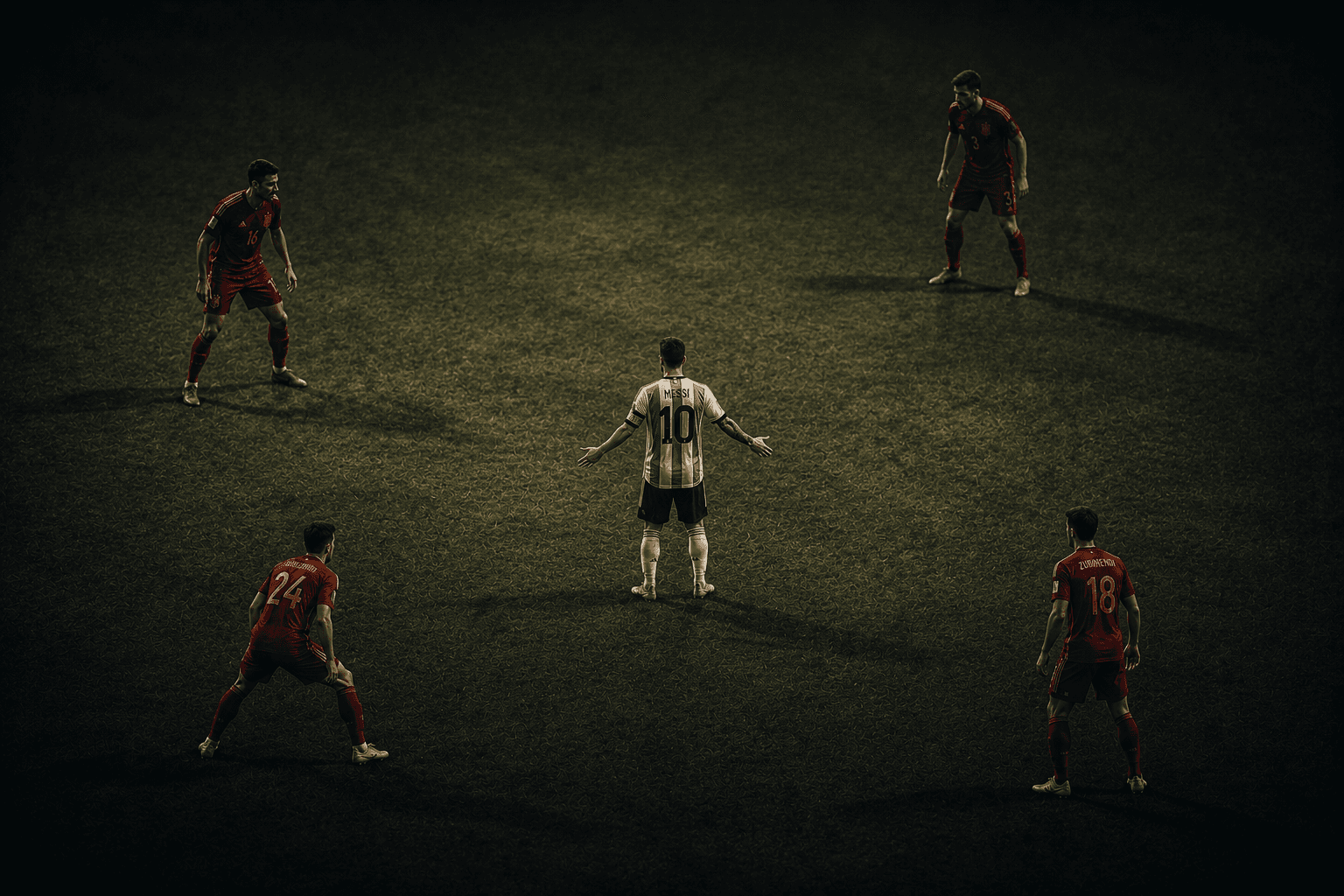
Argentina tried a cruder version of the same idea at the other end, on Yamal. But the difference between the two solutions is the whole difference between the two teams. Argentina let Yamal receive the ball and then swarmed him — two, often three light-blue shirts collapsing on the nineteen-year-old once it was already at his feet, reducing him to flashes. Spain never let Messi receive it at all. One team defended the man; the other defended the pass before it could be played. Argentina dealt with the threat once it existed. Spain prevented the threat from taking shape.
Rock and roll, and the answer to it
You cannot press what you cannot reach
To understand why this worked, you have to remember what Argentina are, because we have written about it here before. This is a team that plays on emotion and friction, that gets under your skin, that feeds on the physical and the fractious — a side, as we put it after the semifinal, that does not overcome adversity so much as need it. Their aggression is not a flaw in their game. It is their game. It is how they unsettle you, how they drag you down to a street fight and win it.
But aggression requires access. Argentina did not need long spells of the ball; they needed Spain's possession to become unstable — a heavy touch, a trapped receiver, a loose pass, a second ball close enough to attack, a moment of contact to escalate. Those are the conditions their whole game is built to exploit, and Spain supplied almost none of them in the places that mattered. You cannot turn a match into a street fight if the opponent will not meet you in the street. Spain moved the ball before the contact arrived, escaped the first pressure, and made Argentina chase the next pass rather than contest the present one. All that menace needed something to bite on, and there was nothing there.
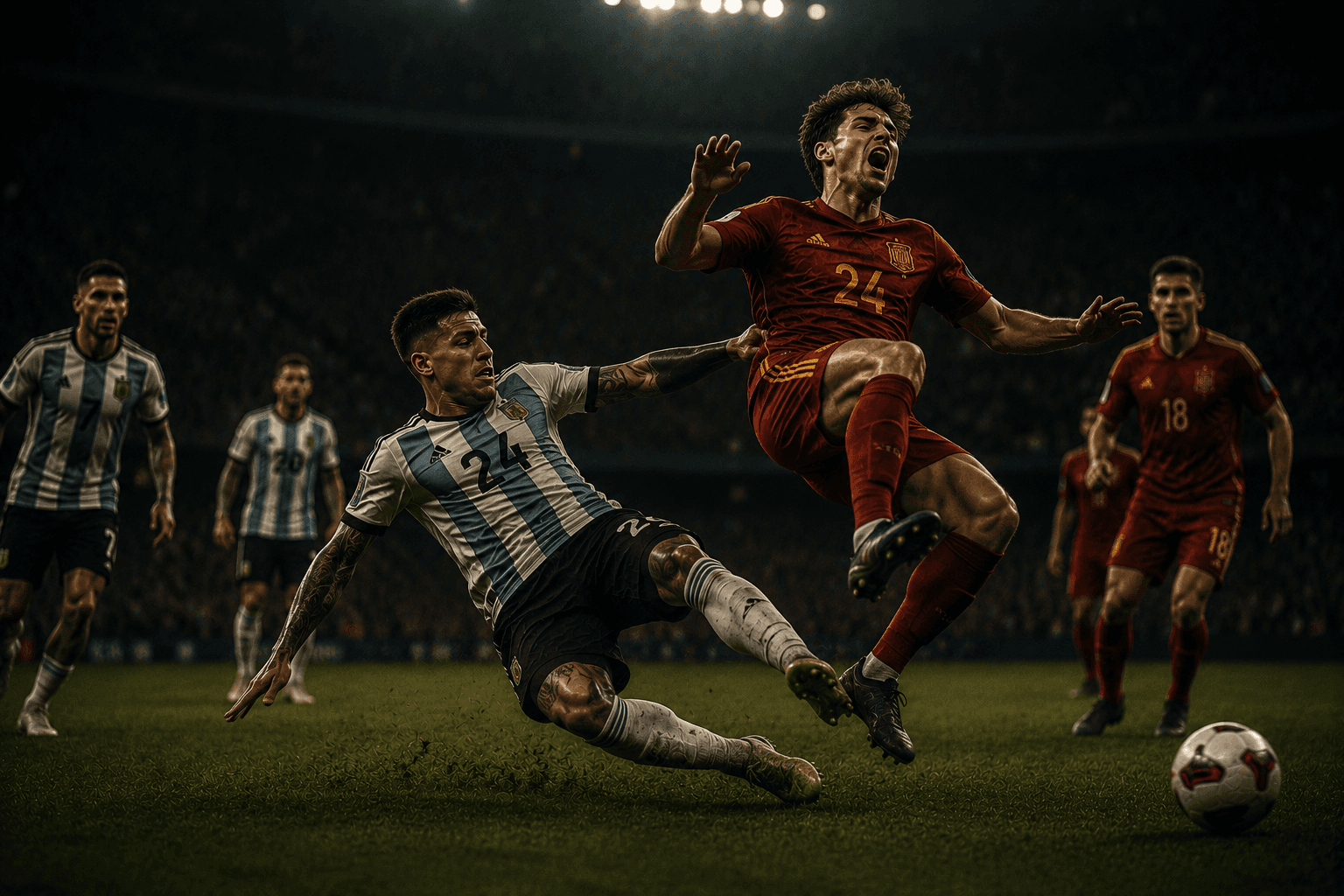
Argentina spent the evening swinging at air, and the frustration built, and it built, until it finally found a body. In the third minute of second-half stoppage time, with the game still goalless, Enzo Fernández flew into Pau Cubarsí with enough force to send the teenager cartwheeling, collected a second yellow, and left Argentina to play all thirty minutes of extra time a man down. The team that lives by the physical had just handed Spain the game with an act of pure, pointless physicality. The blood in the water they usually smell was their own.
This is the deeper thing the final settled, and it goes beyond these two teams. When possession football of this kind first conquered the game, the great tactical counter to it was formulated by Jürgen Klopp, who called his version rock and roll football: if you cannot keep the ball as well as they can, then hunt it, swarm it, press it, win it back in the six seconds after you lose it and attack before they can reorganize. Gegenpressing was the age's answer to the possession machine. And Argentina, in their own way, are a rock and roll team — chaos merchants who thrive in the transitions, in the mess, in the moment the ball is loose.
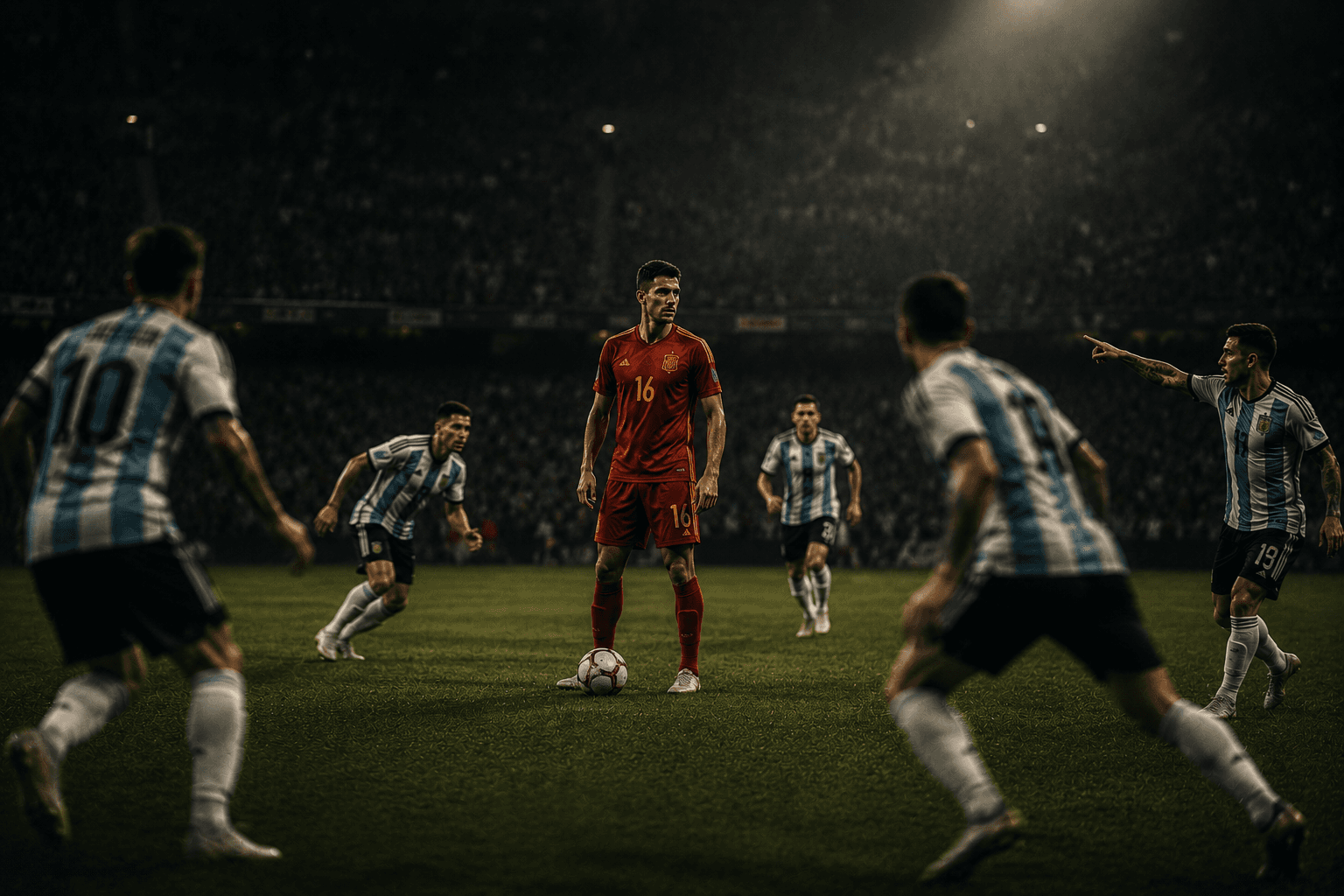
But the counter-press has one unspoken requirement, and Spain found the crack in it. Gegenpressing does not need much, but it needs a moment of disorder: a turnover made badly, with players caught ahead of the ball, distances stretched, an outlet available before the structure can recover. That instant of chaos is the whole opportunity. Spain almost never gave them one. They lost the ball, of course — no team keeps it forever — but they lost it in the safe places, smothered immediately or conceded in positions from which Argentina still had nowhere to go. Rodri cut off the first outlet, seeing three passes ahead as he has all tournament; the nearest red shirts collapsed around the receiver; the interruption ended before it could become a transition. Argentina could reach the ball. What they could not reach was the open, broken game they needed it to create.
What it cost, and what it was worth
The most miserly champions football has ever seen
None of this, it should be said, was a spectacle in the traditional sense. Spain dominated possession and the shot count and still did not especially look like scoring; Torres's winner, when it came, was the reward for accumulated pressure rather than a moment of genuine invention — Yamal collecting on the right, Pedro Porro's cross hanging up at the back post, Nico Williams heading it back across, and a substitute half-volleying it in with his left foot in the first minute of the second period of extra time. Emiliano Martínez made eleven saves, a record for a World Cup final, which tells you Spain created enough. It also tells you there was no goalkeeping error to shorten the evening. Spain simply kept the ball, kept applying pressure, and waited a hundred and six minutes for the opening to arrive. This was not the Spain of tiki-taka legend putting on a show. It was something colder and, in its way, more complete.
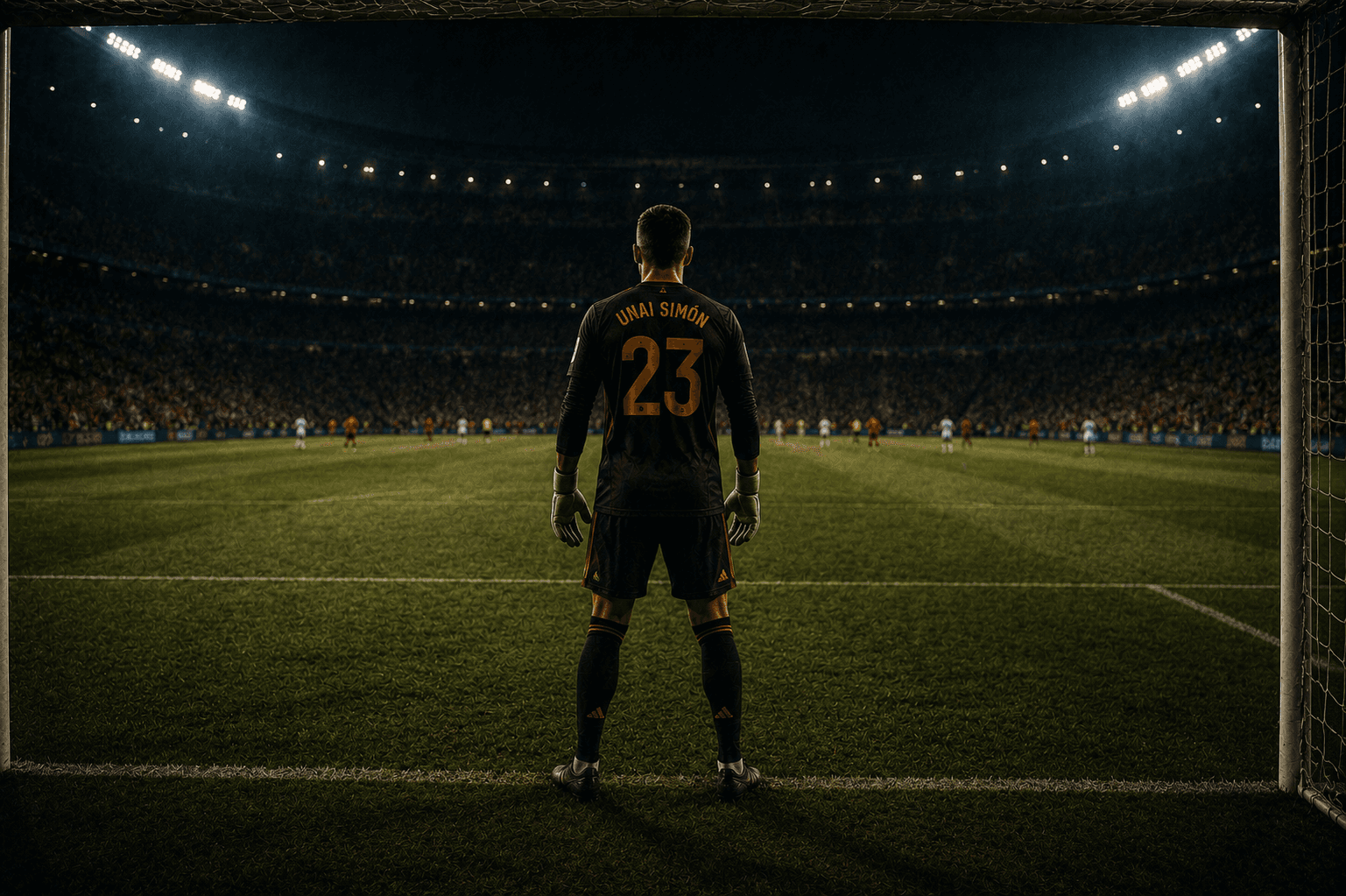
Because the number that will outlive this final is not Spain's goal total. It is one goal conceded across eight matches, more games than any champion has ever had to play, and the fewest ever surrendered by a World Cup winner. Unai Simón put together runs of hundreds of minutes without conceding, and left with the Golden Glove.
Cubarsí, the nineteen-year-old Spain's structure was designed to shelter and who nevertheless became its calm center, left with the tournament's Best Young Player award.
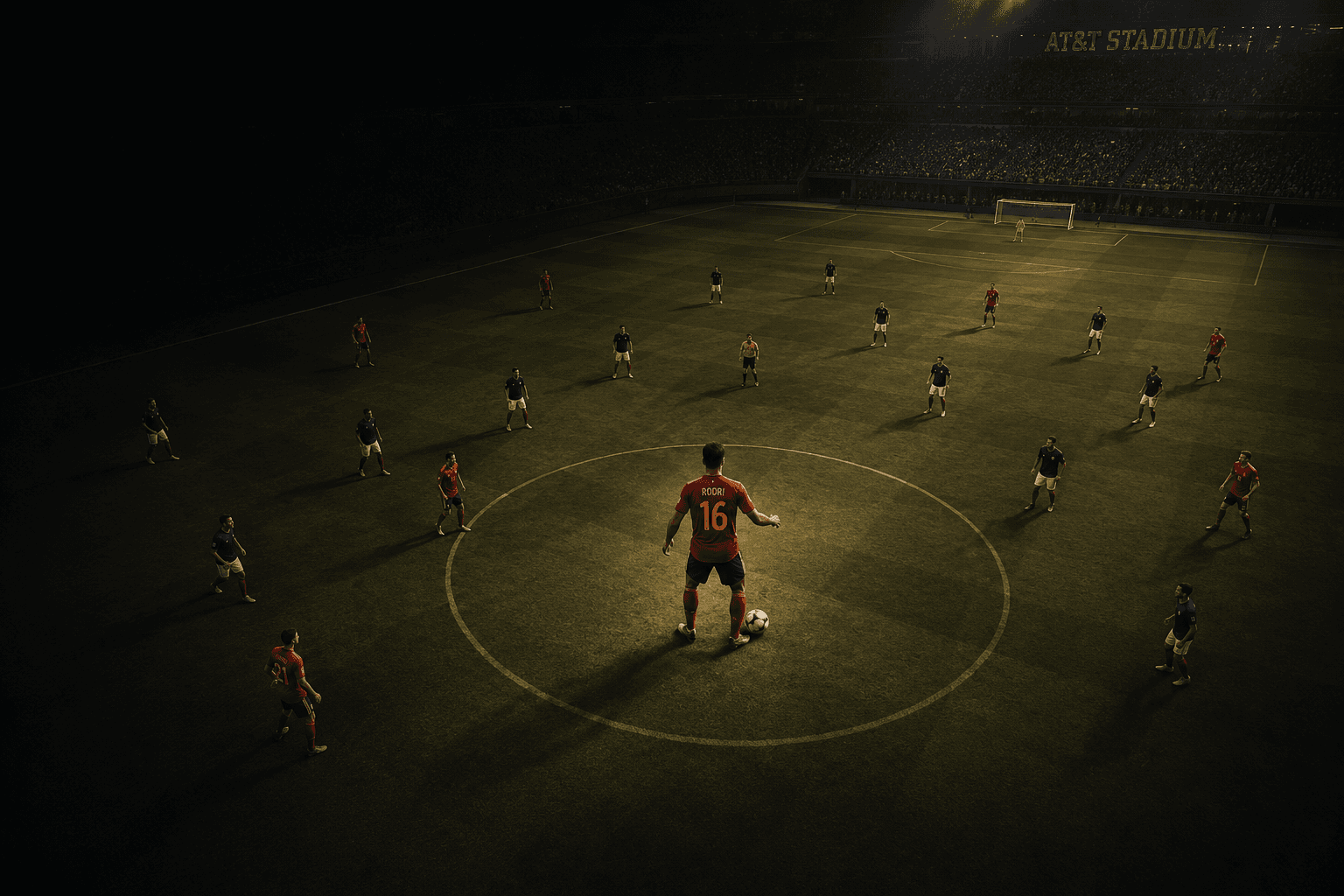
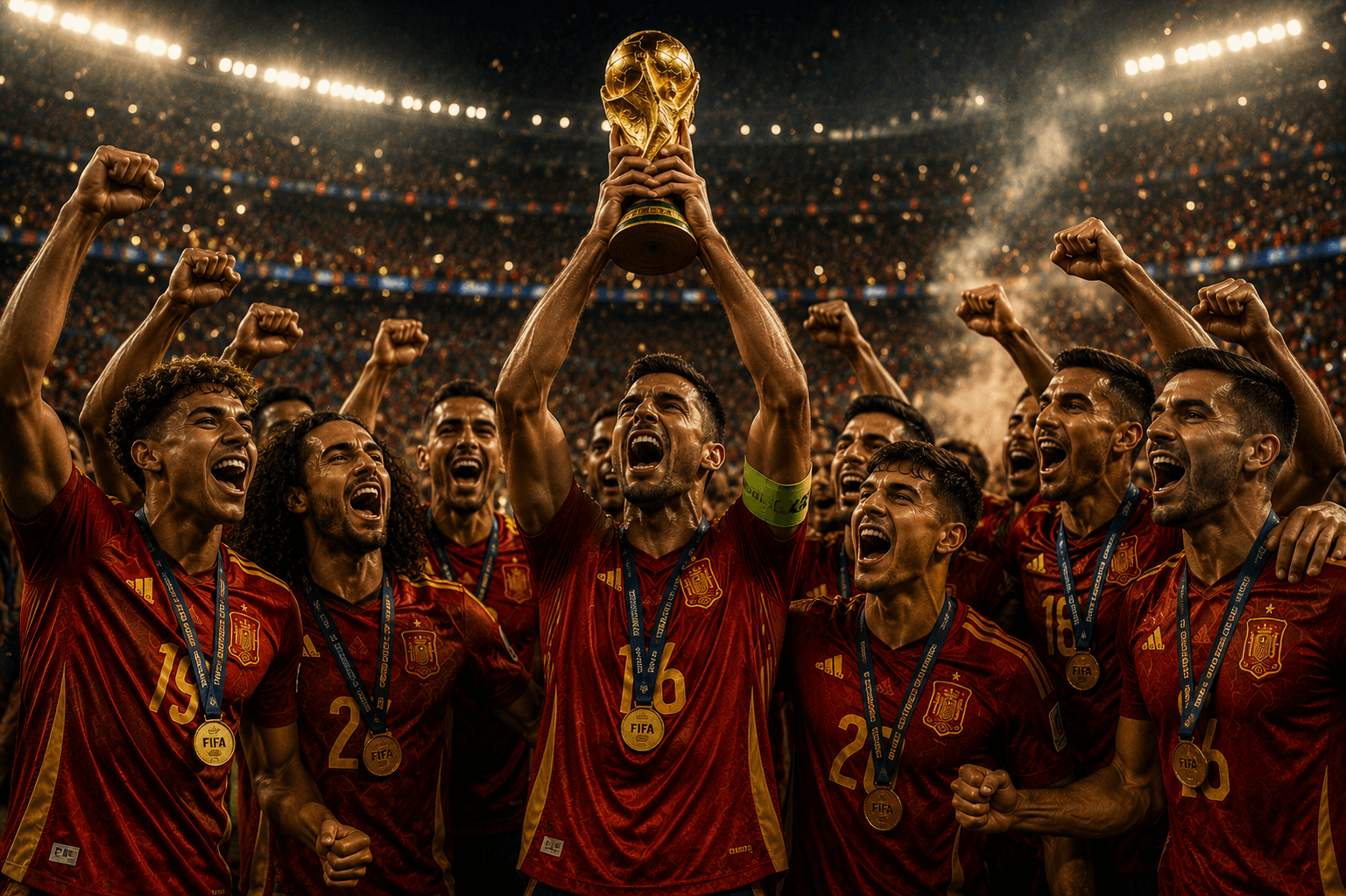
And at the base of it all was Rodri. A year after accepting a Ballon d'Or on a ruptured knee, he controlled a World Cup as though every match were visible to him from somewhere above it. He took the Golden Ball, and then lifted the trophy.
It is worth sitting with what Spain actually proved, because it inverts the cliché the title plays on. The old line says attack is the best form of defense — that the surest way to protect your goal is to keep the other team pinned back and frightened near theirs. Spain proposed the reverse and won a World Cup with it. For them, keeping the ball was the defending. Possession was not the route to a goal so much as the thing that kept the opposition from ever having one. Their attack existed to serve their defense. They controlled the ball not only to create their own chances but to prevent Argentina from creating any, and they were so good at the second part that the most dangerous team in the tournament went home having managed a single shot in a hundred and twenty minutes.
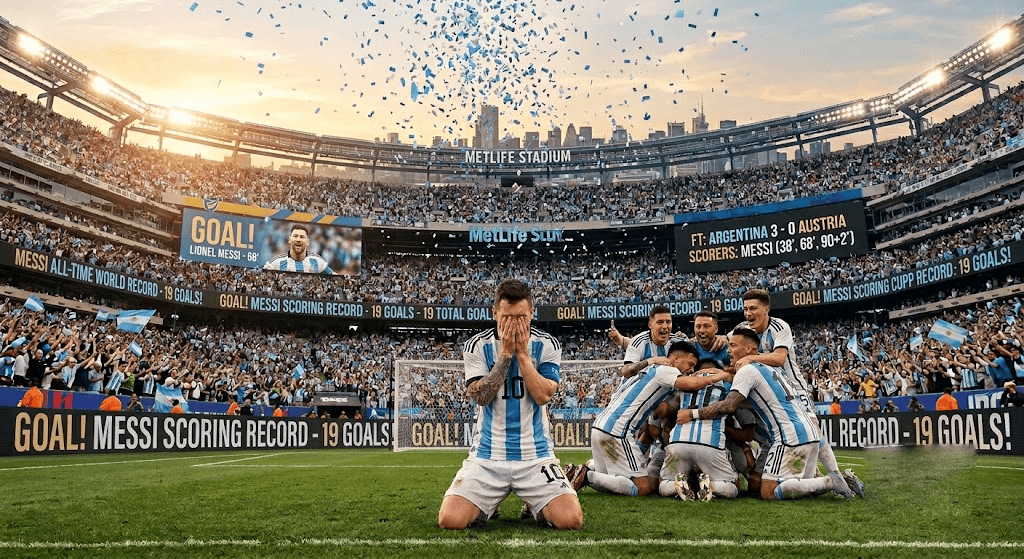
At the end Messi stood on the pitch with a runner-up's medal and wept, and offered no alibi. "They were better," he said. "To be honest." Scaloni said much the same, unprompted, a few feet away. They were not wrong, and the manner of it was the cruelest part. Messi was not beaten by one opponent. He was beaten by a team that had worked out how to make sure he touched the ball as little as possible. The magician was still a magician on Sunday. Spain just took away the hat.
Read more World Cup 2026 coverage: Baby Out With the Bath Water — Argentina's Disgrace · Blood in the Water — Argentina vs England · Dead Rubber — England vs France · The View From Above — Rodri's World Cup · O Kylian — Mbappé's World Cup · Braut — Haaland's World Cup · Hey, Jude — Bellingham's World Cup · El Matador — Mikel Merino · The Round of 16 · The Group Stage Is Over