You can tell a great deal about a footballer by how he plays a game that does not matter.
The ones that matter are crowded with other explanations. A man runs because the tie is level, presses because a place in the final is at stake, takes the ball in the ninetieth minute because the consequences of not taking it are unbearable. Incentive does the work, and it becomes almost impossible to separate the player from the pressure acting on him. Take the pressure away — take away the medal, the glory, the fear, every external reason to try — and what remains is the man himself. Whatever he does now, he does because he wants to.
That is what the third-place playoff is, and it is why football would quietly abolish it if it could find a polite way. It is the fixture the schedule apologizes for. Nobody trains for it as a boy; no child, kicking a ball against a wall in the dark, dreams of the bronze medal. Two teams arrive three days after the worst night of their tournament, asked to care about a game whose entire premise is that they have already failed at the only thing they came to do. It is, by design, a dead rubber — and a dead rubber is usually a tepid, careful, unloved thing, two deflated squads passing the ball sideways until the clock releases them.
And then England and France scored ten goals in it.
Six-four. The most goals in a World Cup match since Hungary put ten past El Salvador in 1982, and the most any third-place game has ever produced. A Saka hat-trick. Mbappé passing Messi for the most World Cup goals in history, in a stadium half-emptied of stakes. Bellingham finishing the whole thing with a solo goal in the ninety-eighth minute that he had no earthly reason to attempt. For a match nobody wanted, an awful lot of people spent it on their feet — and a fair number of them, by the final whistle, were calling it the best game of the entire tournament.
That verdict lands harder when you remember what the tournament was. This has been a World Cup of Paraguay knocking out Germany, of the smallest nations bloodying the biggest, of goals arriving in torrents across six weeks — a tournament a good many people are already prepared to call the greatest of all time. To produce the best single game inside a summer like that is a real distinction. To produce it in the dead rubber, the one match that officially did not count, is almost a joke.
But it is a joke with something serious inside it. Because a game that does not count removes every excuse, and this one gave its answer at a volume nobody could ignore. Strip away the stakes, and what remains is the simplest and least forgiving question in the sport: who can still be bothered?
Who still cared
Two ways to treat a funeral
The first half answered it for the teams.
England played as though the game were a chance to say something, because for them it was. They had been beaten by Argentina three days earlier not merely on the scoreboard but on the terms — the late collapse, the sense of a side that froze when the tournament got heavy, the criticism that followed Thomas Tuchel out of Atlanta like weather. Miami was the first place they could answer it, and there was no trophy attached to the answer, which is precisely what made it revealing. Declan Rice curled in the opener from distance inside three minutes. He then swung in the corner that Ezri Konsa headed home. Bukayo Saka scored twice before half-time. Four-nil at the interval, in the game that was supposed to mean nothing, against the side that had knocked them out of the previous World Cup. It was England's freest football of the tournament — the one afternoon their attack played with the handbrake off — and perhaps it was free precisely because nothing rode on it. With the pressure gone, what was left was a group of players who simply wanted to.
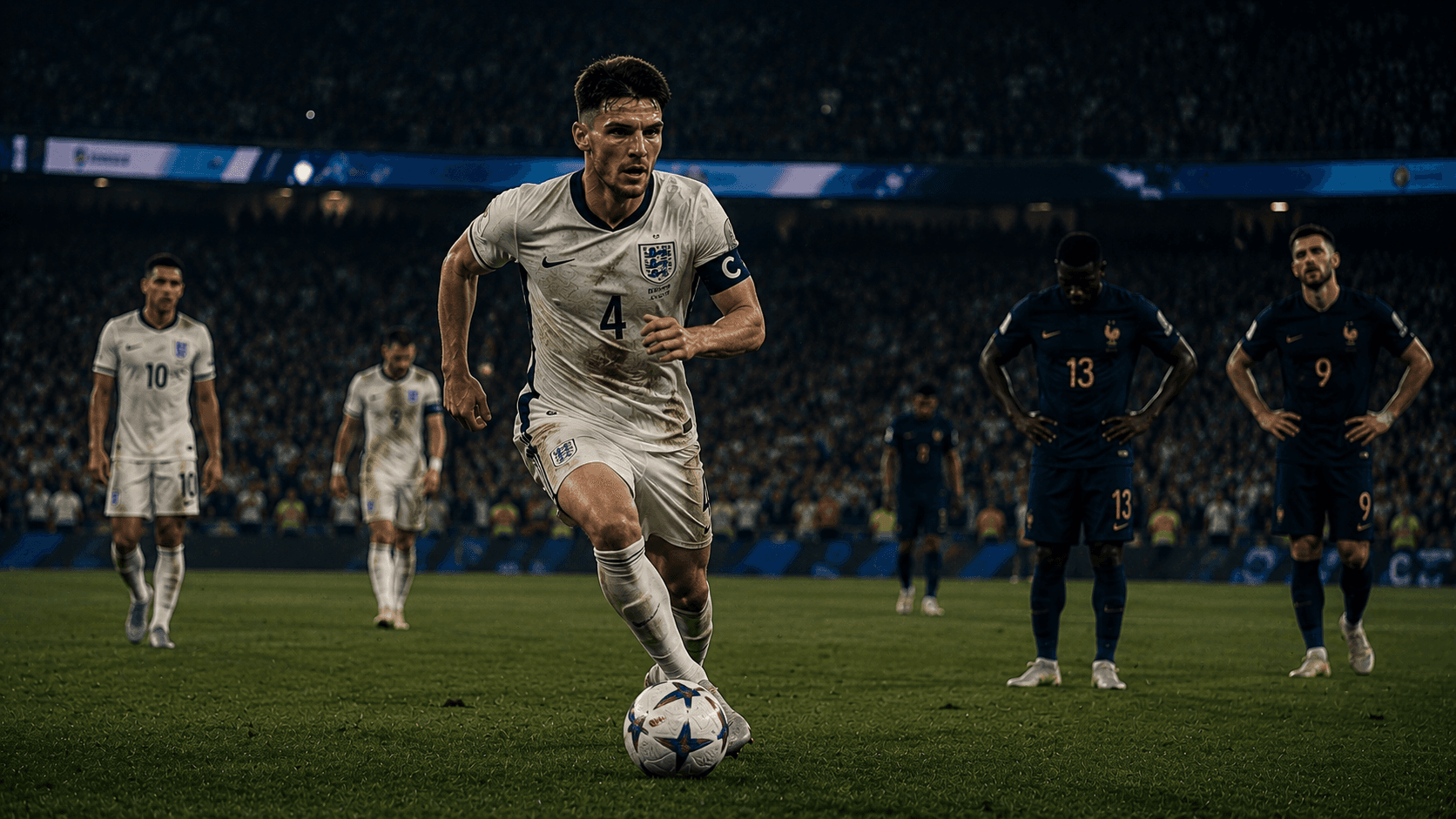
France, in the same forty-five minutes, were not there at all. Whether they were hungover on their own disappointment, still stunned by the Spain result, or had privately decided that a bronze medal was not worth a pulled hamstring — the effect was identical, and the dead rubber exposed it without mercy. They defended like men who had been introduced to one another in the tunnel. Deschamps, in his final match in charge after fourteen years, watched the first half from the technical area and later called it, to French television, "catastrophic." He was being generous.
But a team is not a single thing, and the strange usefulness of a game with no stakes is that it sorts the men inside the collective from one another. France as a unit could not be bothered. Two Frenchmen, it turned out, could be bothered more than almost anyone on the field.
The men who invented stakes
Mbappé, and Olise
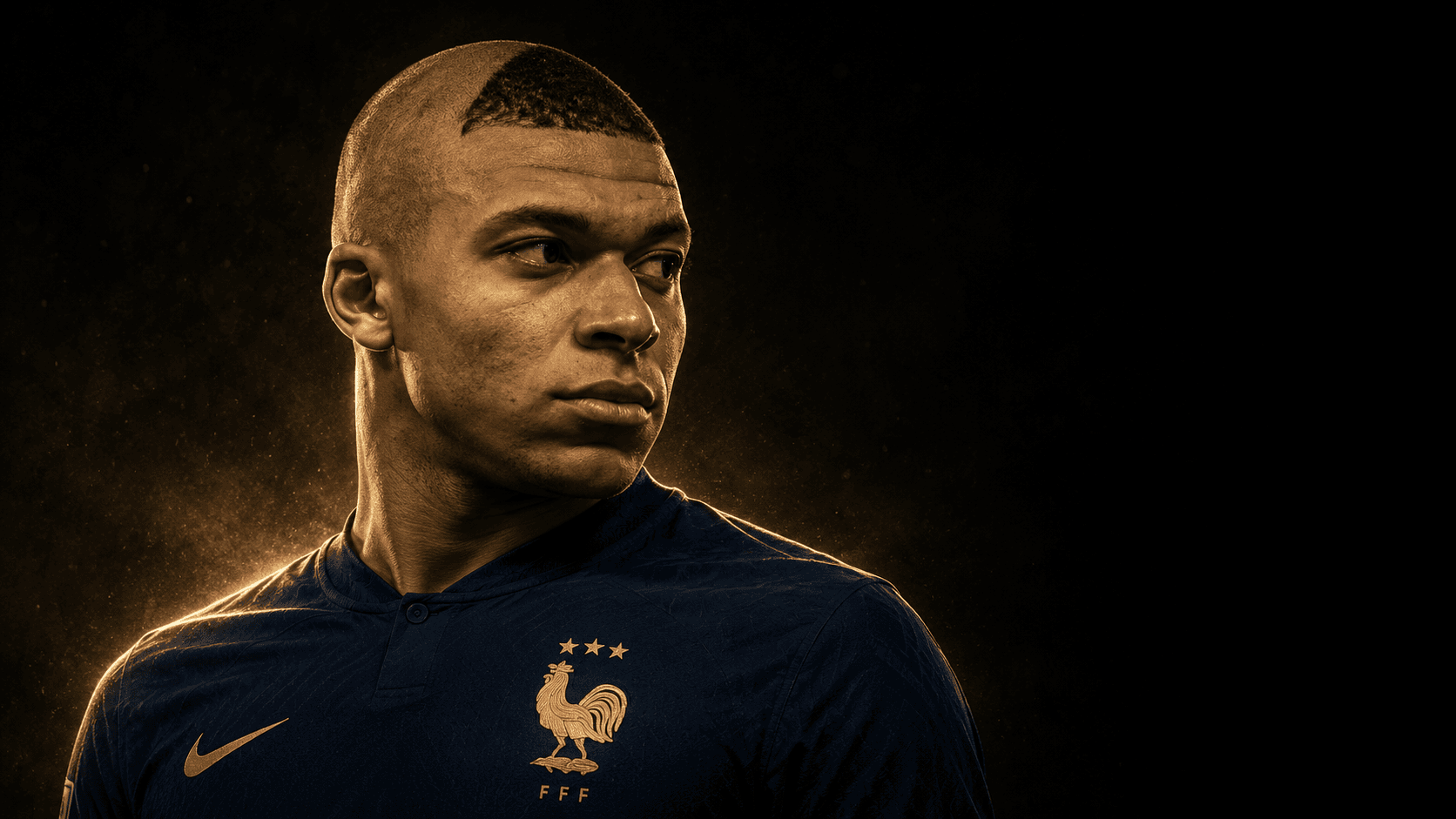
Kylian Mbappé refused to let the match be meaningless. That is the more precise way to say it — not that he cared about a dead rubber, but that he declined to accept it as one, and manufactured his own reasons where the fixture had failed to supply any. He arrived in Miami one goal behind Lionel Messi on the all-time World Cup scoring list and two adrift in a Golden Boot race he had led all month and then watched slip. There was, for him, a very live match happening inside the pointless one.
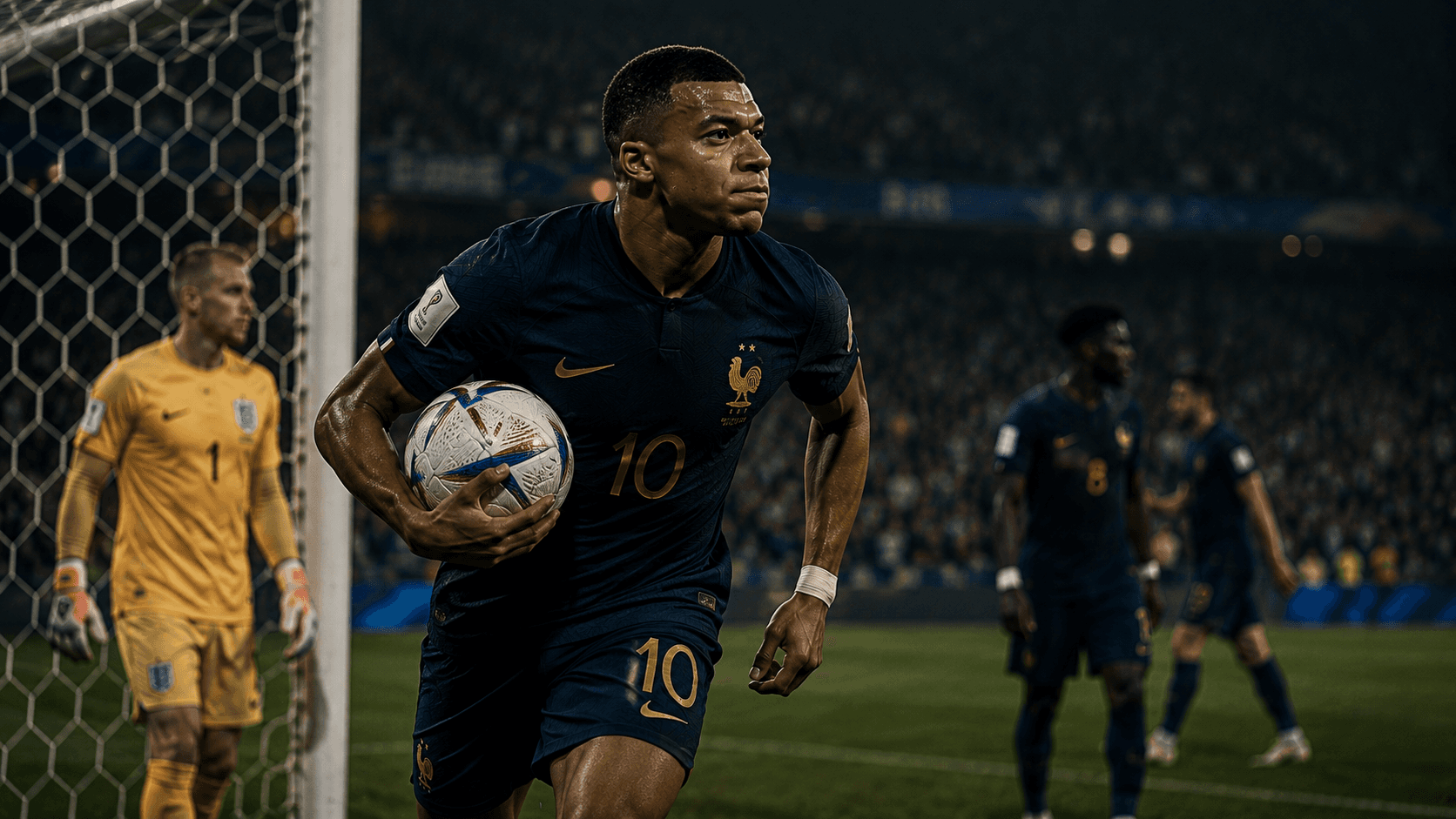
He scored in the forty-eighth minute and again in the sixty-sixth, both laid on by Michael Olise, the second a left-footed strike from the edge of the box that gave Dean Henderson no chance. The second goal took him to twenty-two World Cup goals, past Messi and alone at the top of a list that runs back to 1930. It also took him to ten for the tournament, the first man to reach double figures at a single World Cup since Gerd Müller in 1970. And it dragged France, dead at four-nil, back to four-three. A man who had decided the afternoon counted was, for an hour, almost dragging a comeback out of teammates who, for forty-five minutes, had decided it did not.
He was not alone in caring. Michael Olise, restored to a central role after the break, was the engine of that revival — the two assists were his, and they carried him past Pelé to the most assists any player has ever produced at a single World Cup, seven. But twice, in the seventy-fifth minute and the eighty-first, he was played clean through with the equalizer there to be taken, and twice he fired wide. He was, by the reports out of the France dressing room, in tears afterward, blaming himself, consoled on the pitch by Deschamps and again in private. Which is the whole point turned inside out: this was the game that did not matter, and it reduced a man to weeping because it mattered to him. You cannot fake that. The fixture did not supply the feeling; he brought it with him.

The men who didn't need a reason
Rice, and Bellingham
The hat-trick will lead the reports, and it should: Saka was electric, a reminder that when he is fit he remains England's most incisive wide player, the one who bends a game toward him. But the fullest answer to the question the afternoon was asking wore the armband.
There has been a murmur about Declan Rice — quieter before the tournament, louder through it — and it was never that he had stopped being good; it was a question of balance, of whether England could start him and the similarly inclined Elliott Anderson at once. It is a real debate. It is also not the one that mattered on Saturday. Because whatever the ideal composition of England's midfield, the dead rubber revealed something the tactical argument cannot touch: that Rice plays a game that does not matter exactly as he plays one that does. He captained the side. He scored the first and made the second. He ran ninety minutes of a meaningless match at the end of a season whose workload would have flattened most players, and he never stopped driving the thing forward, because there is no register in him marked this one doesn't count. Some players need the stakes to summon the effort. The rarest ones bring the same effort to a game with none. That is not a tactical quality. It is a character one, and it is the whole reason a manager wants a man like that in the room.
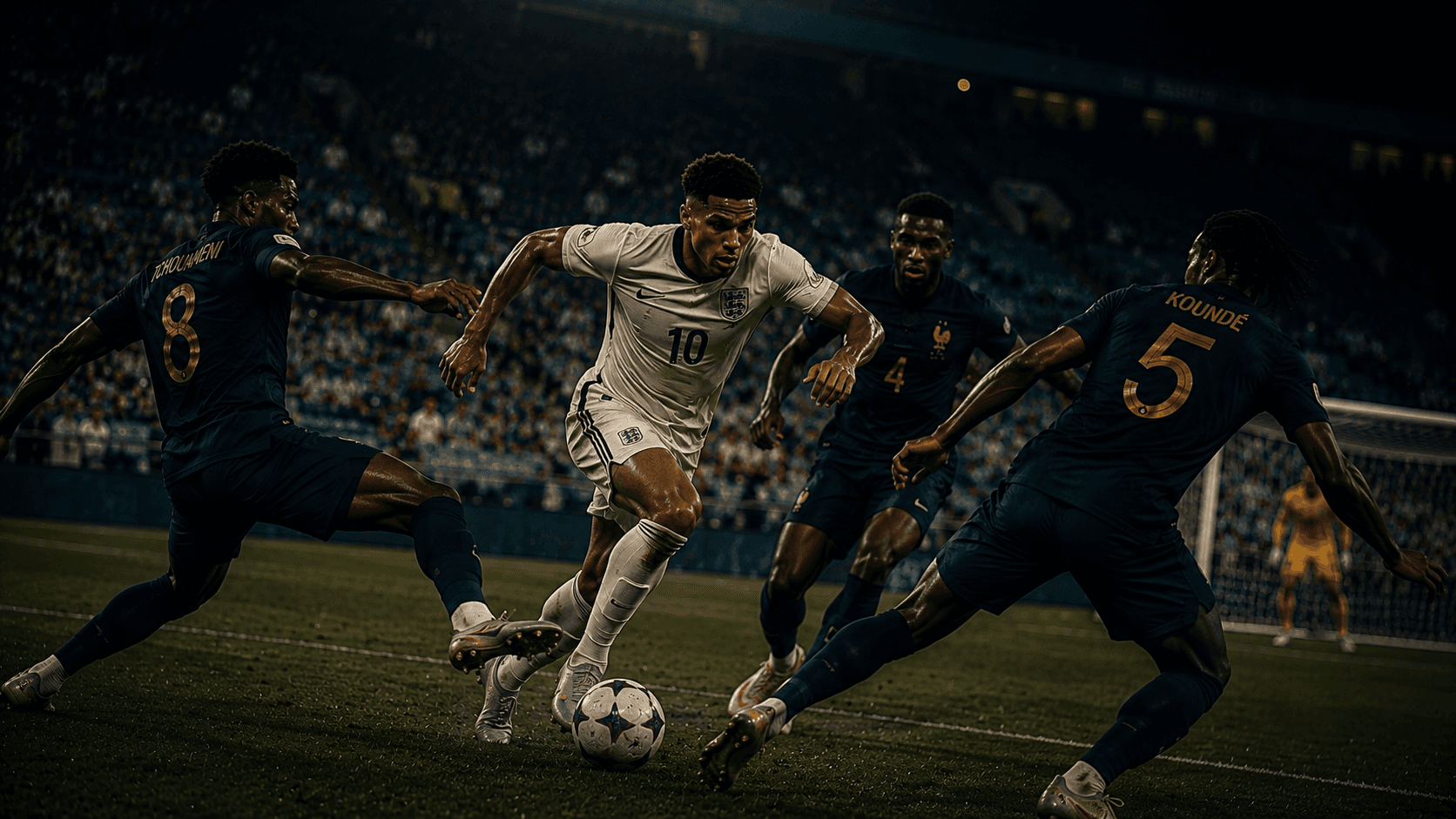
And then, at the very end, Jude Bellingham. He came off the bench earlier in the half and, in the eighth minute of stoppage time, with the result long since settled, dribbled through three France defenders to score. He did not need the goal. England did not need the goal. There was, by any external accounting, no reason on earth to attempt it. He attempted it because he wanted it — because the gap between needing to score and wanting to score is the exact gap this whole strange afternoon was built to expose, and he lives, permanently, on the wanting side of it. It was a small thing, a sixth goal in a ten-goal exhibition. It is also the single most revealing act of the match, because nothing whatsoever compelled it.

That is what the dead rubber was for. Not the medal, which nobody will remember, and not the record books, though Mbappé rewrote them. It was the one game all tournament with the incentives switched off, and with them gone you could see, with a clarity the important matches never allow, who these players actually are. England, collectively, still wanted it. France, mostly, did not. Mbappé built his own reasons; Olise broke over his; Rice never noticed the difference; Bellingham went looking for a goal the scoreboard had made pointless.
The important matches tell you how footballers perform under pressure. The dead rubber tells you who they are without it. It is the fixture nobody dreams of, and it turned out to be the only place all summer you could see them plainly.
Read more World Cup 2026 coverage: Baby Out With the Bath Water — Argentina's Disgrace · The Best Form of Defense — Spain's World Cup Final · Blood in the Water — Argentina vs England · The View From Above — Rodri's World Cup · O Kylian — Mbappé's World Cup · Braut — Haaland's World Cup · Hey, Jude — Bellingham's World Cup · El Matador — Mikel Merino · The Round of 16 · The Group Stage Is Over