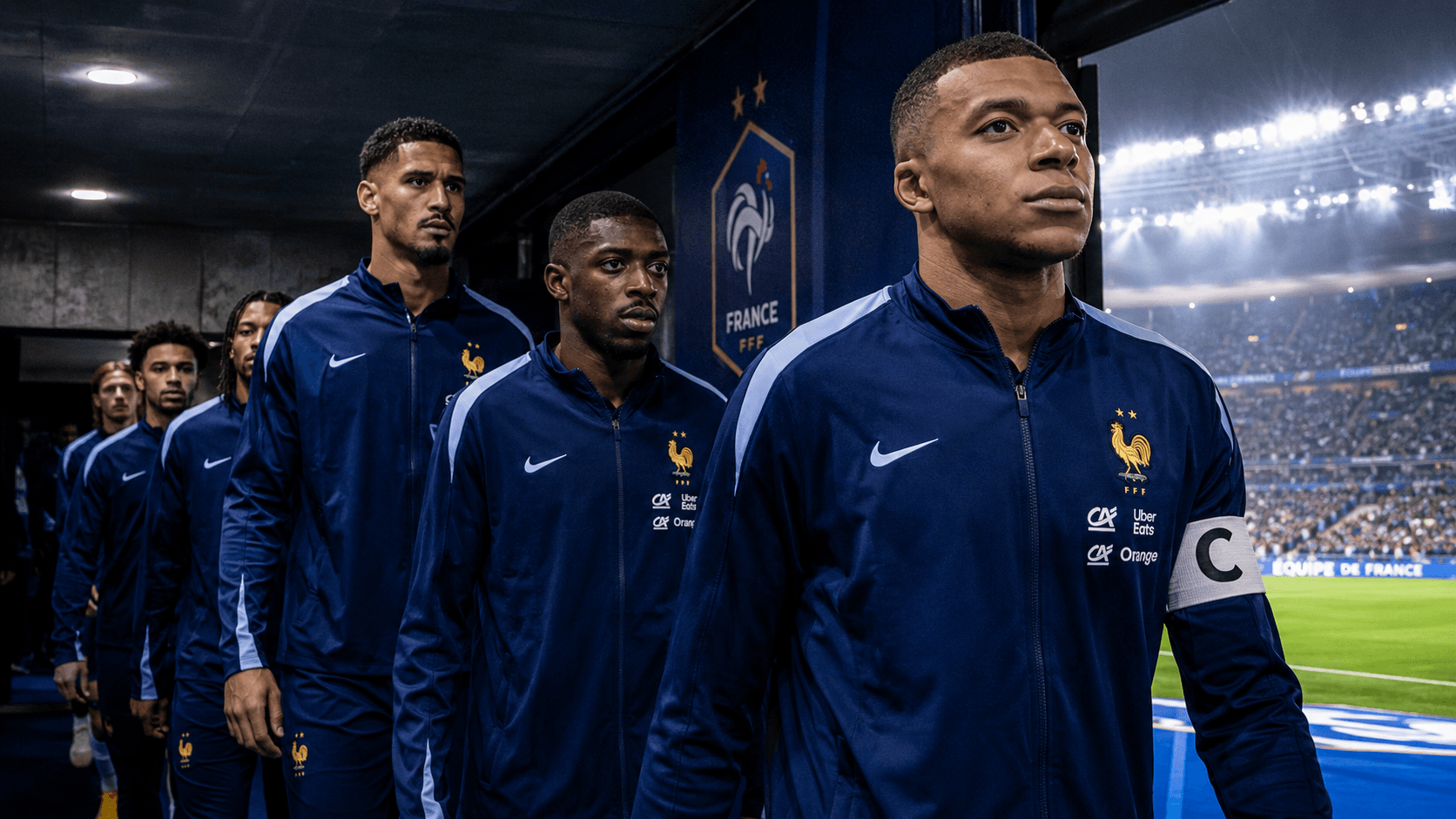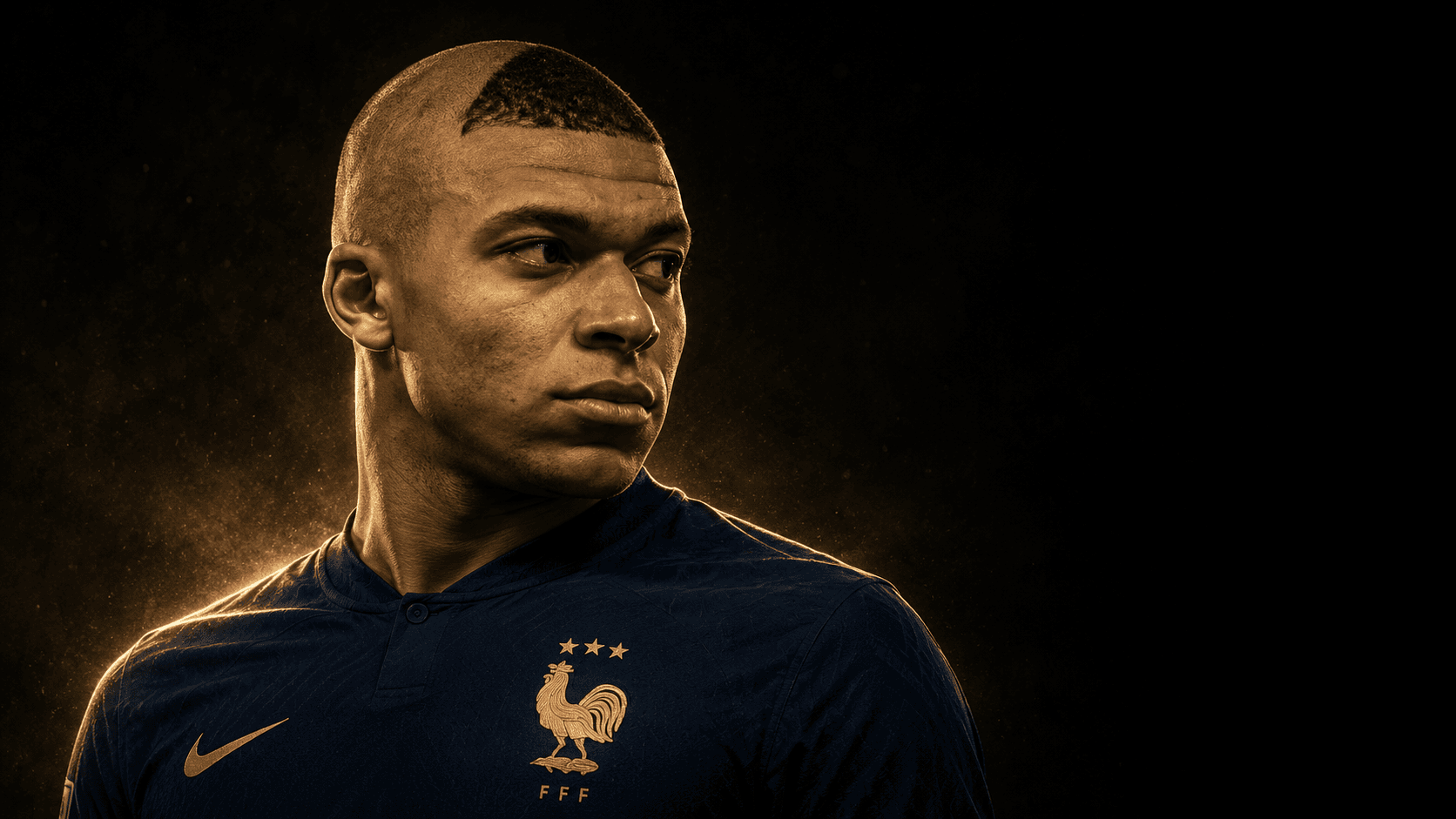
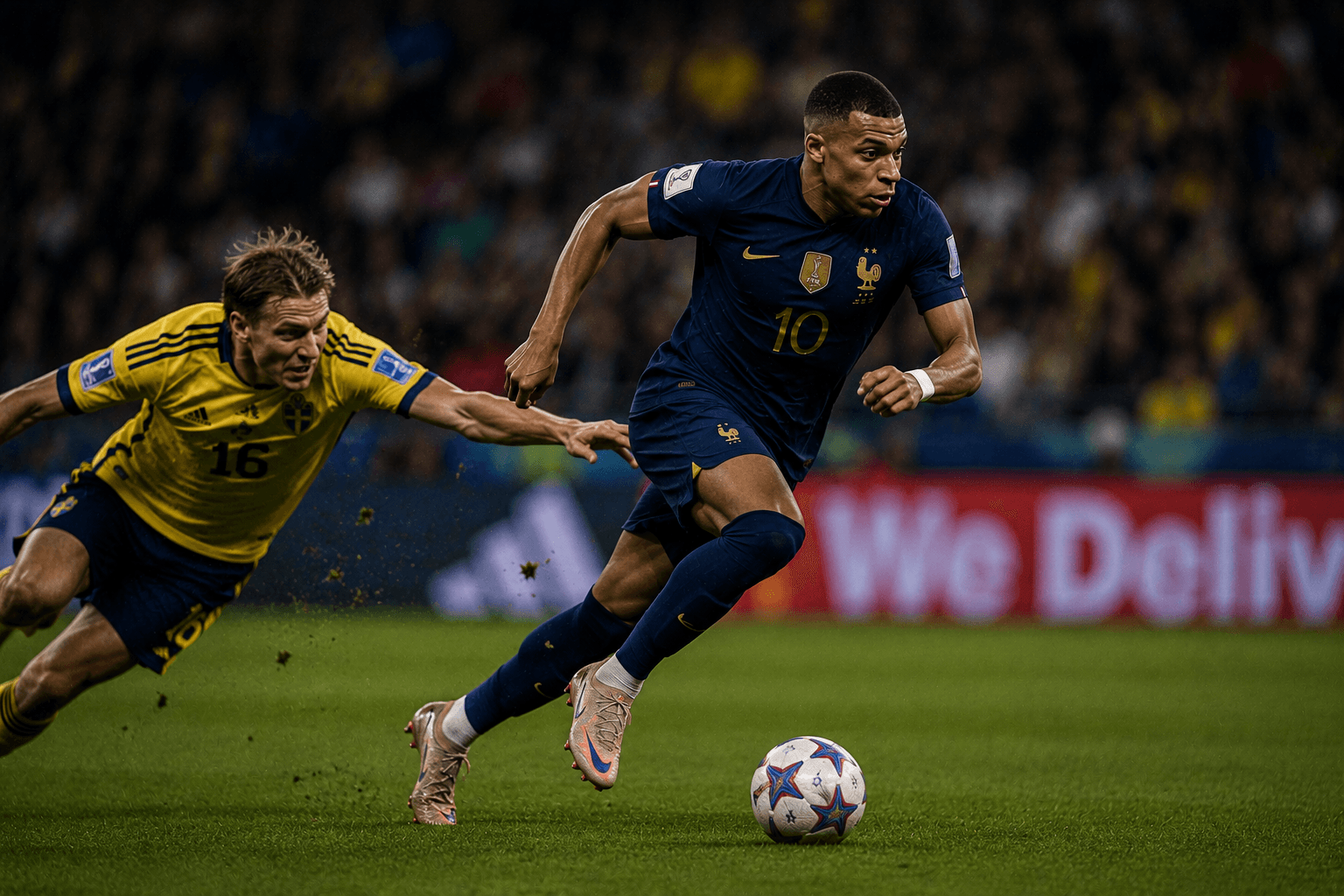
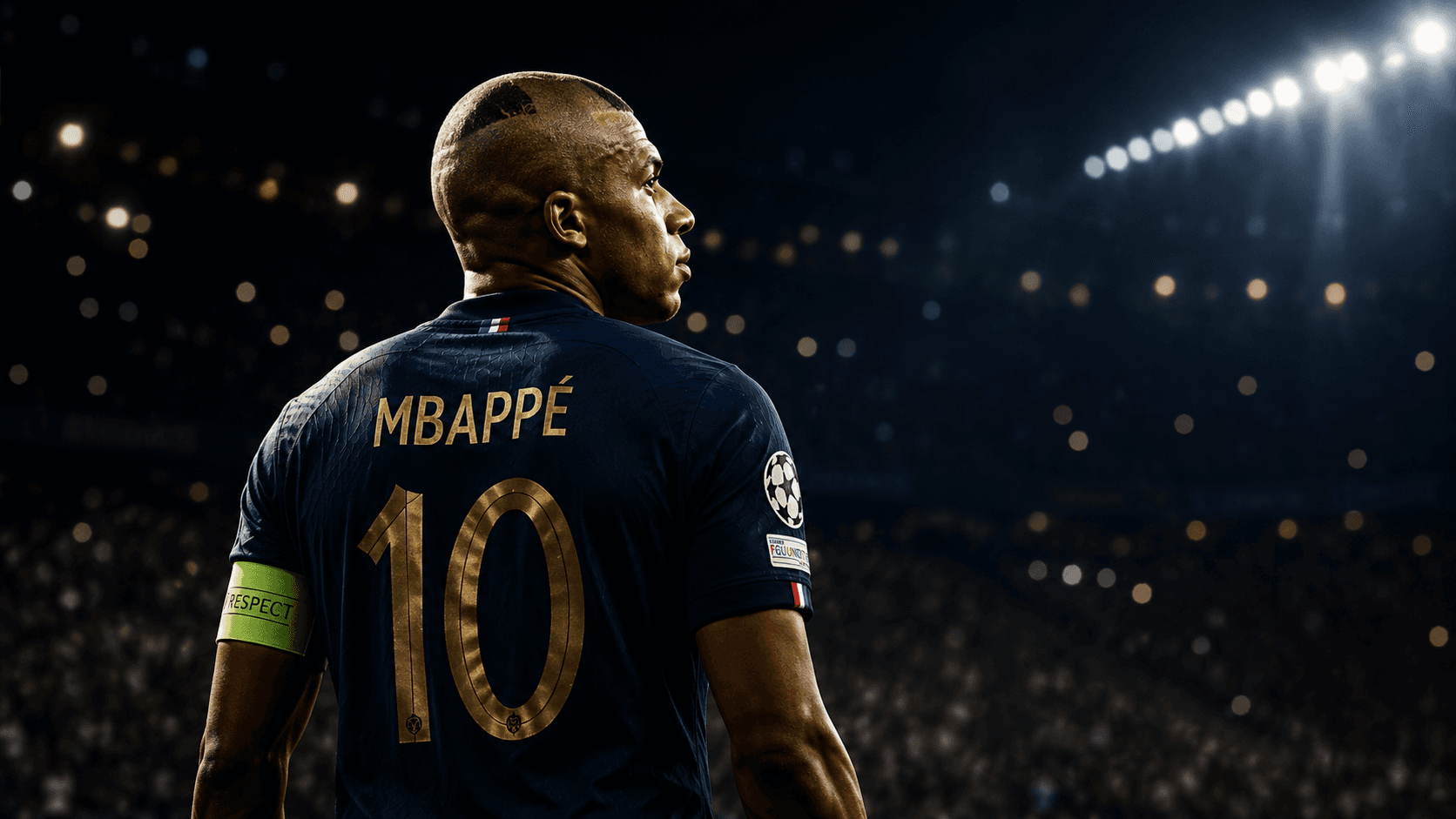
Against Sweden, Kylian Mbappé collected the ball near the byline, took a single crossover step to fold Viktor Gyökeres out of the picture, and drove a diagonal shot inside the far post. It lasted perhaps three seconds. It was also a small act of time travel, because anyone who watched football in the late 1990s had seen it before — the same low center of gravity, the same impossible acceleration in a big man's frame, the same defender left grabbing at the air where the ball used to be.
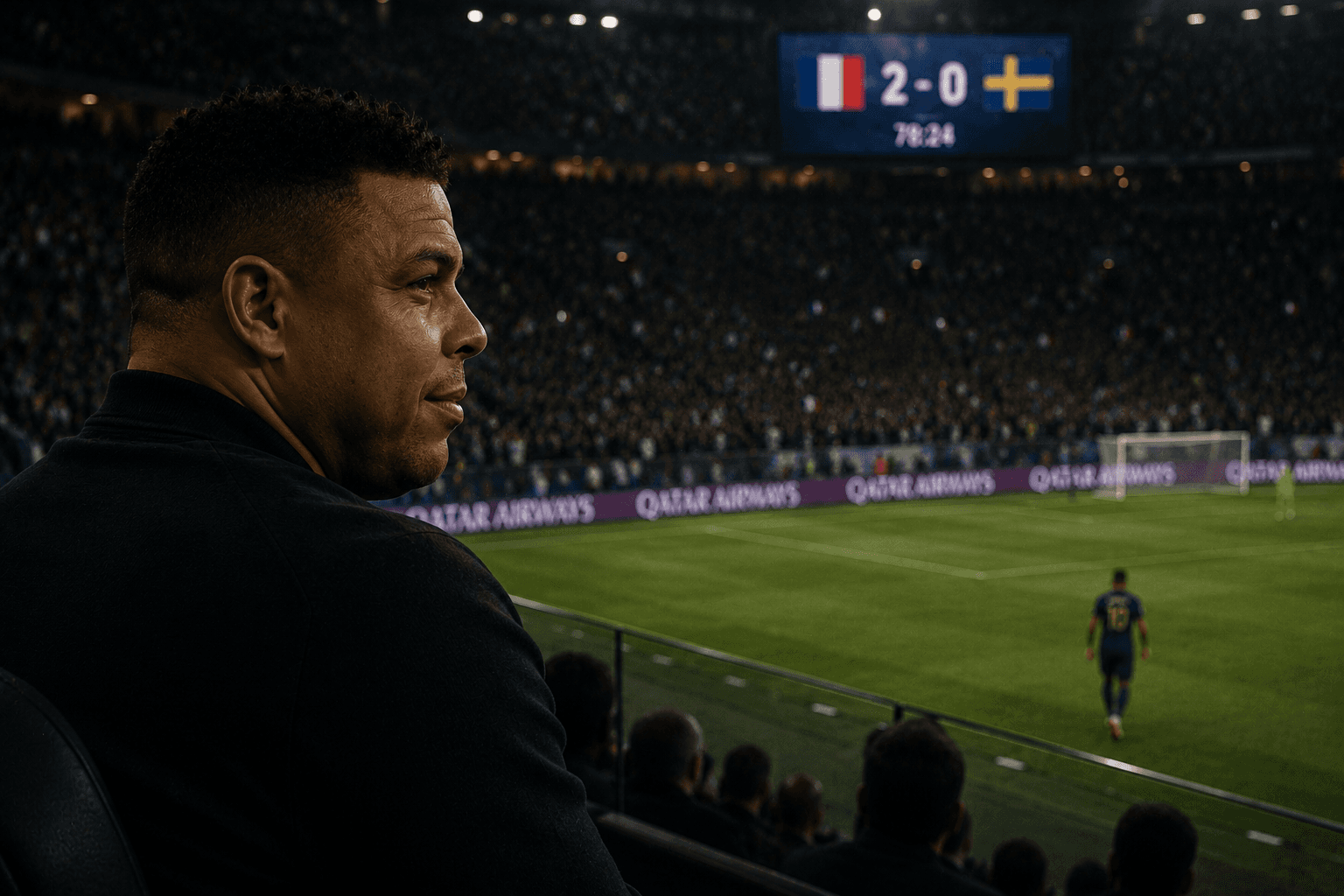
The player who used to do that was Ronaldo Luís Nazário de Lima, and the world called him O Fenômeno: the Phenomenon. Two decades after his knees finally gave out, he was asked this summer which of today's players reminds him of himself. He did not hedge. "Kylian Mbappé," Ronaldo said, "reminds me of myself in my prime."
There is no higher compliment in the sport, and no one on earth better placed to pay it.
O Fenômeno
What the word was for
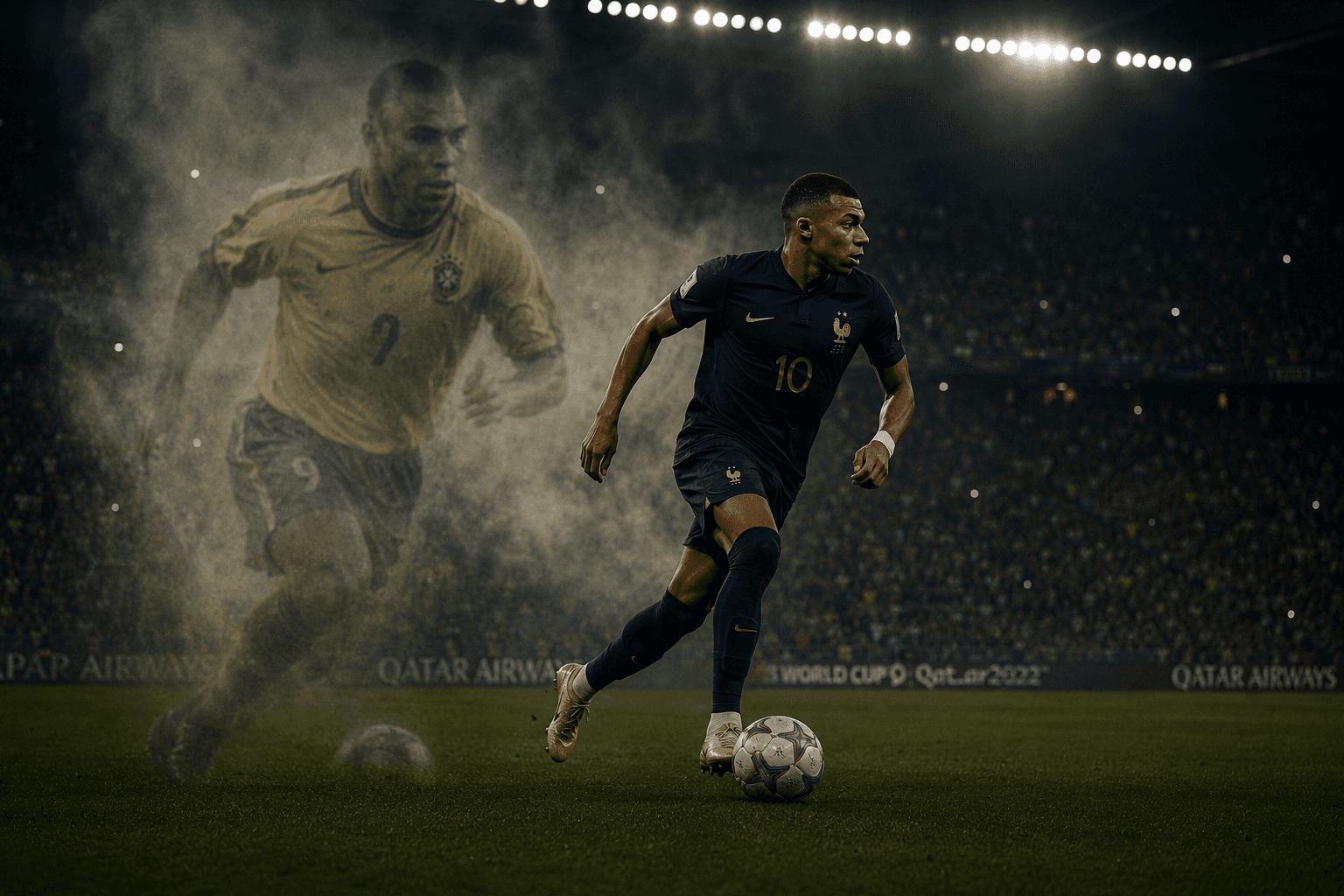
To feel the weight of that, you have to remember what Ronaldo actually was, because the highlight reels flatten him into a run of goals and lose the thing that made defenders afraid. He was not a poacher. He was a one-man attack — a striker with the top speed of a sprinter and the close control of a playmaker, who would drop into his own half to collect the ball and then run at a back line until it broke. He beat men with stepovers thrown down at a full sprint, with the elastico, with a change of pace that left quick defenders looking nailed to the turf. He rounded goalkeepers with a calm that bordered on rudeness.
A striker is a specialist by definition; nobody asks a number nine to do everything a midfield does. But within that narrow trade there is a spectrum, and at the far end of it stands a forward who can do very nearly all of it — run, carry, beat his man, make the chance, finish it with either foot or his head. Ronaldo was the outer edge of that spectrum, the most complete version the position has ever seen. He redefined it in the process: before him, the archetype was the penalty-box finisher; after him, the ideal was a forward who could build the goal and score it in the same movement.
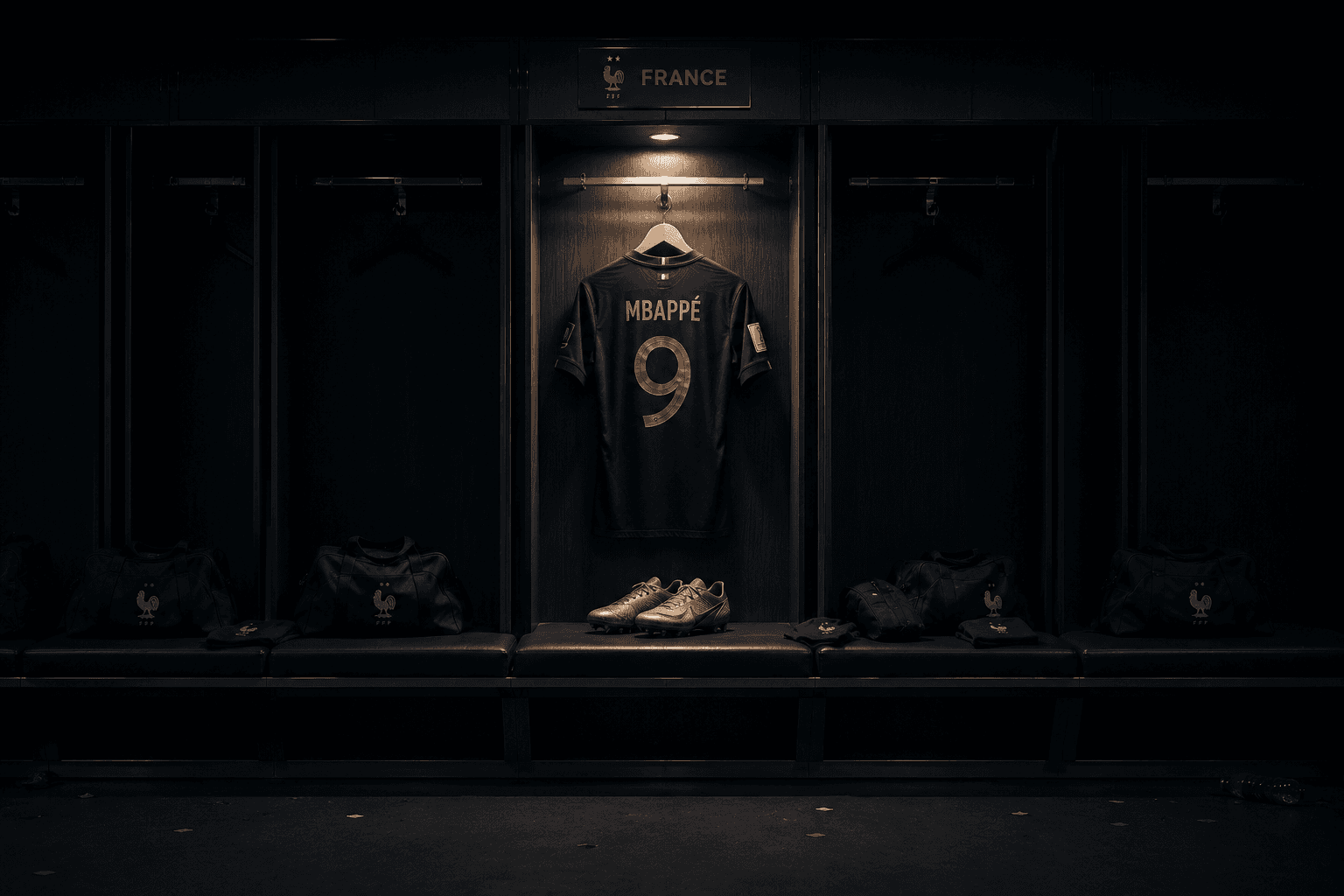
He did all of that, and then his knees took it back — the sharp cuts and sudden stops that made him unplayable were the same forces that wrecked the tendons underneath them. Perhaps that is why he has spent 20 years watching fast, brilliant forwards arrive and declining, every time, to call any of them his heir. Until now.
The same animal
Pace, feet, and the goal he makes himself
Watch Mbappé and you are watching the same animal. The first quality is the one everyone names and few describe correctly. It is not that he is fast, though he is among the fastest players alive; it is that he is fast with the ball at his feet. Raw sprint speed is common. Sprint speed while dribbling — the ball kept a stride ahead and still under command — is the rare and ruinous version, and it is the one both men own. From a standing start he is at full pace inside two touches, which is why defenders cannot simply jockey him. Give him a yard and the yard is already gone.
Then there are the feet. Like Ronaldo, Mbappé beats people with stepovers and hard changes of direction played at speed — not the unhurried tricks of a winger with time to fill, but the violent ones of a striker who has already decided where the goal is. And, like Ronaldo, he does not need the pass to be perfect, or to arrive at all. He makes his own.
That last point is the whole argument, and it is where the comparison with this tournament's other great number nine runs out. Erling Haaland is the purer finisher — put the ball in the six-yard box and no one alive is more certain to convert it. Mbappé, like O Fenômeno, begins many of his own attacks: he wins the duel, carries the ball 40 yards, and applies the final touch himself. That is the harder thing, and the rarer, and it is roughly what the word phenomenon was invented to hold.
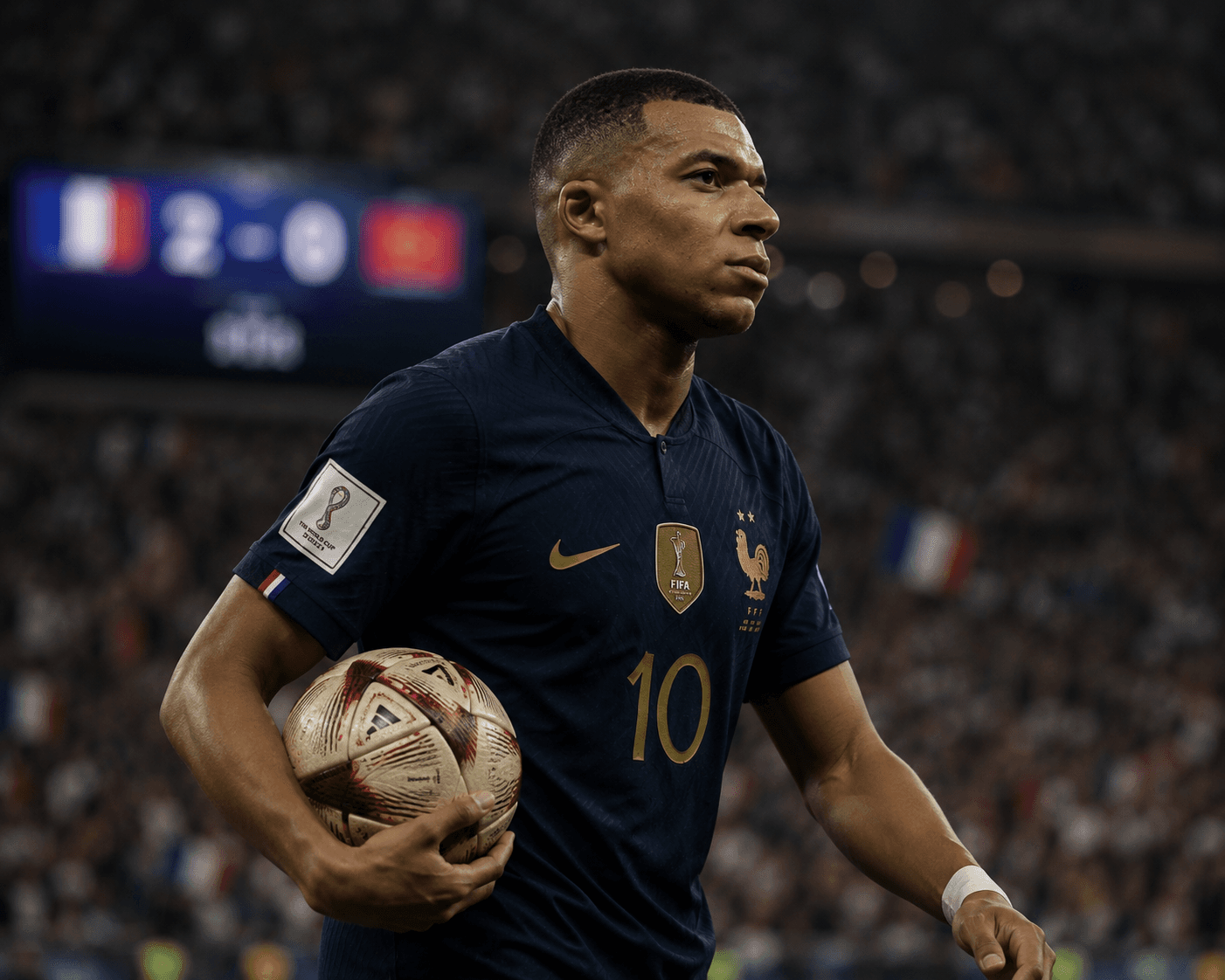
None of which is to pretend he is Ronaldo's equal at Ronaldo's peak. He is not, quite. The Brazilian, before the injuries, carried a heavier physical menace and a finishing instinct so strange that teammates spoke of it as a sixth sense; the honest version of the comparison is that Mbappé is faster and Ronaldo was more complete. But "the closest thing since" is not a runner-up's ribbon. For two decades it has been a vacant title, claimed by no one. Mbappé holds it alone.
The proof
The records he took from the Phenomenon
If that reads as romance, the tournament has spent five weeks turning it into arithmetic. Mbappé came to this World Cup already France's all-time leading scorer — he passed Olivier Giroud last month and has kept climbing, to 64 goals for his country — and he has spent the knockout rounds walking through the game's oldest records as though they were group-stage opposition. He is the leading scorer in World Cup knockout history, with 12, a list he now heads outright, having gone past the two men who had shared the top of it: Leonidas, and Ronaldo. He needed the biggest stage to overtake O Fenômeno, and he did it where phenomena are supposed to live — in the games that end careers.
He has 20 World Cup goals now, second only to Lionel Messi, the pair of them having left Miroslav Klose's old record of 16 in the distance. He leads the race for this tournament's Golden Boot. His 11 goal involvements are the most at a single World Cup since Gerd Müller in 1970, and he is the first player since records began in 1966 to reach double figures for goal involvement at two separate tournaments. This is a man who scored in a World Cup final as a 19-year-old and a hat-trick in the next one; the pedigree was never the question. And in one of the rhymes the sport occasionally offers, he and Ousmane Dembélé are now the first pair of teammates to each score five or more at a single finals since Ronaldo and Rivaldo, for Brazil, in 2002 — the summer of O Fenômeno's own redemption.
The point of the numbers is not the numbers. It is that they are the kind Ronaldo used to produce: goals on the nights when the tournament stops being a festival and becomes a fight.
There is a version of this piece that ends on a forecast — France meet Spain in the semifinal, and a forward in this form, chasing this history, is a grim thing to be asked to stop. But the forecast is not the point, and neither, in the end, is the trophy. The point is what he is. Every generation or so the game turns out a forward who will not fit the categories — too fast, too complete, too total to be filed under finisher or creator — and the sport goes looking for a larger word. It found one for Ronaldo and then spent 20 years waiting to use it again and mean it. The wait is over. The Phenomenon looked across two decades at Kylian Mbappé and saw himself. There is nothing left to say.
Read more World Cup 2026 coverage: Baby Out With the Bath Water — Argentina's Disgrace · The Best Form of Defense — Spain's World Cup Final · Dead Rubber — England vs France · Blood in the Water — Argentina vs England · The View From Above — Rodri's World Cup · Braut — Haaland's World Cup · Hey, Jude — Bellingham's World Cup · El Matador — Mikel Merino · The Round of 16 · The Group Stage Is Over