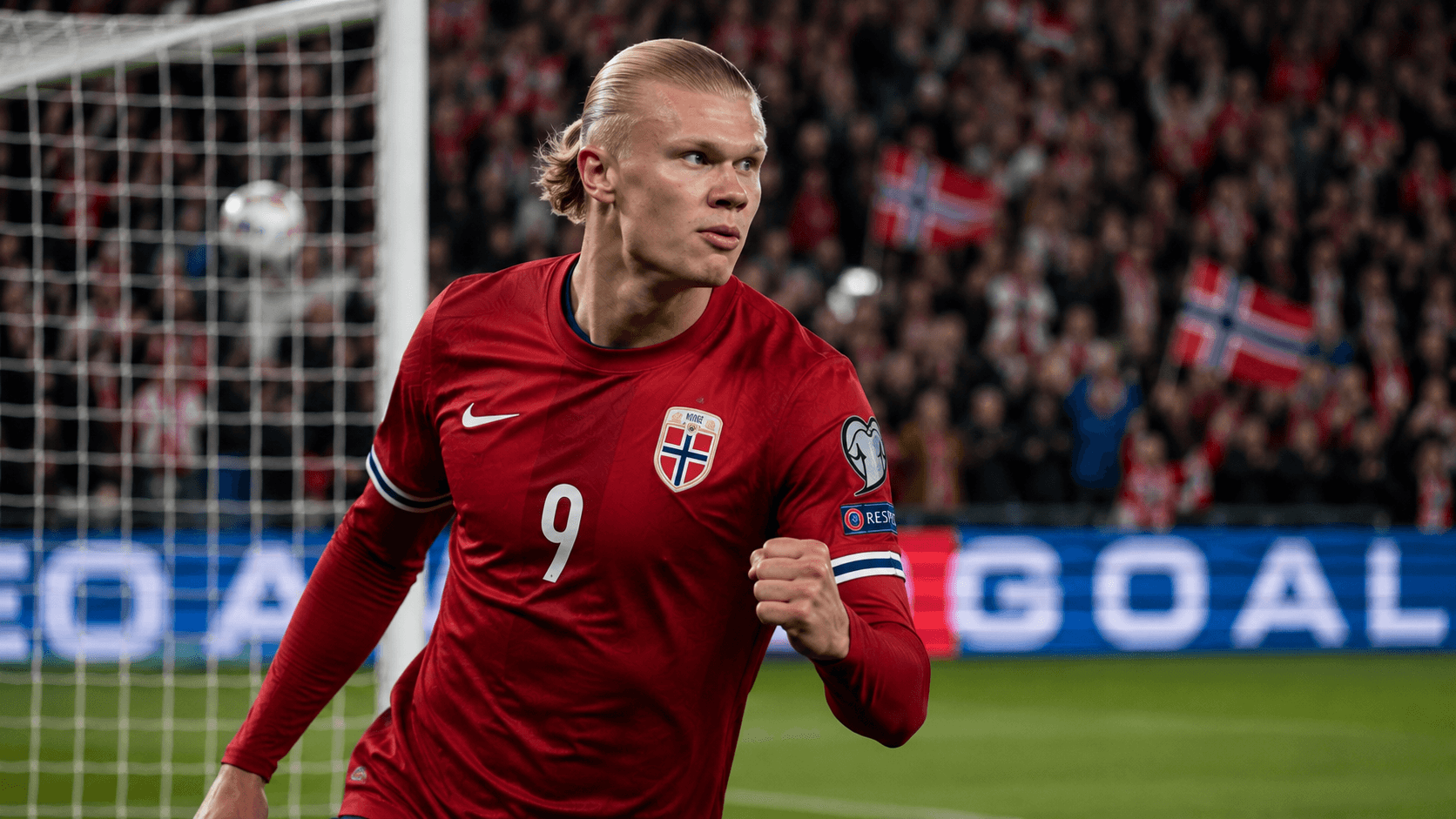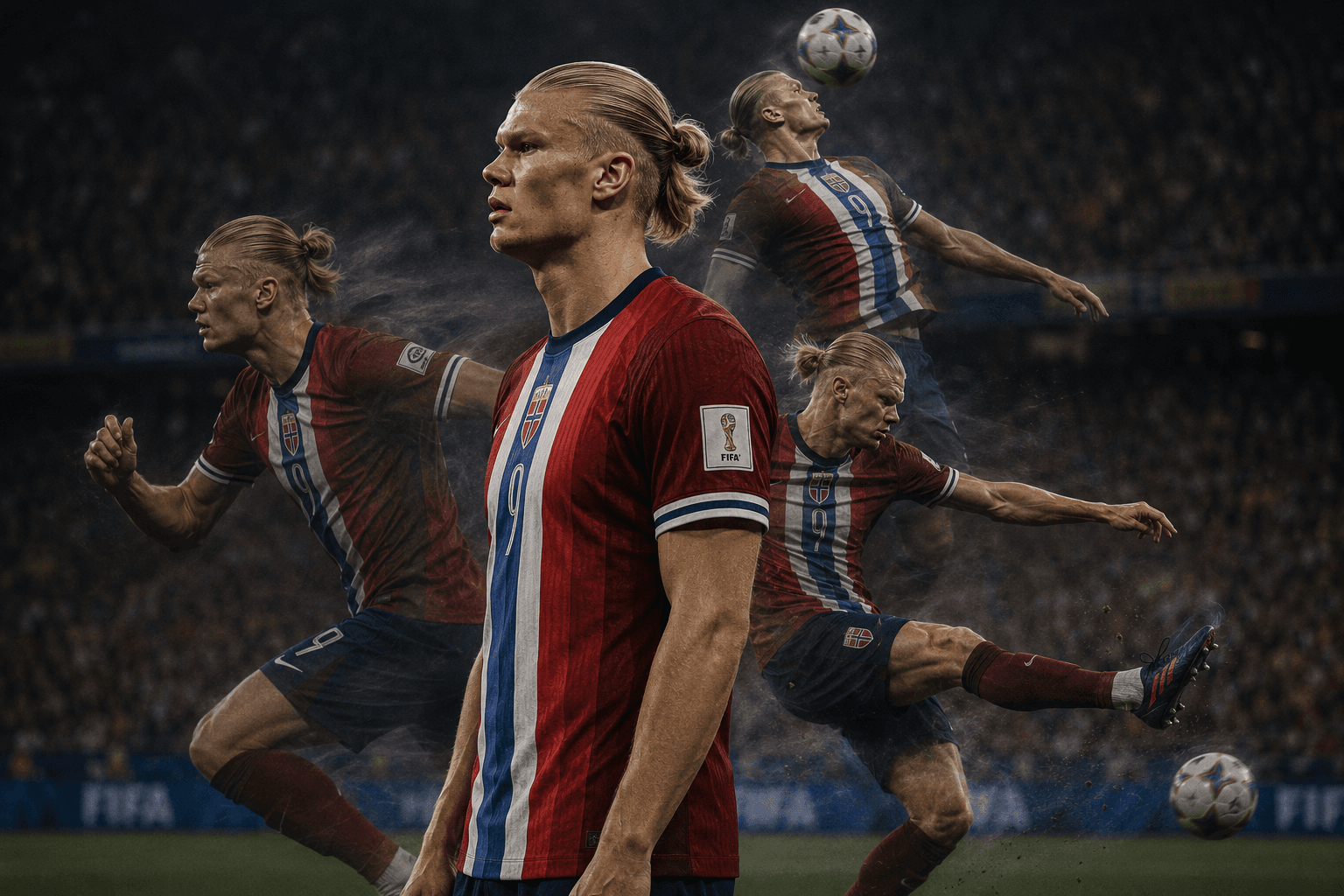
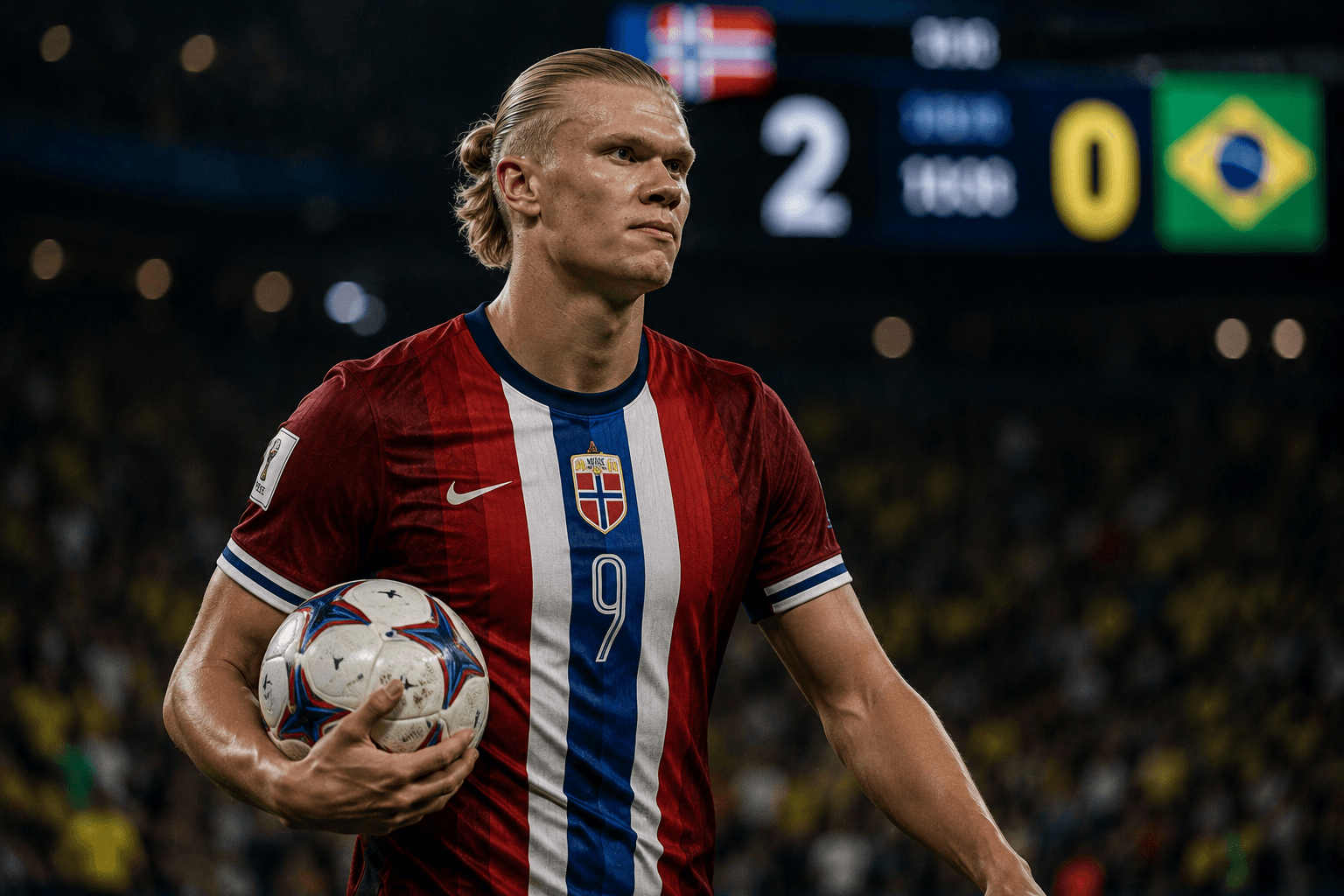
Erling Haaland scored twice against Brazil, and both goals were acts of physical trespass. The first was a header he did not so much rise for as claim, planting himself in front of a defender and nodding a Schjelderup cross past Alisson. The second was a low left-footed drive struck with the backlift of a man slamming a door shut. Barely 30 touches in the whole match, two of them fatal, and the five-time champions were out of their own tournament — beaten, in the final 11 minutes, by the simplest and most brutal thing in football.
When it was done he took the drumsticks from his captain, Martin Ødegaard, and led the Viking Row in front of a silenced Brazil. Norway were into their first World Cup quarterfinal. His middle name, the one his mother gave him, is Braut. Give or take a vowel, it is also a description.
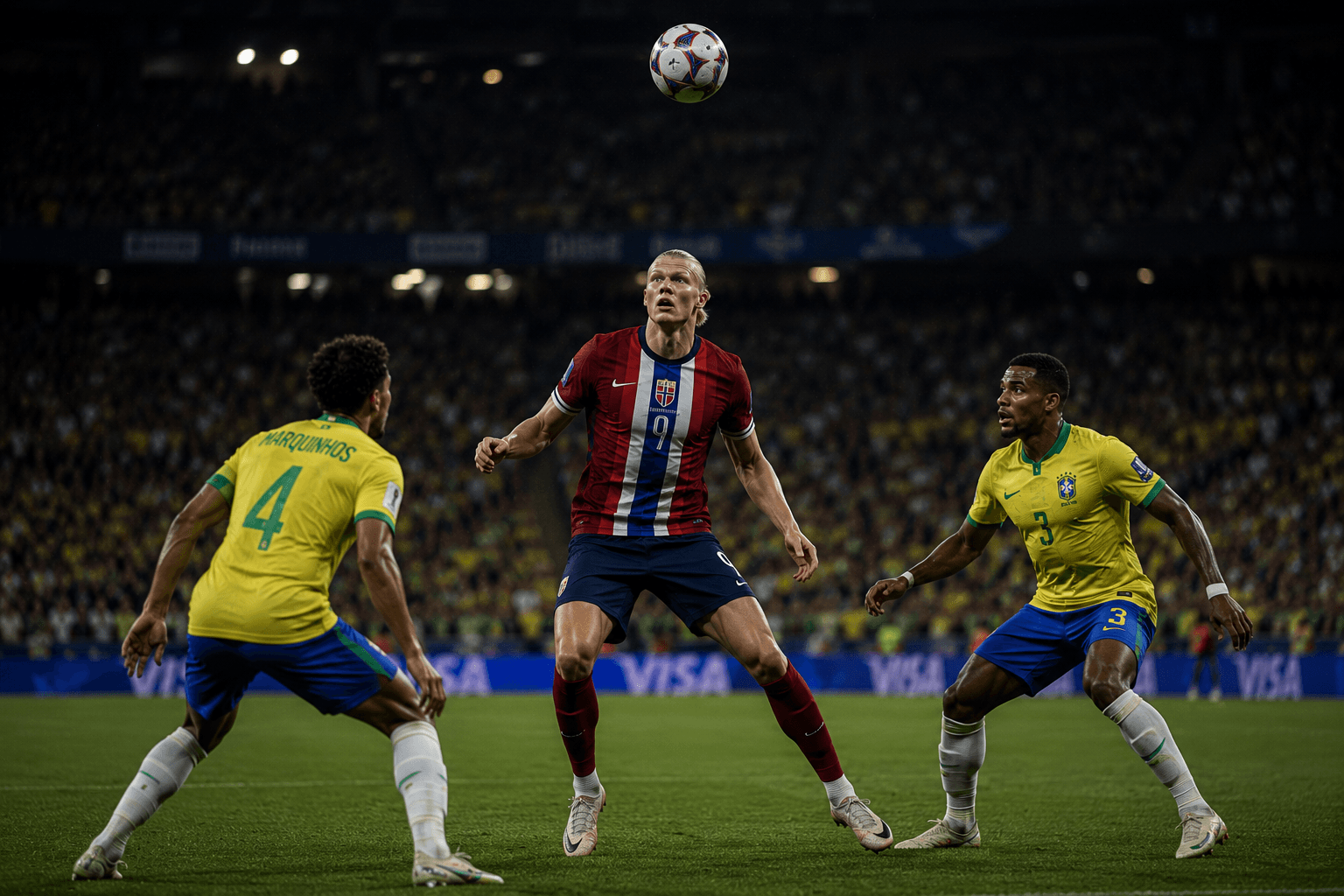
The brute
A striker is a stack of extremes
To reach the very top as a striker, you need an extreme quality — something so far beyond the norm that defenses cannot legislate for it. Most great ones possess a single such advantage and build a career on it: strength, or pace, or the cleverness of their movement inside the box. One overwhelming gift, used without mercy, is usually enough to reach the top.
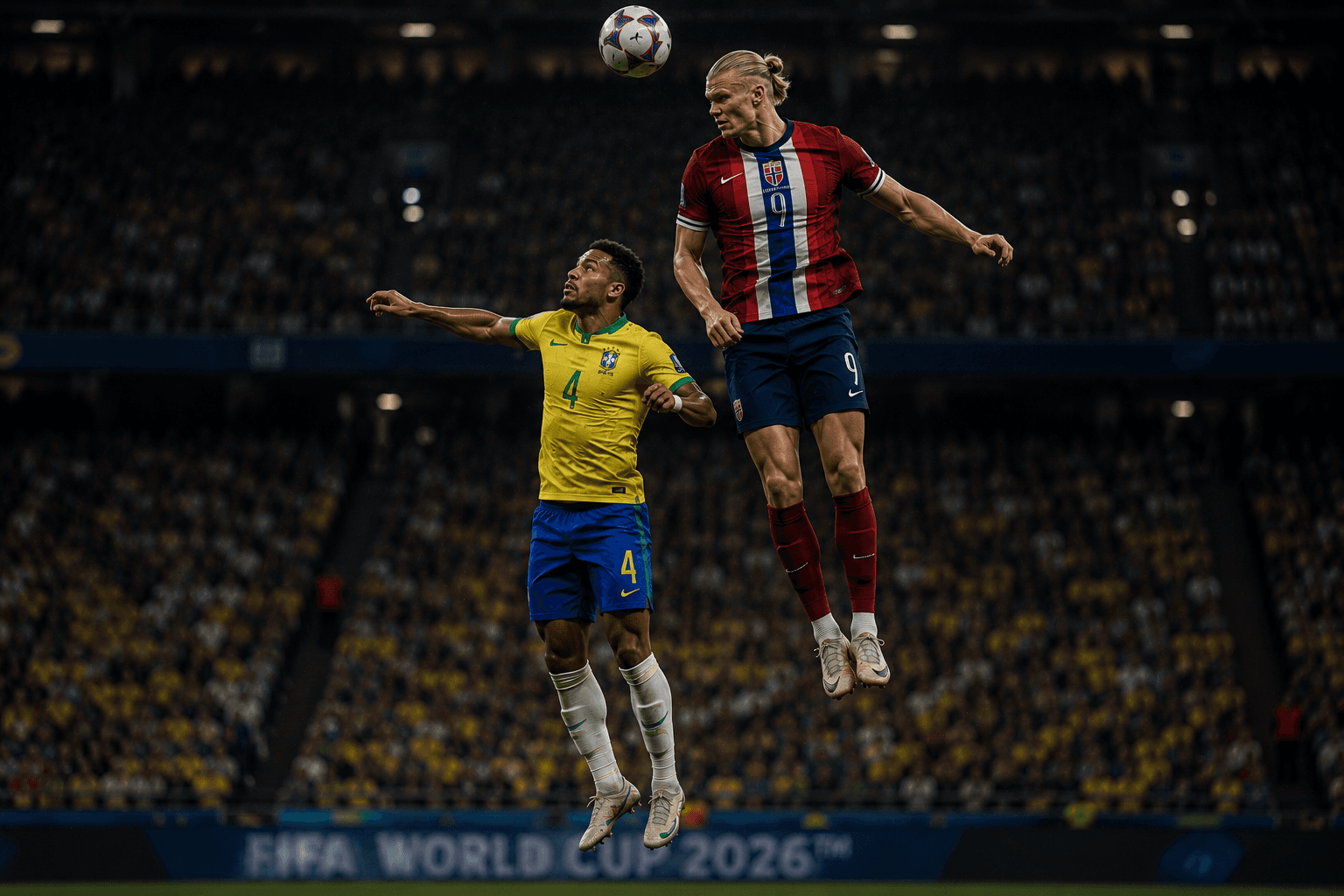
Haaland is not one extreme. He is several at once, and that is what makes him look, at times, like a category error. He is six-foot-five and among the fastest players in the game, a combination that should not be permitted. He is left-footed, right-footed and lethal in the air. His finishing has almost no backlift and almost no waste. Stack those extremes on top of one another and you get a striker who does not need the game to come to him, because he reaches the decisive moment quicker than anyone built like him has any right to. Harry Kane, the tournament's other throwback nine, called him "a machine" and "a beast." Both are affectionate understatements.
Full circle
The system came back to the number nine
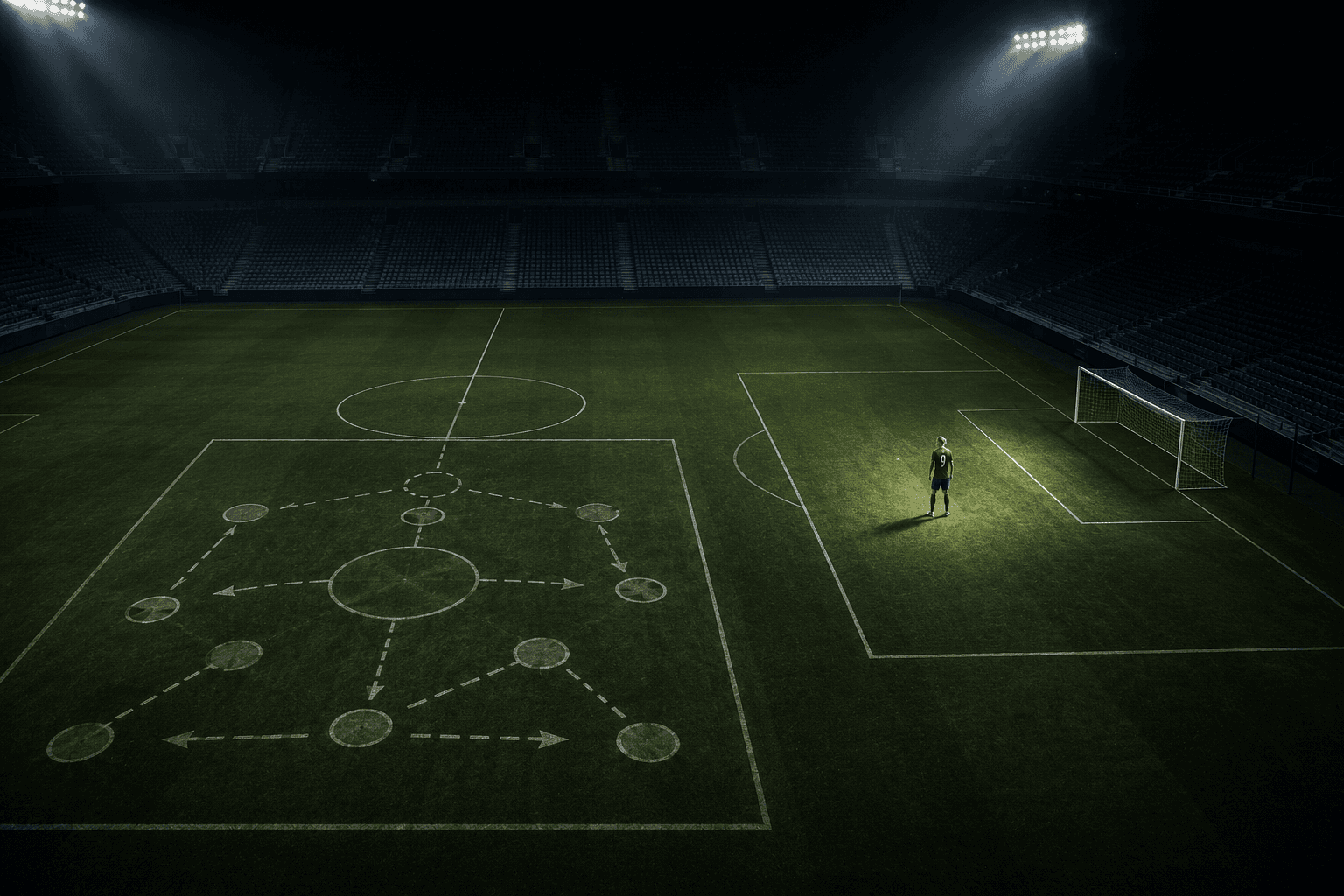
There was a stretch, not long ago, when it looked as though Haaland's kind was being coached out of the game. Pep Guardiola, who did more than anyone to popularize the false nine — Lionel Messi dropping off into the space where a center forward used to stand — spent a season at Manchester City without a recognized striker at all, the team passing its way around the absence. Then he signed Haaland and rebuilt everything around him. The great apostle of the strikerless team went and made one of the most devastating sides of the modern era out of the most uncompromising true nine on earth. The idea had come full circle.
That is the quiet argument Haaland has been making for years, and the one the rest of football spent this World Cup conceding. The forwards who lit up North America were, for the most part, complete forwards: Mbappé, who starts wide and finishes central; Bellingham, a midfielder who scores like a striker. Haaland is the counter-argument in human form — the out-and-out number nine, the Viking who does one job and treats it as a calling. In an age that prizes the forward who can do it all, he is the proof that doing a single thing at a genuinely extreme level is still, maybe, the most dangerous thing in football.
The stage
It changes me
He had waited a long time for a stage this size. This was his first major tournament — his first ever, at 25, for a Norway that had not reached a World Cup since 1998 — and he answered it in the only grammar he trusts: seven goals, including the late winner against Ivory Coast and the brace that finished Brazil; a share of the Golden Boot lead with Mbappé and Messi; a country dragged further than it had been in a generation. A year ago he had put Norway's chances of winning the thing at half a percent, with the shrug of a man who deals in what is in front of him. Then he went and made the number look timid.

It ended in Miami, against England, the way these runs tend to end for the side that has already outrun itself. A Norway goal was chalked off when Haaland was judged to have shoved a defender in the build-up; by the close he was on the bench, out of gas, watching Jude Bellingham — his old friend from Dortmund, the complete forward — score twice to settle it. The brute had been beaten, at the last, by the all-rounder.
He did not seem to mind. "It's quite nice," he said of going out and heading straight to holiday, before adding the line that ought to unsettle everyone else: "I think this changes Norway. I think it changes me. We're building on something." He is 25, and he has just shown the world that the one thing he does — that stack of extremes, that beautiful brutality — travels to the very top. The drum has gone quiet. It sounds less like an ending than the first beat.
Read more World Cup 2026 coverage: Baby Out With the Bath Water — Argentina's Disgrace · The Best Form of Defense — Spain's World Cup Final · Dead Rubber — England vs France · Blood in the Water — Argentina vs England · The View From Above — Rodri's World Cup · O Kylian — Mbappé's World Cup · Hey, Jude — Bellingham's World Cup · El Matador — Mikel Merino · The Round of 16 · The Group Stage Is Over