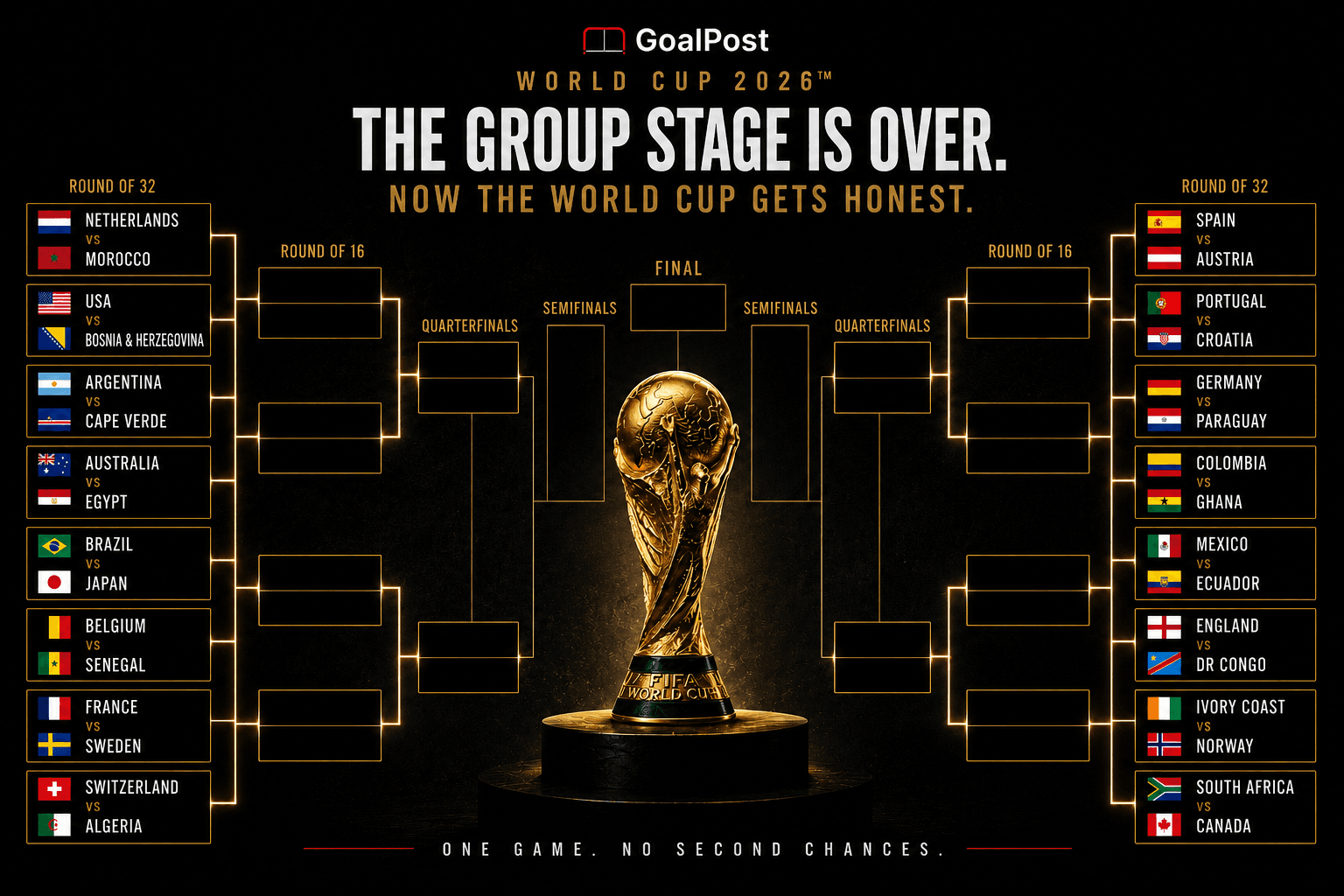
The Round of 16 is the round where a World Cup stops being a festival and becomes a cull. Sixteen teams arrived; eight left. And the eight that went home took the tournament's warmest stories with them — the hosts, most of the romance, and, in one case, a nation that had spent three weeks proving it belonged.
What is left is harder, colder, and more familiar. The favorites are mostly still standing. The drama, though, has not gone anywhere. If anything, it has moved off the pitch and into the room where the video replays are watched.
The hosts are gone
Start with the absence at the center of it. For the first time, this World Cup was staged across three countries, and by the end of the Round of 16 all three of them were watching from home.
Mexico went out at the Azteca, beaten 3-2 by England in a match that had everything — a Bellingham brace inside two first-half minutes, a red card, a penalty at each end — and ended with the home crowd silenced. The United States were dismantled 4-1 by Belgium in Seattle, a scoreline that flattered no one and confirmed a fifth Round-of-16 exit in six tournaments since 1994. Canada, the last of the three to fall, lost 3-0 to Morocco, undone by a side operating at a level they could not reach.
There is a symbolism to it that the tournament's organizers will not enjoy. The expanded World Cup was sold, in part, as a home celebration for North America. The football did not cooperate. By the quarterfinals, the continent that built the tournament had no team left in it.
Messi, and the art of not losing
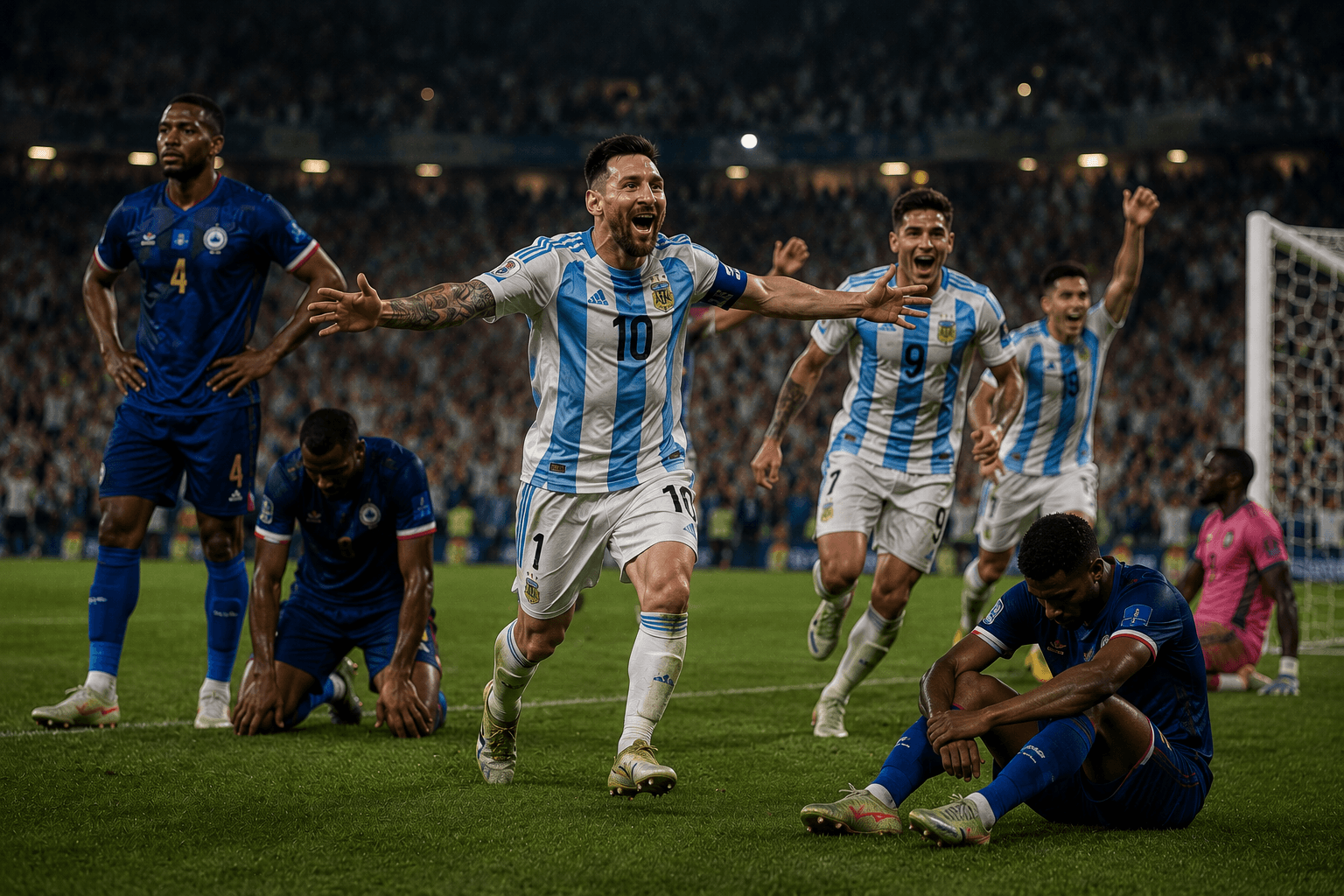
Then there is Argentina, who have made a habit this tournament of looking beaten and refusing to be.
Against Cape Verde in the Round of 32 they needed extra time to see off the smallest nation ever to reach the knockouts. Against Egypt in the Round of 16 they went deeper into the dark still — two goals down inside the hour, a Messi penalty saved, staring at the exit. And then, in the space of fourteen minutes, they scored three times. Cristian Romero headed one back, Messi leveled it, and Enzo Fernández won it in stoppage time.
Messi's goal was his eighth of the tournament, which took him clear at the top of the Golden Boot race, one ahead of Mbappé and Haaland. It was his 21st in World Cup history, and it extended a record that now reads nine consecutive World Cup matches with a goal. He has equaled Guillermo Stábile's Argentine mark of eight in a single edition, set in 1930, and no player has scored as often through a team's first five games of a World Cup since Gerd Müller in 1970. At 39, in what he has confirmed is his final World Cup, he is still the tournament's most decisive player.
He is also, inevitably, at the center of the officiating debate that has come to define the knockout rounds — which brings us to the part of the round nobody wanted to be talking about.
The officials took over
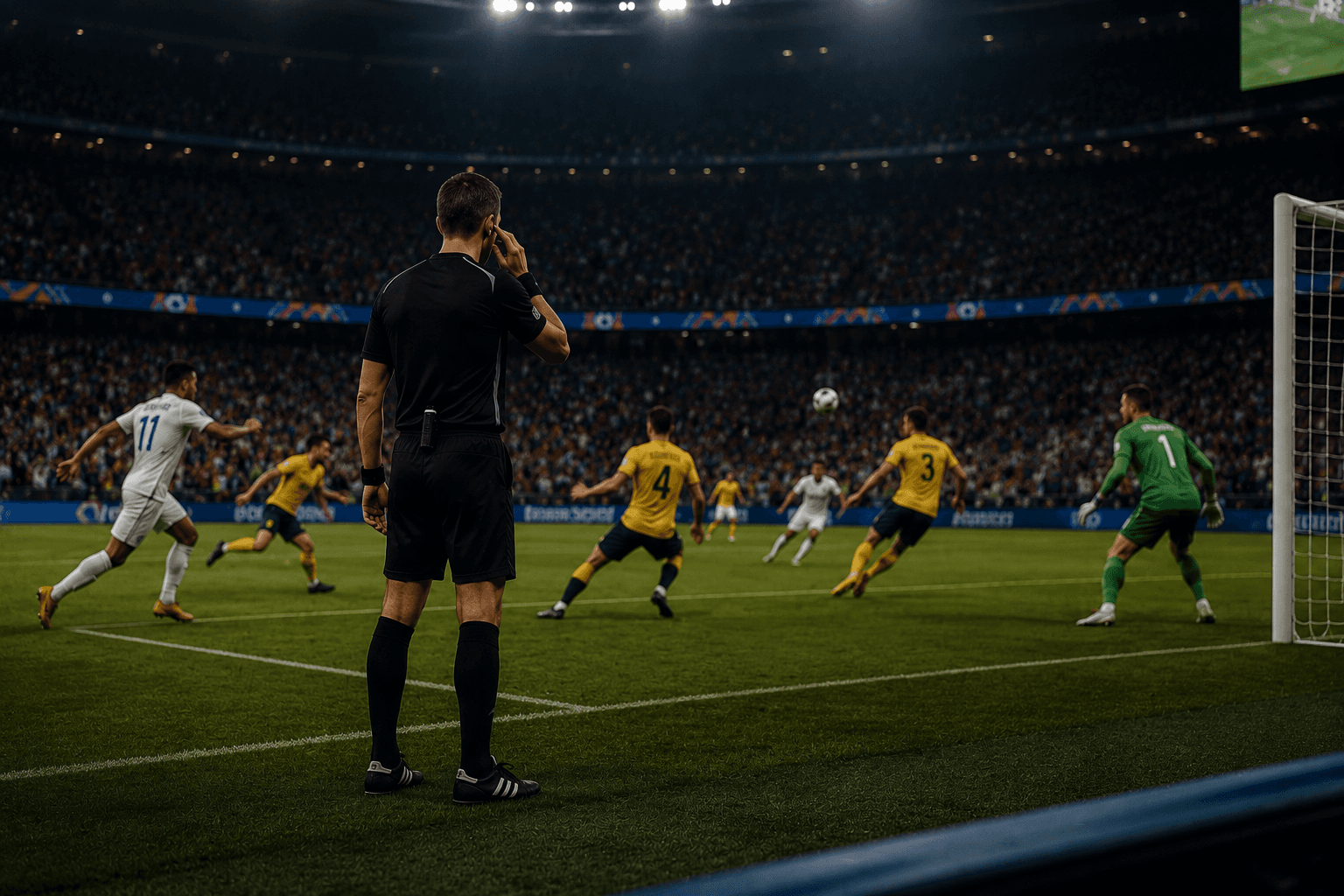
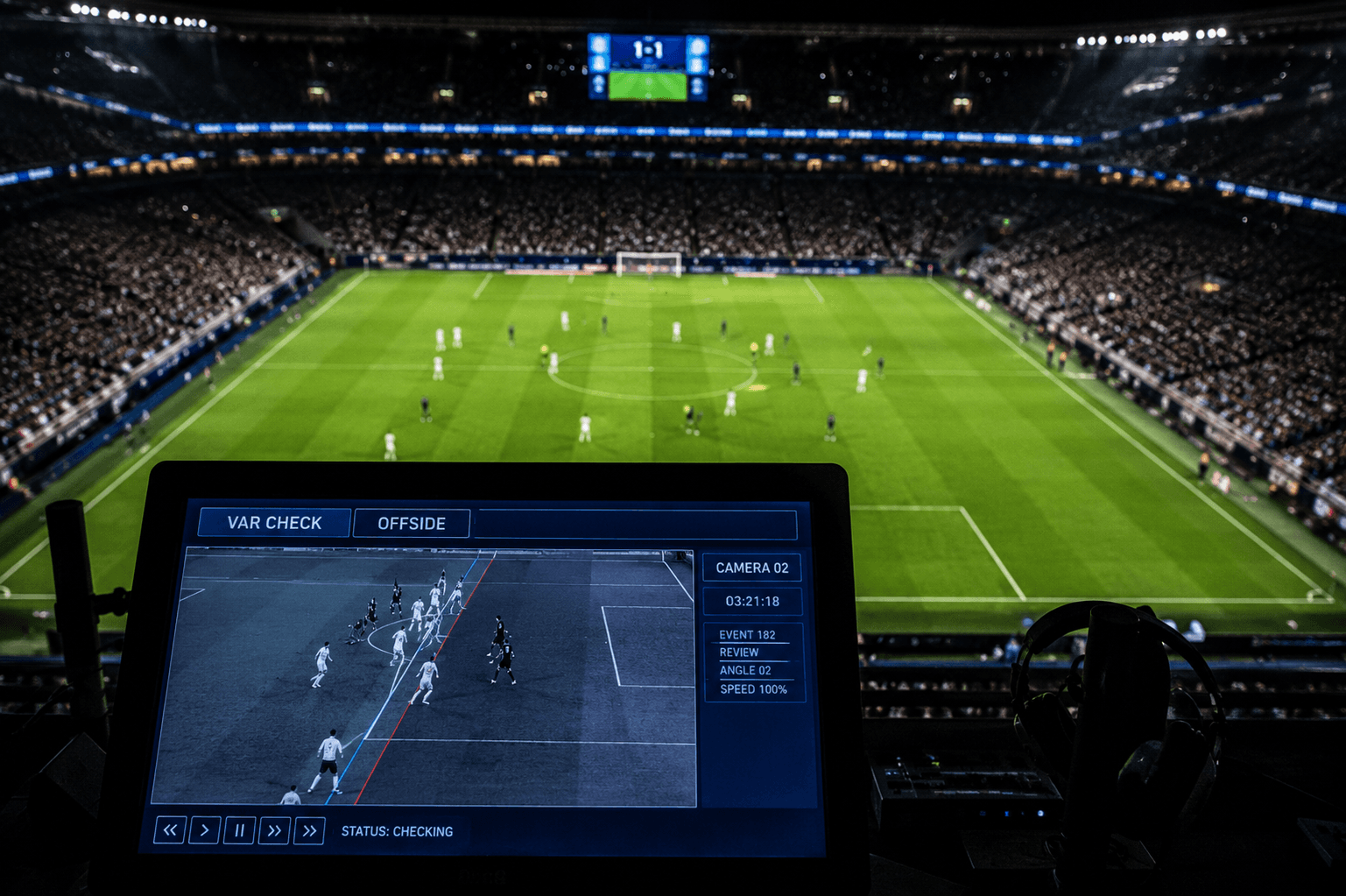
VAR was introduced to settle arguments. In this Round of 16 it started most of them.
The problem is not the technology. It is the consistency, or the absence of it — the sense, growing with each round, that the same incident can be a foul in one match and nothing in the next, that the standard for intervention moves depending on the game, the stage, and the names involved. Across the knockouts the video booth has been both savior and saboteur, and its judgment has begun to feel less like law than like weather.
We have made this argument before, about the club game — that VAR's failure is not that it sees too little but that it is applied too unevenly, week to week and competition to competition, to ever settle the arguments it was built to settle. What the knockouts have shown is that the disease travels. It has followed the sport to its largest stage, and the symptoms are worse under the lights.
Consider the evidence, and note that it does not run one way. In the Round of 32, Germany — four-time world champions — had a legitimate extra-time goal disallowed against Paraguay for a phantom block on the goalkeeper; ESPN's officiating desk judged plainly that the goal should have stood, and Germany went out. Against DR Congo, Harry Kane was tripped rounding the goalkeeper in a challenge one analyst called a certain penalty; nothing was given, and VAR did not intervene.
These are not calls that favored the giants. They punished them.
France-Paraguay ran the same way in reverse. France, the tournament favorites, were the only side cautioned in a bad-tempered tie — three times — while Paraguay, who spent the evening kicking lumps out of them and, in Matías Galarza's case, striking out at both Mbappé and Koundé off the ball, escaped without a single booking. The one France card, shown to Michael Olise for what replays confirmed was a shirt-tug against an opponent who went down holding his face, was so soft that the French federation formally appealed it. FIFA rejected the appeal. If the officiating had a bias toward the big names, France did not feel it.
So the inconsistency is real, and it is not a simple story of the powerful being protected. Except in one match, it was hard to see it any other way.
Argentina against Egypt was the round's great officiating controversy, and it turned on a single decision. Leading 1-0 and pressing for a second, Egypt scored what looked like a magnificent goal through Mostafa Zico — only for VAR to reach back some twenty seconds and a full pitch-length to a soft challenge, a shirt-pull and a stepped-on foot, by Marwan Attia on Lisandro Martínez. The goal was disallowed. Argentina, instead of trailing 2-0, had a free kick. The experts split, and honestly: Fox's analyst thought the foul was technically there; Rob Green thought it absurd that VAR would reach that far for something so slight; Alan Shearer reduced it to a sentence — "either both are fouls, or neither is."
Shearer's line is the whole matter, because of what happened next. In the buildup to Argentina's winner, two incidents in their own box went the other way. Alexis Mac Allister pulled Hamdy Fathy's shirt; no foul. Julián Álvarez, challenging Mohamed Salah, missed the ball and caught the boot; no foul, and no review. If the distant tug on Martínez was worth erasing a goal, the contact on Fathy and Salah, in the penalty area, in the move that decided the tie, was worth at least a look. It did not get one.
And there were transgressions that were not merely unpunished but unacknowledged — challenges and off-the-ball contact from Argentine players that, on another night or against another team, would have drawn a whistle or at least a glance from the booth, and drew neither. You did not need a replay to see them. The officials simply did not.
None of this requires a conspiracy, and the honest reading resists one. Referees are human, the stakes are vast, and one possible explanation is an understandable reluctance to be the official who ends Lionel Messi's final World Cup on a marginal decision — so the marginal calls get waved on, and the benefit of the doubt flows in one direction. Egypt's coach Hossam Hassan put the darker version bluntly: "Perhaps they wanted to keep the world champions in the competition? Perhaps they wanted Messi to stay in the running?" The Egyptian federation lodged a formal complaint. It is worth stating clearly that there is no evidence of design, and the Germany and Kane decisions are the proof that the video booth is not simply steering the favorites through. But there does not need to be design for the effect to be real. Whether the hand is guiding or merely absent, the ball ends up in the same place.
That is the corrosive thing about inconsistency: it is indistinguishable from bias. And a tournament cannot afford for its officiating to be a Rorschach test, in which supporters of every eliminated team see the same shape — their own side, wronged.
The eight who remain
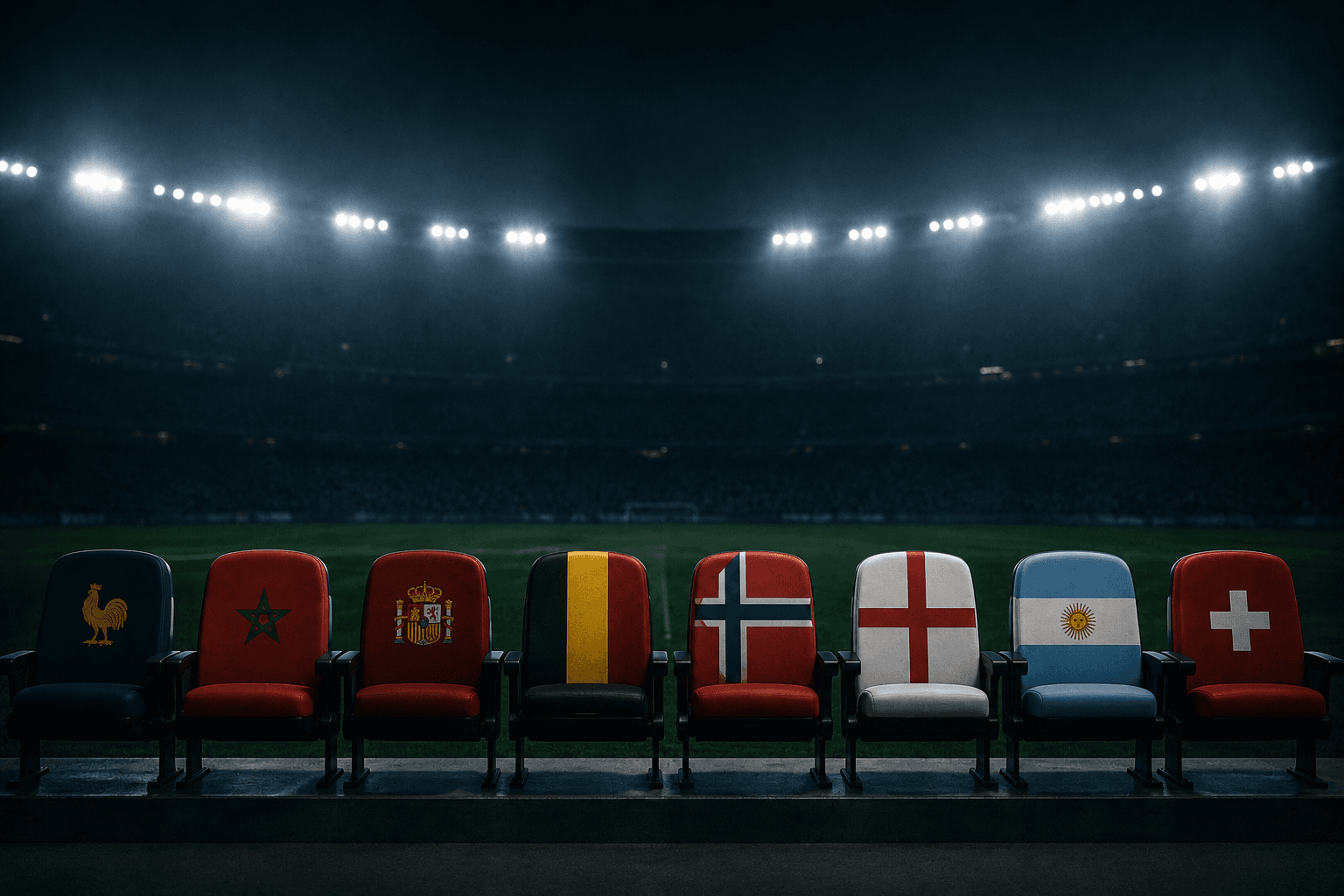
Whatever people make of the officiating, the quarterfinal bracket is exceptional.
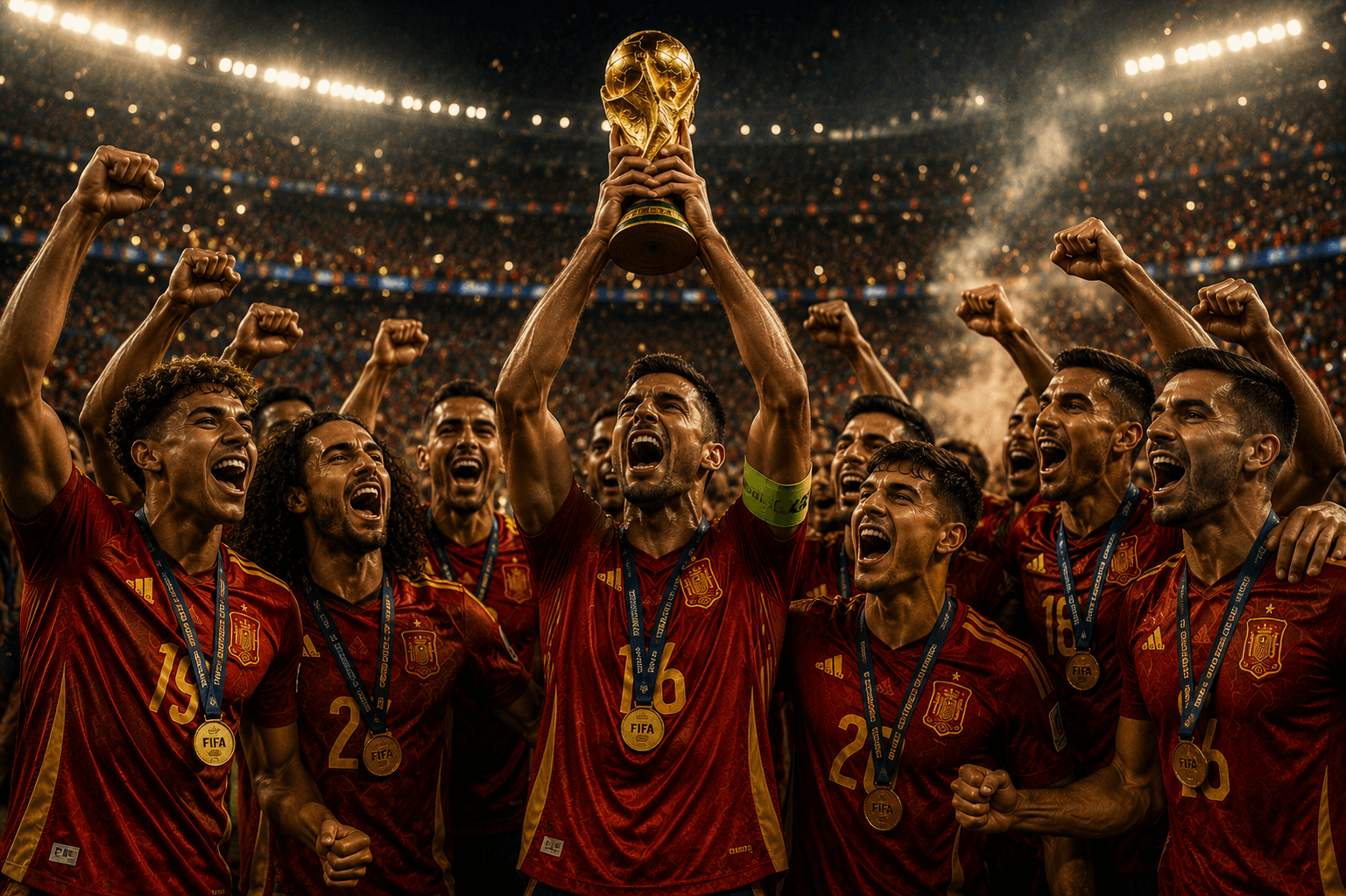
France, the most complete side in the tournament and the only one to win all five of its matches inside ninety minutes, face Morocco — a rematch of the 2022 semifinal, and a Morocco side that has become the first African nation to reach the quarterfinals of consecutive World Cups. Spain, who still have not conceded a goal, meet Belgium. Norway, Haaland and all, face England and a Bellingham who has decided he rather likes this tournament. And Argentina, having survived twice, get Switzerland, into the last eight for the first time since 1954.
The Golden Boot race runs through all of it. Messi leads on eight; Mbappé and Haaland sit on seven; every one of them is still alive. The prize will likely be decided by who goes deepest, which means the individual honor and the team's fate are, from here, the same question.
What the round showed
The Round of 16 confirmed the tournament's central lesson and complicated it. The gap between the giants and the rest has closed — Cape Verde and Egypt both took Argentina to the brink, Morocco is a genuine contender, and the hosts fell to better teams rather than to flukes. But it has not closed all the way, and the giants, when pushed, have mostly found the answer.
What the round added was less comfortable. In a tournament this good, decided by margins this fine, the officiating has become a variable as large as any of them — and until it is applied the same way twice, the suspicion it breeds will keep growing. The football has been magnificent. The arguments about it have been avoidable.
A World Cup should be remembered for the goals that were scored, not the ones that vanished inside a replay booth. Eight teams are left, and the football deserves to be the story again. After this round, that feels less certain than it should.
Read more: Baby Out With the Bath Water — Argentina's Disgrace · The Best Form of Defense — Spain's World Cup Final · The Round That Didn't Exist · The Group Stage Is Over · Messi Stands Alone · VAR's Problem Is Not That It Sees Too Little