Two years ago, this round did not exist. FIFA built it to hold the extra bodies of an expanded tournament, and the fear was obvious: a week of mismatches before the football that actually mattered.
It was not that. It was, by some distance, the most dramatic week the World Cup has produced in years. And when it was finished, it had answered the question the group stage only asked — though not in the way either side of the argument wanted.
What the round took

Start with the bodies, because there are a lot of them.
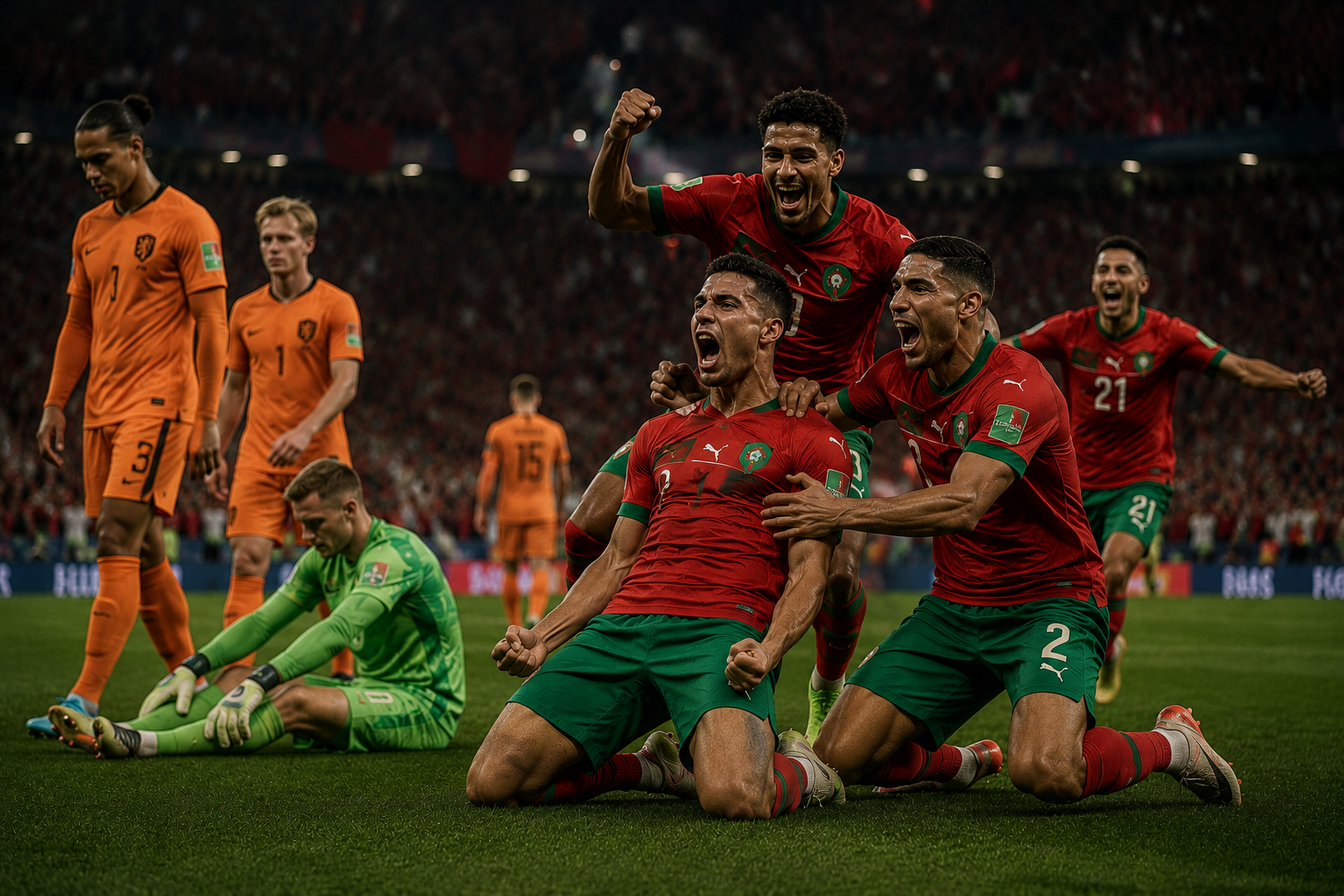
Germany are out. Four-time world champions, gone in the Round of 32 after a 1-1 draw with Paraguay and defeat on penalties. The Netherlands are out, beaten in a shootout by Morocco — the third consecutive World Cup in which the Dutch have appeared and gone out on penalties. Japan are out, edged 2-1 by Brazil to a stoppage-time winner, but only after another performance that made a five-time champion work for every yard of it.
Look closely, though, and only one of those is a giant felled by a minnow. Paraguay knocking out Germany is the genuine upset — the side ranked well below, with no pedigree to speak of, eliminating a country with four stars on its shirt. The others are subtler. Brazil beating Japan is a favorite surviving a scare. And Morocco beating the Netherlands is not an upset at all: Morocco are a top-ten side, semifinalists in 2022, and were ranked above the Dutch going in. That result was one strong team beating another.
None of which makes the round any less dramatic. Three shootouts, a stoppage-time winner, the champions of the world taken to the brink — the extra round did not dilute the tournament. It concentrated it. But the story it tells is more careful than "the giants fell," because mostly they did not. One did.
What the round kept
And yet.
Look at the sixteen teams that remain, and the picture reorganizes itself. France are there, and have looked like the best side in the tournament. Argentina are there, the defending champions. Spain, Brazil, England, Portugal — all there. The upset was real and it was thrilling, but a single felled giant thins the middle of the field, not the top of it. The teams built to win World Cups are, almost without exception, still the teams left to win this one.
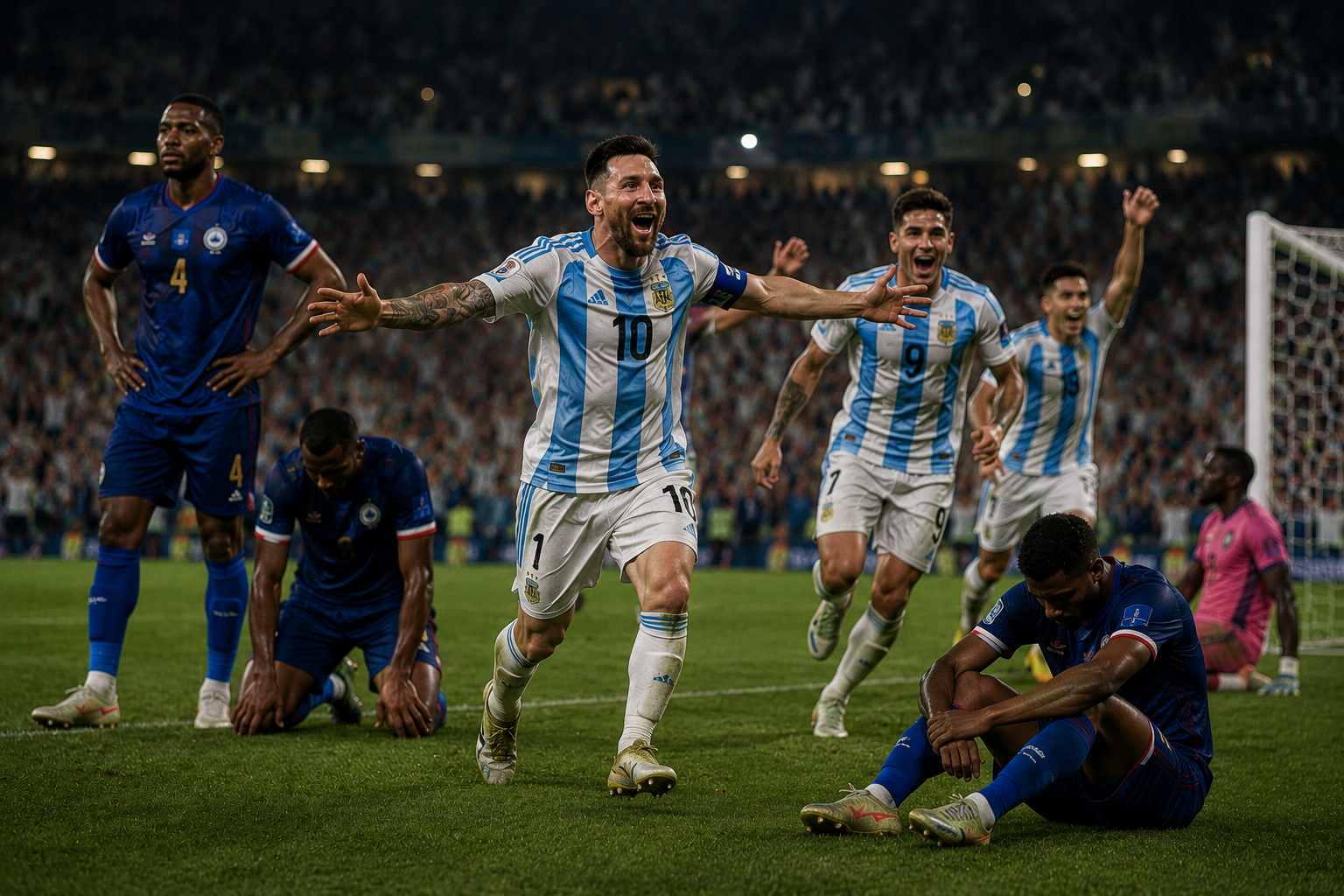
The clearest proof is the tie that could have been the round's great upset and instead became its most honest lesson. Cape Verde — a nation of half a million, ranked outside the world's top sixty, at the first World Cup in their history — took Argentina to extra time. They equalized twice: once in the second half, and then again in the 103rd minute, seconds after Argentina thought they had finally pulled clear. Deep into extra time, the smallest country ever to reach this stage of a World Cup stood level with the champions of the world.
And then they lost, the way the underdog so often loses when the game goes long — not to a moment of quality from the favorite, but to the thinness of their own margins. The winning goal came from a deflected Cristian Romero header, bundled over the line under pressure Cape Verde could not keep absorbing forever. Argentina did not overwhelm them. They simply outlasted them, which is a different thing, and the thing the giants can almost always do.
The verdict

So here is what the round decided. The gap has closed — that much the group stage suggested and the knockouts confirmed. Paraguay did not beat Germany by accident, and the fact that so few of us were truly stunned is itself the story: a result that would once have been a scandal now registers as merely a shock. A generation ago, that did not happen at this rate. It is happening now, and it will keep happening, because the divide has genuinely thinned — the players carrying the smaller nations train with the same methods, eat and recover with the same science, and spend their club seasons among the best in the world. They are no longer impressed by them.
But the gap has not closed all the way, and single-elimination is where the remaining distance shows. Over ninety minutes, organization can erase much of the talent gap. Stretch the tie to a hundred and twenty, though — substitutes on, legs gone, the margins thinning with every phase — and it is the deeper squad and the colder nerve that tend to find the answer they need. Cape Verde could live with Argentina almost to the end. Almost is the whole story. That last, stubborn stretch of distance, the part that refuses to close no matter how much of the rest already has, is the part that still decides World Cups.
The expanded format gave us a magnificent week, and it will be remembered for the night the champions were nearly caught and the morning Germany did not wake up in the tournament. But it did not rewrite the hierarchy. It compressed it, exposed it to more risk, made the great teams earn their passage against opponents who genuinely believed. Most of them earned it anyway.
Cape Verde went home having proved the point in both directions at once. For a hundred and ten minutes they were the equals of the world champions; for the eleven that remained, they were not. No sooner had they hauled themselves level a second time than the tie's true weight reasserted itself, and the margin they had defended all night finally gave. The distance between frightening Argentina and beating them is smaller than it has ever been. The gap is no longer wide enough to ignore. It is still wide enough to decide World Cups.
It is not yet nothing.
Read more: The Group Stage Is Over · The Fear Is Gone · The Data Says: Mexico Finally Have a Forward Line