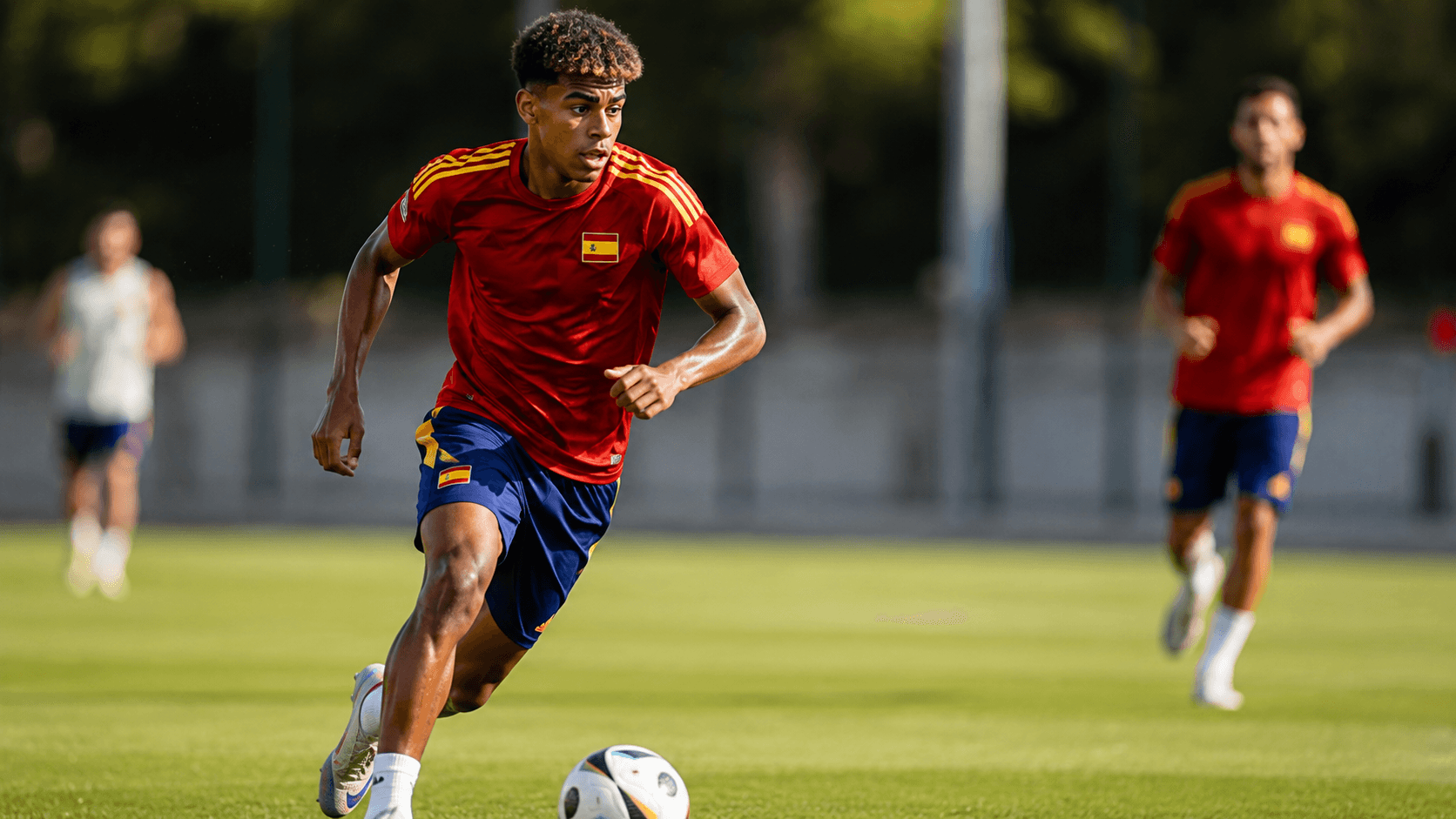
The matador does not chase the bull. He waits. He lets the animal tire itself against the cape, lets the crowd hold its breath, and then, at the one moment that matters, he steps in and ends it. Everything before that is preparation. The kill is the point.
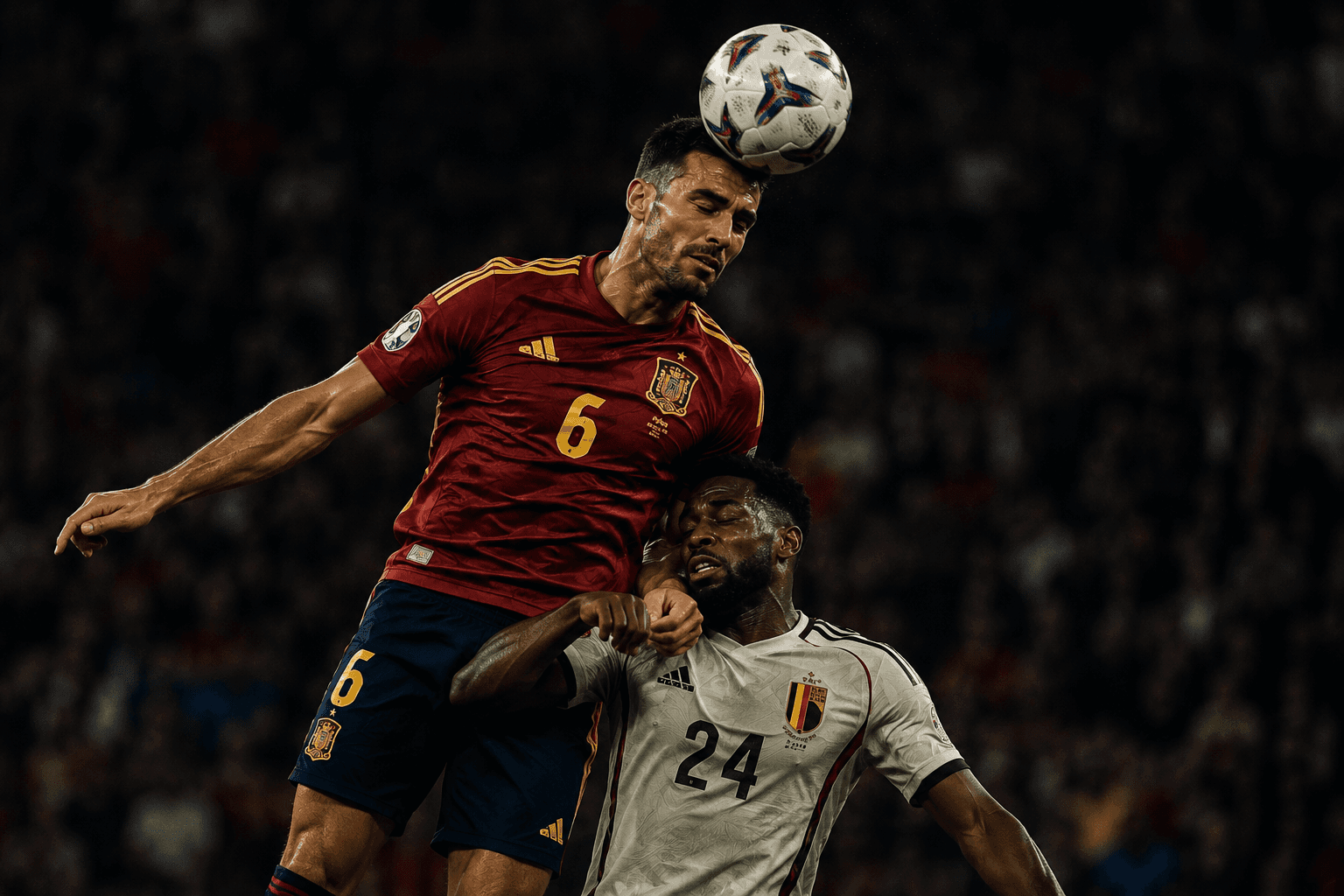
Mikel Merino has watched most of Spain's World Cup from the bench. Against Portugal in the Round of 16 he entered in the 85th minute and scored the game's only goal in stoppage time — a strike that ended Cristiano Ronaldo's last World Cup. Four days later, against Belgium, he was the fifth and final substitute, sent on in the 86th minute. He scored in the 88th — one hundred and seventeen seconds after his feet touched the grass. Two knockout ties, two winning goals, both from the bench, and just minutes between his arrival and the decisive act.
No player in World Cup history had ever scored the winner as a substitute in two separate knockout matches. Merino did it inside a week, and barely broke a sweat.
The man with no position

To understand how, you have to stop asking what Merino is, because the answer keeps changing.
He arrived at Borussia Dortmund as a teenager and played center-back. At Newcastle and then Real Sociedad he was a holding midfielder, the one who breaks up play and starts it again. At Arsenal, where he signed in 2024, Mikel Arteta turned him into something else entirely — a box-to-box eight who, when the team ran out of forwards, simply became the forward. He is left-footed, physical, clever in the air, and comfortable in more roles than most players manage in a career. He is, in the truest sense, positionless.
The thing Arsenal actually signed, though, was the strength. In his final season at Real Sociedad he won 326 duels — more than any player in Europe's top five leagues, and it was not close; the man behind him trailed by forty-one. No midfielder on the continent won more aerial battles. "Duel monster," the scouting write-ups called him, and Arteta, who prizes exactly that, moved for him on the strength of it. This is the part of Merino that never makes the highlight reel: not the goals, but the relentless, physical business of winning the ball back, over and over, in the air and on the floor.
Then Arsenal ran out of strikers. With Gabriel Jesus and Kai Havertz injured, Arteta pushed a midfielder who had never led a line into the front, and Merino took to it with a striker's greed — a double off the bench to beat Leicester, a header in the 3-0 Champions League win over Real Madrid, nine goals in a half-season a specialist forward would gladly take. His goals the following fall helped set Arsenal on course for a first league title in more than two decades — a contribution larger than it was ever credited for, and one they missed badly when injury removed him from the run-in.
For most footballers, "positionless" is a polite way of saying they have no natural home, that they are useful rather than essential. Merino has inverted it. Because he can be anything, he can be dropped into whatever gap the moment opens up — and the gaps that appear late in tight knockout matches are exactly the gaps a striker is meant to fill. So Spain fill them with a midfielder who has spent his whole career learning to be whatever the game needs. When the cape has done its work and the opening finally comes, they send on the man who knows how to take it.
This is not new, either. Merino was one of Spain's more reliable men through qualifying, forever arriving in the box at the right moment, and at the European Championship two years ago it was he who rose in the penultimate minute of extra time to head Spain past the hosts, Germany, in the quarterfinals of a tournament they would go on to win. Luis de la Fuente has never needed convincing. The clearest proof came in the selection itself: Merino reached this World Cup having barely played since January, fit only in the closing days of Arsenal's season, and de la Fuente picked him anyway. A coach does not gamble a squad place on a half-fit midfielder unless he knows exactly what that midfielder is for.
None of which makes him flawless. His passing can slow a side built on control — he holds the ball a beat too long, then rushes it through the lines to make up the time, and it does not always arrive. The versatility that makes him indispensable is also what keeps him from being the best in the squad at any single thing. But a tournament team is rarely built on specialists alone. It is built on men who can do the necessary thing, wherever the game asks for it. Merino has spent his whole career being asked to do exactly that.
The scooter
Five months ago, none of this looked possible, because Mikel Merino could not walk.
In January, against Manchester United, he broke a bone in his right foot — a stress fracture, as it turned out, in a part of the foot so unusual that the specialists had no comparable case to work from. "At the beginning I was a little scared, I'm not going to lie," he admitted later. "We didn't have examples from other people that had done the same injury." Surgery followed, then two months in which he could not walk at all, wheeling himself around Arsenal's training ground on a mobility scooter, the dog for company, trying to find the light in it.
He was told he might be out for five months. His first thought was not his club. "I could only think about missing the World Cup," he said. "I was devastated." And then, in the sentence that tells you everything about the player Spain now trust to finish their biggest matches: "I had two options — to go down and cry myself to extinction, or keep my head up."
He kept his head up. He was back on the grass by late May, back in the squad in time to watch Arsenal lift their first league title in twenty-two years, and on the plane to North America when it might so easily have been someone else's seat. The man on the scooter is now the man Spain cannot do without.
The safe bet
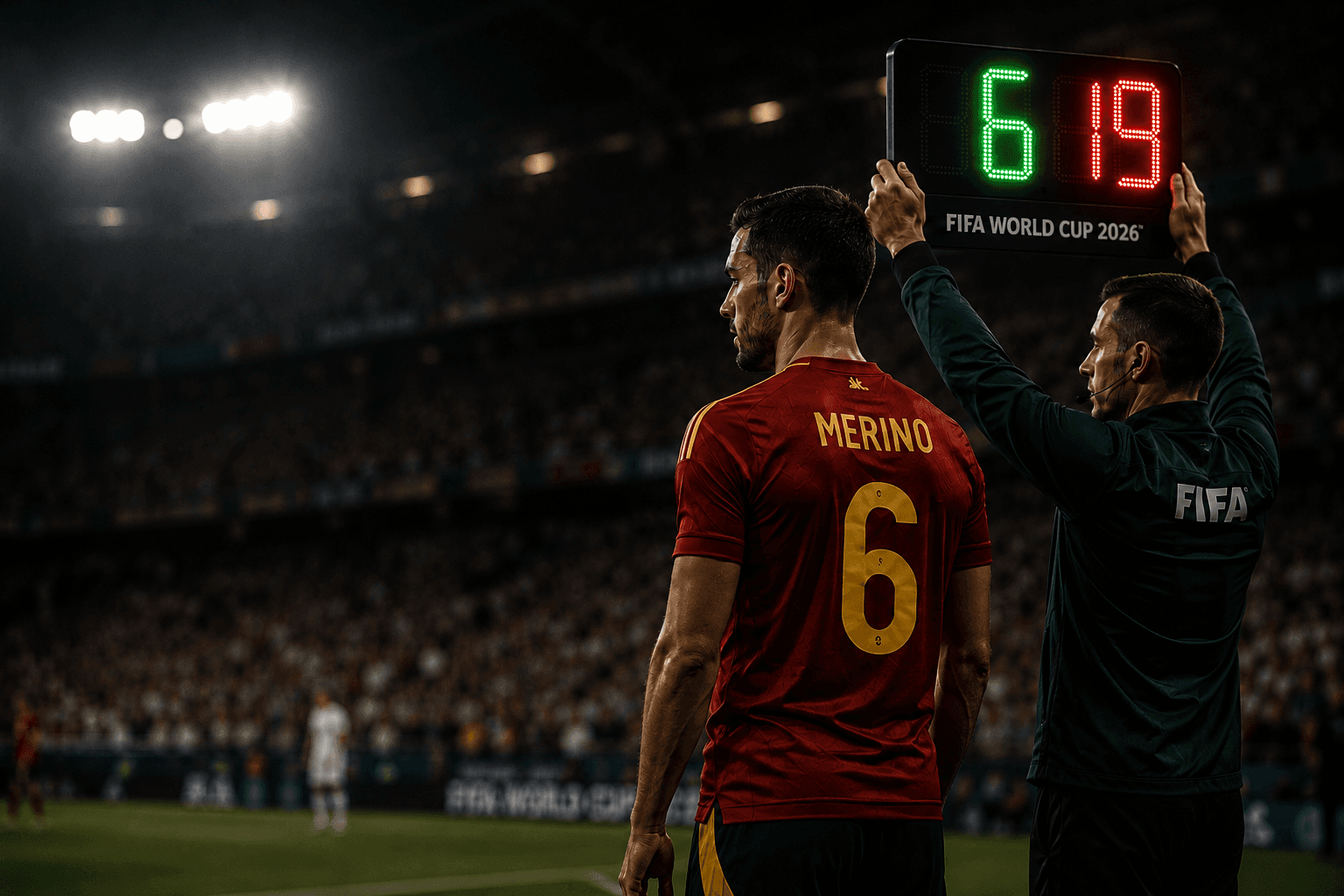
There is a version of Spain's tournament that reads as unconvincing. They have not been vintage. They drew their opening match against Cape Verde, navigated the group without ever looking like the side that won the Euros two years ago, squeezed past Portugal, before edging Belgium. "They could be better," Micah Richards said after the Belgium match, and he was right. But there is a quieter quality to a team that keeps finding a way when it is not at its best, and Merino is that quality made flesh — the substitute who turns a night that is drifting toward penalties into a night that is already won.
De la Fuente, who has known him since Spain's youth ranks, put it plainly: "I want to emphasise the importance of the players who come off the bench. Mikel never disappoints. He's a safe bet."
Spain meet France in the semifinal, and they will probably need to be better than they have been. If they are not, though — if the game tightens and the clock runs down and the opening refuses to come — they have a man on the bench who has made a career of the one thing that decides these matches. He does not need ninety minutes.
He needs the moment. And the matador, when the moment comes, does not miss.
Read more: Baby Out With the Bath Water — Argentina's Disgrace · The Best Form of Defense — Spain's World Cup Final · Dead Rubber — England vs France · Blood in the Water — Argentina vs England · The View From Above — Rodri's World Cup · O Kylian — Mbappé's World Cup · Braut — Haaland's World Cup · Hey, Jude — Bellingham's World Cup · The Round of 16 · The Group Stage Is Over