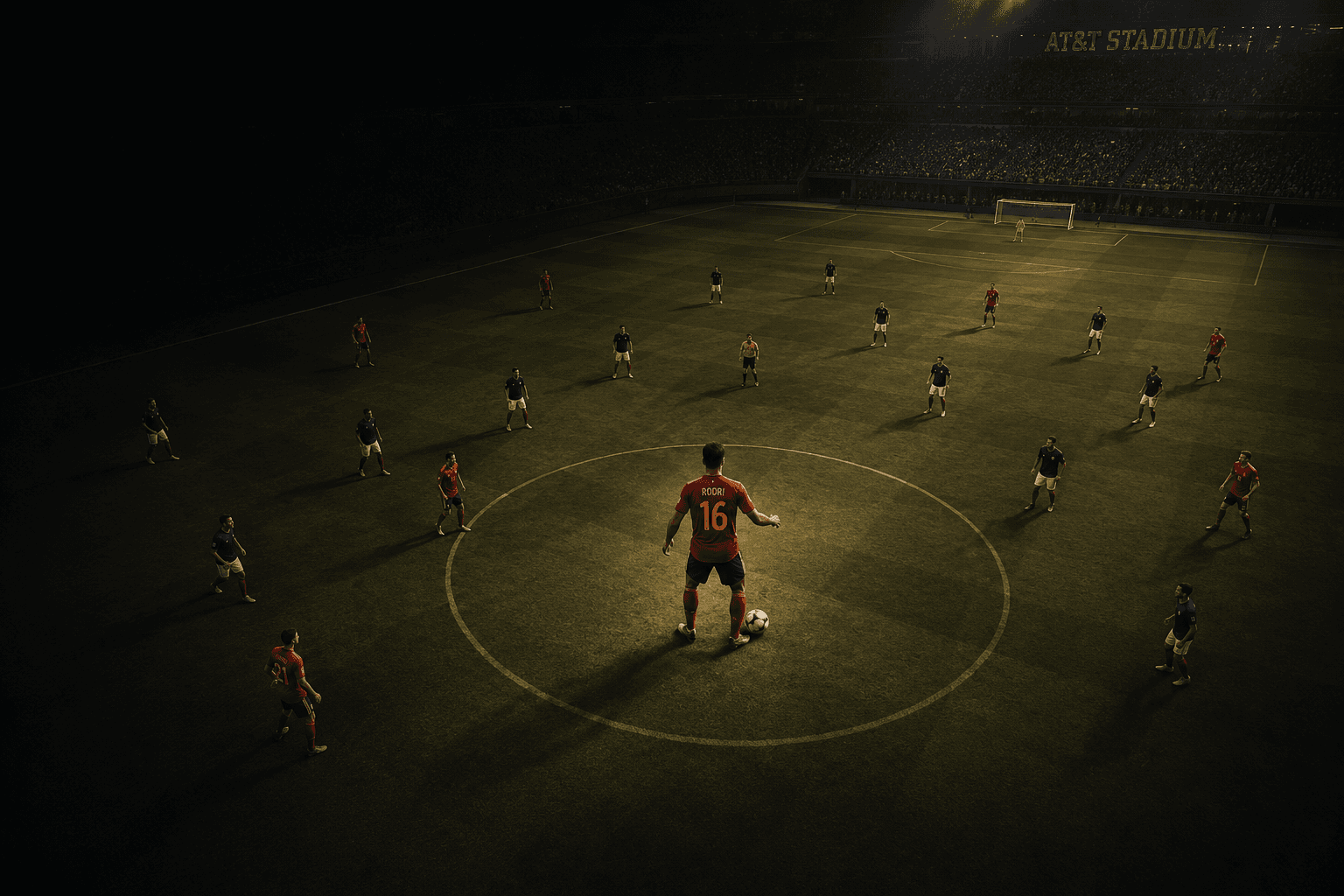
Somewhere in the first half — it does not matter when, and that is rather the point — Rodri took the ball and moved it eight yards sideways. Nobody applauded. Nobody remembered it thirty seconds later. It will not survive into any highlight reel this tournament produces.
It was also, more or less, the match.
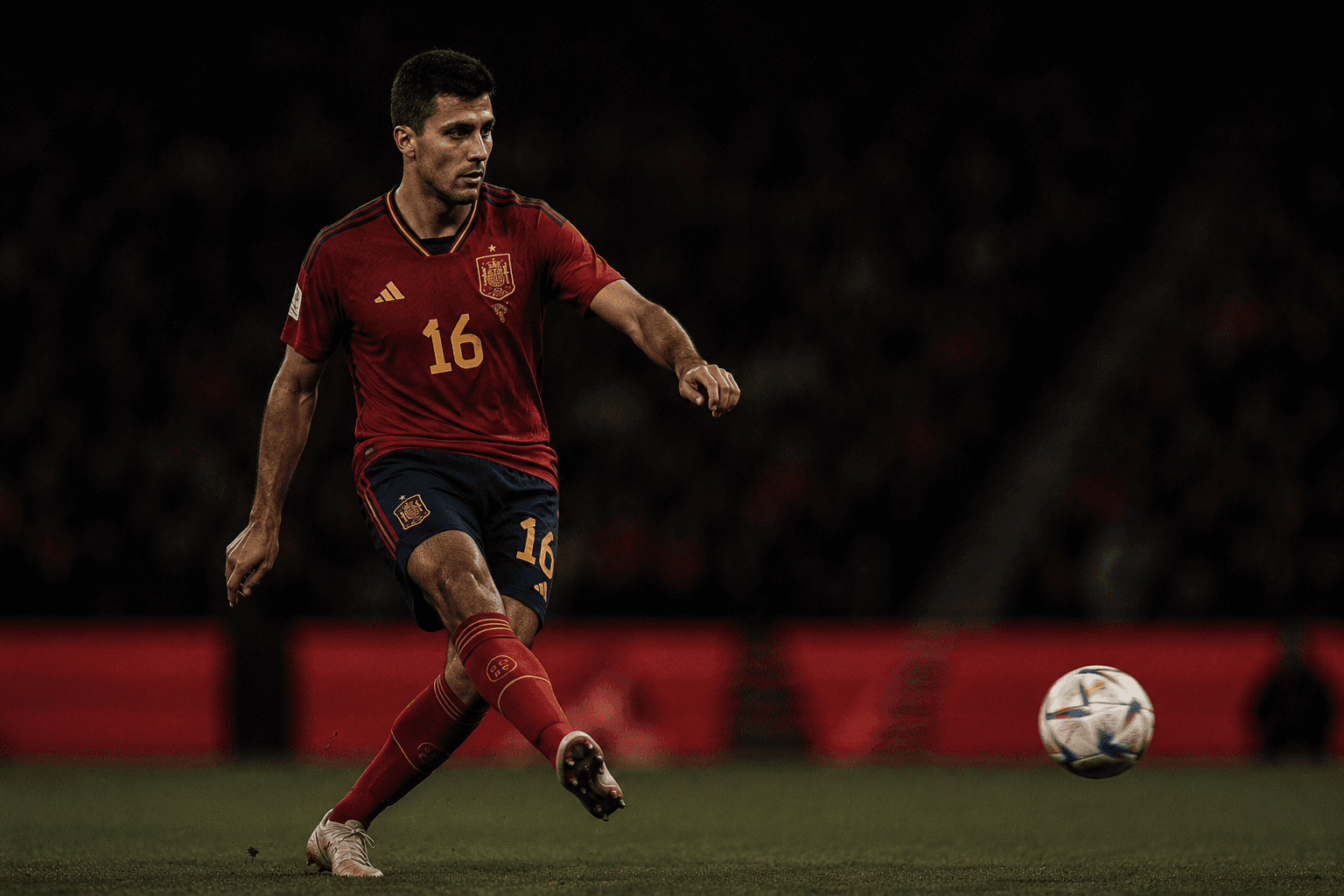
He did it over and over, and the cumulative effect was that France — Mbappé, Dembélé, Olise, the most feared attack anybody brought to North America — never reached the game they had come to play. They were not beaten by a better team so much as denied the conditions under which they become one.
We describe players like Rodri with the word control, which is accurate and tells you almost nothing. Control is the outcome. It is not the faculty. The faculty comes earlier than that: great midfielders do not see more football than everyone else. They see it sooner.
The view from above
He is not quicker to the ball. He is quicker to the question.
The best central midfielders have something close to a view from above — a sense, held while the game arrives from every side at once, of where all twenty-one other players are and where they are about to be. It is not vision in the highlight sense, the raking crossfield ball nobody saw coming. It is quieter than that and worth far more: knowing, before the ball has reached you, which of the three available options keeps the picture intact and which one hands the evening to somebody else. Zinedine Zidane had it. France, of all countries, ought to recognize it when it walks past them.
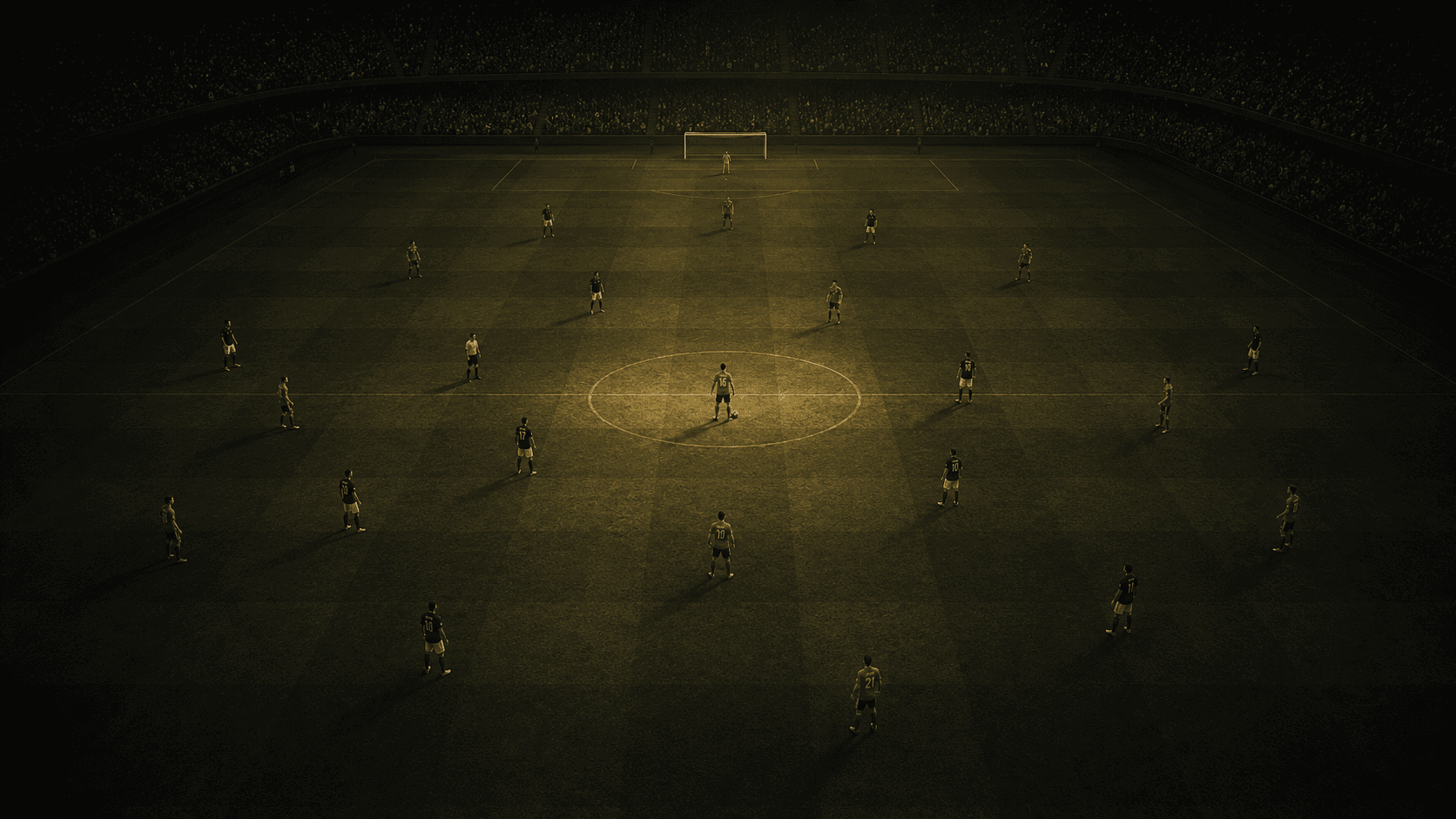
From the outside it looks like composure, which is the wrong word, or like time, which is closer. What it actually is, is earliness. Everyone else on the field is responding to where the ball is. The man with the view from above is arranging where it is going to be. Watch him against France and you are watching someone play the same match as everyone else, only earlier.
Cruyff understood the distinction. Playing simple football, he said, is "the hardest thing there is." Anyone can pass a ball eight yards. The difficulty is knowing which eight yards before the ball arrives.
This is the thing football has never quite known how to reward. In October 2024 it gave Rodri the Ballon d'Or — the first defensive midfielder of the modern era to win it, only the second Spaniard ever, after Luis Suárez in 1960 — and the award read less like a coronation than an admission. Football had finally noticed the man who had been deciding matches for years without doing the things it usually celebrates. He is not applauded for the sprint, the dribble or the leap. He decides matches through actions that disappear almost as soon as they happen. Zlatan Ibrahimović, watching this semifinal from a studio, put it the way only a forward could: Rodri goes unseen, he gets no credit, and yet he won a Ballon d'Or from a position where nobody wins them — because he can set the men around him on fire, and he can put fires out.
Corridors
A winger sees football vertically
A winger sees football vertically. He receives, turns and goes, and everything dangerous happens inside the corridor in front of him. That is not a limitation so much as the job, and France have assembled the finest collection of it on earth.
A controller sees across.
France arrived at a World Cup semifinal with the most destructive vertical attack in the tournament and nobody in midfield capable of giving it a horizontal view.
Michael Olise came into the match leading the tournament in assists, and Deschamps used him as the 10. The selection contained France's whole problem. Olise is a right winger who drifts infield. He can create from central areas. He does not organize them, not in the way Cherki does, and France needed them organized. Against Spain he attempted two dribbles, completed neither, and left in the 72nd minute having spent most of the evening receiving the ball in places from which nothing could begin.
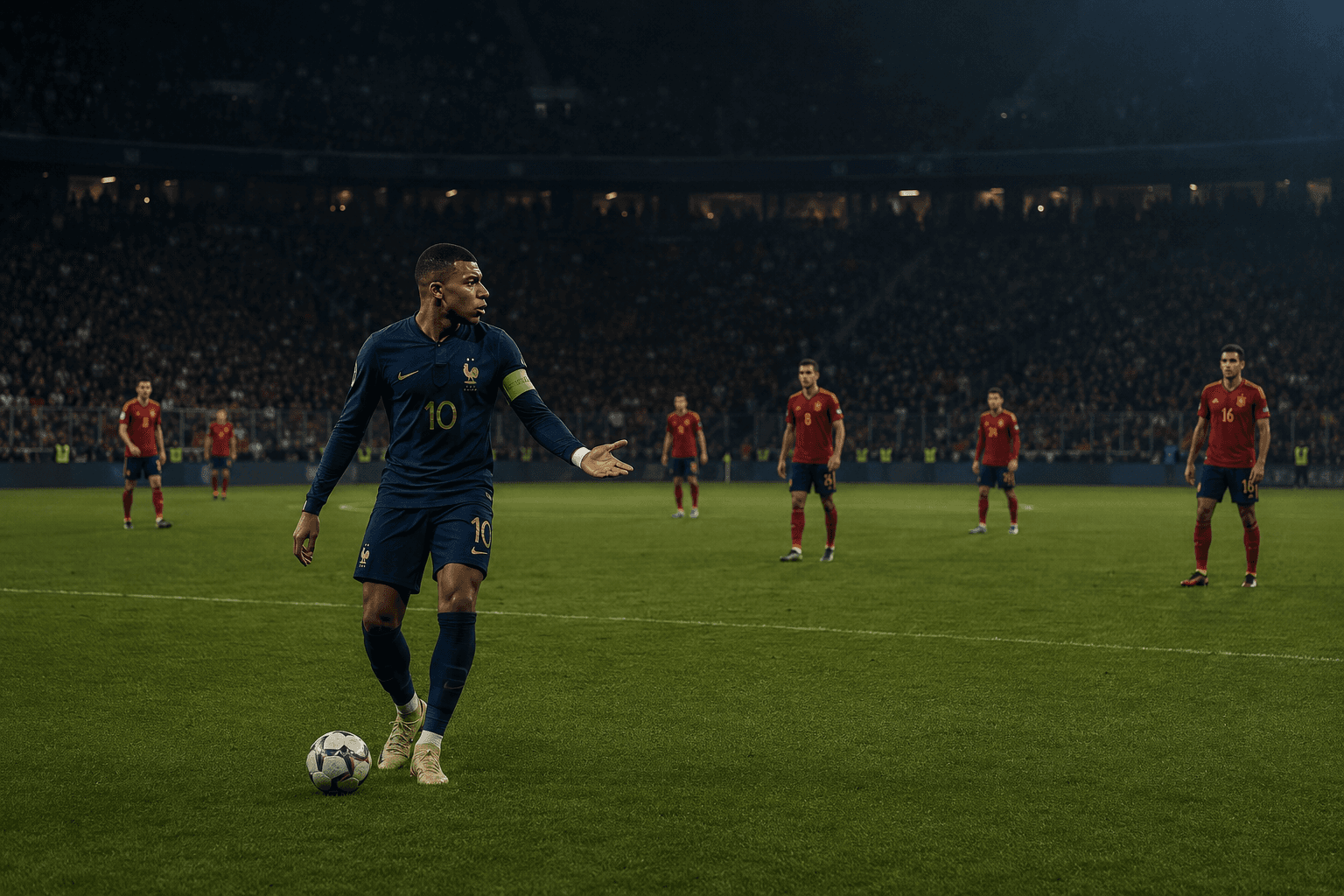
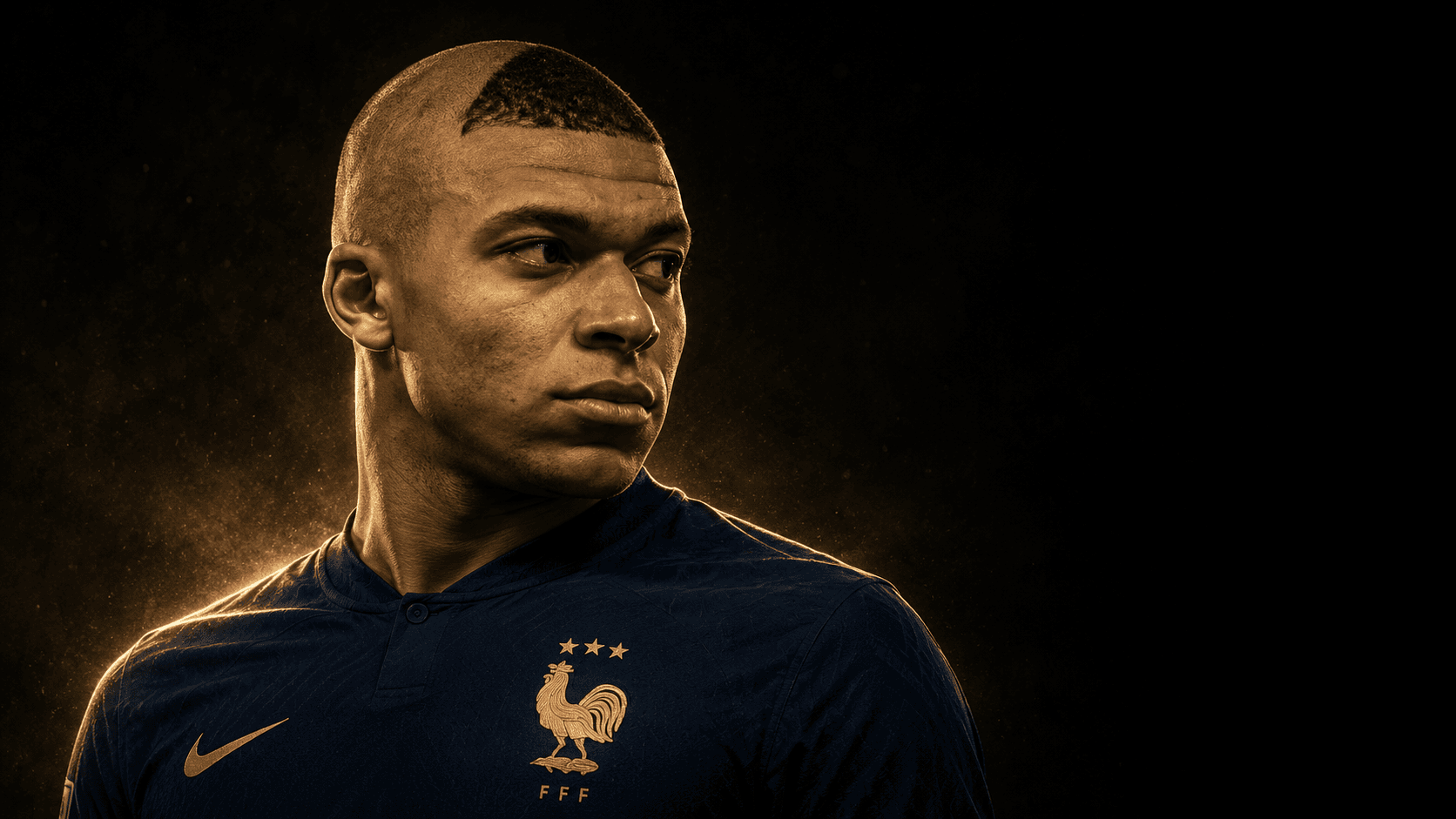
Mbappé kept dropping deeper to find it. That is the image that remains: the most devastating transition player alive walking backward into his own midfield, hunting a match that would not come to him. He thrives in the instant that possession changes. Spain rarely permitted that instant to exist.
By the 85th minute he was booked for a cynical foul, the frustration finally taking physical form. The yellow card said more about France's evening than the shot map did.
In the first forty-five minutes France produced four hundredths of an expected goal. That is not a statistic. That is an absence.
The reason sits in the middle. Spain had Fabián Ruiz, an auxiliary eight who plugs holes, arrives late and performs the covering nobody applauds. Behind him was Rodri, protecting the structure and deciding its rhythm. France had Adrien Rabiot, a version of Ruiz, and Aurélien Tchouaméni, an elite anchor who screens, breaks play and recycles possession. Both are excellent. Neither is a controller, and neither has ever pretended to be.
Spain had one man deciding. France had four men asking.
It need not have been Rodri, or anyone like him. Prime N'Golo Kanté never had the view from above and never needed it. His supernatural certainty about where the ball would appear solved the same problem by different means. A great central midfielder does not merely improve his team. He licenses it.
France had nobody licensing anything.
Rabiot was booked inside ten minutes for standing on Dani Olmo's foot, and Deschamps took him off at half-time rather than carry the card through a semifinal — a central midfielder surrendered to a caution in the one area where France were already destitute. Cherki, the only man in the squad who might have offered something genuinely central, came on in the 72nd, by which point there was nothing left to be inventive about.
And when men accustomed to executing a plan are suddenly required to invent one — do something, now, with this — they begin doing things they would never otherwise do.
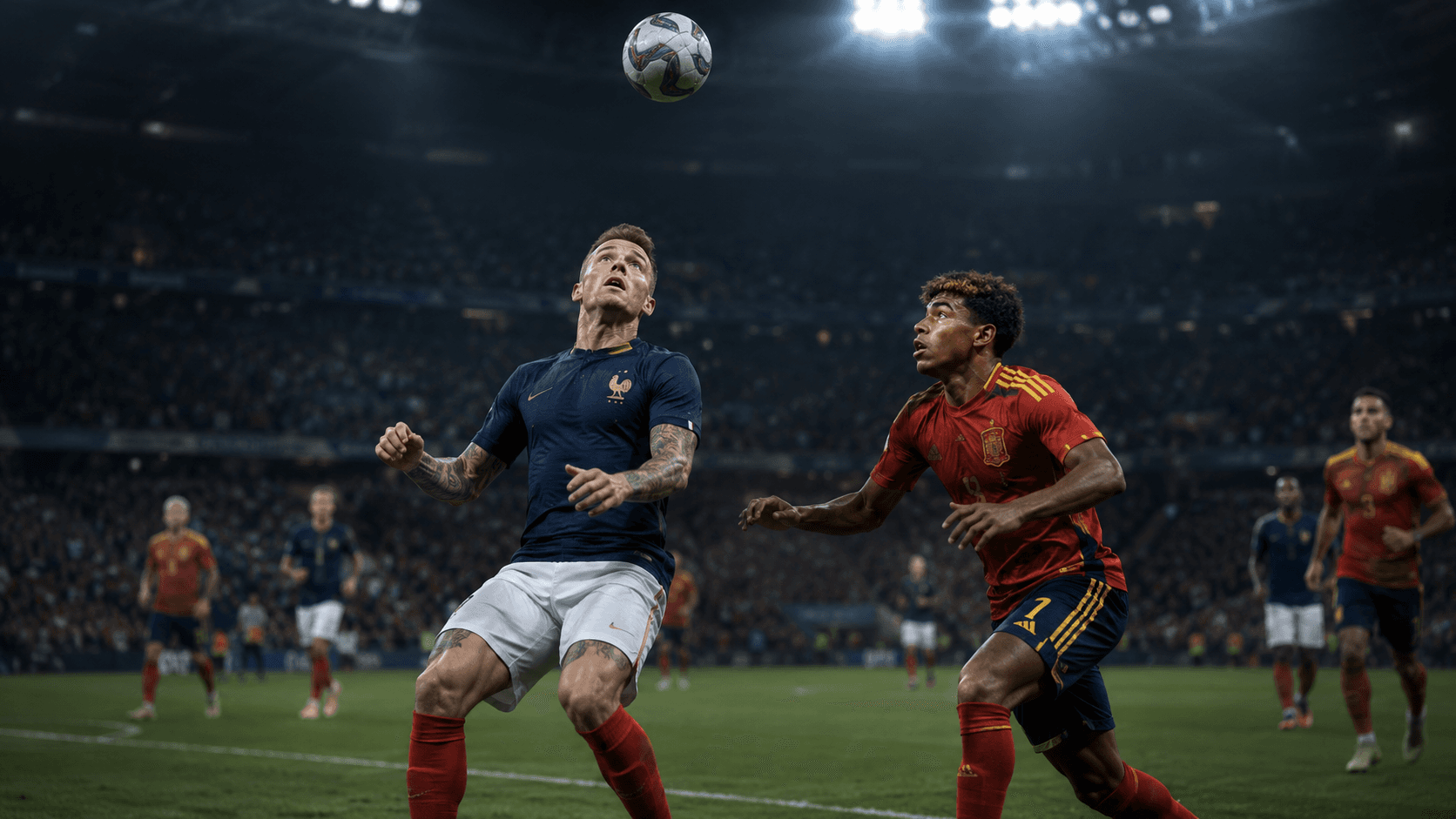
The cross came from Marc Cucurella. Digne rose to meet it and nodded it straight upward, into the air above his own penalty area. He watched it fall, turned to clear, and found that Yamal had arrived at the other end of the swing. The boot caught the thigh. Iván Barton pointed to the spot.
You could see it coming from a very long way out. It unspooled slowly enough that everyone in Arlington understood what was about to happen before it happened, which is a strange property for a World Cup penalty to have, and a revealing one. It did not look like an error. It looked like a symptom. Mikel Oyarzabal scored it in the 22nd minute, Pedro Porro added the second in the 58th off a one-two with Dani Olmo, and that was the semifinal.
Twenty-two months
The award, and what it cost him
Here is what gives the evening its shape.
When Rodri collected that Ballon d'Or in October 2024, he did it five weeks after his knee came apart against Arsenal. He had not played since September and would not play again for eight months. Football finally handed its greatest individual prize to the man who sees earliest, and he arrived to accept it unable to run.
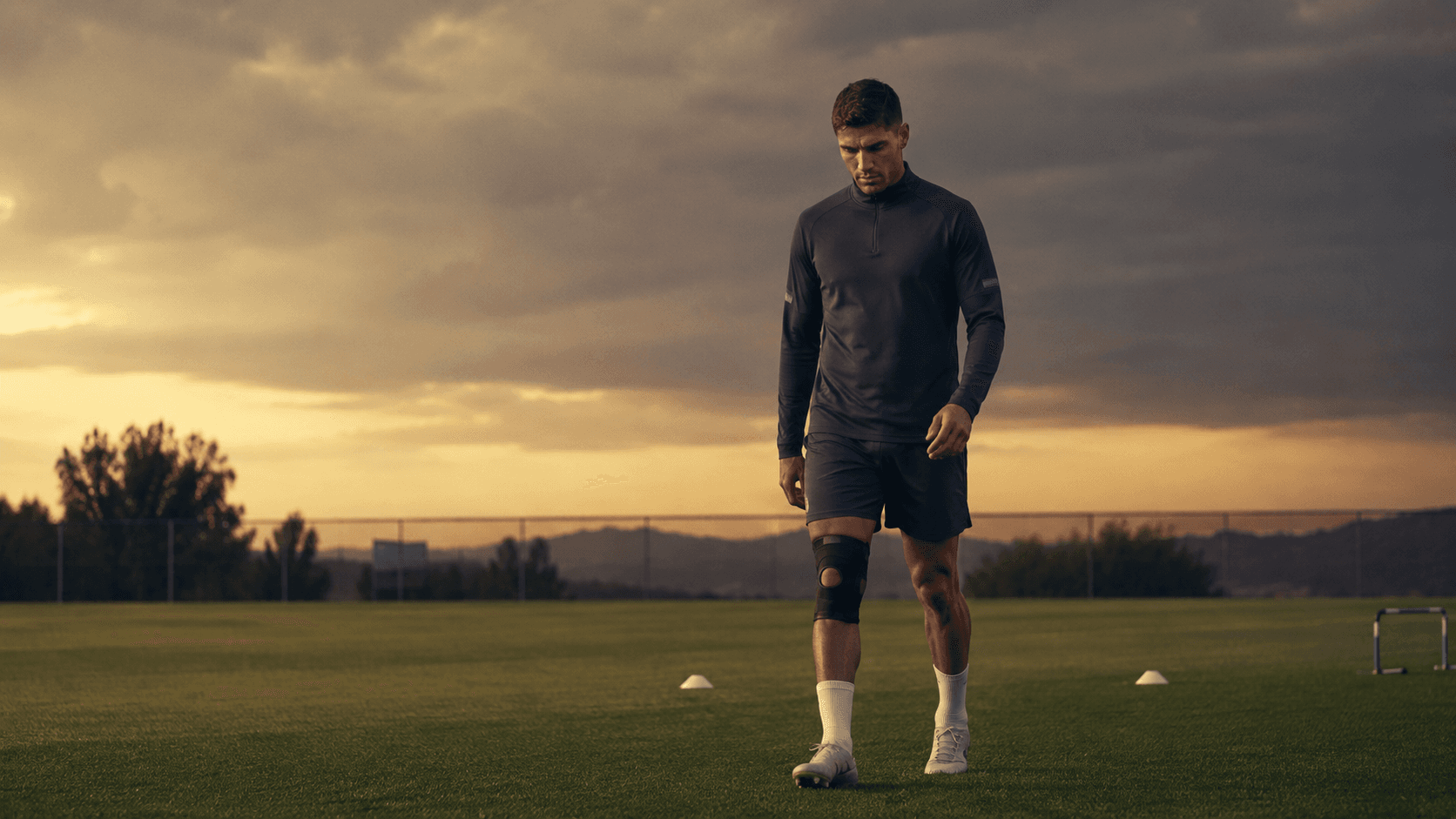
He was gone 220 days and fifty-one matches. Manchester City, who had won something in every season since 2016-17, won nothing at all without him, which is the sort of negative proof this sport almost never provides. He came back in May 2025, but his body kept interrupting the return — first the groin, then the hamstring — and Guardiola eventually conceded they may have rushed him. He spent most of last season being managed back toward himself: the man football had named the best player on earth, used as a substitute.
He turned 30 during this tournament. He is Spain's captain now. Twenty-two months after the knee, he took a World Cup semifinal and ran it at walking pace. He explained it afterward in the flattest language available — France are strong in speed and explosiveness, Spain prioritize the ball — which is the whole match, described by the man who decided it, with no adjectives on it at all.
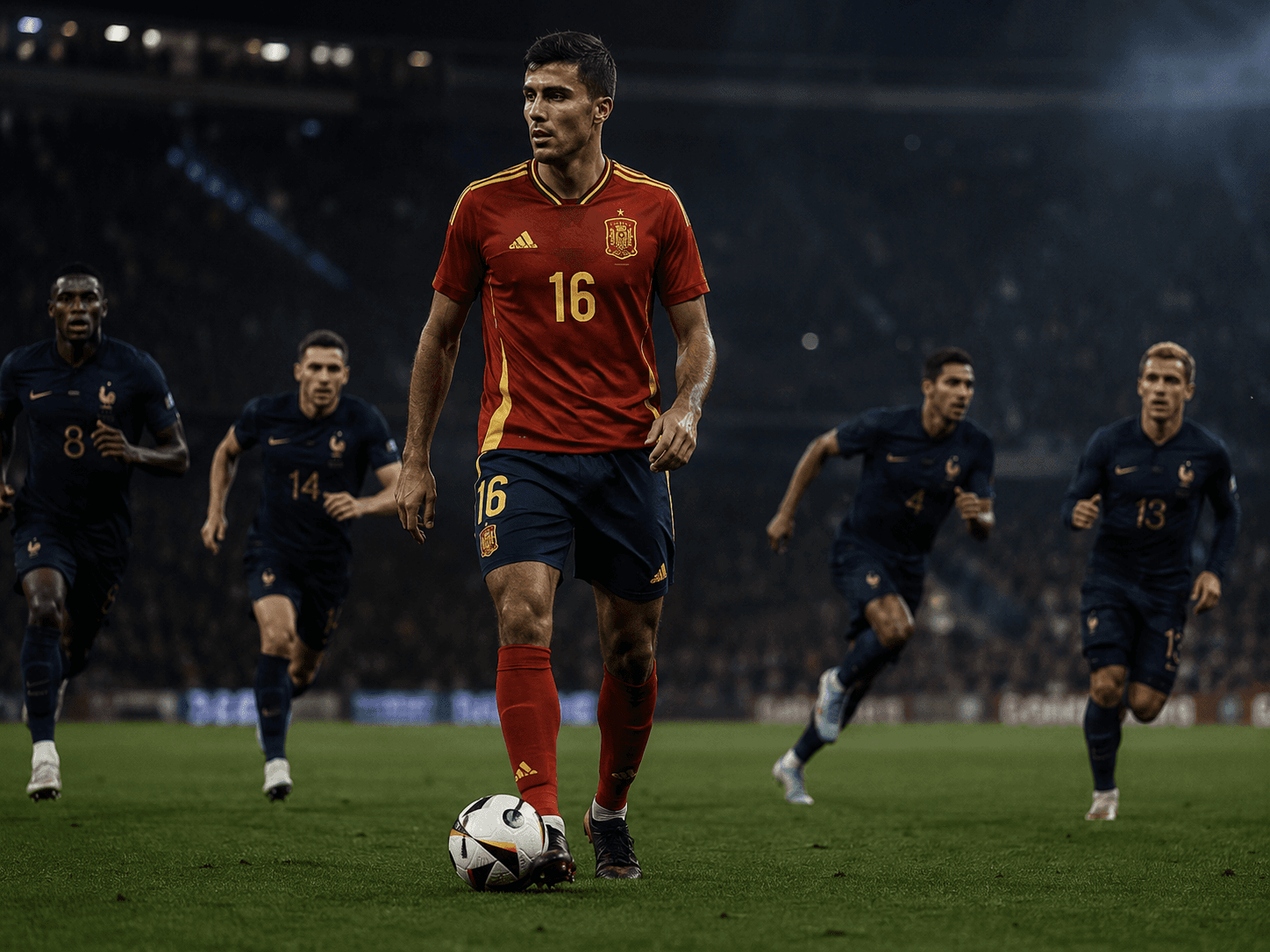
Spain go to MetLife with six clean sheets in seven matches and one goal conceded. It is also the third consecutive summer in which they have removed France at the semifinal stage. At some point that ceases to be a sequence and becomes a fact about the teams. For Deschamps, fourteen years end here: one World Cup won, two more finals reached, and a semifinal in which France never became themselves. Careers rarely receive the endings they have earned.
Football has always been in love with speed. We celebrate the sprint, the dribble, the shot, the leap — the actions that happen quickly enough to pull people out of their seats.
The semifinal belonged, on paper, to the fastest attackers on earth. It was decided by a different kind of speed.
France had acceleration. Rodri had anticipation.
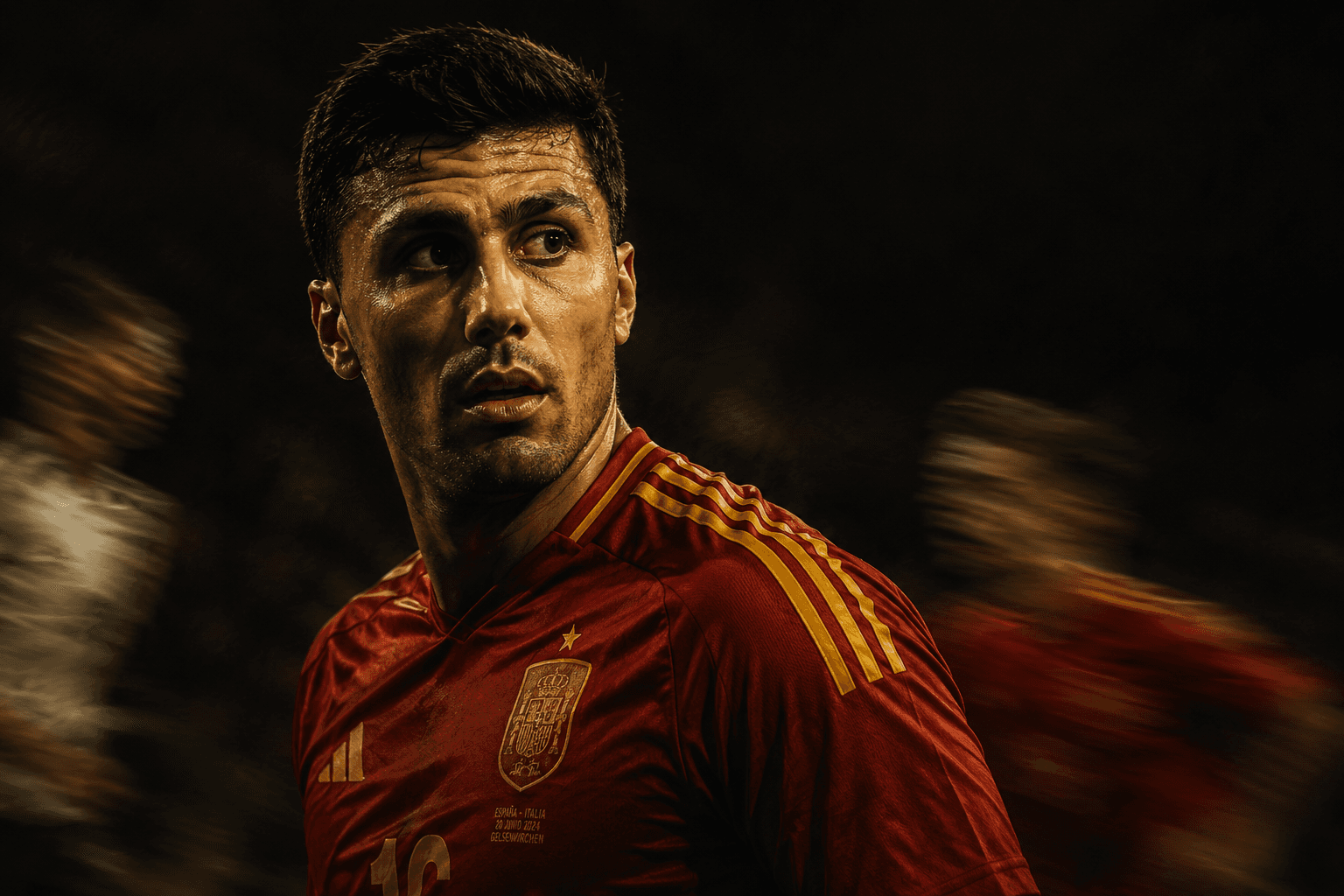
The game reached him before it reached anybody else.
Read more World Cup 2026 coverage: Baby Out With the Bath Water — Argentina's Disgrace · The Best Form of Defense — Spain's World Cup Final · Dead Rubber — England vs France · Blood in the Water — Argentina vs England · El Matador — Mikel Merino · O Kylian — Mbappé's World Cup · Braut — Haaland's World Cup · Hey, Jude — Bellingham's World Cup · The Round of 16 · The Group Stage Is Over