In 2017, Atlanta did not have a Major League Soccer team. By 2018, it had a champion.
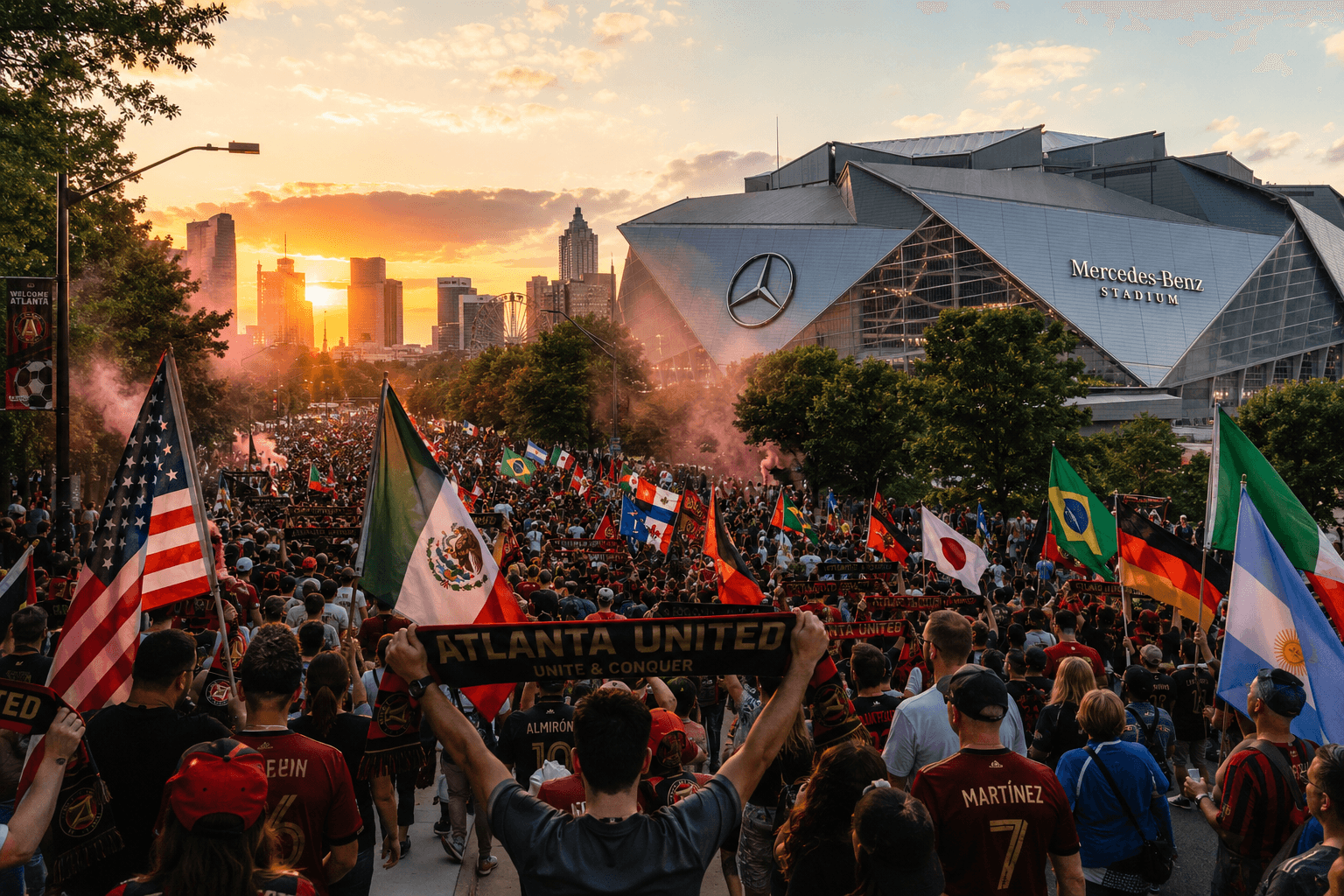
Few football cities have been built faster. Atlanta United joined MLS and immediately led the league in attendance, regularly drawing crowds north of 40,000. They won the MLS Cup in their second season. They did it in front of supporters who sang, marched, and built a culture from scratch that rivals clubs with a century's head start. Atlanta did not wait for permission to become a soccer city. It simply decided to be one.
This is the context for the World Cup arriving in Atlanta. The stadium — renamed Atlanta Stadium for the tournament — hosts eight matches, including a semifinal on July 15, one of only two matches in the world that decide who plays in the final. This is not a city hosting football as a novelty. This is a city that spent a decade proving it belonged in the conversation, now handed one of the biggest fixtures of the entire tournament.
The football geography
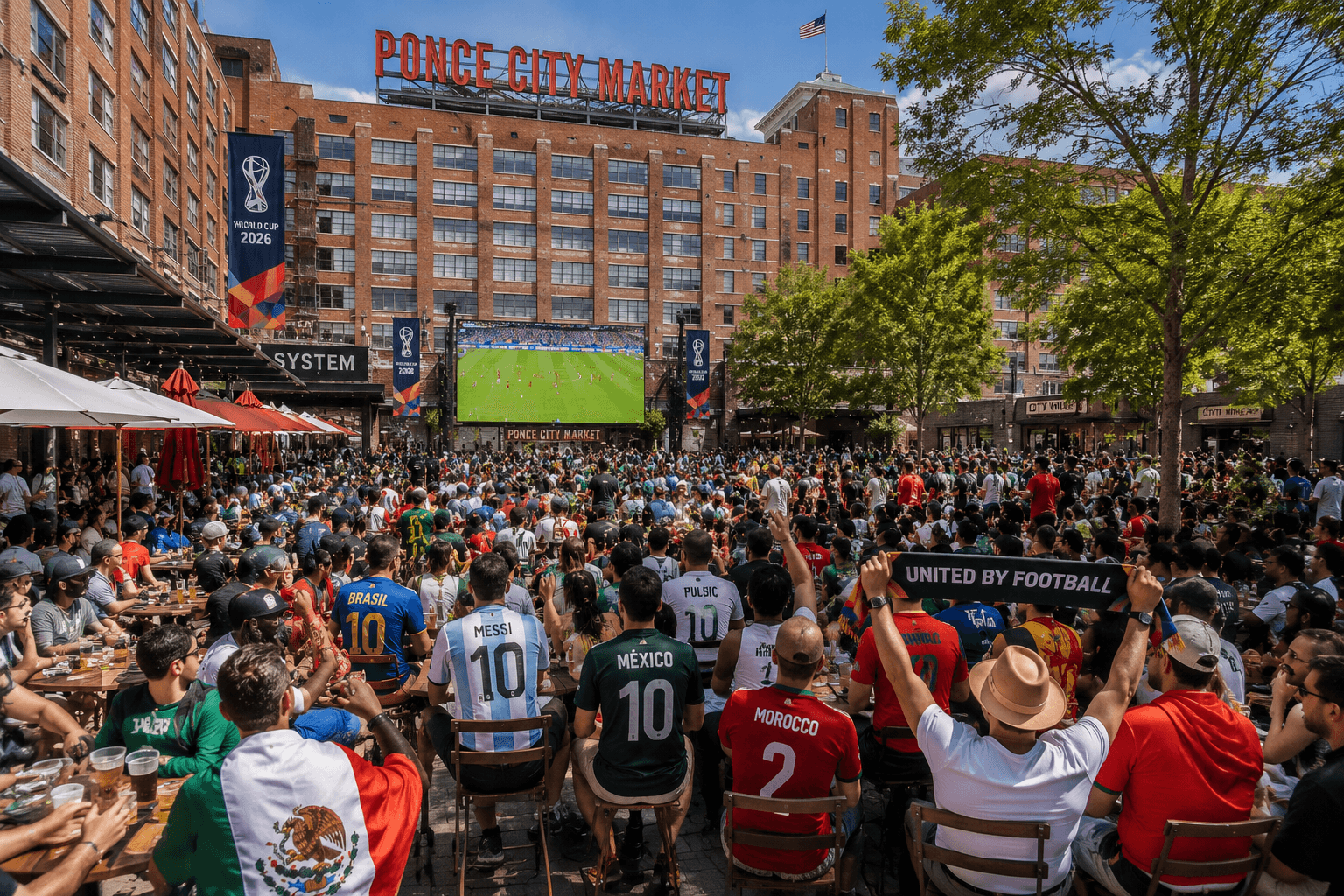
Atlanta is a city of neighborhoods loosely strung together by an idea: the BeltLine. The 22-mile loop of trails, parks, and converted railway runs through the districts where the city eats, drinks, and gathers, and during the World Cup the most popular stretch — the Eastside Trail, threading Inman Park, the Old Fourth Ward, and Ponce City Market — becomes a corridor of patios and watch parties.
The stadium sits downtown, and unlike most American cities, Atlanta will actually take you to the front door by train. Three MARTA stations serve it: Vine City, the SEC District stop, and Five Points, the last of these about a ten-minute walk. On a match day, the train is the answer; rideshare surge pricing around the stadium is not.
The watching itself sorts by tribe. There is a downtown cluster within walking distance of the stadium and the Fan Festival. There is Little Five Points, home to the best soccer bar in the country. There is Midtown for the American supporters and Buford Highway for the Mexican community. And there is Decatur, a few MARTA stops east, for anyone who wants the tournament without the central crush. Atlanta does not have one football neighborhood. It has a half-dozen, and the tournament will fill all of them.
Where to watch
The stadium
Atlanta Stadium — Mercedes-Benz Stadium in ordinary times — opened in 2017 and was the first professional sports stadium in the United States to achieve LEED Platinum certification. Its signature feature is the retractable roof, built from eight triangular panels that open like a camera aperture, and it is fully climate-controlled when closed — which matters in a Georgia July. It is also famous for fan-friendly pricing the owner has made a point of pride, one of the few major American venues where the food does not cost more than the ticket.
Atlanta hosts eight matches: five in the group stage, then a Round of 32 tie on July 1, a Round of 16 on July 7, and the semifinal on July 15.
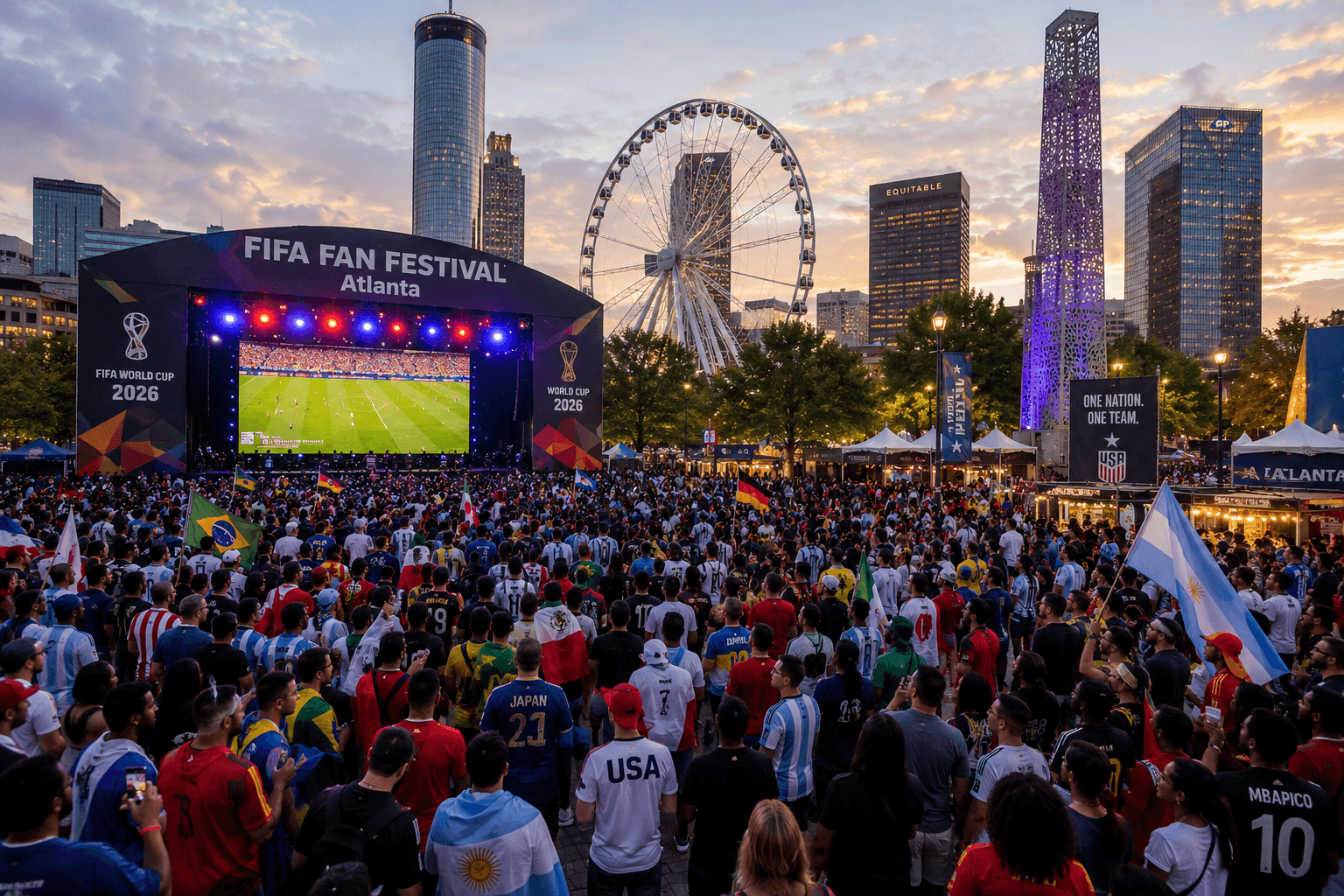
For fans without tickets, the official FIFA Fan Festival takes over Centennial Olympic Park — a 22-acre site, giant screens, live music, free entry with advance registration — less than a ten-minute walk from the stadium. There is a symmetry to it: the park was the heart of the 1996 Olympics, hosting the world's biggest sporting event thirty years on.
The matches
Atlanta's group-stage schedule put Spain on show twice and delivered one of the tournament's defining moments:
- June 15: Spain vs Cape Verde — the match that became the story of the group stage, as Cape Verde held the European champions goalless.
- June 18: Czechia vs South Africa — a Group A meeting with knockout places at stake.
- June 21: Spain vs Saudi Arabia — Spain's second group match in Atlanta.
- June 24: Morocco vs Haiti — the 2022 semifinalists against the nation returning after 52 years.
- June 27: DR Congo vs Uzbekistan — two of the tournament's debutant stories closing out Group K.
Then the knockouts, building to the semifinal on July 15 — Atlanta's most prestigious World Cup moment, one win from the final.
The city
Atlanta calls itself the city in the forest, and the nickname is earned — it has more tree canopy than almost any major American city, lush and green even downtown. It is the capital of the American South, a cradle of the civil rights movement, and a city whose cultural influence — in music, in film, in food — far exceeds its size.
For the World Cup, Atlanta brings what it brought to MLS a decade ago: a young, diverse, enthusiastic football audience that does not carry the baggage of a century of disappointment, because it has only been doing this for ten years. That enthusiasm is the city's signature. Other cities inherited their football; Atlanta chose its own, and made it one of the loudest in the country. In July, it gets to show the world.
Also in this series: The Best Bars in New York to Watch the World Cup · The Best Bars in Los Angeles · The Best Bars in Dallas · The Best Bars in Houston · The Best Bars in Miami · The Best Bars in Philadelphia · The Best Bars in San Francisco · The Best Bars in Seattle · The Best Bars in Toronto · The Best Bars in Vancouver · The Best Bars in Mexico City · The Best Bars in Guadalajara · The Best Bars in Monterrey · The Best Bars in Boston · The Best Bars in Kansas City