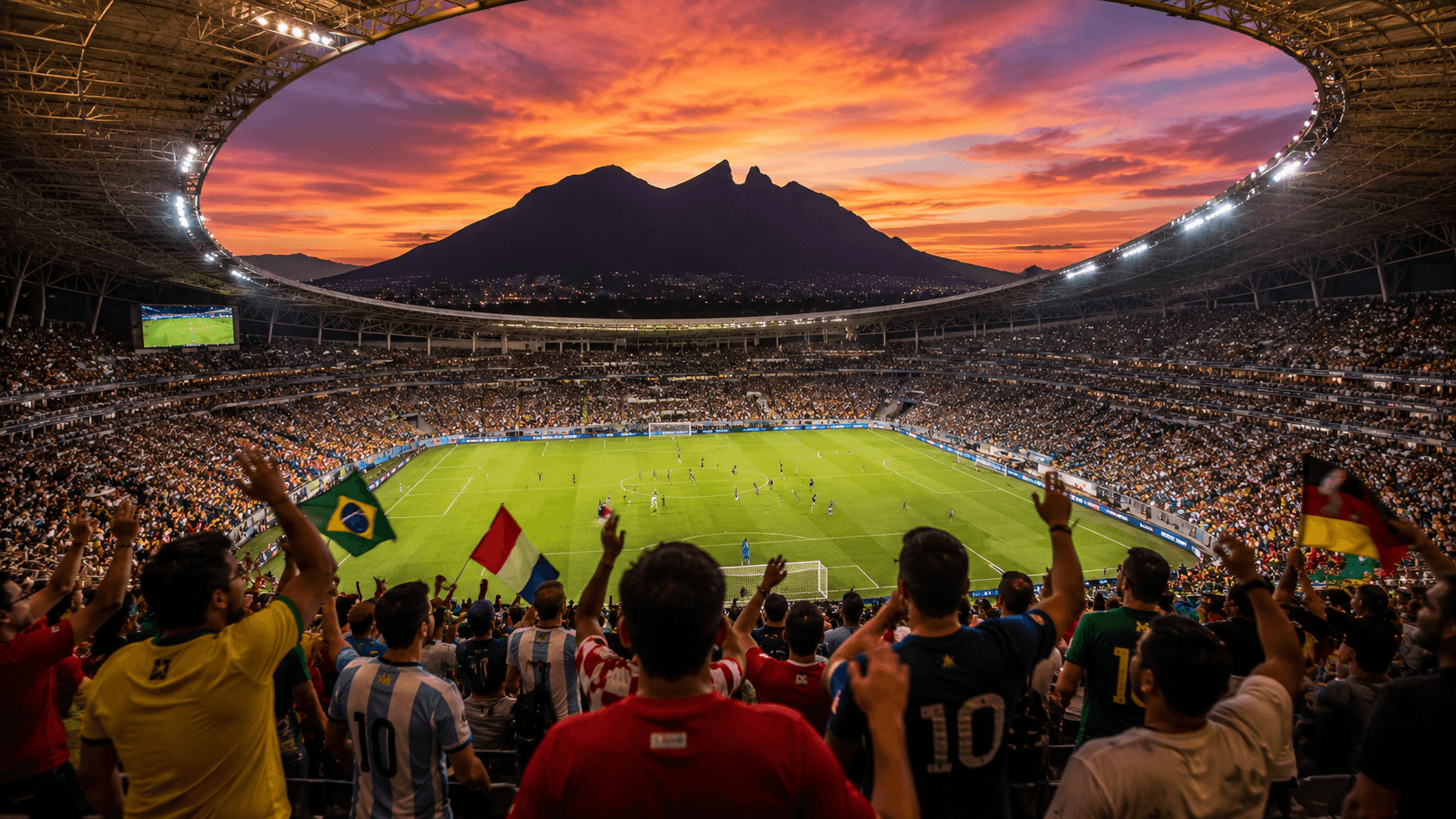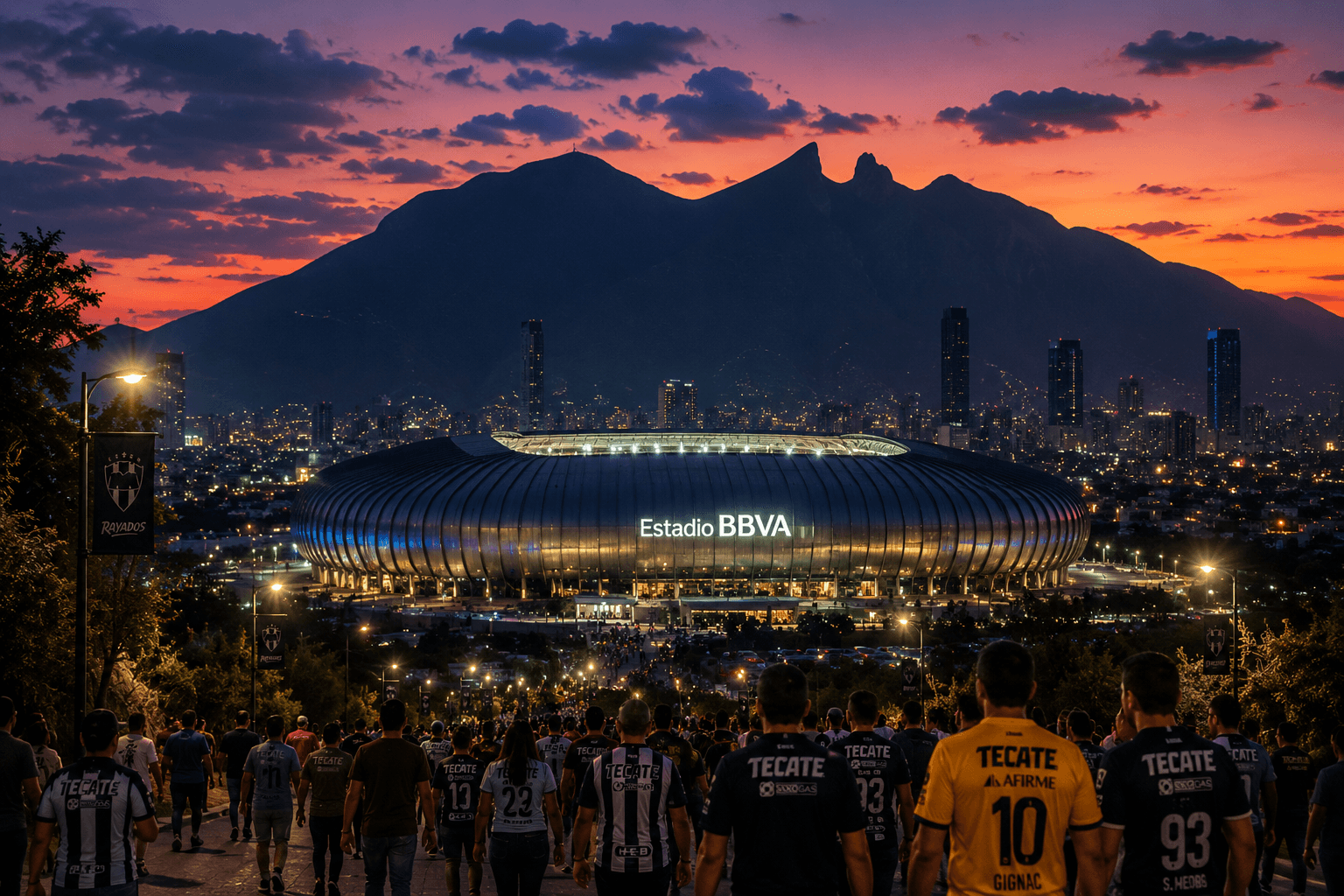
Monterrey is not a city that apologizes for itself. It is Mexico's industrial capital — built on steel, beer, and a proximity to the US border that has shaped its economy, its culture, and its football. The city sits in a valley surrounded by the Sierra Madre Oriental, and the mountains are visible from almost everywhere, including from inside Estadio BBVA, where the peaks rise behind the south stand like a set designer's idea of what a football stadium should look like.
The stadium is nicknamed El Gigante de Acero — the Steel Giant. The city produced the steel. The nickname is not a metaphor.
Monterrey's football identity is defined by a rivalry. Rayados (CF Monterrey) and Tigres UANL share the metropolitan area and divide it completely. The Clásico Regio is one of the most intense derbies in the Americas — the kind of fixture that fills a 53,000-seat stadium and empties the city of any other conversation for a week before and after. The World Cup arrives in a city that already understands what football at maximum intensity looks and sounds like.
Estadio BBVA will host four matches — three group-stage fixtures and one round-of-32 knockout match. One of those group-stage matches will be the 1,000th in FIFA World Cup history. The milestone belongs to the Steel Giant.
The football geography
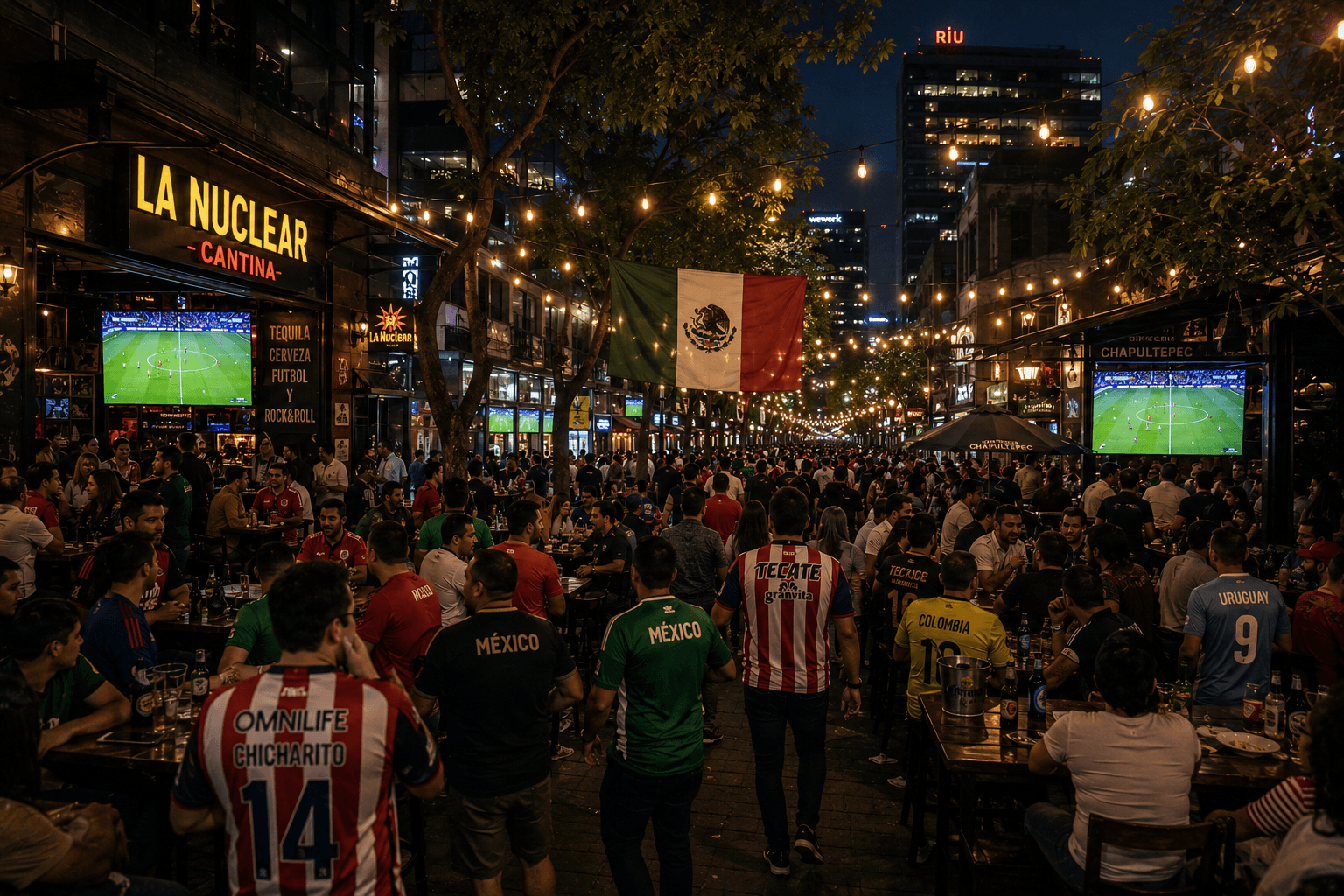
Monterrey's bar scene is split between two poles: Barrio Antiguo and San Pedro Garza García.
Barrio Antiguo is the historic nightlife district, east of the Macroplaza in the city center. Cobblestone streets. Colonial architecture. Bars, clubs, and live music venues packed into a few walkable blocks around Calle José María Morelos and Calle Diego de Montemayor. During the World Cup, this is where the city will gather after matches — the bars stay open late, the streets fill with people, and the walk from venue to venue takes minutes. If you want the atmosphere, you want Barrio Antiguo.
San Pedro Garza García is the affluent suburb to the southwest — cocktail bars, wine bars, rooftop terraces with mountain views, and the kind of venues where the television is secondary to the environment. The football will be on. The volume will be lower. The mezcal will be better.
Fundidora Park — the converted steel foundry that is now one of Mexico's most impressive urban parks — will host the official FIFA Fan Fest. It is reachable from downtown by the Santa Lucía canal walk or by metro. For matches you do not have tickets to, this is the city's gathering point. For matches you do have tickets to, it is where you go before and after.
Where to watch
Monterrey does not gather in one place for football. It gathers in two — Barrio Antiguo for atmosphere, San Pedro for comfort. During the World Cup, most visitors will start in one and end up in the other.
The stadium
Estadio BBVA opened in 2015 in Guadalupe, part of the Monterrey metropolitan area. It is the newest and most modern of the three Mexican World Cup venues. The architecture is inspired by Cerro de la Silla, the saddle-shaped mountain that defines Monterrey's skyline — the roofline echoes the peak. The capacity is 53,500. The first row of seats is nine meters from the pitch. The sightlines are among the best in Latin America.
To reach the stadium, take Metrorrey Line 1 to Exposición station and walk 10 minutes. Several bus routes (214, 223, TME) stop within minutes of the venue.
The Clásico Regio established the standard. The World Cup will test whether anything can exceed it.
The matches
Three group-stage matches and one round-of-32 match at Estadio BBVA:
- June 14: Sweden vs Tunisia
- June 21: Tunisia vs Japan — the 1,000th match in FIFA World Cup history. A milestone fixture in the Steel Giant.
- June 24: South Africa vs South Korea
- Round of 32: Monterrey is the only Mexican venue to host a knockout fixture — pairing set once the groups conclude.
The city
Monterrey is not a tourist city in the way that Mexico City and Guadalajara are. It is a business city, an industrial city, a city of steel and cement with the Sierra Madre rising behind everything. The food reflects the north — cabrito (baby goat), carne asada, machacado — and the beer is local. Monterrey is the birthplace of Cervecería Cuauhtémoc, which became Grupo FEMSA, which produces most of the beer consumed in Mexico. The city does not drink imported beer. It drinks its own.
The World Cup brings Monterrey something it does not often receive: an international audience for a city that already knows exactly what it is. The bars will be full. The stadium will be full. The mountains will be where they have always been. And the 1,000th match in World Cup history will be played in the Steel Giant, beneath the mountains that have watched Monterrey become what it is.
Also in this series: The Best Bars in Mexico City to Watch the World Cup — the Azteca city, five matches, and cantina culture that predates television. The Best Bars in Guadalajara to Watch the World Cup — Mexico's football city, four matches at Estadio Akron, and Avenida Chapultepec as a World Cup corridor. The Best Bars in Atlanta to Watch the World Cup — the city that built a soccer culture from scratch, now hosting a semifinal. The Best Bars in Boston to Watch the World Cup — Irish pubs, the Tartan Army, and a train to Foxborough. The Best Bars in Kansas City to Watch the World Cup — the Soccer Capital of America, barbecue tailgates, and the loudest stadium on earth.
Correction, October 5, 2026: this guide first placed Mulligan's at Prolongación José María Morelos 837, in Barrio Antiguo. It is in the Metropolitan Center, Av. Lázaro Cárdenas 2400, in San Pedro Garza García.