Spain Had the Ball. England Had the Shape.
Priya's Board — the written board.
Start with the match split in two, because the full-time numbers conceal the most important thing about it. At the moment Elliot Anderson walked, on 63 minutes, the count read like this: Spain four attempts, England eight. Expected goals: Spain 0.18, England 2.12. The world champions, at home, had not yet put a shot on target. Now read the full-time sheet — twenty-three attempts to nine, just under two-thirds of the ball for Spain — and you are reading about a different game: the one England played with ten men, hanging on at 3–2. Both matches happened. Only one of them was close.
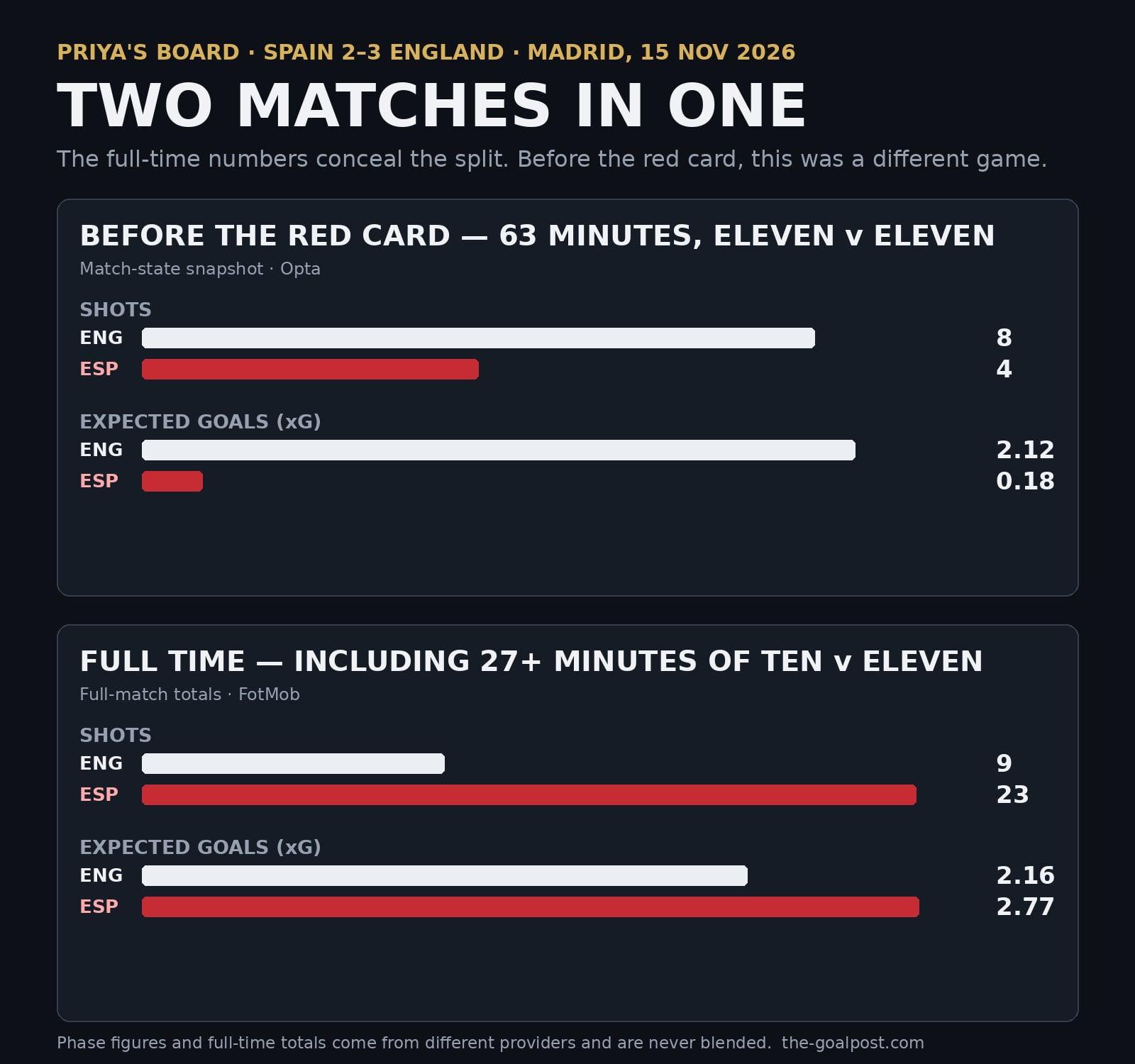
Possession is only dangerous when it moves the block in front of it. That was the first hour in a single line — Spain's ball travelled across England and around England and, for all its beauty, rarely through them. But hold the line up to the light before carving it anywhere, because it is not the whole truth, and the last half hour proved it. Possession does quieter work too: it can push a defence backwards yard by yard, it can tire legs, it can store up the territory from which later chances come — and Spain's possession may have been doing some of that slow work. May. What changed this match was not an accumulation finally telling; it was a number, lost suddenly, to an England error. So be precise about what England achieved. They contained Spain's attacks for an hour, and they did it by design. Containing a team's attacks is not the same as controlling a match, and when the numbers changed, the difference between those two things nearly swallowed England whole. That distinction is this article. Everything else is the working.
The press and the block
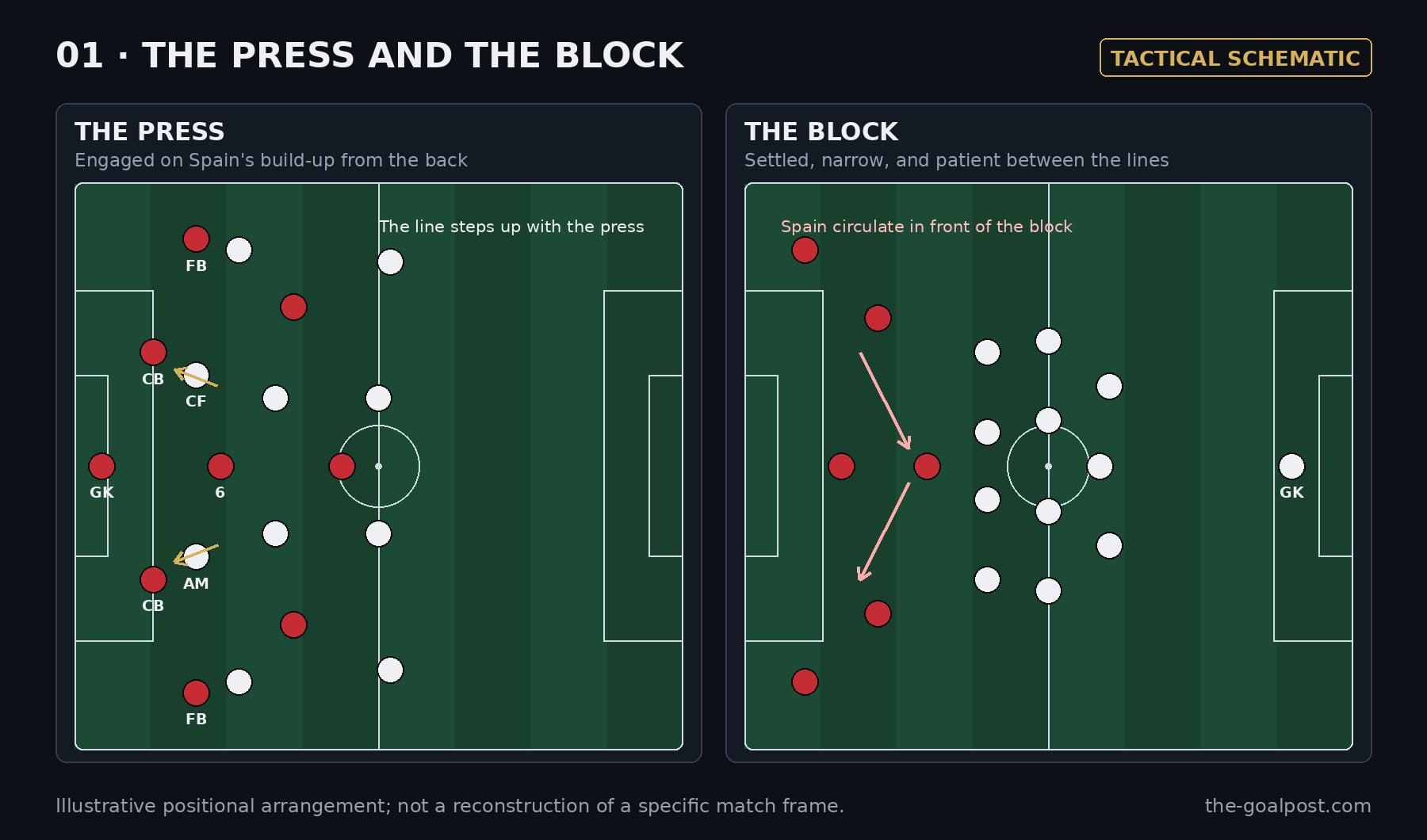
Begin by correcting the picture this match will be remembered by, because the lazy version — England parked in a patient mid-block for an hour, waiting for their moments — is not what happened. For the first ten minutes, England went after Spain. They pressed them up the pitch, into their own third, and Spain — Spain — completed twenty-three successful passes in the opening ten minutes, their lowest opening-ten total in any Nations League match. In the opening eleven minutes it was England who held roughly seven tenths of the ball. By half-time, Spain's pass completion in their own half stood at 83.6 per cent, a figure that sounds respectable until you remember whose figure it is: this was a team being hurried in the places where it is never hurried. Seven times across the match, England won the ball back high up the pitch.
Watch the press make its decision once, early, and you can see the trigger. Seven minutes in, Spain tried to build out from deep — the foundation their whole game stands on — and England engaged on the build-up itself: the ball robbed as Spain played out from the back, Kane's first-time shot flashing just wide before Spain's shape had reset. That is the press as a judgement rather than a mood. It did not chase everything. It went when Spain's build-up invited it — on Spain's first touches, in Spain's third, with Spain's rest of the team still facing the wrong way.
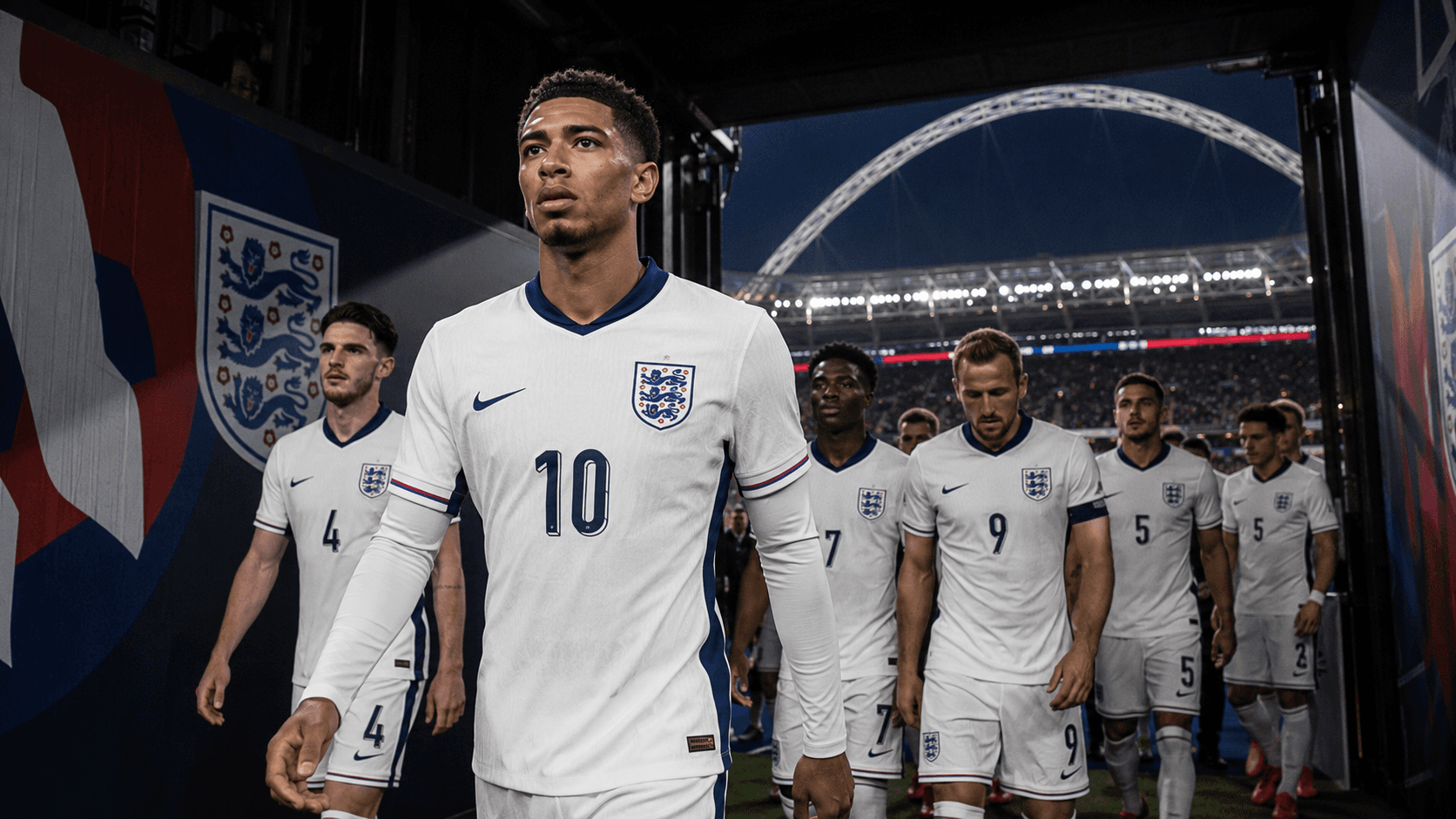
And then — this is what makes it a system rather than a spurt — when the press did not win it, England did not chase the game into the spaces Spain wanted. They settled. Declan Rice and Anderson screened in front of the defence, the wide players tucked in narrow, and the distances closed up: screen connected to back line, back line connected to screen, the whole structure moving side to side as one piece, like a fence being carried across the pitch. Spain are the best side in the world at pulling a block apart one pass at a time, at tempting a midfielder to step out and then playing through the space he leaves. In the settled phases, England's midfielders simply declined to step. Two modes, one idea: Spain never got to set their own tempo. Whether England pressed high or settled into their block, Spain struggled to establish the passing sequences they normally use to control opponents.
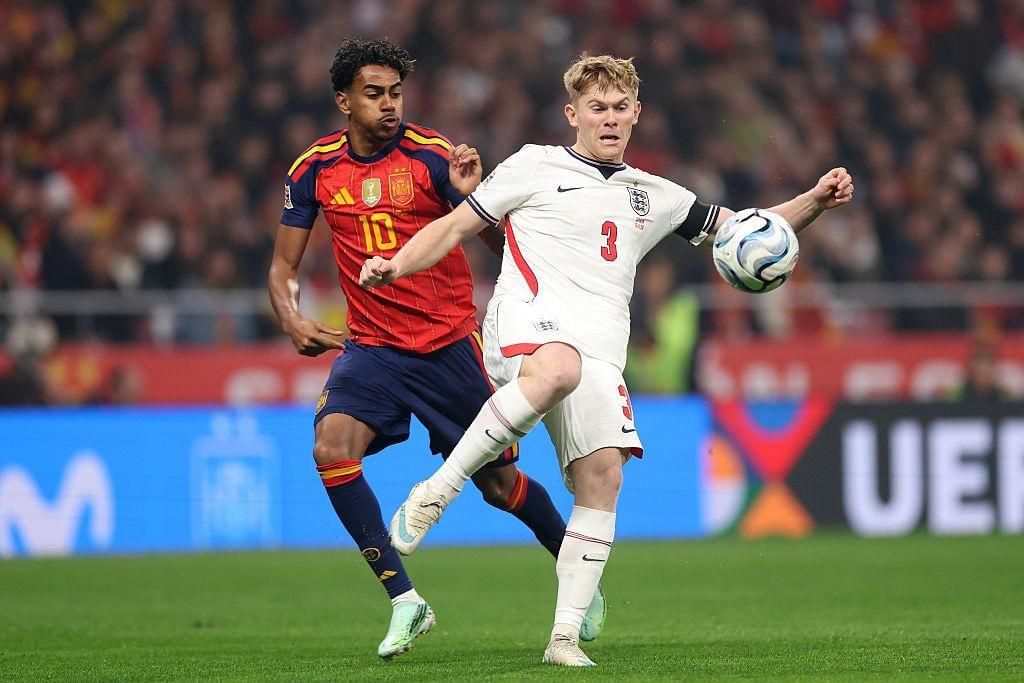
It was not all refusal, either. England's own attacks leaned hard to one side: 46.1 per cent of their attacking touches came down the left, where Anthony Gordon and Lewis Hall worked Spain's right flank over. Gordon was the press's first trigger and its best advertisement — he won possession seven times, more than any player on the pitch. Hall, a full-back, completed five dribbles in the first half alone, turning England's defensive side into an outlet. Spain's right is where Lamine Yamal lives. For an hour, it was England's corridor.
Three ways to score
The goals are the argument, so take them one at a time — because they are not the same goal three times. They are three different mechanisms, and Spain failed against all three.
The first is the break, and it begins with a pass rather than a sprint. Anderson, in England's own half, flashed the ball down the channel — the one pass Spain's shape was not set for — and released Harry Kane into the space behind their line. Kane cut inside Pau Cubarsí, Cubarsí brought him down, and Kane scored the penalty himself, just before half-time. Notice what the break actually attacked: not a player, but a direction. Spain's whole game is built on facing the play. The moment their defence had to turn and run towards its own goal, the structure that protects it was gone.
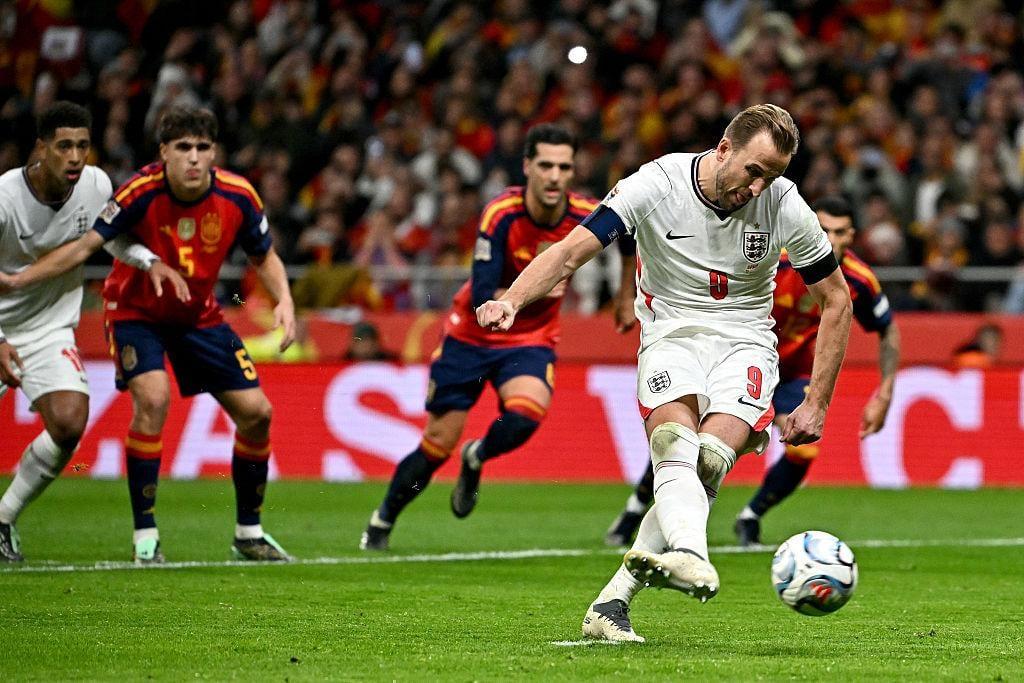
The second goal, eight minutes after the restart, is the set piece — and it is the one Spain should be angriest about, because it has nothing to do with England's shape at all. Rice's delivery is good. But Ezri Konsa is unmarked. Not a yard free, not half a yard free — unmarked, in the middle of the penalty area, heading in a corner against the world champions. I will not claim England had scouted that exact hole all week; a free header cannot carry that claim, and this board only deals in what the picture can carry. What the picture shows is enough: a marking scheme failing at its simplest job, which is to know where the runners are, and an England side alert enough to punish it. A team can prepare for a counter-attack. A free header at a corner is not a failure of Spain's open-play structure. It is a failure of set-piece organization — and that is a tactical responsibility of its own.
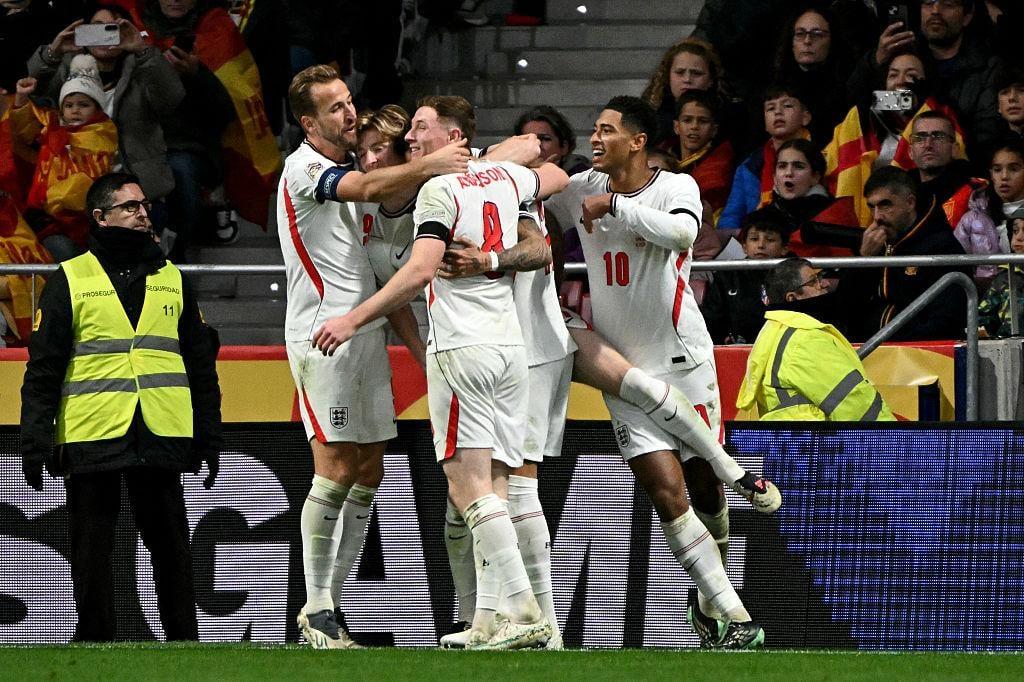
The third goal is the combination. Four minutes later: Kane drops in, away from goal, and his movement drags Spain's shape with him; Jude Bellingham slips the pass into the space Kane has vacated — and the man arriving to finish it is Ben White. The right-back. Late, on the far side of the move, in the world champions' penalty area, away from home. Start the explanation where it belongs: with Kane's movement, Bellingham's recognition of the opening, White's run, and Spain's reaction, each a half-second late. Then ask the supporting question, because the board asks it too: look at where England's remaining outfielders are standing as the move develops — behind the ball, in the lanes a counter-attack would need. White's run created the attacking advantage. The question for the board is what England retained behind him, and whether that protection made the run sustainable.
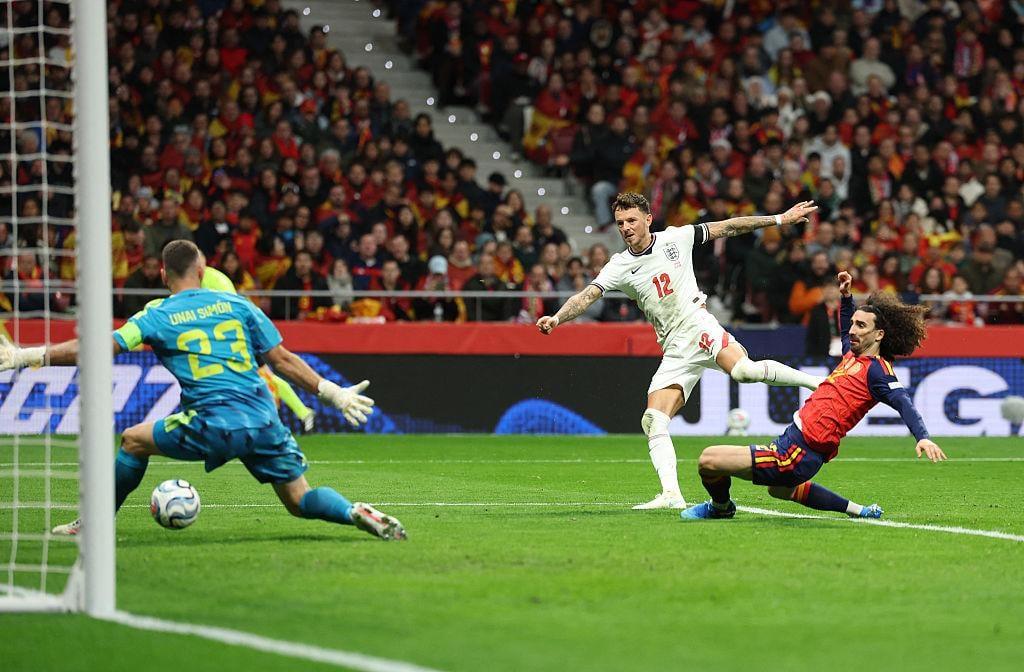
Three goals: a break, a set piece, a runner from deep. Spain did not lose to a trick. They lost to a team that had three ways to hurt them and used all three inside an hour.
The hinge
Now the part of the evening that belongs to Spain — because a forensic account that stops at 3–0 is not forensic, it is just flattering.
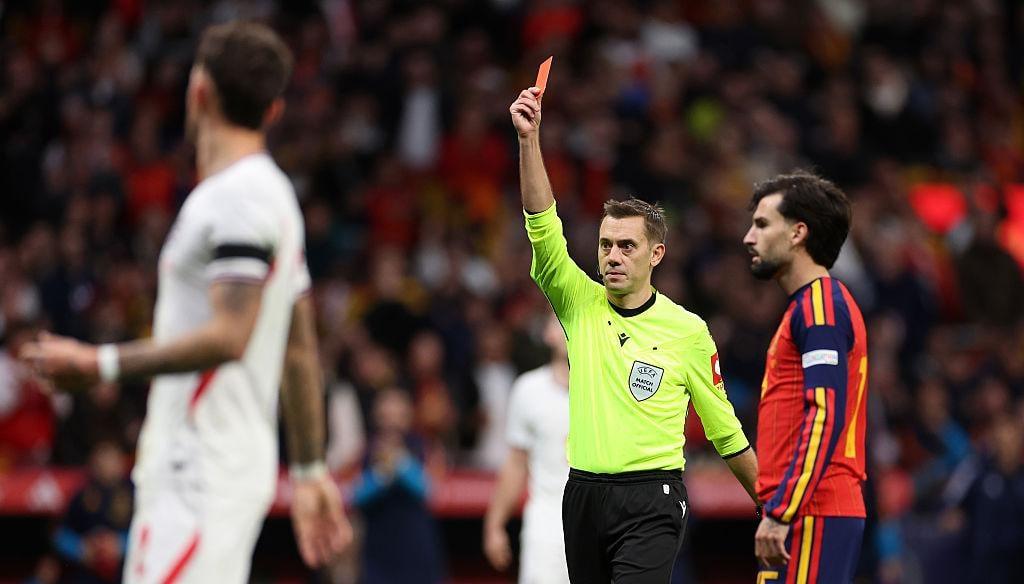
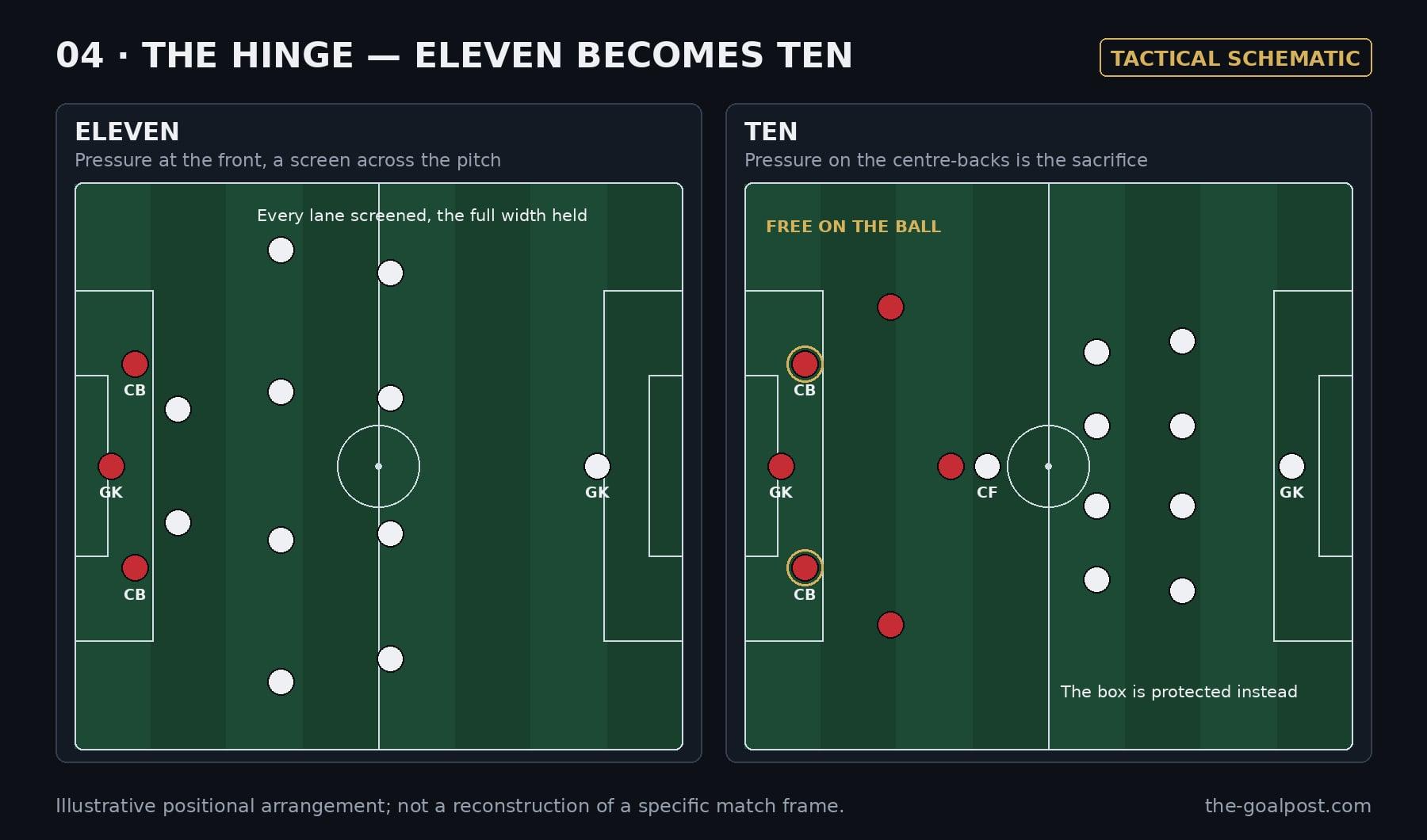
The hinge was not a Spain idea. It was an England error, and it has a name. On 63 minutes, Jarell Quansah dallied on the ball in his own half and Yamal took it off him. Mikel Oyarzabal slipped Yamal through, and Anderson — the last man, facing a runner bearing down on goal — fouled him. The foul prevented an immediate goalscoring opportunity. It also brought the red card, and the penalty Oyarzabal scored, and it cost England the midfielder whose screening had held so much of their shape together. Dress it up in neither direction: not a heroic sacrifice that saved a certain goal — nobody knows what Yamal does next — and not a mystery. One misjudged ball, and the geometry of the whole evening changed. Ten men can still screen the width of a pitch — but not for free. Something has to be given up: the pressure on Spain's centre-backs, the cover on the far side, or the player stationed higher to stop Spain recycling the ball and coming again. Which of those England chose to sacrifice is the honest question of the last half hour, and it is a question the traced states have to answer, not the narrative — Board 4, below, is built to answer it. What the eye could see was the block that had stayed connected for an hour dropping, compressing, retreating towards its own area — and Spain had territory at last, with England pinned inside it. Not territory their possession had banked across the night and finally claimed; territory the extra man handed them, on the spot.
Spain's response
Plenty of teams receive a man advantage and simply circulate faster. Spain did something better, and a forensic account has to separate the numbers Spain gained from the use Spain made of them. Yamal is the story. For an hour he had been managed — shown into traffic, receiving with the fence already set in front of him, his influence rationed by a shape that could always step out to him. Against ten men, the stepping-out stopped. He began receiving with room to turn, then room to run, and the game bent towards him possession by possession. The second Spain goal, on 75 minutes, was built from an England error on the other flank — Gordon dispossessed — and finished by Yamal's quality: the break running through him, the cross, Nico Williams converting at the far side. That is why Spain's full-match figures deserve respect rather than a footnote. Twenty-three attempts and an expected-goals total of 2.77 are mostly this half-hour's work — a great side, handed a door, producing real danger through its best player. England did not survive a statistical illusion. They survived Spain, playing properly at last.
The survival
What they survived it with was, first, the oldest discipline in the game: box defending. Bodies in the right zones, the near post protected, clearances sent to touch rather than back into play. And the night's neatest symmetry: White, who had scored the third goal, made the late intervention that stopped Williams getting through again. The man who put England three up helped keep them in front.
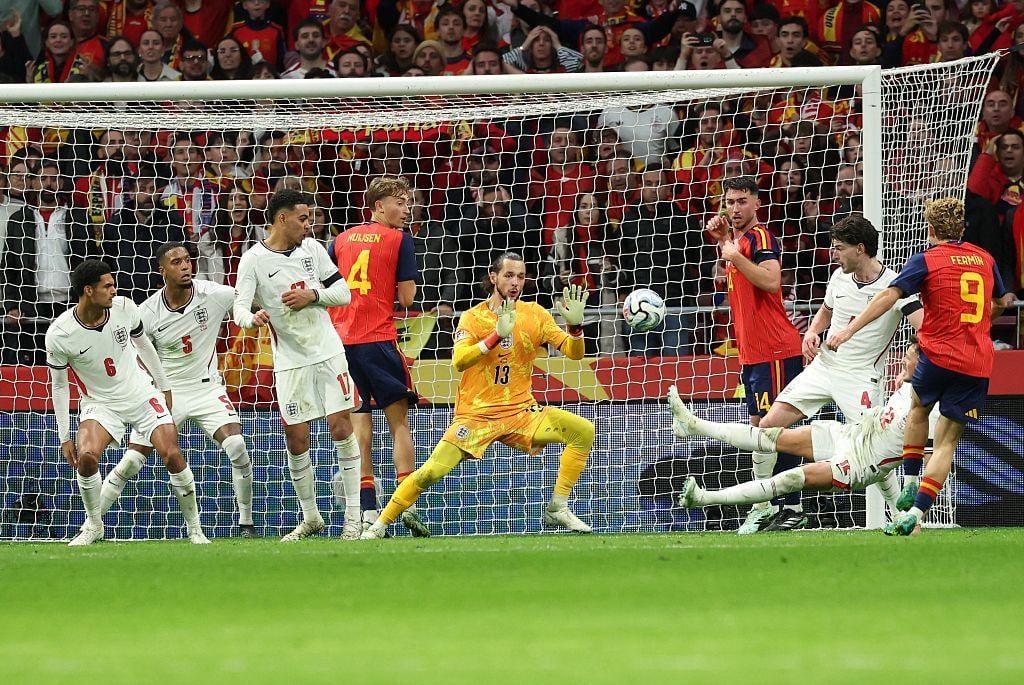
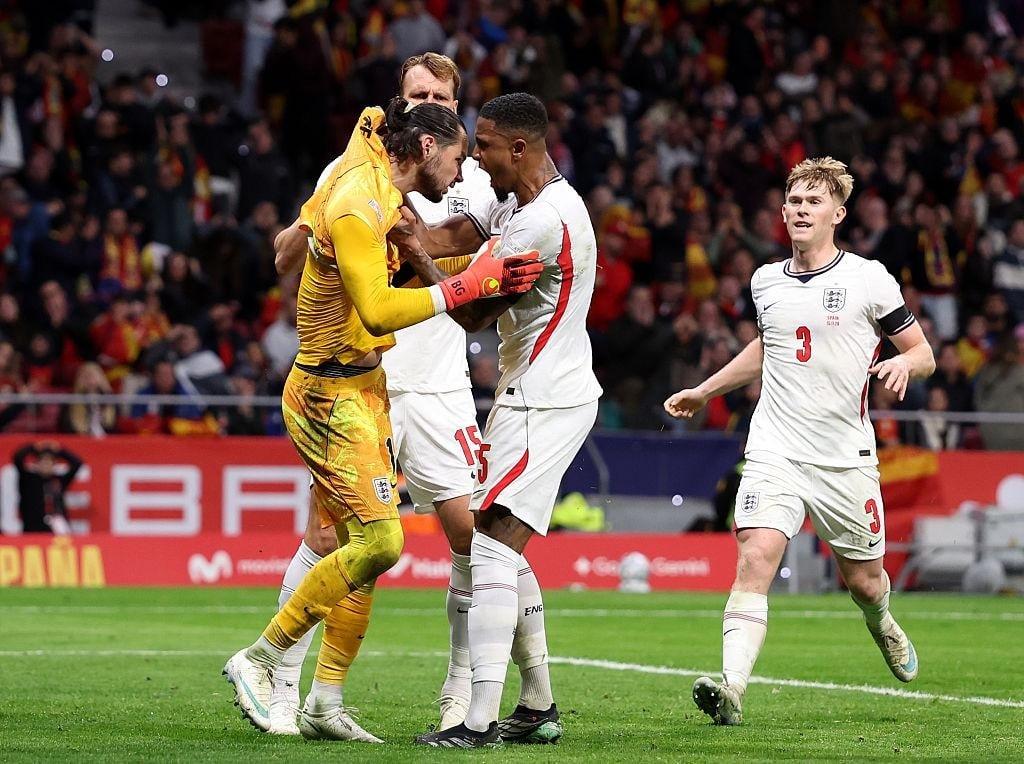
But the shape did not stop the shots. James Trafford did. Six saves on the night, and the ones that preserved the result arrived in pairs: on 81 minutes, twice in a matter of seconds — and then, in stoppage time, Fermín López's shot beaten away and the follow-up pushed around the post at full stretch, a goalkeeper scoring his own second save from the floor. If one of those late chances goes in, this article is about a collapse. It did not — and part of the reason it did not has a name and a pair of gloves. That is not an exception to the tactical story; it is part of it. England's structure limited what Spain could create for an hour. When Spain created anyway, the last line of the structure was a goalkeeper, and he held. An account that credits the shape and skips the saves is telling only the flattering half — the half this column exists to avoid.
The lesson
Two lazy readings of this match are already hardening, and both are wrong. The first says Spain dominated and lost unluckily — a smash and grab, a freak. The first hour answers it: eight attempts to four, 2.12 to 0.18 in expected goals before the red card, Spain without a shot on target, three goals from three different mechanisms. That is not fortune. The second reading, from the other direction, says Spain are finished — the machine found out, the era over. Also wrong. Spain lost one match, finished second in the group on goal difference behind England, and go into the spring quarter-finals as, in all likelihood, still the best team in the world. What has been taken from them is not their quality. It is their inevitability. Be careful, though, about what one night can establish. This article can only show what England exposed in this match — it cannot say what forty-three previous opponents did or did not test across the run, and it does not. What Sunday showed is narrower and, for Spain, worse: the questions were asked together, in the same hour, and they cost a result. Can Spain defend the space behind their own line, defend a set piece and defend a full-back arriving late, all in the same game? Every coach preparing to face them now has that hour of film.
There is a correction for England in here too, and Thomas Tuchel's players will know it. The plan worked, and the plan nearly died of an individual error that had nothing to do with Spain's pressure. A shape this good should not need its midfielder to take a red card to protect it. The distance between England's best hour under Tuchel and a famous collapse was one misjudged ball — and that, as much as the three goals, is the true measure of where this England team stands: excellent, and not yet settled.
So the test comes in the spring, and it runs in both directions. For Spain: whether Madrid was a night or a blueprint — how they defend the space behind their own line, how they mark at corners, how they account for the late runner, now that the whole continent has seen the questions asked in the same hour. For England, separate carefully what Madrid demonstrated from what it did not test. Madrid demonstrated a side that can press the world champions, settle into a shape behind the press, and hurt them three different ways. It did not test the opposite problem: breaking down a block as patient as England's own, in a match England are expected to own. That question is unanswered — not answered badly, simply unanswered — and sooner or later a tournament will ask it.
Until then, the shape of Sunday night stands as the most instructive hour of the international season: a team that out-created the best side in the world while the game was eleven against eleven, then spent half an hour learning that containment and control are cousins, not twins. Having the ball is not the same as having the game.
Show me the shape, not the score.
— Priya Shah, Priya's Board