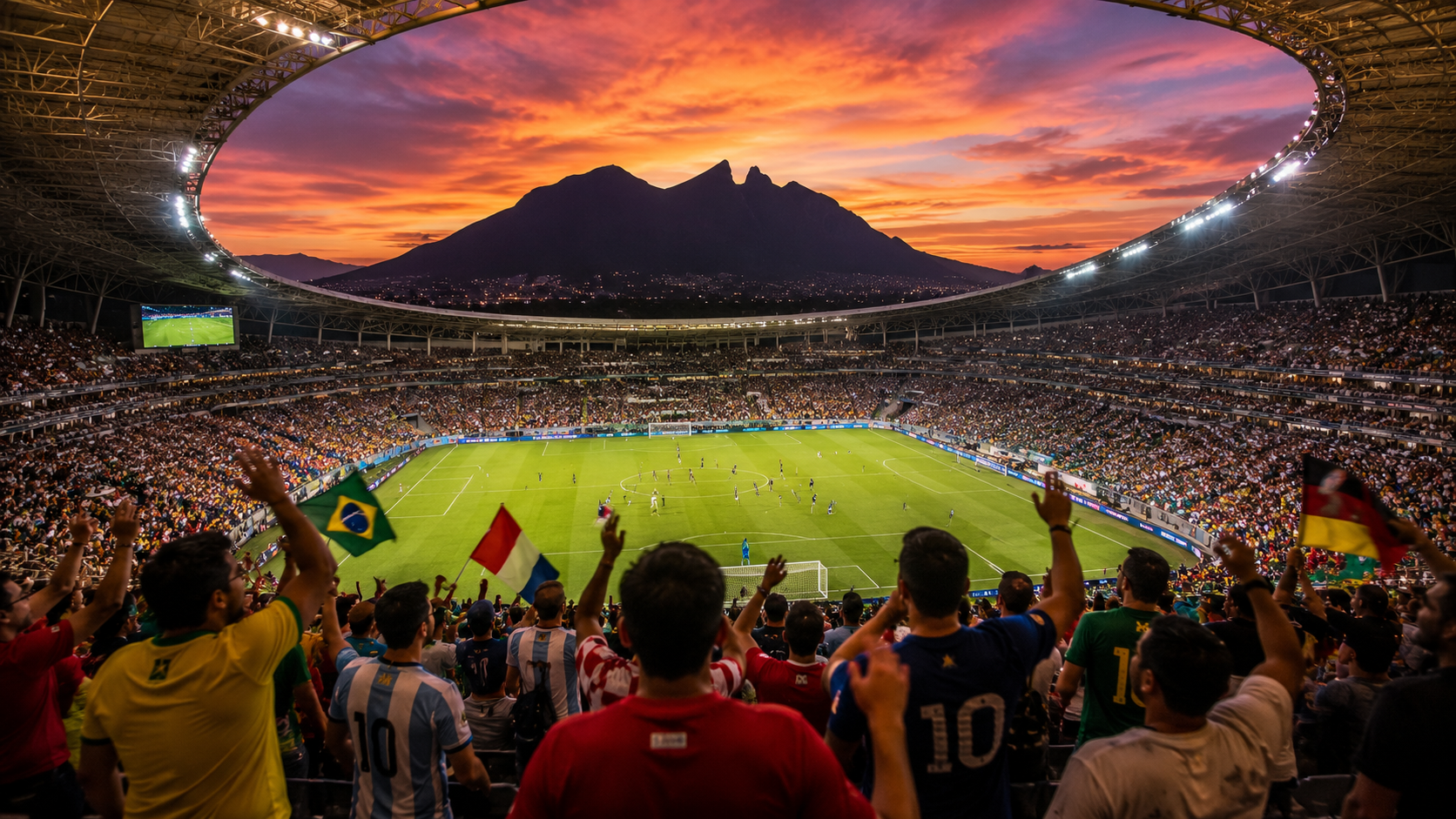
Monterrey sits 240 kilometers from the Texas border and it shows — in the skyline, in the industrial scale, in the culture that built itself around steel, beer, and beef rather than around the colonial grandeur of central Mexico. The Sierra Madre Oriental rises directly east of the city, and the Cerro de la Silla — the Saddle Mountain, named for its silhouette — dominates the eastern horizon. It is the mountain visible through the open south end of Estadio BBVA during a match, which is the single most distinctive stadium view in this entire tournament. No other venue in the World Cup has geology built into its architecture.
Mexico's industrial capital. 5.3 million people. The birthplace of carne asada culture and the hometown of Carta Blanca, the northern Mexican beer that has been coming out of the Cervecería Cuauhtémoc Moctezuma brewery since 1890. Monterrey is the wildcard of the Mexican host cities — less visited than Mexico City, quieter than Guadalajara, and the one that most consistently surprises the visitors who come expecting something they don't find and find something better instead.
Four matches. Three group stage, a Round of 32. Tunisia plays here twice — vs Sweden on June 14, vs Japan on June 20 — which brings North African fan bases into a city that shares more with the American Southwest than with coastal Mexico. The heat is serious. The evenings are the right time to be outside.
The Stadium
Estadio Monterrey — Estadio BBVA in everyday use — sits in Guadalupe, a suburb immediately east of the city center, approximately 10 kilometers from the Macroplaza. It was designed by Populous, the firm responsible for the new Wembley and Tottenham Hotspur Stadium in London, opened in 2015, and is widely considered the finest football venue in Mexico. The bowl holds 53,529 under a perimeter canopy that shades the seats while leaving the pitch end open — which is why the Cerro de la Silla is visible from inside the stadium. The effect is unusual and the view earns mention regardless of what is happening on the pitch.
Home of CF Monterrey, the Rayados, one of Liga MX's most successful and best-supported clubs. The rivalry between Rayados and Tigres UANL — also based in Monterrey, playing across town at Estadio Universitario — is the defining fixture of northern Mexican football and produces an atmosphere at both grounds that visiting fans who encounter it for the first time consistently describe as the loudest they've experienced. The World Cup inherits that infrastructure of passion.
Getting There
The stadium is in Guadalupe, east of the city center, approximately 15 to 20 minutes by rideshare from Barrio Antiguo or the Macroplaza — around $3 to $4 USD at normal rates. Metrorrey, the city's metro system, covers the central corridors and will have enhanced service for match days, with shuttles operating from key stations. On a June afternoon with a 7PM kickoff, the rideshare is the most practical option for most visitors. Book the return before you go in — post-match rideshare availability tightens.
Traffic on match days around Guadalupe will be significant. Allow 90 minutes from the city center to be safe, and plan the post-match exit around transit rather than rideshare if the crowd is large.
🏨Find Hotels
Book on Hotels.com
Hotel links are affiliate links. We earn a commission on completed stays at no extra cost to you.
The Food
Northern Mexican cuisine is built around flame and the Monterrey kitchen is its fullest expression.
Cabrito — young goat slow-roasted whole over mesquite until the skin crisps and the meat pulls from the bone — is the regional dish that defines regiomontano identity the way barbecue defines Kansas City or pizza defines Naples. It is not fast food. It is a meal that takes hours to prepare and is typically eaten on Sundays with family, the whole goat turning over the coals in the backyard while everyone argues about football. El Rey del Cabrito and Los Cavazos are the institutions. Order the full cabrito and bring the right number of people.
Carne asada in Monterrey is different from carne asada anywhere else in Mexico — the beef is higher quality, the cut thicker, the mesquite smoke more prominent, and the tortillas flour rather than corn, reflecting the wheat-farming traditions of the north. Asadero El Tío, with multiple locations across the city, is the standard recommendation — family-run, enormous portions, the smoke visible from the street.
Machaca — dried, spiced shredded beef — is the breakfast staple, scrambled with eggs, served with flour tortillas and salsa. The traditional northern Mexican breakfast: machaca con huevo at any local café before a match day is the correct morning routine.
The Cervecería Cuauhtémoc Moctezuma brewery, established in 1890 in the red-brick building on the edge of the Fundidora district, offers free tours ending with complimentary samples. The tour takes 45 minutes and provides a specific sense of how Monterrey's industrial identity and its food and drink culture developed from the same origins. Cerveza Fauna's taproom in the Barrio Antiguo corridor carries the craft beer evolution that grew from the same tradition.
The City
Macroplaza and Centro
The Macroplaza is one of the largest public squares in the world — 400,000 square meters, larger than Mexico City's Zócalo — anchored by the Faro del Comercio, a 70-meter orange tower that projects a green laser across the city each night. The cathedral, the government palace, the Museum of History, and the Museum of the Northeast surround it. The Paseo Santa Lucía, a 2.5-kilometer canal walkway, runs south from the Macroplaza to Fundidora Park — walkable, boatable, lined with restaurants and art installations and pedestrian bridges. Start at the Macroplaza and follow the canal south.
Barrio Antiguo
The Barrio Antiguo sits immediately east of the Macroplaza — 10 blocks of 18th and 19th-century colonial buildings converted into the city's most concentrated nightlife district. On Friday and Saturday nights from 9PM onward, the mezcalerías and craft beer bars along Calle Morelos and Calle Galeana fill with a crowd that is local, young, and entirely uninterested in presenting itself for tourist consumption. The cantinas serve free botanas — small plates — alongside the drinks, a northern Mexican tradition that makes the bar the right place to eat as well as drink. Dinner here starts at 9PM and ends when the conversation runs out.
Fundidora Park
Parque Fundidora, south of the Paseo Santa Lucía, was built on the site of Monterrey's old steel foundry — the Horno 3 blast furnace still stands, now converted into a museum with a cable car ride that crosses inside the dormant furnace. The park contains the Cintermex convention center, sports venues, large festival grounds, and the environmental logic of an industrial site returned to public use. It is, in the way that Monterrey does these things, both practical and visually dramatic.
San Pedro Garza García
San Pedro Garza García, southwest of the city center, is the wealthiest municipality in Mexico — the concentration of corporate headquarters, upscale hotels, and restaurants that reflects Monterrey's role as the country's business capital. For visitors whose accommodation budget extends toward the upper end, San Pedro provides the infrastructure of luxury without the distances of the city's outer districts.
Between Matches
The García Caves, 40 kilometers northwest of the city in Villa de García, are one of the more unusual geological attractions in Mexico — 65-million-year-old limestone caverns accessible by a Swiss-made cable car, with 16 chambers, stalactites, stalagmites, and an underground lake. The cable car ride itself, dropping into the mountain, is the experience. Half a day, car or organized tour from the city.
Cola de Caballo — Horsetail Falls — is a 25-meter waterfall in the Sierra Madre about 40 kilometers south of the city. The setting is Sierra Madre pine forest, the trail easy, the cascade particularly full in June when the rainy season begins. Horseback riding is available at the entrance.
The drive into the Sierra Madre on any road heading east or south from Monterrey is, on its own, worth the time — the landscape changes from urban flat to mountain dramatic within 30 minutes.
The Heat and Safety
June highs run around 91°F (33°C), July around 95°F (35°C), with afternoon humidity and the kind of thunderstorms that announce themselves and then deliver. The evening kickoffs — most World Cup matches here start at 7PM or later — are timed partly for this. Plan outdoor activity for early morning or after 7PM. Carry water.
On safety: Mexico's federal government is deploying approximately 99,000 security personnel nationally for the World Cup, with particular concentration around host venues. Nuevo León state carries a higher-caution classification in most government travel advisories, but the tourist corridors — Barrio Antiguo, Macroplaza, San Pedro Garza García, the stadium area — are considered safe for normal visitor activity. Exercise the same vigilance you would in any major city: stay in groups at night, use rideshare rather than hailing taxis, and keep the standard watch on belongings in busy areas. Check your government's current travel advice closer to departure.
What It Costs
Monterrey is the most affordable of the Mexican host cities for international visitors.
| Metro, central corridors | |
| Rideshare, Centro to stadium | ~$3–4 USD |
| Cabrito, El Rey del Cabrito | |
| Carne asada, Asadero El Tío | |
| Beer, Barrio Antiguo bar | |
| Hotel, Barrio Antiguo (mid-range) | $80–160 USD/night |
| Hotel, San Pedro Garza García | $150–300 USD/night |
Find Hotels
Book on Hotels.com
Hotel links are affiliate links. We earn a commission on completed stays at no extra cost to you.
Essential Information
Stadium Estadio Monterrey (BBVA), Guadalupe. 53,529 capacity. 4 matches: Sweden vs Tunisia June 14, Tunisia vs Japan June 20, plus one more group game and Round of 32.
Transport Rideshare from Centro ~$3–4 USD, 15–20 mins. Metrorrey with match-day shuttles. Allow 90 mins from city center on match days.
Fan Festival Macroplaza area (expected — confirm at fifaworldcup.com/monterrey as tournament approaches).
Neighborhoods Barrio Antiguo (nightlife, mezcalerías, craft beer, colonial, 10 blocks from Macroplaza). Centro/Macroplaza (museums, Faro del Comercio, Paseo Santa Lucía). Fundidora Park (former steel mill, Horno 3 museum, festival grounds). San Pedro Garza García (upscale, luxury hotels).
Food Cabrito, El Rey del Cabrito (slow-roasted goat, the regional institution). Carne asada, Asadero El Tío (mesquite, family-run, multiple locations). Machaca con huevo for breakfast (any local café). Cervecería Cuauhtémoc Moctezuma brewery tour (free, ends with beer samples).
Bars Barrio Antiguo mezcalerías, Calle Morelos and Calle Galeana. Cerveza Fauna taproom. Traditional cantinas with free botanas.
Between matches Paseo Santa Lucía canal walk (2.5km, Macroplaza to Fundidora). García Caves (cable car, 40km northwest). Cola de Caballo waterfall (Sierra Madre, 40km south). Cervecería Cuauhtémoc Moctezuma brewery tour.
Safety Exercise normal urban vigilance. Tourist core considered safe. ~99,000 federal security personnel deployed nationally for the World Cup. Check current government travel advice before departure.
Weather Hot and humid. June highs ~91°F (33°C), July ~95°F (35°C). Afternoon thunderstorms. Evening kickoffs. Plan outdoor activity before 11AM or after 7PM.
Currency Mexican peso (MXN). Withdraw from BBVA or Santander ATMs. Cash essential for street food, cantinas, market stalls.