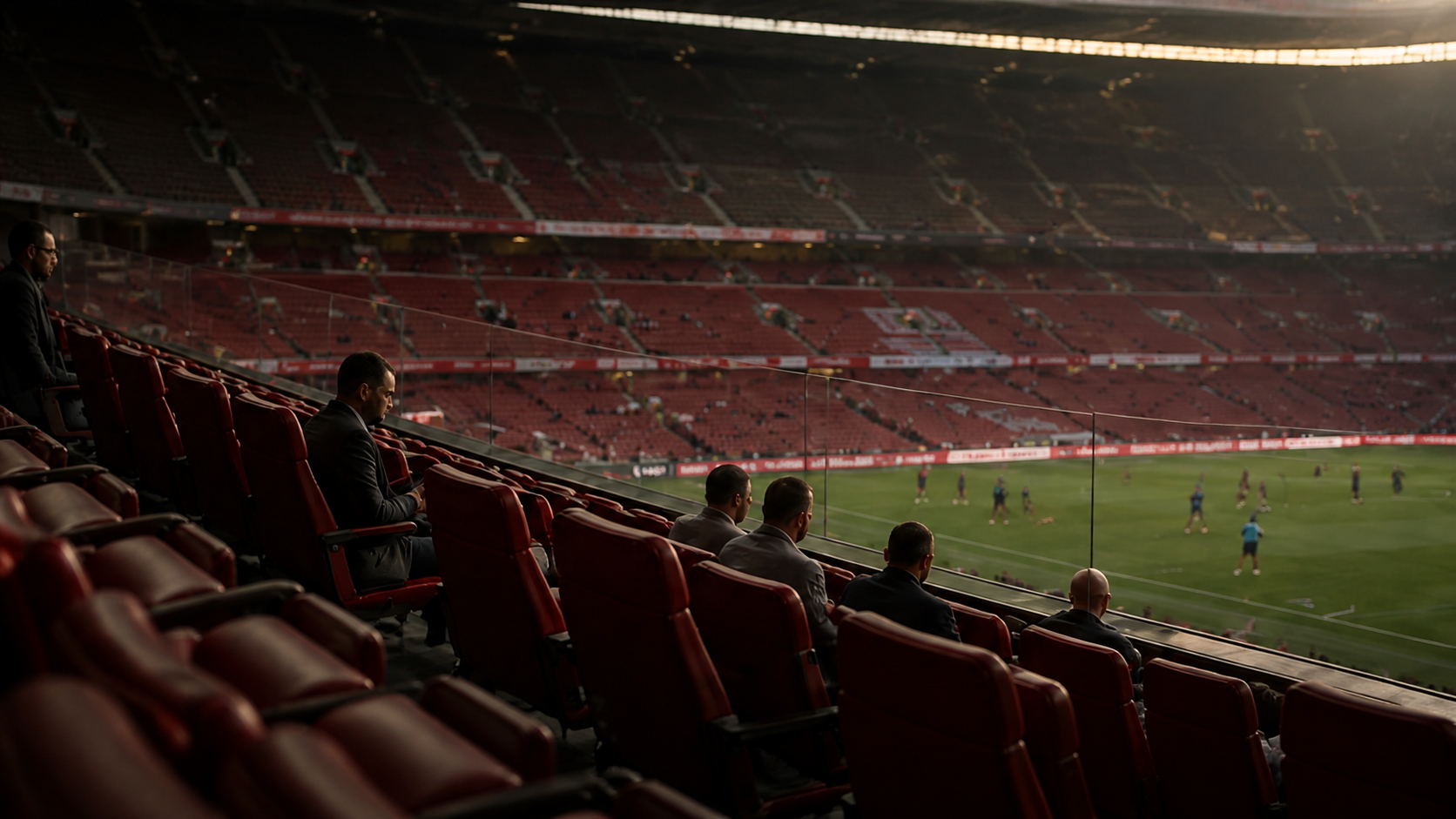
In the late Victorian theatre, an evening was expected to last. A full-length work was not thought sufficient on its own, so managements padded the bill with shorter companion pieces — one before the main event, one after. The one that went first was called a curtain raiser.
It was, by design, a thing to be missed. The chronicler W. J. MacQueen-Pope described the arrangement without much sentiment: the curtain raiser was a one-act play "seen only by the early comers", performed to empty boxes and a half-filled upper circle while the stalls gradually assembled. The people in the expensive seats routinely skipped it. They had dinner reservations, and dinner mattered more.
MacQueen-Pope's addendum is the part worth keeping. These little plays, he thought, were often very good, and deserved rather better than they got — and, crucially, they were where young actors were sent to win their spurs. The people who arrived late did not merely miss a play. They missed the first sight of who was coming.
Which brings us to a Sunday afternoon in Cardiff.
The fixture nobody counts
Displaced by a concert, and rightly ignored
English football's own curtain raiser is the Community Shield, and it is treated exactly as the Edwardian stalls treated theirs. Nobody quite counts it. Managers are asked afterwards whether it means anything and dutifully say that it does not. The trophy is real and the result is filed under preparation.
The skepticism is well founded. In the thirty-four Community Shields of the Premier League era, only eight winners have gone on to be champions that season — a hit rate of about a quarter. As a piece of prophecy it is not merely unreliable; it is worse than a coin toss. Whatever else the fixture is for, it is not for telling you who wins the league.
This year even the building declined to take it seriously. The Shield has been played at Wembley since 2007, but Wembley had summer concerts booked, so the match was moved to the Principality Stadium in Cardiff — the first time the Welsh national stadium had staged it in two decades. The traditional opening of the English season was relocated across the border because a singer had the better claim on the room.
There is a version of this piece that finds that insulting. I find it clarifying. The curtain raiser was always the thing that went on while the important people were elsewhere.
Twenty-four seconds
What the early comers saw
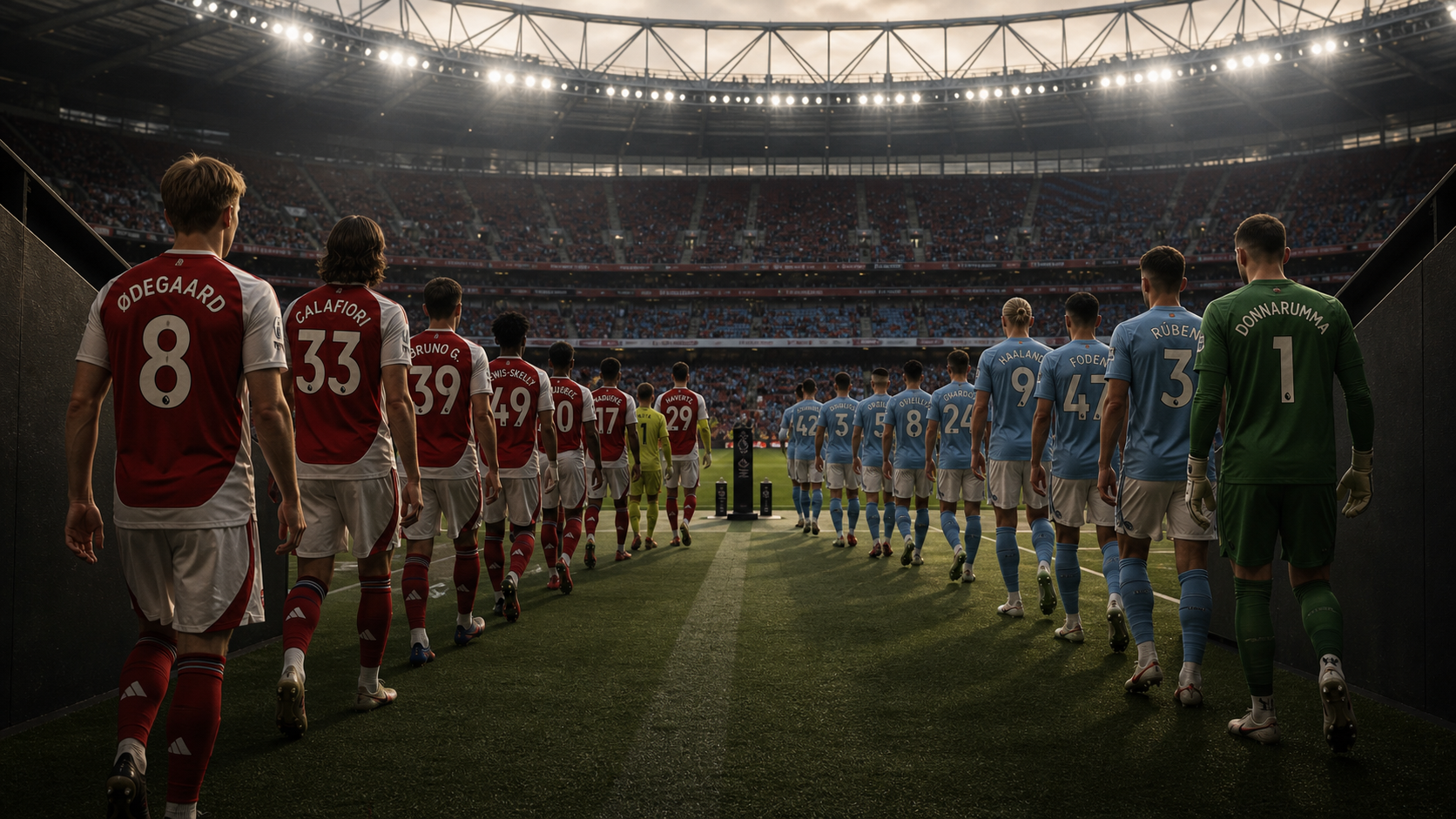
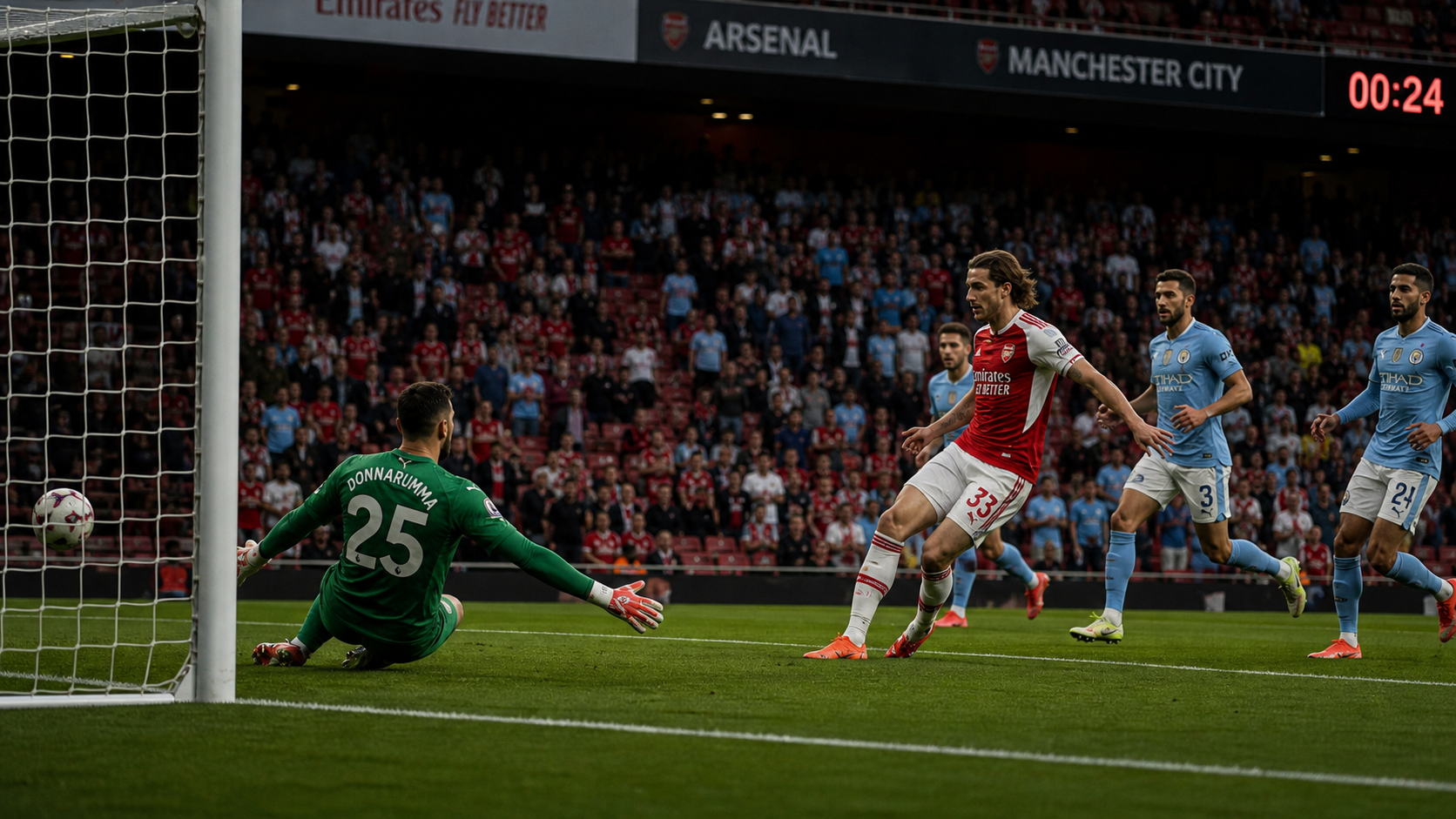
Arsenal scored after twenty-four seconds.
Myles Lewis-Skelly, whose future had been the subject of transfer speculation all week, slid a pass through the Manchester City defense, and Riccardo Calafiori — a full-back — took it in his stride and finished past Gianluigi Donnarumma. The people still finding their seats missed the only goal the match would need.
It got worse for City. On twenty-eight minutes Kai Havertz headed in from a Christos Tzolis delivery, and three minutes after the interval Martin Ødegaard collected another Tzolis pass, went past Joško Gvardiol, sold Donnarumma a dummy of some cruelty and rolled the ball into an unguarded net. Three-nil, and Arsenal's eighteenth Shield. Ødegaard, who had not scored since December in an injury-wrecked season, was named man of the match and lifted the trophy.
Mikel Arteta, afterwards, was pleased with something other than the goals. What struck him was how his players tracked back — a side short of match fitness compensating with what he called soul and heart. It is the sort of remark managers make when the football has been easy and they are looking for something harder to praise.
The cast list
What the fixture is actually for
Now: none of that is evidence. Three-nil in August against a team missing its holding midfielder, in a match neither side needed, four days before the season starts — that is precisely the sort of result the twenty-four percent exists to warn you about. Arsenal beat City 3-0 in the 2014 Shield and finished third. Prophecy is not on offer here.
But prophecy was never what a curtain raiser did. It introduced people. And the introductions on Sunday were considerable.
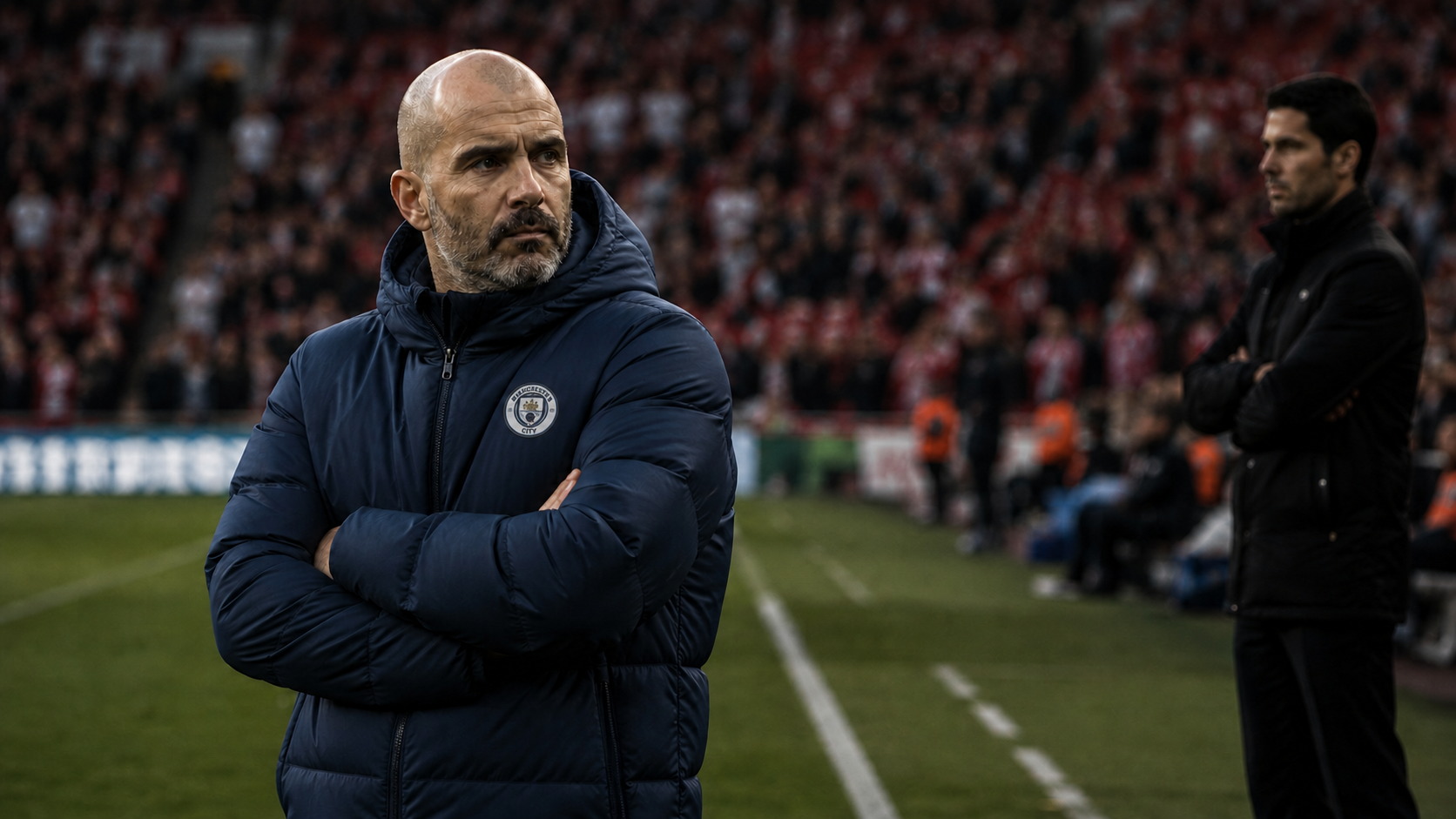
The most significant one was a subtraction. For the first time in ten years, Manchester City walked out for a competitive fixture without Pep Guardiola on the touchline. In his place stood Enzo Maresca, taking charge for the first time since inheriting the job, and beaten inside half a minute. That departure deserves its own reckoning and this is not it. But English football has spent a decade organizing itself around one man's ideas, and the first fixture of the post-Guardiola era was contested by two of his former assistants at City. He left. His methods did not. They simply changed hands, and there are now more of them.
The other introductions were the ordinary kind. Tzolis, £34 million from Club Brugge, made two goals on his competitive debut. Bruno Guimarães, £75 million from Newcastle, settled into the midfield as though he had been there a season. Elliot Anderson, on whom City spent £116 million, was withdrawn having done very little. Jack Grealish appeared for the first time since May of last year.
That is a cast list. It is not a result.
The main event
Friday, and what is actually being attempted
The real business begins on Friday, when Arsenal play Coventry City at the Emirates — Coventry back in the top flight after twenty-five years away, which is its own kind of curtain going up.
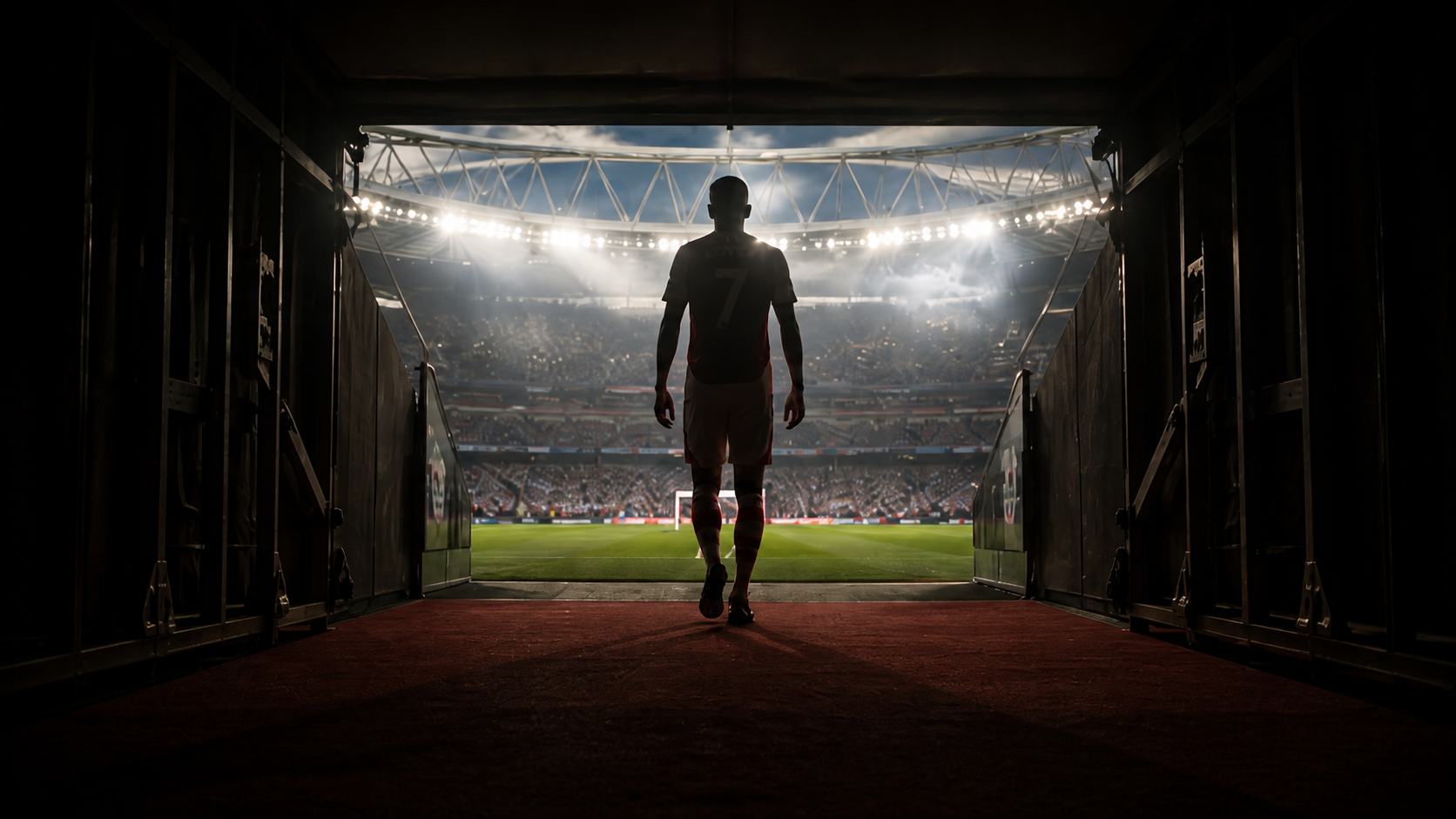
And Arsenal begin something they have not attempted in a very long time. They will start a campaign as champions for the first time since 2004-05, having ended a twenty-two-year wait in May, and they are trying to win consecutive English titles for the first time since the 1930s. The Shield tells you nothing about whether they will. What it told anyone watching was that the champions turned up in Cardiff at something close to full seriousness for a match they were entitled to treat as a warm-up, and the team that finished seven points behind them did not.
Make of that what you like. In April it will either look prescient or it will look like the other seventy-six percent.
The curtain raiser does not carry the plot. It never did. It gives you the stage, the light and the first look at the people who will be doing this until May, while half the audience is still parking, or queuing, or finishing dinner somewhere.
The early comers saw a full-back score in twenty-four seconds. The rest will hear about it.
Read more Premier League coverage: 8,060 Days — Arsenal's Twenty-Two-Year Wait · A Game of Chicken — The Title Race · UCL Final: The Water Won