A 19-year-old on the south coast curled a football into the top corner, and 117 miles away, in a training ground in Hertfordshire, a room full of grown men lost their minds.
The squad had gathered at the Sobha Realty Training Centre in London Colney to watch. The manager had not — Arteta was at home with his family, having told his players to be together while choosing, for reasons only he will fully understand, to be apart. When the final whistle sounded at the Vitality Stadium, the training ground erupted. Players and staff embraced, shouted, wept. Tense, then hopeful, then pandemonium.
It took a few moments before the specific ritual began. Bukayo Saka and Jurriën Timber walked across the room to a blacked-out replica of the Premier League trophy that Arteta had installed weeks earlier — wired to illuminate only when the title was confirmed. Saka looked at it. "Light that up," he said. "Let me tell you something — 22 years, 22 years. There was laughing. There was joking. They aren't laughing anymore. Look, it's going to be shining, it's going to be shining bright."
Declan Rice posted on Instagram: "I told you all... it's done."
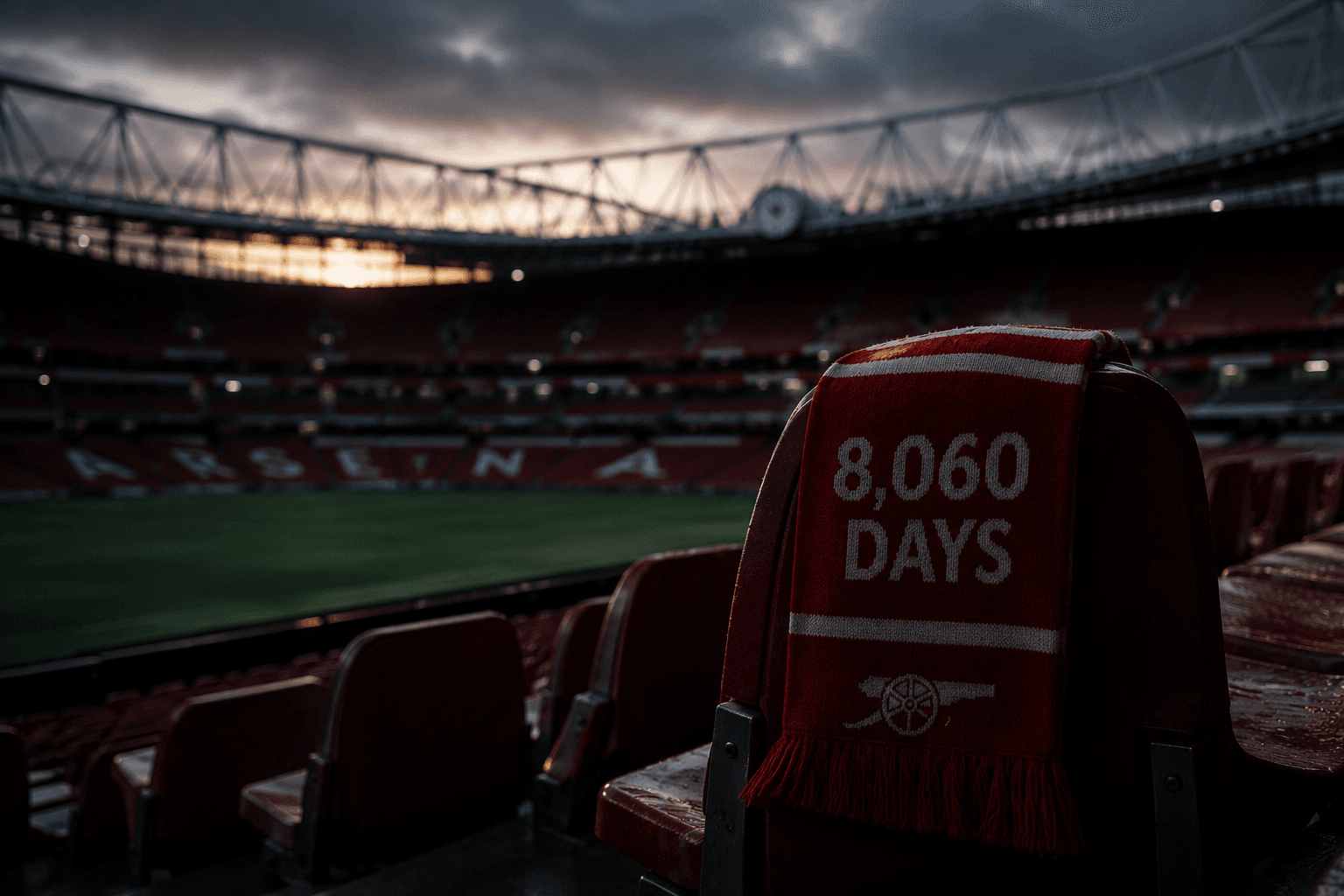
It is done. Arsenal are Premier League champions for the 14th time in their history, the fourth time in the Premier League era, and the first time since the Invincibles of 2003-04. The drought lasted 8,060 days.
In that time, the club left Highbury and moved to the Emirates. Arsène Wenger managed for another 14 years, won three more FA Cups, and finished second for the last time in 2016. Unai Emery arrived and departed. Freddie Ljungberg held the job for six weeks. Arteta took over in December 2019, inherited a squad that included Aubameyang, Özil, Lacazette, Xhaka — a team with talent, if not direction — and began rebuilding.
He won the FA Cup in his first season, in an empty Wembley during the pandemic. Then came the difficult years. Eighth in 2020-21 — at one point 15th in the table after 12 games, seven of them defeats. Eighth again in 2021-22. Fifth in 2022-23. Then three consecutive seasons as runners-up — twice to Guardiola's City, once to Slot's Liverpool. Each time the gap closed. Each time it was not enough.
It should be said that Arteta is, in some ways, fortunate to still be in the job. Two consecutive eighth-place finishes would end most tenures. The ownership backed him — invested heavily, year after year — and afforded him the time and patience to grow past the pain. It paid off. But it could have been a completely different story. Slot won the league in his first year at Liverpool with a similarly capable squad. This season was not a foregone conclusion either. Had City started a little better than they did, had the margins tilted differently in a handful of games... but that is not to detract from the achievement. It is only to say that the distance between triumph and dismissal, like most things in football, is measured in margins smaller than anyone would care to admit.
The irony of how it ended — if you want to call it irony — is that Arsenal were not playing. The title was confirmed on Bournemouth's pitch, in Bournemouth's game, decided by Bournemouth's teenager. Arsenal's players watched it on a screen. Their fans gathered outside a stadium where nothing was happening. The celebrations were real. The moment felt surreal.
There is a version of this that involves a sweeping move, a goal, a save at the other end, the pitch invasion, the trophy lifted on the turf where it was won. That is the version every supporter carries in their imagination. The version they got was a training ground in London Colney and a trophy that lights up on command. After 22 years of heartache, after the near-misses and the collapses and the moments that didn't go right, maybe it simply hasn't landed. Maybe there is a numbness that comes from wanting something for so long that when it arrives, you don't quite trust it. Maybe the calluses have built up.
Maybe it will land on Sunday, at Selhurst Park, when the actual trophy is lifted by actual hands. Maybe it will land at a pub, among friends, when someone says something and the room understands. These things arrive on their own schedule.
What happened at the Vitality Stadium deserves more than a footnote, because Bournemouth were magnificent. They did not merely hold City. They carved them open.
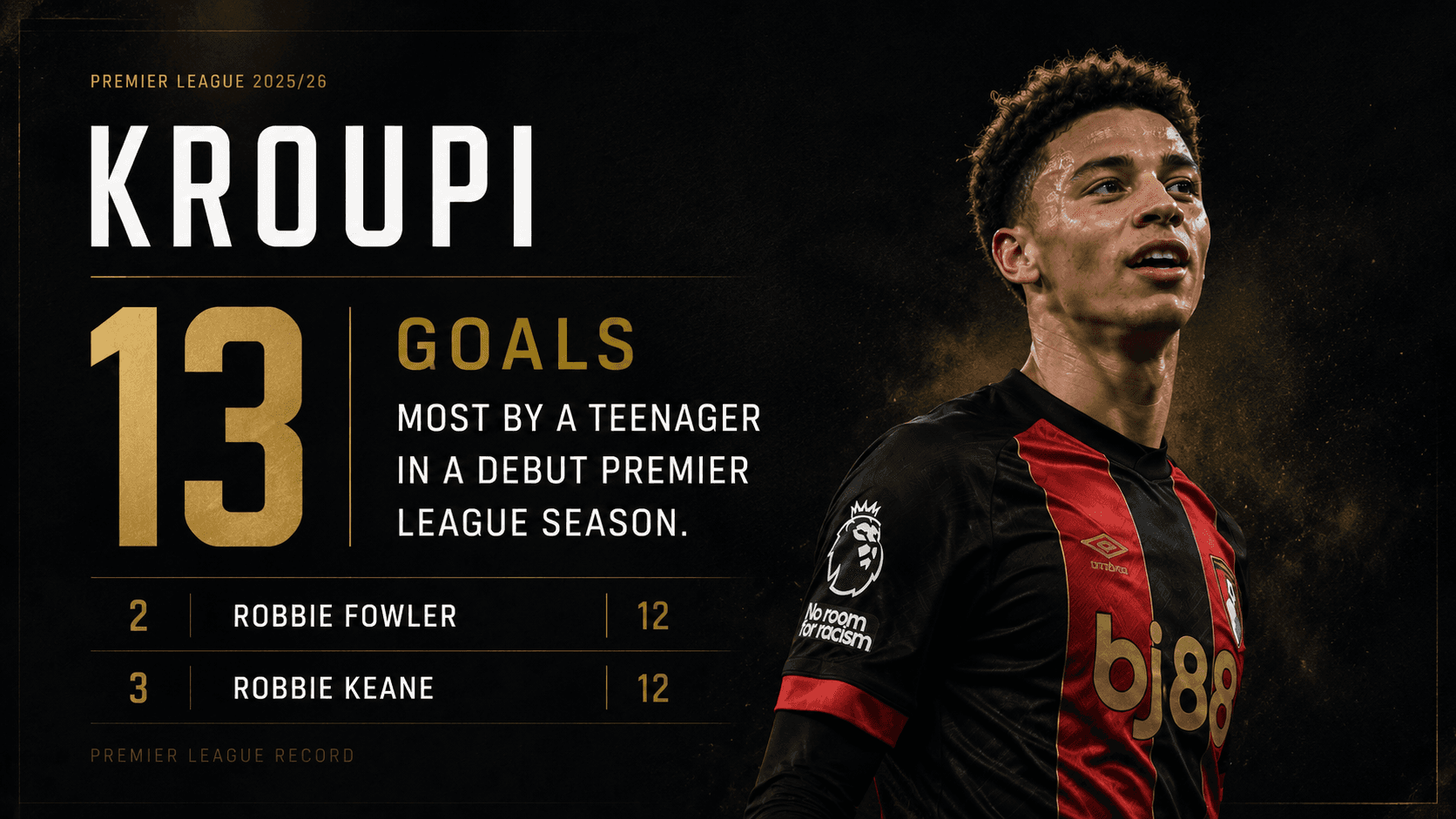
Kroupi's 39th-minute goal — Truffert breaking down the left, cutting the ball back, the 19-year-old curling it into the far top corner with Donnarumma rooted — was his 13th Premier League goal of the season, surpassing Robbie Fowler and Robbie Keane for the most by a teenager in a debut campaign. It was brilliant and it was deserved, but it was also only the beginning. Bournemouth should have been out of sight long before Haaland equalized.
In the second half they created chance after chance. Evanilson worked Donnarumma from close range. Kroupi curled over from the edge of the box. Rayan clipped the outside of the post. David Brooks, sent on in the 84th minute, had two one-on-one opportunities to kill the game — Donnarumma saved the first, the second crashed against the upright. Their press, their combination play, the speed with which they moved the ball — it was a sight to behold. Even the usually unflappable Rodri seemed rattled.
It is credit to Iraola. In his final home game before departing for Athletic Bilbao, managing a squad assembled largely from the Championship and Europe's lower shelves, he produced a performance that outplayed the most expensively assembled team in the history of English football. City have already named Guardiola's successor. But if the club are serious about what comes next, Iraola deserves consideration. What he has done with Bournemouth — the talent identification, the development, the unearthing of players like Kroupi — is quietly extraordinary. They qualified for European football for the first time in 127 years. That is not an accident.
Haaland's equalizer came in the fifth minute of stoppage time. Rodri struck the upright during a goalmouth scramble, and Haaland hammered the rebound via the post into the net. David Seaman, watching from somewhere in North London, posted on X: "Longest 22 years (and three minutes) of MY LIFE" — the three minutes being the gap between Haaland's goal and the final whistle, the space in which the trophy was so close you could almost reach for it but couldn't quite get a hand on it yet.
The squad Arteta has assembled to end the drought is defined by what it does not concede rather than what it creates. Twenty-six goals allowed in 37 matches. David Raya's third consecutive Golden Glove, 19 clean sheets. The central partnership of William Saliba and Gabriel Magalhães — the best in the league for two years, and the most reliable in Arsenal's modern history. Declan Rice in front of them, doing what he does.
Rice deserves more than a passing mention, and probably deserves his own piece. In the modern game, where teams are genuinely competitive and evenly matched, there is an extra edge needed — a player who tilts the balance on their own. A striker like Haaland. A creative force like De Bruyne. A complete forward like Salah. What Rice provides is something different. Call it the Kanté effect — a player who covers the ground of two, who disrupts and defends and then carries the ball forward, who makes the team around him better by the sheer volume and quality of his work. Arsenal's title is built on defensive structure. Rice is the human embodiment of that structure.
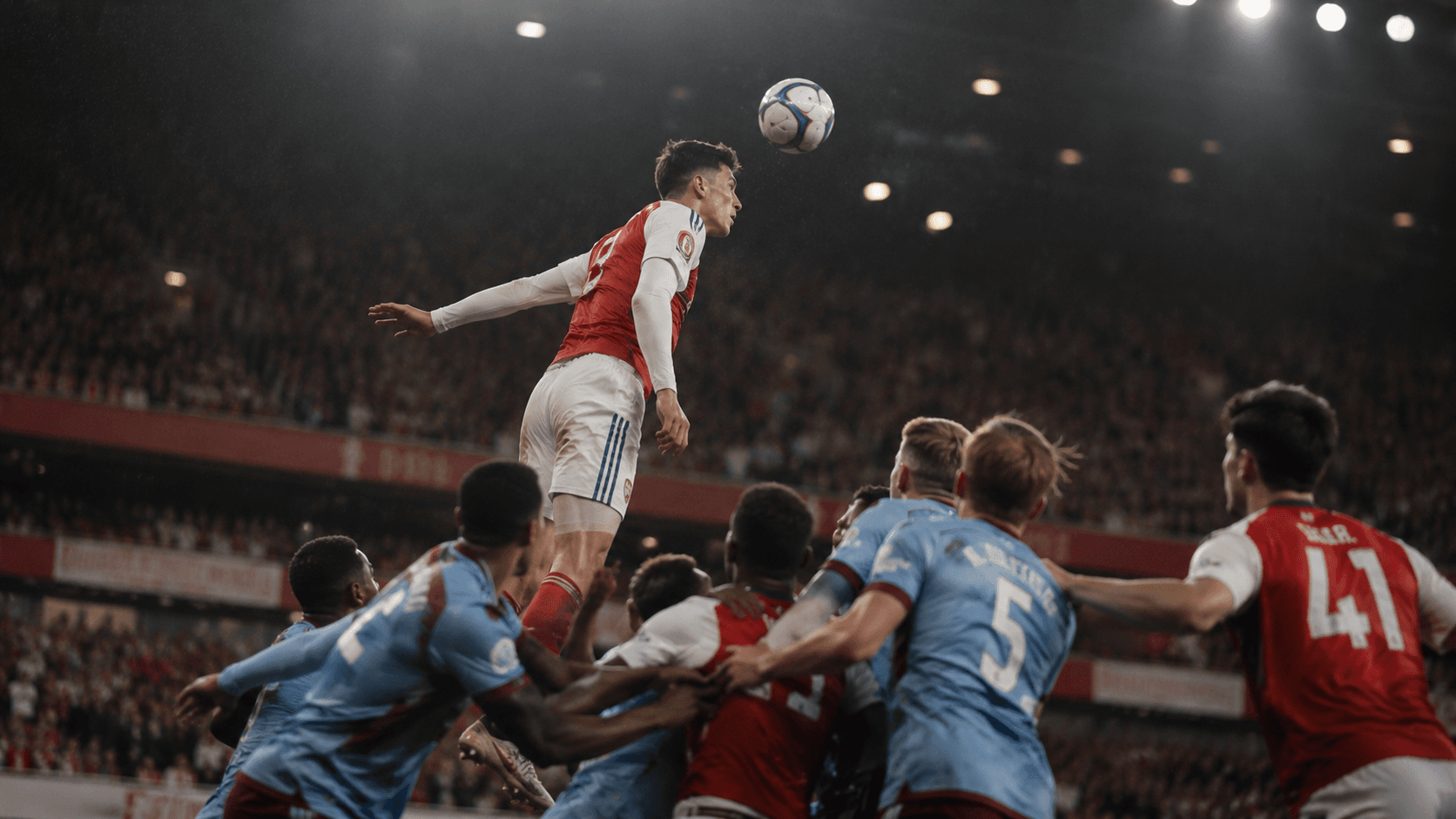
This is not the Invincibles. The 2004 team was built on pace, flair, aggression, and the best striker the Premier League has ever seen. This team is built on organization. They win 1-0 from corners. They suffocate games. They defend leads with the discipline of a side that has been burned before — because they have, repeatedly, in the seasons that preceded this one.
The final weeks were not vintage. The Burnley game was tight and nervy, won by a set-piece header. The title confirmed by a draw 117 miles away. There was no sweeping passage of play to replay on the highlights. No defining goal. Just results, accumulated across a season, adding up to enough. At this stage of the season, the method is secondary. Getting across the line is what matters.
Arteta, at 44, is the youngest Arsenal manager to win the English top-flight title and the first former Premier League player to win it as a manager. He played for Everton and Arsenal between 2005 and 2016 — a career of quiet industry, never spectacular, always present. He was Guardiola's assistant at City for three years before taking the Arsenal job. Everything he built at the Emirates carries the fingerprints of what he learned at the Etihad.
He said, before Tuesday's game: "I think we are all supporters of Bournemouth because we know what it means." Then, quieter: "I thought the amount of hair that I have was never going to go away, but this job is going to test it to the limit. I don't know how long I'm going to watch it, but I will be there in front of the TV. I don't know how much I can watch."
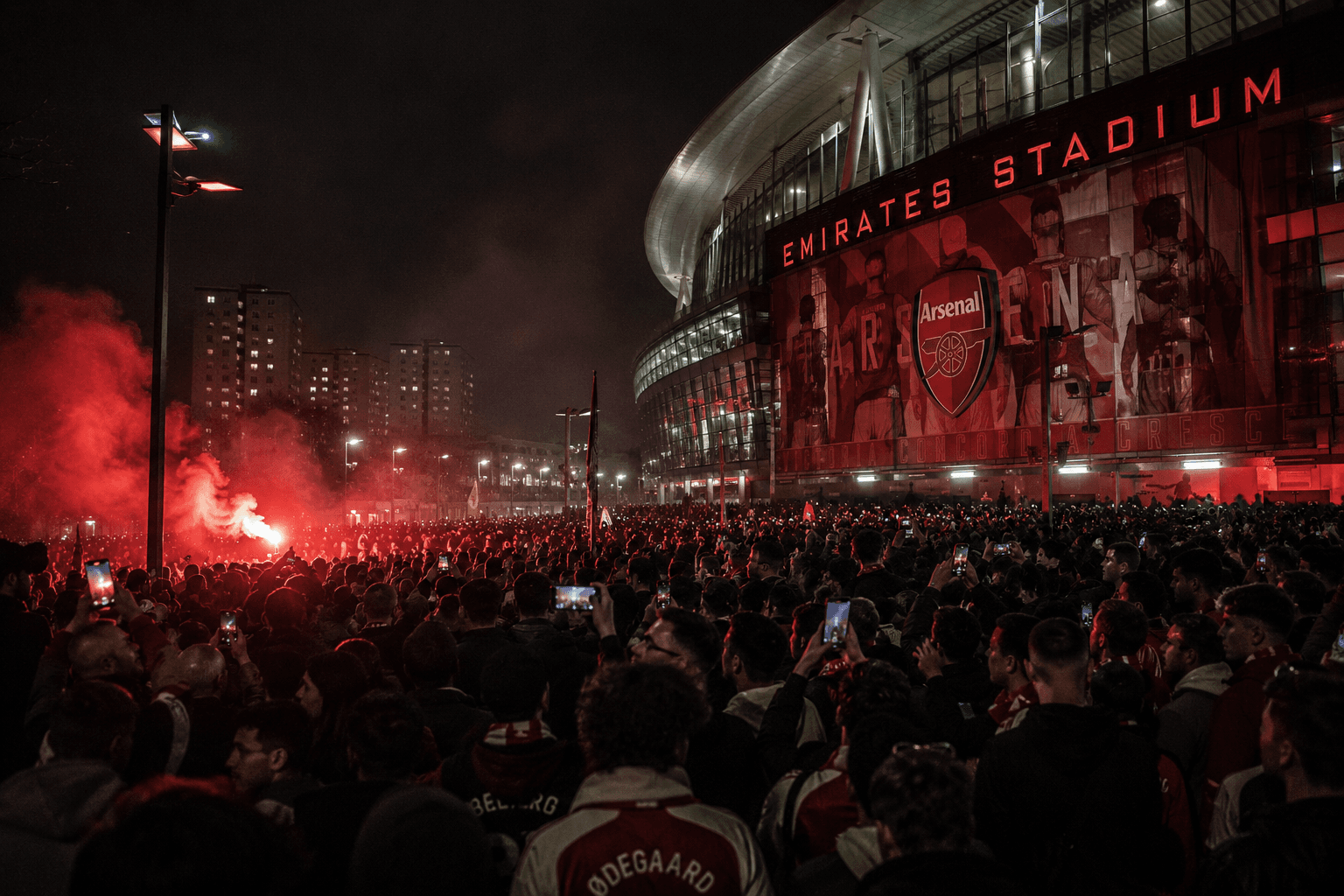
Outside the Emirates, tens of thousands gathered on Tuesday night. Fireworks and flares. "Champions! Champions! Ole! Ole! Ole!" Ian Wright — Arsenal's all-time leading scorer before Henry, FA Cup winner in 1998 — was outside the stadium popping champagne, mobbed by fans singing his name. Thierry Henry, whose goals defined the last championship, thanked the new generation.
By five in the morning on Wednesday, some of the current squad were spotted outside the Emirates, the celebrations having migrated from London Colney through North London and into the small hours. They went to the stadium even though nothing had happened there that night. They went because it is theirs. Because the title belongs to the place, not just the team.
Guardiola, in his press conference at the Vitality Stadium, said: "Congratulations Arsenal. Mikel, staff, backroom staff, fans — for this Premier League. Well deserved."
His final home game is Aston Villa at the Etihad on Sunday — the same day Arsenal lift the trophy at Selhurst Park. The master and the disciple, finishing the season on different pitches, with different destinations. One era closing, another opening.
Max Dowman is 16 years and 144 days old. He is the youngest player ever to win the Premier League, surpassing Phil Foden, who was 17 years and 350 days when City won it in 2017-18. Dowman scored his first Premier League goal in March — the youngest scorer in the competition's history, at 16 years and 73 days, in a 2-0 win over Everton. He has a winner's medal now. He will not understand what it means for years.
This is the kind of detail that matters in 22-year stories. The gap between 2004 and 2026 is long enough for an entire generation to grow up without seeing it. Children born in the year Arsenal last won the league are old enough to have graduated university, started careers, had children of their own. The drought was not just long. It was formative. It shaped what being an Arsenal supporter meant — the jokes, the assumptions, the quiet resignation disguised as loyalty. "They aren't laughing anymore," Saka said, and he was right.
The season is not over. Crystal Palace on Sunday — the coronation, the trophy presentation, the lap of honor that Tuesday night could not provide. And then, five days later, Budapest. The Puskás Aréna. Arsenal against Paris Saint-Germain in the Champions League final. Arsenal have never won Europe's grandest competition. Their only previous final, in 2006, ended in defeat to Barcelona.
If Arsenal win in Budapest, the achievement would surpass anything the club has ever done. A Premier League title and a first Champions League in the same season. The greatest 11 days in the club's 140-year history.
But that is for later. Today, for the first time in 8,060 days, Arsenal are champions of England. It happened on someone else's pitch, confirmed by someone else's goal, watched on someone else's screen. It does not feel the way anyone expected it to feel.
It will. Give it time.