There is a phrase in cricket - the "nervous nineties" - that moments before a batsman completes a century — one of the sport's most coveted achievements. A batsman on 89 is just having a good innings. A batsman on 90 is about to score one of the most coveted achievements in the sport. The interval between those two states should be three or four well-struck shots. Often it isn't.
The nervous nineties have their own folklore. Batsmen who have been hitting the ball with metronomic calm suddenly mishit a sweep, edge a defensive prod to the keeper, run themselves out attempting a single that wasn't there. Don Bradman — the greatest batsman in the sport's history, with a career average of 99.94 — needed just four runs in his final innings to retire on an average of exactly 100. He was bowled for nought, a second ball duck, by Eric Hollies at The Oval in 1948. The brain knows the prize is close. The body, having been a smooth instrument up to that point, suddenly starts asking whether it might miss.
The Premier League has its own version of this state. Several of them, actually — running concurrently across the table this weekend, every one of them a story about a team that is one or two results away from getting what it has waited for, and quietly nervous about the gap.
Mind the Gap
Arsenal have 76 points with three games to play. Manchester City have 71, with four — including a game in hand. The math, simplified: if Arsenal win their three remaining matches against West Ham, Burnley, and Crystal Palace, they are champions. If City drop points anywhere in their four-fixture run-in, the title can be sealed earlier.
Last weekend was the kind of weekend that makes a title race feel decided. Arsenal beat Fulham 3-0 at the Emirates on Saturday — routine, professional. The following Monday, Manchester City drew 3-3 at Everton. Pep Guardiola's side led twice. They were level twice. They were behind once. By full time, two points had vanished and the title race had a different shape.
Five points became the gap. Three days later, Arsenal beat Atlético Madrid 1-0 to reach the Champions League final.
It was the kind of result that changes the emotional temperature of a season. Defeat would have invited the familiar conversation about Arsenal's relationship with pressure, a conversation that has followed the club through successive title races and near misses. Progression did the opposite. The nervousness did not disappear. It simply had less room to grow.
Arsenal clinch if they win all 3 remaining games.— as of 9 May 2026
The gap is the obstacle. The gap is also the reason for nervousness. Five points with three games to go is not a margin that disappears under normal circumstances. But Arsenal know about abnormal circumstances. They have finished second in the Premier League for three consecutive seasons — 2022-23, 2023-24, 2024-25 — becoming the first club in English top-flight history to manage that twice. They did it once before, between 1999 and 2001, before winning the double in 2001-02.
The history is suggestive, not predictive. Two data points across more than a century of football don't constitute a pattern. They constitute an omen.
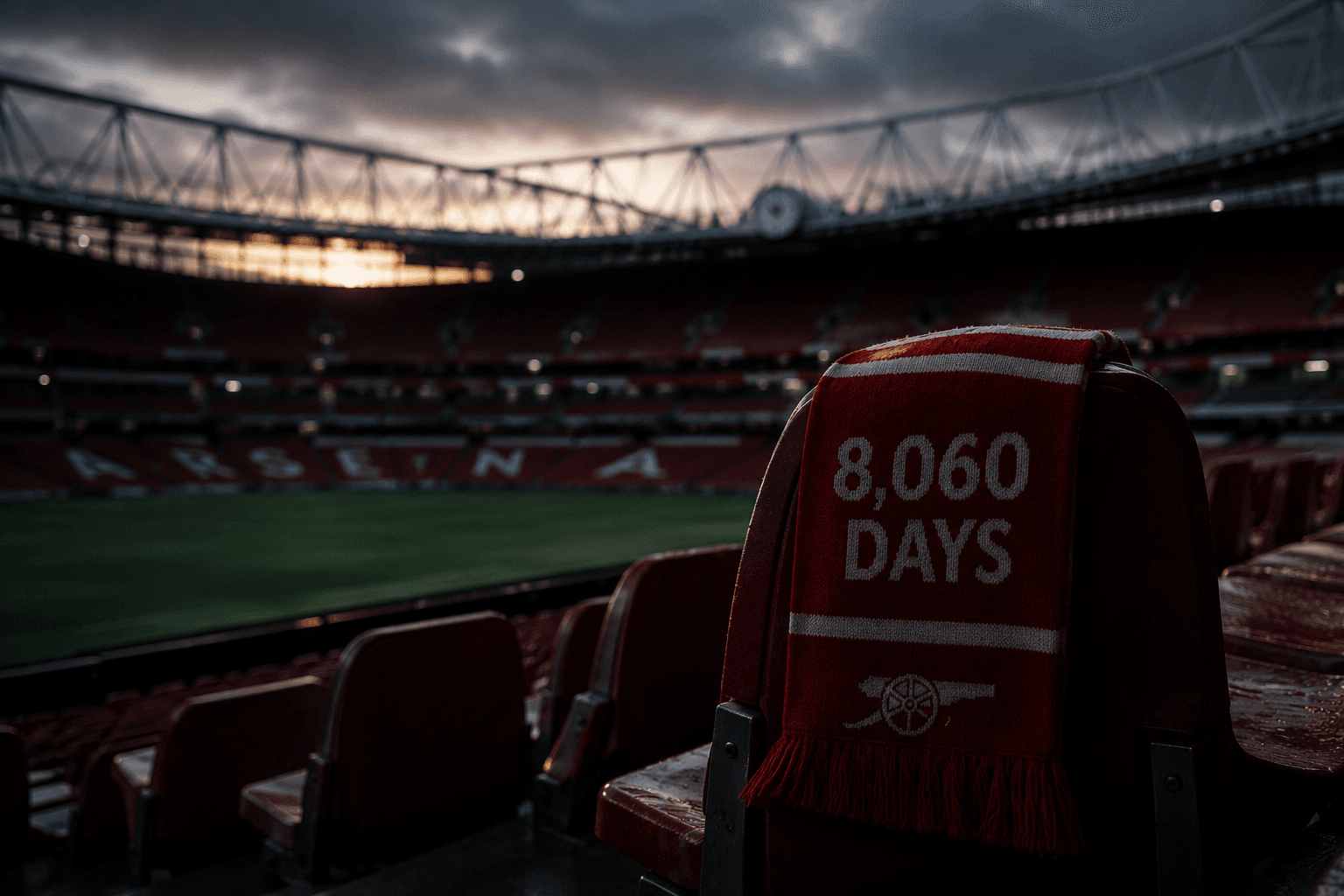
Arsenal's last Premier League title was 2003-04. The Invincibles. Henry, Bergkamp, Vieira, Pires, Campbell, Lehmann. The team finished 11 points clear of Chelsea, unbeaten across all 38 matches. Henry scored 30 league goals, won the Golden Boot, took the PFA Players' Player and the FWA Footballer of the Year. The campaign is still discussed in English football the way Pelé's 1970 Brazil is discussed in international football — as a kind of platonic ideal, a thing that happened once and may never happen again.
This Arsenal side is not that Arsenal side. They have lost five matches and drawn seven. Their leading scorer, Viktor Gyökeres, is on 18 league goals — strong, but not Henry-tier. The margin is five points, not eleven. And yet this side is closer to a title than the Invincibles were at this stage of their season — closer in calendar terms, closer in remaining margin for error, closer to ending a 21-year wait that has begun to feel like a structural feature of the club rather than an absence.
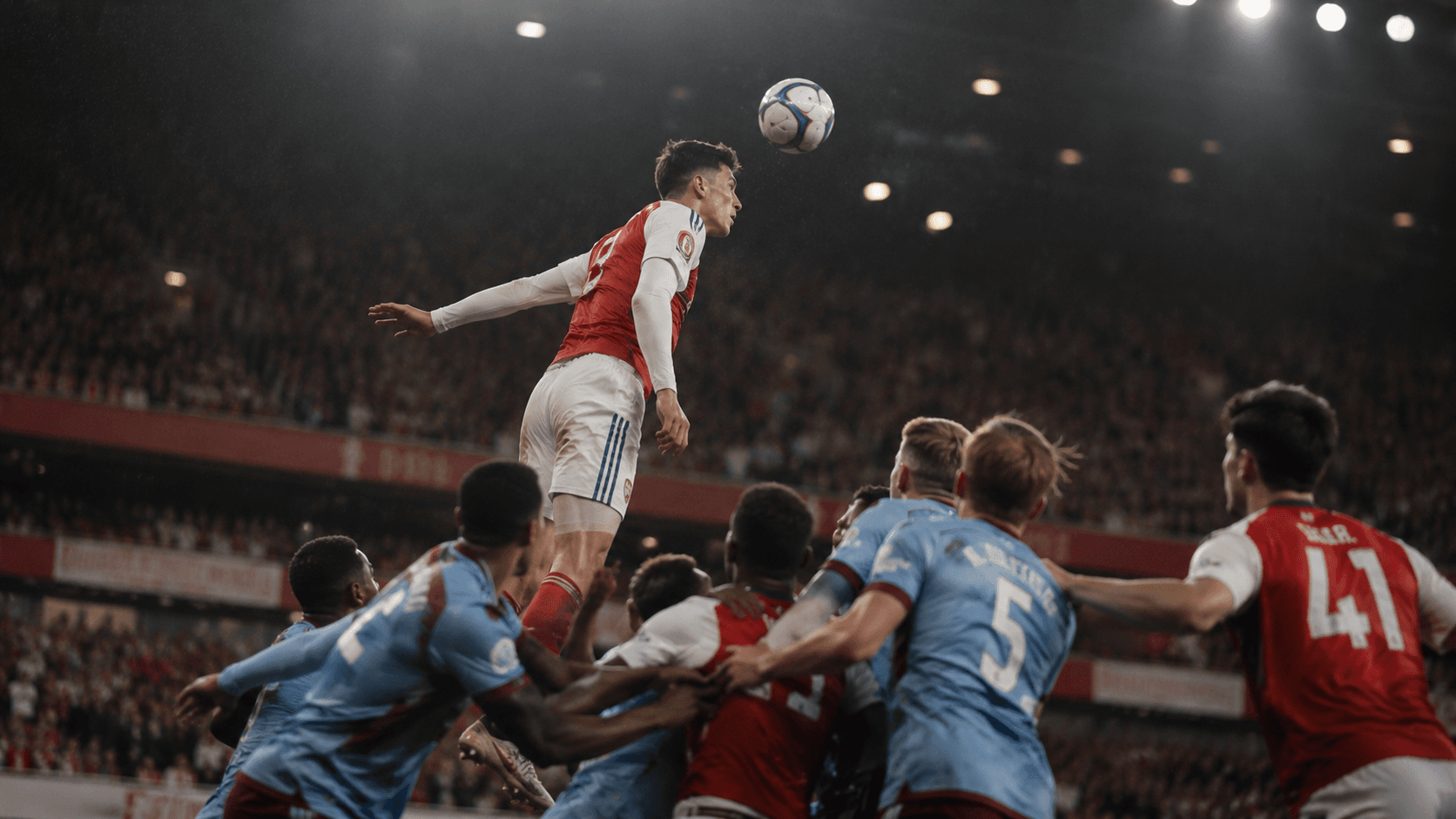
Sunday is West Ham at the London Stadium. Arsenal's win probability sits at 60.2%. West Ham's at 17.6%. The numbers favor the visitors heavily. The numbers also favored Arsenal in 2022-23, when they led the table for 248 days and finished second. They favored them in 2023-24, when they led on goal difference into April and finished two points behind City. Numbers are not nerves.
Two Cities, One Spot
Burnley and Wolves are already down. The third relegation place is going to one of two London clubs.
West Ham sit 18th on 36 points, one point inside the relegation zone. Tottenham sit 17th on 37, one point above the line. Whoever finishes lower joins Burnley and Wolves in the Championship.
Both clubs entered this season with European football. Both are now staring at the drop. West Ham started the campaign under Graham Potter, sacked him in November, hired Nuno Espírito Santo. Tottenham have been operating an entirely different category of crisis. They began the season under Thomas Frank, sacked him in February, brought in Igor Tudor, sacked him 44 days later, and finally appointed Roberto De Zerbi at the end of March. Four managers across 12 months. Their first win of 2026 came in April. Spurs went 15 Premier League games without a win between the start of the calendar year and that April victory — one short of the club's longest winless run in league history, a 16-game stretch that ran from December 1934 to April 1935. Only two clubs in Premier League history have started a calendar year with a longer winless run: Derby in 2007-08 (18 games) and Sunderland in 2002-03 (17). Both were relegated.
Spurs have since steadied. Two wins in their last three. De Zerbi has the team playing with structure, if not flow. Their fixture list reads: Leeds at home, Aston Villa away, Everton at home — a path that involves no team currently chasing anything urgent.
West Ham's run-in is harder. Sunday at home to Arsenal. Then Newcastle. Then Tottenham at the London Stadium on the final day, a fixture that could end with one of these two clubs literally relegating the other. Opta's supercomputer projects West Ham as having an 80%+ chance of going down.
1 of 3 spots still mathematically contested.— as of 9 May 2026
The Hammers are the side at 89, looking at the boundary, with the bowler running in fast.
The Other Race
Move up the table. Liverpool sit fourth on 58 points. Aston Villa sit fifth, also on 58 — separated by goal difference alone. Bournemouth sit sixth on 52. The top five qualify for next season's Champions League, courtesy of the Premier League's coefficient bonus. Sixth gets a Europa League berth — unless Aston Villa win the actual Europa League final on May 21 and finish fifth, in which case sixth also gets a Champions League spot. English football's regulations rarely come simpler.
The fixtures, paired correctly: Liverpool host Brentford, then visit Aston Villa on May 15, then close at Crystal Palace. Aston Villa host Burnley on Sunday, then host Liverpool, then close at Tottenham. Bournemouth visit Fulham, then host Manchester City, then close at Nottingham Forest. The Liverpool–Villa fixture on May 15 at Villa Park is the one circled in both fanbases — a draw probably hands fifth to Liverpool on goal difference, a Villa win shifts the dynamic entirely.
Bournemouth need to make up six points across three games while two clubs above them — both with comparable run-ins — drop comparable points. It is possible. It is not likely. But Andoni Iraola's side has been the season's quietest story, riding an 11-game unbeaten run earlier this spring and a 3-0 win over Crystal Palace last weekend. They have the look of a team that beat better sides than itself before everyone noticed they were doing it. The Cherries are at 87. They need a six off the next ball, then a six off the one after that.
Top 5 qualify for Champions League. 4th and 5th separated by goal difference only.— as of 9 May 2026
Squeaky bum time
Sir Alex Ferguson coined the phrase in 2003. He was describing the closing weeks of a Premier League season, the part where points feel heavier than they did in October, where one bad afternoon can rearrange everything that came before it. It's tight, he said. Ferguson's Manchester United were chasing Arsenal that year. He knew the feeling.
It is the same feeling, fundamentally, that drives the cricketing version of the same idea. The body has done its job for ninety units of work. Ten more, and the prize is collected. The brain, which has been silent through the first ninety, suddenly becomes loud in the way brains become loud when they have nothing left to do but watch.
The Premier League is in that phase now. Five teams want something. Two more are trying not to lose something. There are seventeen days between this weekend and the final whistle of the season.
The bowler is running in.
Next round of fixtures: Manchester City v Brentford (Saturday); West Ham v Arsenal (Sunday); Tottenham v Leeds (Monday).