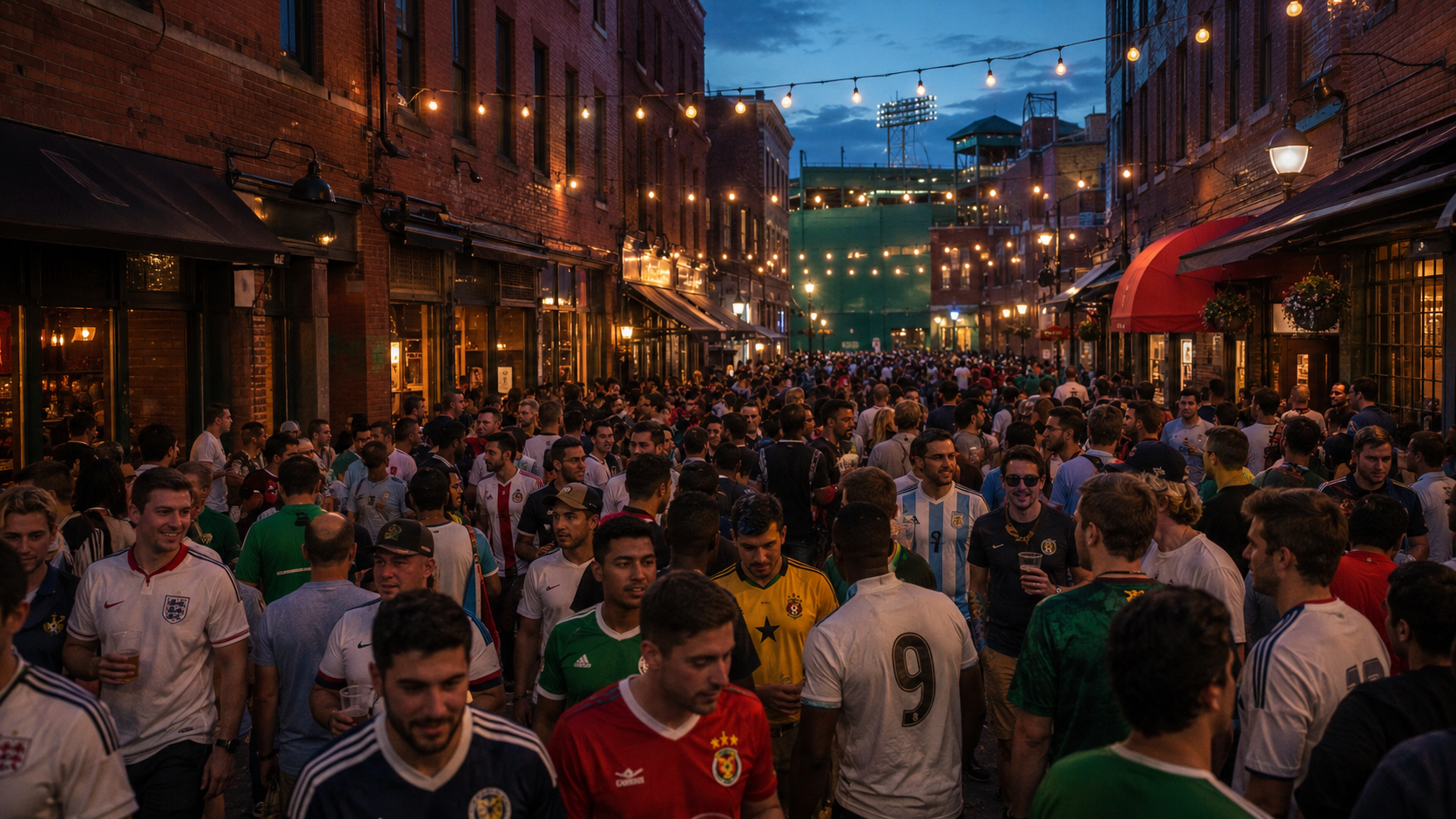
Boston is the most walkable major city in the United States and knows it. The neighborhoods sit close enough together that a visitor can walk from Beacon Hill to the South End to the Seaport without needing a map, and the T — the MBTA, the oldest subway system in the country — handles everything the feet cannot. The city is layered in ways that accumulate quickly: Revolutionary War history a ten-minute walk from Irish pubs that have been pouring Guinness since long before the sport being celebrated here arrived from Britain, Caribbean communities in Dorchester and Roxbury whose presence in the city has been shaping its culture for generations, universities turning the Cambridge bank of the Charles River into one of the densest concentrations of intellectual life anywhere in the world. The World Cup does not arrive in Boston to give the city an occasion. It arrives in a city that already has too many of them.
The stadium is in Foxborough, thirty miles south. Seven matches will be held there, including England vs Ghana on June 23 and a quarterfinal — which means the fan bases with the deepest wells of feeling at this tournament will both be in Boston for at least one match. The Irish community, watching Haiti and Scotland. The Ghanaian diaspora, scattered across the Boston metro area and the Massachusetts college system, watching England vs Ghana in a stadium thirty miles from their neighborhood.
The Stadium
Boston Stadium — Gillette Stadium in its everyday life — sits in Foxborough at 1 Patriot Place, roughly halfway between Boston and Providence, Rhode Island, on Route 1. It holds 65,878 for World Cup matches and has been home to the New England Patriots, the New England Revolution MLS club, and some of the largest concerts in New England since 2002. The Patriot Place shopping and entertainment complex at the stadium's doorstep handles the pre-match hours — dining, retail, and a degree of commercial activity that makes the thirty-mile journey from Boston feel less like an isolation.
The New England Revolution have been playing here since the stadium opened. Their supporter section, The Fort, generates atmosphere on a scale that most MLS clubs do not reach. The infrastructure of genuine football support exists here. The World Cup inherits it.
Getting There
The MBTA is operating dedicated World Cup train services from South Station in downtown Boston directly to Gillette Stadium for every match. Tickets are available only through the MBTA app — buy in advance, as capacity is limited and the trains will fill for high-demand fixtures. Allow at least 90 minutes before kickoff. Driving is possible on Route 1, but match-day traffic on the corridor between Boston and Providence is significant and the parking, while available, requires advance booking through LAZ Parking's interactive map.
For visitors staying in Rhode Island — Providence is expecting a significant number of World Cup visitors to use it as a base given its proximity to the stadium — bus service from Rhode Island pickup points is being planned. Providence is 20 miles south of Foxborough, cheaper than Boston for accommodation, and worth considering as a base for the full tournament.
The MBTA's full World Cup guide is at mbta.com/worldcup. Check it before your match day for confirmed schedules and any updates.
🏨Find Hotels
Book on Hotels.com
Hotel links are affiliate links. We earn a commission on completed stays at no extra cost to you.
The Fan Festival
The FIFA Fan Festival takes place at City Hall Plaza in downtown Boston for 16 days — check the official host committee site for confirmed dates, as it will not run for the tournament's full duration. City Hall Plaza is a five-minute walk from Government Center T station on the Green and Blue Lines, and a ten-minute walk from Faneuil Hall and the waterfront. Large screens, food and beverage program, interactive programming. For the matches not on your ticket itinerary, this is the most organized viewing option in the city center.
The Neighborhoods
Back Bay and Beacon Hill
The postcard version of Boston lives here — the brownstones along Commonwealth Avenue, Newbury Street's mix of independent shops and restaurants, the Public Garden with its swan boats and its willows trailing in the lagoon, the Charles River Esplanade where the city runs and cycles and sits in the summer evenings. Beacon Hill's narrow gaslit streets were built before the automobile and have resisted every subsequent century's attempts to update them. For visitors who want to understand what Boston looks like in its most preserved form, these neighborhoods are the answer.
The accommodation supply in Back Bay is the most comprehensive in the city. The proximity to the Green Line and the South End puts most of the city's food and nightlife within twenty minutes on foot.
Fenway-Kenmore
Fenway Park has been standing at the corner of Yawkey Way and Brookline Avenue since 1912. The Red Sox have been playing there since it opened, and the neighborhood around it has organized itself around the stadium in the way that neighborhoods do when a sporting venue has been the primary landmark for over a century. Lansdowne Street, running behind the Green Monster, is the pre- and post-game corridor — bars open early, close late, and carry the particular energy of a street that has been doing exactly this for decades.
The Lansdowne Pub is the Irish anchor of the neighborhood — corned beef eggrolls and Irish nachos in a Guinness cream sauce, a room that operates as a genuine Irish pub rather than a themed one. For English, Irish, and Scottish fans in the city for the June matches, Fenway-Kenmore provides the most familiar bar infrastructure of any Boston neighborhood.
Row 34 at Kenmore Square has been named among the 25 best restaurants in Boston by the New York Times and does oysters and raw bar and seafood in a room that takes those things seriously.
Cambridge
Cross the Charles River and the city changes register. Harvard Square — bookstores, café terraces, the Gothic architecture of Harvard Yard visible through the gates — operates at a different pace from the sports bars of Fenway. Grafton Street Pub & Grill has been a Harvard Square institution for over 25 years, combining a traditional Irish pub's warmth with full-service dining. The Druid screens Gaelic football and carries the kind of Irish sports culture that the bigger pubs on the tourist circuit do not. The Phoenix Landing hosts the Liverpool FC Supporters Club of Boston — the football infrastructure in Cambridge is genuine and decades-old.
MIT's campus runs along the Charles east of Harvard. Central Square, between the two universities, has the densest concentration of eclectic dining in the metro area — Shōjō Cambridge for Asian fusion, the kind of neighborhood restaurant mix that reflects the student and academic population around it.
Roxbury, Dorchester, and Mattapan
These are the neighborhoods that travel guides to Boston most frequently overlook and most consequentially misrepresent. Boston's Black diaspora — Caribbean, African-American, West African — is concentrated here, in communities with decades of roots and a cultural presence that the city's more photographed neighborhoods do not carry. Nubian Square is the commercial and cultural hub, with institutions like the Museum of the National Center of Afro-American Artists and Black-owned businesses that have been operating long before the World Cup arrived.
Chef Kwasi Kwaa, who was part of the opening team at Comfort Kitchen in Dorchester, has been running an Afro-diasporic pop-up series under the name The Chop Bar — drawing on the roadside restaurants of his Ghanaian childhood, with dishes including Madras curry stewed goat with jollof rice and crispy okra. The March 2026 event at Oggi in Harvard Square was described as memorable. Future dates will be announced at thechopbar.com. For the Ghanaian diaspora in Boston — and the broader West African community watching England vs Ghana on June 23 — this is the most specific and most meaningful dining experience the city offers.
The South End
The South End's Victorian brownstones carry a gallery and restaurant scene that has been developing for two decades without quite becoming as well-known as it deserves. Mesob, near the Eritrean Community Center, serves Ethiopian and Eritrean cuisine from a kitchen named for the traditional woven basket on which shared meals are served — the food is genuine, the room warm, and the location reflects a community with genuine roots in the neighborhood.
The Food
Boston's food reputation is built on seafood, and the seafood reputation is deserved. The city sits at the edge of some of the most productive fishing grounds in the Atlantic — Georges Bank has been feeding New England for four centuries — and the cooking traditions that have developed around that geography are specific and excellent.
New England clam chowder — cream-based, not tomato-based; that version is Manhattan's and the distinction is considered important in Boston — is the dish most specific to this city. Legal Sea Foods has been serving it since 1968 across multiple Boston locations. The Union Oyster House on Union Street, operating since 1826, is the oldest continuously operating restaurant in the United States — the oyster bar at the entrance has been there since Daniel Webster was a regular customer.
For lobster: the lobster roll exists across the city in variations ranging from excellent to tourist-grade. The Row 34 version at Kenmore is reliable. James Hook + Co. on the waterfront buys its lobster directly off the boats and serves it with minimal intervention.
The Cape Cod day trip — 90 minutes south — exists for seafood eaten closer to where it was caught, at the shacks along Route 6A that have been doing this since before Boston's current restaurant scene existed. A day between matches is the right context.
The Bars
Boston's Irish pub infrastructure is the most authentic outside of Ireland itself. The city's Irish-American community — the largest in the country as a proportion of population — has been building it for 150 years.
The Dubliner on Congress Street is considered by the Irish expat community to serve the best pint of Guinness in Boston — Irish staff, relaxed vibe, the kind of pub that was built by people who knew what a pub was supposed to feel like. Emmetts on Beacon Hill. The Druid in Cambridge. The Grafton Street Pub in Harvard Square. The Lansdowne Pub in Fenway. These are not themed establishments performing Irishness for tourists. They are the real version, staffed by people who came from the same place the teams playing in Foxborough came from.
For England, Scotland, and Ireland matches, any of these will be full long before kickoff. Arrive early.
The History
The Freedom Trail is a 2.5-mile walking route marked in red brick through the streets of downtown Boston, connecting sixteen sites of American Revolutionary history — from the Boston Common to the Bunker Hill Monument to the USS Constitution in Charlestown Harbor. It requires no ticket and no guide, though both are available. Walking it takes two to three hours at a comfortable pace and provides a version of American history that is considerably more complicated and more interesting than the one most school curricula deliver. Between matches, it is the most efficient way to understand what Boston thinks it is.
What It Costs
Boston is mid-range among the US host cities — more expensive than Atlanta and Kansas City, cheaper than New York and San Francisco.
| MBTA subway (any trip) | $2.40 |
| Commuter Rail, South Station to Foxborough | ~$15–$20 round trip |
| Clam chowder, Legal Sea Foods | ~$9–$12 |
| Lobster roll, James Hook | ~$30–$40 |
| Drinks, Cambridge pub | $8–$12 |
| Group stage ticket, mid-tier | $250–$500 |
| Quarterfinal ticket, mid-tier | $600–$1,500+ |
| Hotel, Back Bay/Seaport | $200–$400/night |
| Hotel, Providence RI (alternative base) | $120–$220/night |
Find Hotels
Book on Hotels.com
Hotel links are affiliate links. We earn a commission on completed stays at no extra cost to you.
Essential Information
Stadium Boston Stadium (Gillette Stadium), Foxborough, MA. 65,878 capacity. 7 matches including England vs Ghana June 23 and quarterfinal.
Transport MBTA dedicated World Cup Commuter Rail from South Station to Foxborough, match days only. Tickets via MBTA app — buy in advance. Allow 90 minutes before kickoff. Driving on Route 1: heavy match-day traffic, advance parking booking required via LAZ Parking. Providence RI bus service planned — check official sources for confirmation.
Fan Festival City Hall Plaza, downtown Boston. 16 days only — check host committee site for dates. Green/Blue Lines to Government Center.
Neighborhoods Back Bay/Beacon Hill (walkable, accommodation hub, Green Line). Fenway-Kenmore (sports bars, Lansdowne Pub, Row 34). Cambridge (Irish pubs, university culture, Harvard Square). Roxbury/Dorchester (Black diaspora, Ghanaian community, The Chop Bar). South End (galleries, Mesob, Ethiopian/Eritrean).
Food Union Oyster House (oldest restaurant in the US, since 1826, oyster bar). Legal Sea Foods (clam chowder, multiple locations). Row 34, Kenmore (oysters, New York Times top 25). James Hook + Co. (lobster, direct from the boats). Mesob, South End (Ethiopian/Eritrean). The Chop Bar (Ghanaian pop-up, thechopbar.com for dates).
Bars The Dubliner (best Guinness in Boston). Lansdowne Pub, Fenway (Irish, match days). The Druid, Cambridge (Gaelic football on screen). Grafton Street, Harvard Square. Phoenix Landing, Cambridge (Liverpool FC Supporters Club). Emmetts, Beacon Hill.
Between matches Freedom Trail (2.5-mile walk, 16 historic sites, free). Fenway Park tours. Cape Cod day trip (90 mins). Salem (40 mins north). Martha's Vineyard/Nantucket (ferry from Hyannis, 2+ hours).
Weather New England summer — genuinely pleasant. June highs ~72°F (22°C), July ~78°F (26°C). Occasional rain. Cooler than every other US host city. Bring a light layer for evenings.
Alternative base Providence, Rhode Island — 20 miles south of Foxborough, significantly cheaper than Boston for accommodation, bus service to stadium being planned.