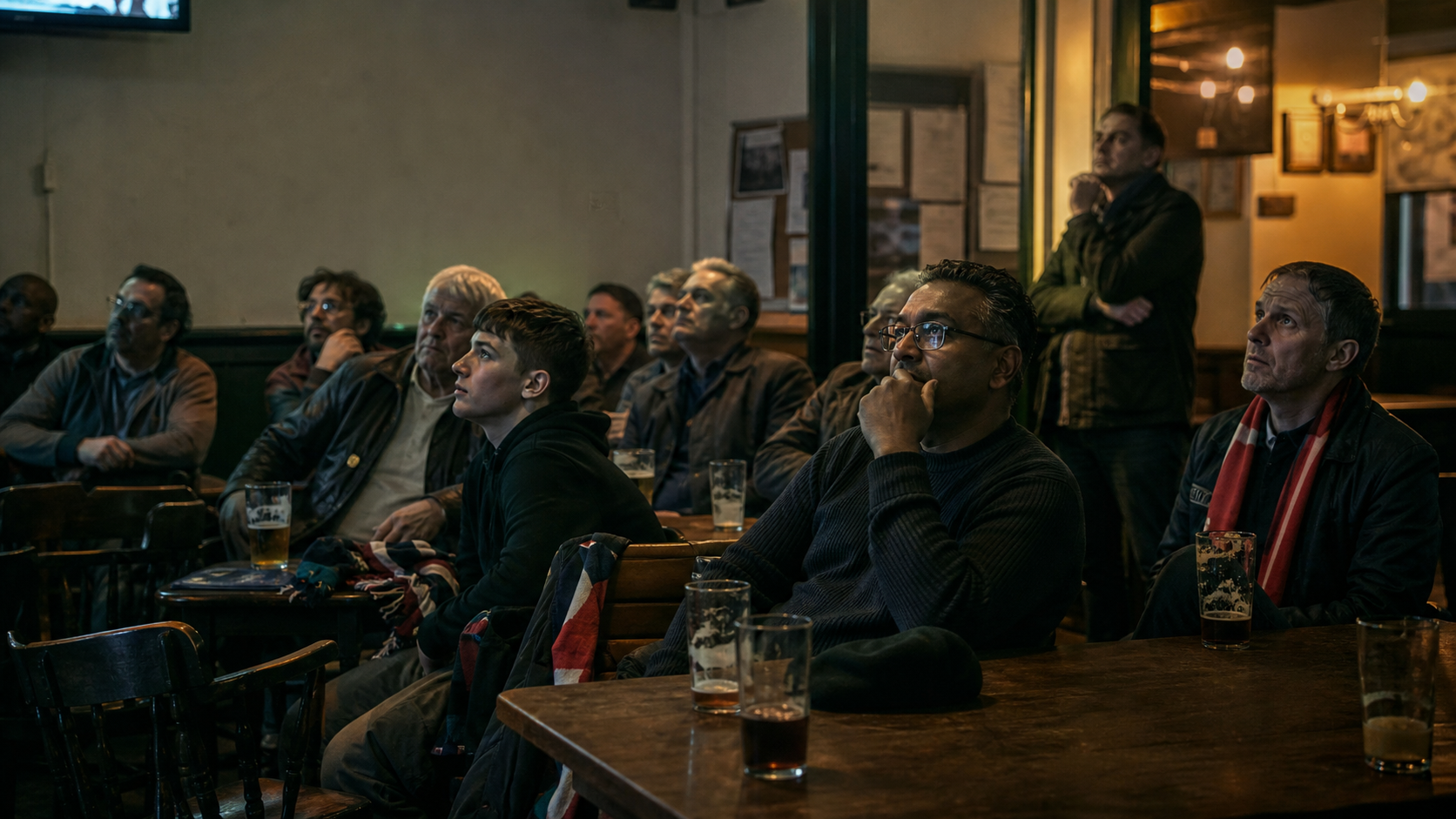
On the evening of Wednesday 4 September 1867, in a hotel on Arundel Street in Sheffield, a group of men formed a football club. Two days later the Sheffield Independent carried the announcement, and it stated the purpose plainly. The new club existed with the object of "keeping together during the winter season the members of this cricket club."
Read that again, because it is the whole of what follows. The Wednesday Cricket Club had been going since 1820 — tradesmen, mostly, who played on the Wednesday half-day their employers gave them. They liked each other. Cricket stopped in October. So they invented a football team, for the stated reason that they did not want to spend the winter apart.
The football was not the point. The football was the solution to a problem, and the problem was five months without one another's company.
That hotel was the Adelphi. Yorkshire County Cricket Club had been founded there four years earlier; Sheffield United and the Sheffield Football Association would follow. One room produced clubs and a governing body before it was demolished in 1969 for the Crucible Theatre — its own small joke about what England does with its great good places.
The clubs did not appear and then find pubs. The pubs were there, full of men who already knew each other, and football is what they decided to do about it.
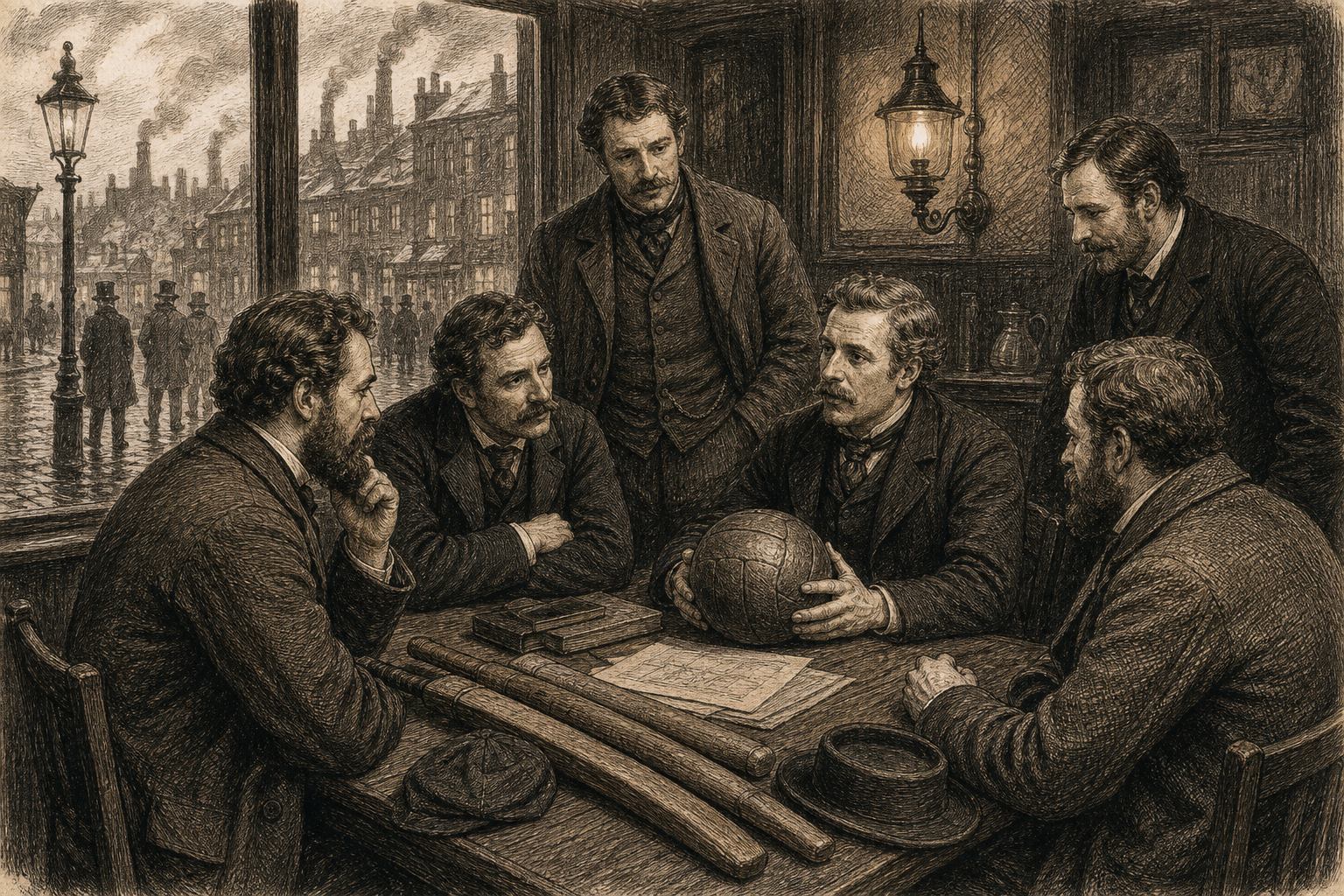
I think about that more than is probably reasonable, because it inverts the assumption almost everybody makes about a room with a match on. We assume the football is the point and the company is the byproduct. Turn it around — company as the point, football as the pretext, the excuse that makes the gathering legible — and a lot of rooms suddenly make more sense than they did.
The great good place
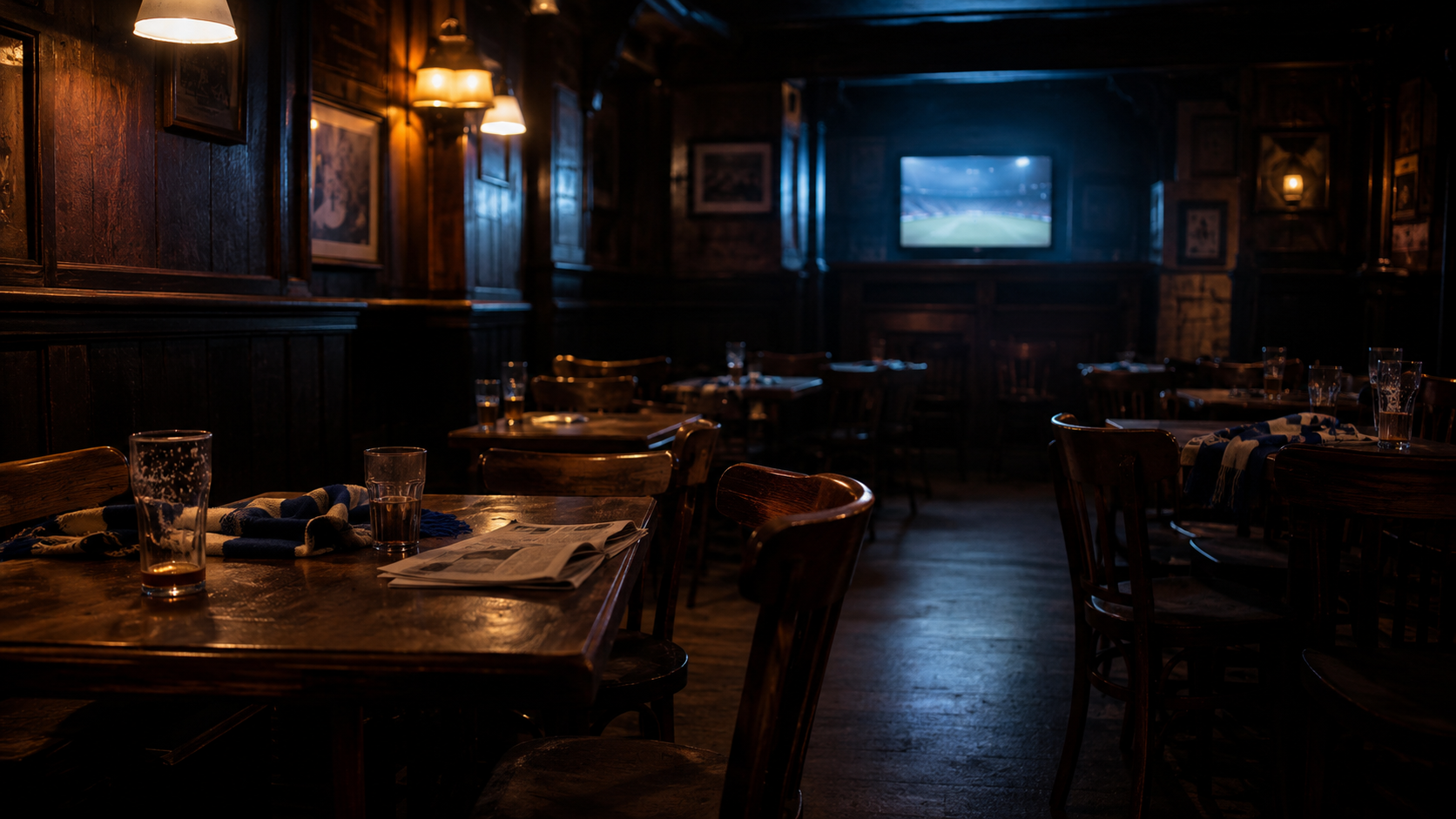
Oldenburg's third place, with a television in it
In 1989 an American sociologist named Ray Oldenburg published The Great Good Place, and gave us the phrase that has been quietly doing this work ever since. A third place is the one that is neither home nor work. Not the first place where you sleep, not the second where you earn, but the third — the pub, the café, the barber shop, the library, the corner of somewhere that belongs to nobody in particular and therefore to everyone who turns up. Oldenburg called them the living room of society. Neutral ground. You arrive alone and are not alone, and the price of admission is showing up.
The research since has been unromantic about it in a way I find more persuasive than the romance would be. Research since has associated third places with better mental and physical health, stronger social capital and a greater sense of belonging — and noted that they contribute far more visibly to quality of life than to conventional economic output, which helps explain why planning systems repeatedly undervalue them. One study of rural Irish pubs found them functioning as economic infrastructure as well as social: employment, local business, the provision of social capital in places too remote for anything else to provide it. Another, looking at deprived neighborhoods in Britain, made the harder point — third places matter more to people with less, and they are exactly the places austerity removes first.
What almost none of that literature says out loud is that in an enormous number of these rooms, the thing on the wall is a football match.
The pretext
What people say they came for
There is a sociology of the football pub, and its most useful finding is a small one. Kevin Dixon, interviewing English fans about their relationship with the pub, found what you would expect about ritual and belonging. But a separate study of pub sociability turned up the detail I keep returning to: what regulars actually talked about, when asked why their pub mattered, was birthdays, anniversaries, weddings and funerals. Not football. The life events. The pub was where a person's biography got marked.
The paper is titled, wonderfully, "If they weren't in the pub, they probably wouldn't even know each other."
That sentence is the whole argument, and there is something faintly astonishing in it that the academic phrasing almost hides. These are people with no reason to have met. Not friends who chose each other, not colleagues thrown together by a payroll, not family. Strangers, sorted into the same room by nothing more principled than postcode and kickoff time, who then spend two decades marking each other's birthdays and burying each other's parents. The football is what got them into the same room on a Saturday, repeatedly, for years, until the accumulated Saturdays turned into the kind of relationship where somebody notices you have not been in. Nobody joins a community. People turn up to watch a match, and then keep turning up, and the community is what has quietly happened to them by the time anybody thinks to name it.
You can see the same mechanism in the research on English pubs more broadly: a regular starts coming for an early evening drink, sees a flyer for a yoga class in the function room, and ends up in a group that has coffee afterward. The notice board in the entrance hallway is cluttered with flyers for local businesses. I would call that board a labor market, though I should be honest that this is my inference and not a finding. What the research establishes is only that the board exists and that the room produces relationships. The rest is me joining two dots: a room where the same people gather reliably becomes, without anyone designing it, a place where information moves — about work, about rooms to rent, about who needs a plasterer and who has a van. Every person who has ever found a job through somebody's cousin knows how this works. Nobody has measured it, because it is not the sort of thing that submits to measurement.
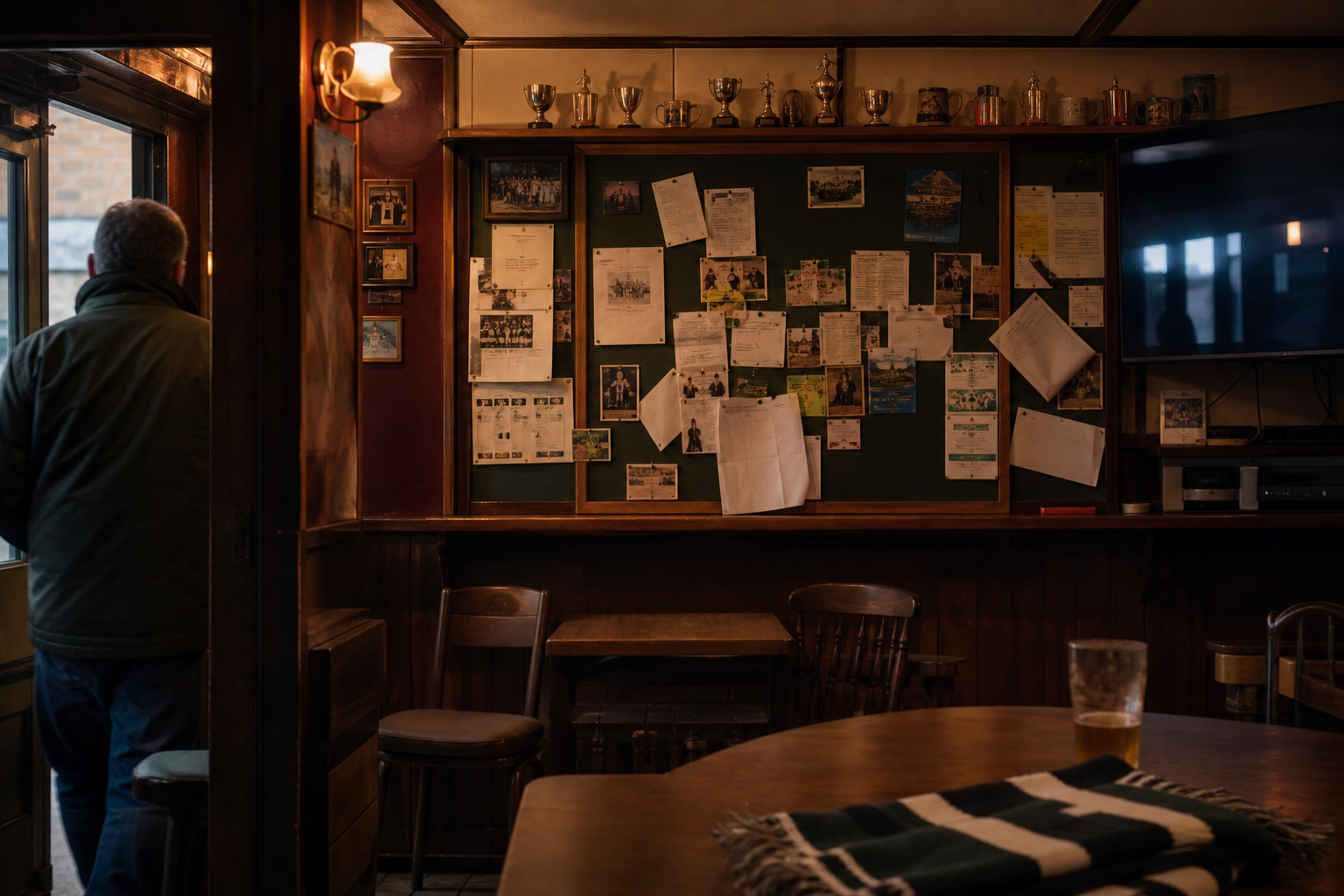
I would not want to overstate this. A pub is not a social service and pretending otherwise is how you end up with a sentimentality the evidence does not support. But the flyer board is real, the funerals are real, and the finding that people who would otherwise not know each other do know each other is real. Whatever football is doing in that room, it is not only entertainment.
What the room does
Two hours a week for twenty years
The supporters' club is the purest version of the thing, and the one that gives the game away.
A supporters' club is nominally an organization for following a football team. In practice it is a mutual aid society that has agreed on a badge. The Spirit of Shankly, Liverpool's supporters' union, does community work for people in the city who need it. In India, the Highlander Brigade — North East United's supporters — organized donations for flood-affected areas of Assam. One academic paper comparing football fandom with religious practice placed this charitable work alongside traditions such as seva, daan, zakat, sadaqa and langar: obligations of care that arise from belonging to a community. Not because football is a religion, but because communities can arrive independently at the same social obligation.

And that is the point at which the pretext stops looking like a pretext and starts looking like a design.
Because here is what football supplies that almost nothing else in modern life does: a recurring, non-negotiable, socially legitimate reason to be in the same room as the same people, for two hours, every week, for twenty years. Very little else still offers that at comparable scale. Church did, and does for fewer people. Work did, before it dispersed into laptops. The extended family did, before people moved. Almost every institution that used to force regular proximity has loosened its grip, and one of the very few that has not is a fixture list.
Put it concretely. A man starts going to the same room at twenty because his mates go and there is a match on. He is fifty before he notices that the people in it have been at his wedding, visited him in hospital, carried his father's coffin and stood him a drink on the day he retired. Nobody planned any of that. Nobody drew up terms. A fixture list simply kept returning the same men to the same room until the returning became the relationship.
The room and the match
On not needing the game to be good
And football is unusually good at this for a reason worth naming, which is that it asks almost nothing of a stranger.
You can spend an entire afternoon beside a man and learn nothing about him except which team he supports, and that turns out to be enough to start from. The match supplies a common object of attention long before anybody is required to supply anything personal. No introductions, no disclosure, no stated intention to make a friend — just two people looking the same direction at the same thing, which is the least demanding form of company that exists and, it turns out, a serviceable foundation. Shared attention first. Shared anything else, years later, if at all.
That is why these rooms are so much easier to walk into than any space that advertises itself as a place to meet people. Nothing is being asked. The stranger part is what happens once everyone is inside, and I have no clean explanation for it.
The match, in these rooms, does not have to be good. It does not have to be important. Nobody leaves the pub at half-time of a nil-nil because the football has failed to justify their attendance, and nobody says afterward that the afternoon was wasted. The quality of the game could scarcely matter less to what actually happened, which was that twelve people who like each other spent three hours together and somebody worked out that one of the regulars had not been in for three weeks.
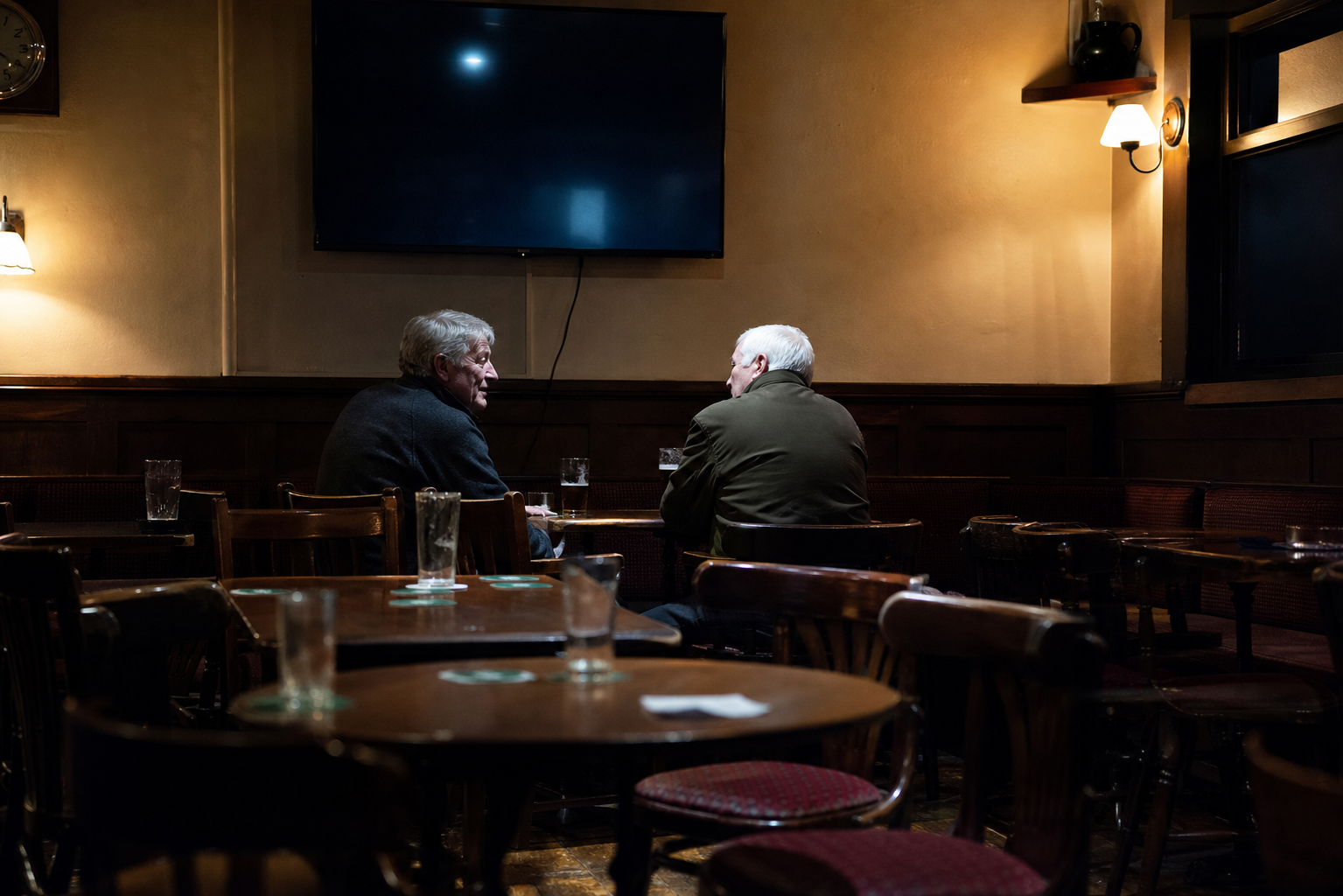
If the football were the point, a bad match would be a bad day. It isn't. And that tells you what is load-bearing and what is scaffolding, though everybody involved would insist, sincerely, that they came for the game.
I do not think they are lying. I think the pretext has to be believed to work. A room that admitted out loud it was a loneliness intervention would not get anybody through the door on a Tuesday. Football lets men in particular sit beside each other for years, in public, sustaining friendships that neither of them would ever describe as friendship, without anybody having to say a word about what is happening. The match gives you something to look at so you do not have to look at each other. That is not a criticism of the arrangement. It might be the most useful thing about it.
They wrote it down in 1867 and nobody has improved on it since: the object was keeping together during the winter season the members of this cricket club.
They are still doing it. The room has a television now.
The Away End is a series about everything football is besides the match itself — the rooms, the rituals, the people who would never otherwise have met. Also in the series: Games in Memory — on yards in Gaborone, where there was often no match to watch at all, and Measured in Sleep — on the supporters who set an alarm for three in the morning.