Most football cities are divided by class, or by geography, or by history. Istanbul manages all three at once, and then adds a strait.
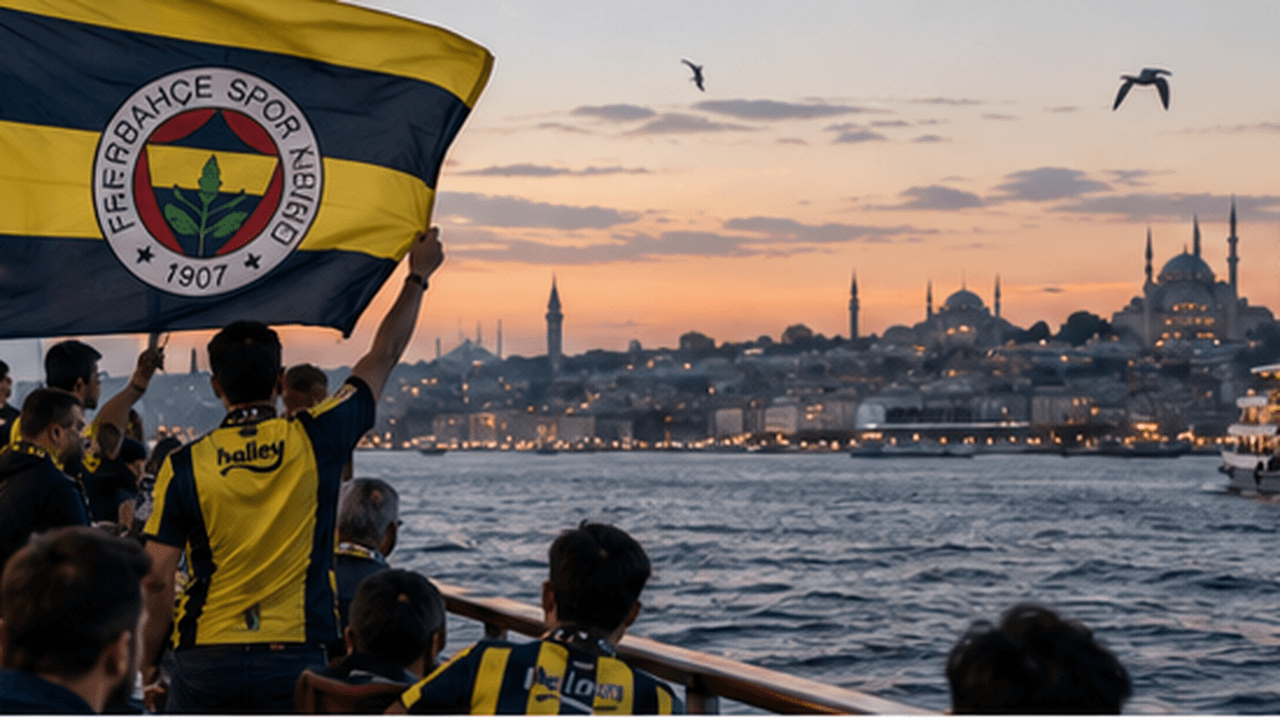
The Üç Büyükler — the Big Three — are Galatasaray, Fenerbahçe and Beşiktaş, and none of them has ever been relegated from the Süper Lig. Galatasaray were founded by pupils of Galatasaray High School and have carried the reputation of the elite club ever since; full membership still generally runs through the school. Beşiktaş are the club of the commoners, and say so proudly. Fenerbahçe sit across the water on the Asian side, in Kadıköy, which is not merely a different neighborhood but a different continent.
So when people tell you Istanbul is a football city, understand what they mean. It is not one city with a team. It is three cities occupying the same map, plus a ferry.
What follows is arranged accordingly — not as a ranked list of bars, but as a route through the three football worlds this city contains, and the rooms that let you into each one.
The football geography
Beşiktaş is the most legible of the three. The district's marketplace — the çarşı — is where supporters gathered on their way to the old İnönü Stadium, and in 1982 the club's organized fan group took the marketplace's name as their own. Çarşı are now among the most famous supporter groups in Europe. The streets around the stadium are black and white and busy on matchdays, and the bars there are not neutral.
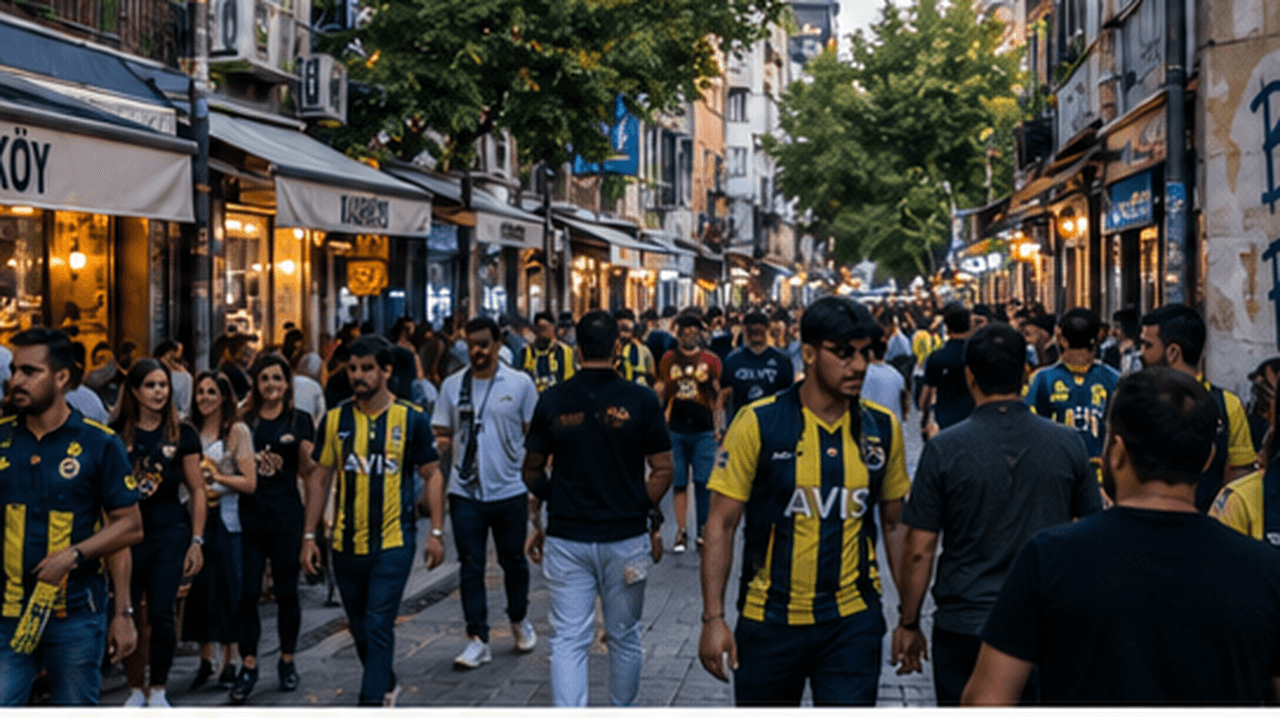
Kadıköy, across the Bosphorus on the Asian side, is Fenerbahçe. The Şükrü Saraçoğlu stadium sits in the middle of it. Kadıköy has fewer sports bars than the European side but a stronger sense of itself — the bars here are neighborhood bars that happen to show football, rather than sports bars that happen to be in a neighborhood. The ferry over from Eminönü takes about twenty minutes and is the best-value journey in world football.
Beyoğlu — Taksim, İstiklal, and the tangle of streets around them — is where visitors end up. It leans Galatasaray, most visibly at Nevizade, a narrow lane of bars and meyhanes off İstiklal where yellow and red hang in the windows. It is also where the city's Irish pubs and expat rooms cluster, which makes it the most reliable place to find a Premier League match with English commentary.
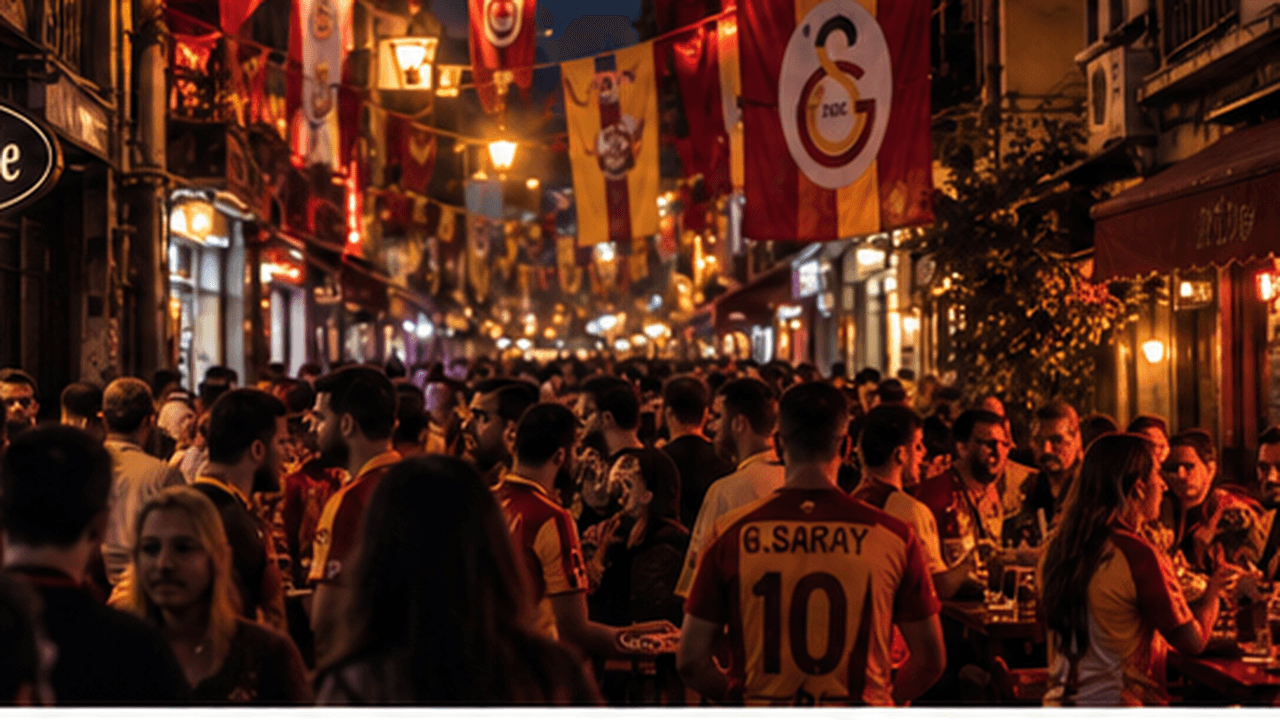
Nişantaşı and Şişhane are the closest thing to neutral ground: quieter, more expensive, less partisan. If you do not know who you are supporting and would rather not find out the hard way, start here.
The room with no address
Before the bars, the tea houses — because this is the thing that makes Istanbul different from every other city in this series.
The kıraathane is the traditional neighborhood tea house. Men, small tulip glasses of çay, backgammon, and a television bolted high in a corner. There are thousands of them, and on matchdays football is rarely difficult to find. The tea costs almost nothing. Nobody will ask you to buy anything else, and nobody will mind if you sit for two hours over a single glass.
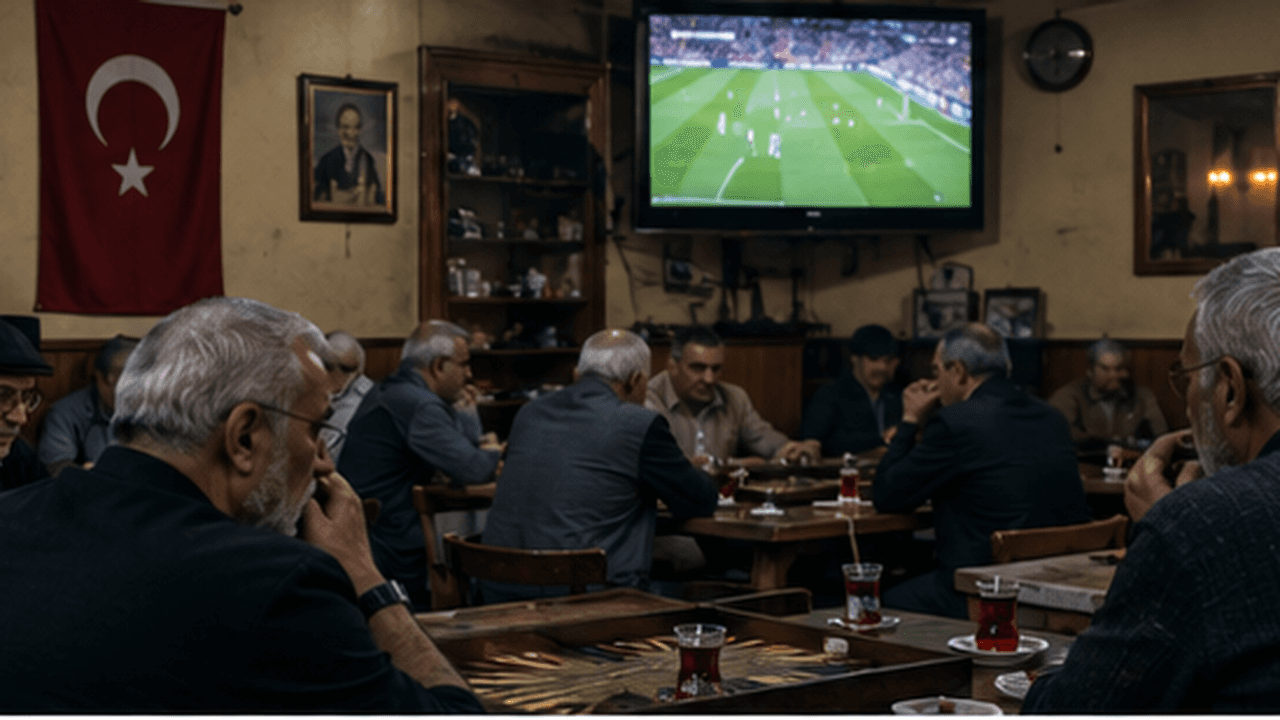
It is the form of football watching that tells you most about this city. Buenos Aires watches in the street. Guadalajara watches along one avenue. Istanbul watches over tea, in rooms that were not built for football and have been showing it for fifty years anyway. The çay bahçesi — the tea gardens along the waterfronts at Moda, Caddebostan and Üsküdar — do the same job outdoors, with the Bosphorus behind the screen.
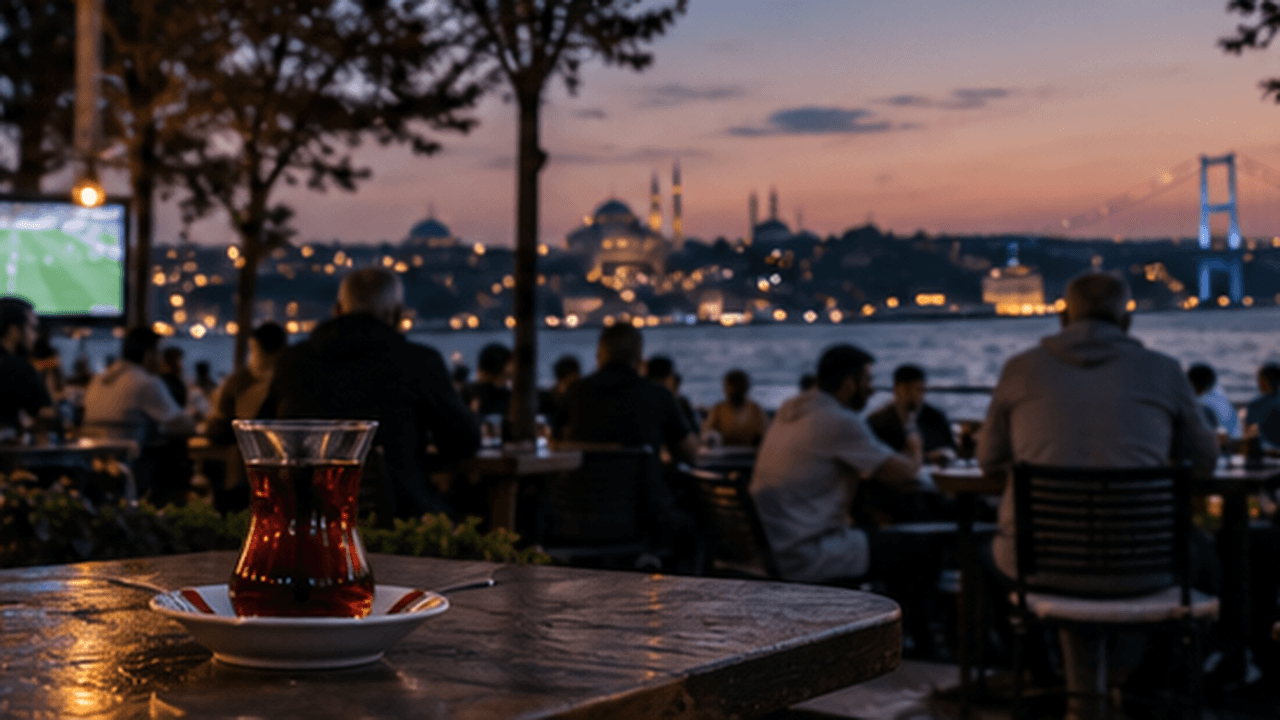
You will understand very little of the commentary. You will understand everything else.
Kadıköy — Fenerbahçe
Maçkolik Complex
Zühtüpaşa Mahallesi, Şefikbey Sokak No. 1
A short walk from the Şükrü Saraçoğlu, Maçkolik is a complex rather than a single room, with multiple screens running different fixtures at once. It is the closest thing Istanbul has to a cathedral of televised football, and on Süper Lig weekends it carries all three of the big clubs with the sound up.
Understand the geography before you walk in. This is Fenerbahçe's neighborhood and the crowd reflects it. Visitors consistently describe the atmosphere during a derby as closer to attending a match than watching one. For a neutral fixture it is simply the most comprehensive football room in the city.
Karga
Kadife Sokak
Karga is a live music venue that becomes a football bar when the occasion demands, which is a very Kadıköy way to run a business. Fenerbahçe fixtures and Champions League knockout nights get the full treatment; the rest of the time it is a bar with bands in it.
The building is the draw as much as the football — several floors of dark rooms and worn furniture on Kadife Sokak, the street locals call Barlar Sokağı, and an atmosphere with more in common with a squat than a sports bar. For a big European night with a young Turkish crowd, there are few better places to be.
Belfast Irish Pub
Guinness, a friendly room, and a specific quirk worth knowing: the matches are frequently on mute. This sounds like a flaw and is in fact a feature, because it means the room supplies its own commentary, and the room is Turkish. Belfast leans toward local football rather than the European leagues, which makes it a gentler introduction to Süper Lig fandom than walking into a partisan bar on a derby weekend.
Beyoğlu — visitors, expats, and Galatasaray gravity
The Dubliner
An Irish pub with eighteen screens and, as far as anyone can tell, every broadcast package sold in Turkey. The Dubliner is the default answer to the question of where to watch English football in Istanbul, and the default answer is usually the right one: the Premier League is on, the sound is on, and the crowd is a mix of expats, visiting supporters and Turks who follow an English club.
It is not the place to experience Turkish football culture. It is the place to watch Arsenal against Everton at half past five on a Saturday with people who care about the result, which is a different and entirely legitimate thing to want.
Me Gusta
Taksim
Down a few steps off the square, high-ceilinged and mirrored, with a long bar through the middle and booths in the corners. Me Gusta holds around 280 people and puts the big matches on projectors across two floors, and on Champions League nights it fills to the walls.
Taksim is the center of the city the way Times Square is the center of New York — not where anyone lives, but where everyone passes through. Me Gusta is one of the better football rooms in it, and the easiest to find.
Beşiktaş — the street is the venue
This is the section where naming a single bar would be a disservice.
Beşiktaş çarşı is a dense grid of small bars, cafés and food stalls between the ferry terminal and the stadium, and on matchdays the whole of it functions as one venue. Screens go up outside. Crowds form in the lanes between them. The supporters' group took its name from this marketplace precisely because the marketplace was already where everyone was — the bars did not create the gathering, they arrived to serve one that existed.
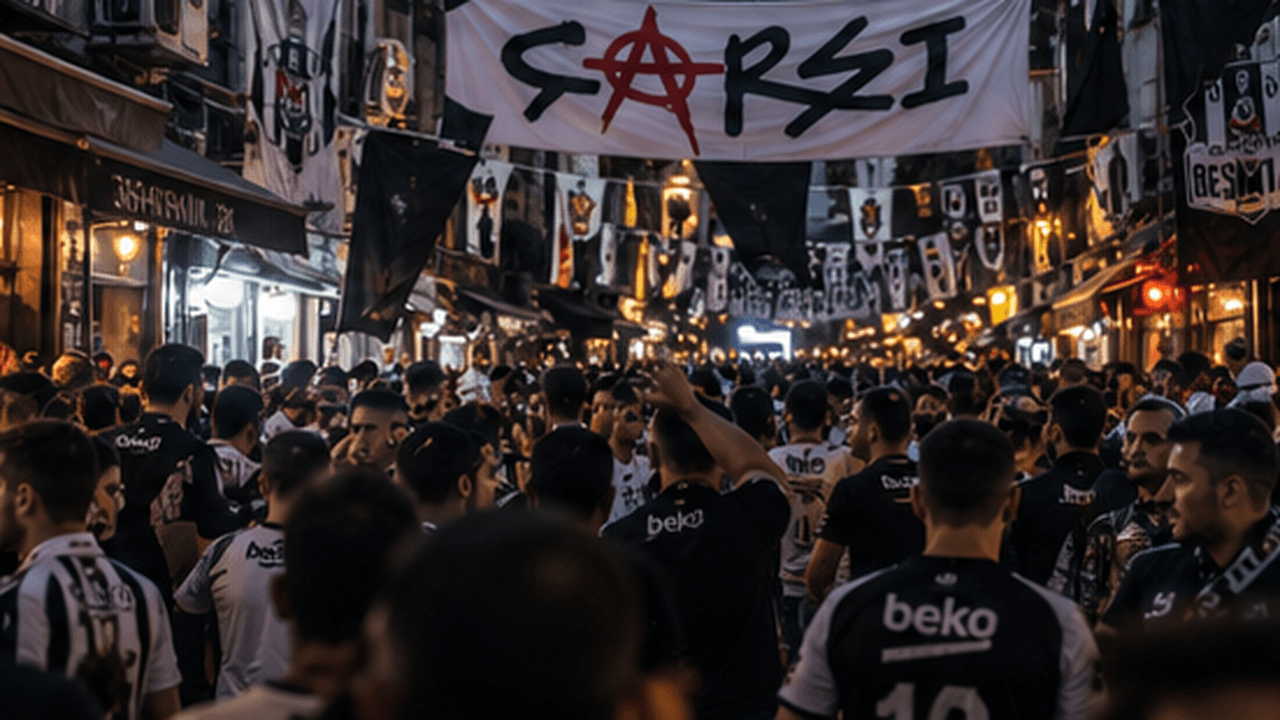
Practically, this means the advice for Beşiktaş is different from the advice everywhere else. Do not research a specific address. Take the ferry or the tram, walk into the çarşı ninety minutes before kickoff, and choose a room by looking through the door. On a Beşiktaş matchday, practically everything there will have the match on, and there is no chance whatsoever of being confused about whose neighborhood you are standing in.
Getting into the actual stadium
You cannot simply turn up. Turkish football requires every supporter — tourists included — to register through its ID-linked ticketing system before buying a ticket, an arrangement introduced after years of crowd trouble. It now runs through the Passo Taraftar platform, which has replaced the older Passolig card.
The good news is that it has become considerably easier than its reputation suggests. Registration is done online with a passport, no physical card is required, and entry is by QR code in the Passo app. The practical advice is simply to register several days before you want to attend rather than on the morning of the match, and to know that tickets for the derbies are scarce regardless of how organized you are.
Still, it is an extra step no other major European league asks of a visitor, and it means attending a match here is a plan rather than an impulse. Which is part of why the rooms in this guide matter. Istanbul has thousands of them, and on any given weekend far more of the city is in a tea house than in a stadium.
Know before you go
Kickoff times. Istanbul stays on UTC+3 year-round, putting it three hours ahead of the UK in winter and two ahead during British Summer Time. Premier League matches land at roughly 5:30 PM, 8:00 PM and 10:30 PM local — comfortable evening viewing. Champions League nights kick off around 10:00 PM local, and the expat pubs in Beyoğlu stay open for them. Süper Lig fixtures are spread from Friday to Monday.
Colors. Plenty of Istanbul bars are unofficially a Fener room or a Cimbom room, and the neighborhood venues near the Şükrü Saraçoğlu or in the Beşiktaş çarşı are emphatically not neutral. Know which room you have walked into. Wear a neutral shirt if you are unsure, keep the celebrating good-natured, and read the room before the room has to read you.
Verify before travelling. Ticketing rules, broadcast arrangements and individual venues all change, and Turkey's fan-card system has already been overhauled once. Confirm the current Passo Taraftar requirements and venue opening hours before you plan around them.